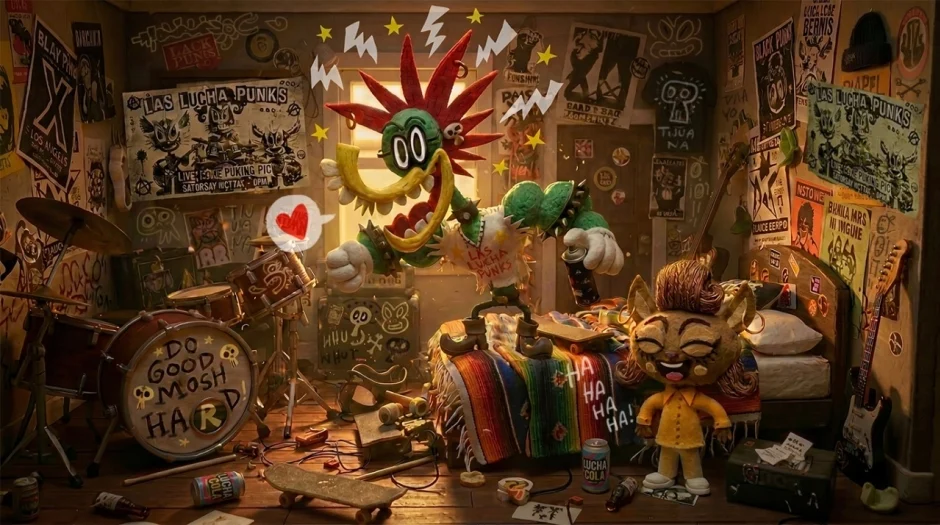
Emmy-winning director Jorge R. Gutierrez has withdrawn from the animated series "Punky Duck," slated to be produced by Amazon MGM Studios and distributed by Prime Video, following a swift and intense backlash from the animation community. The decision came just two days after Amazon announced the project as part of its new GenAI Creators’ Fund, a program designed to explore the integration of generative artificial intelligence within animation production pipelines.
Genesis of the Controversy
The initial announcement on Wednesday revealed "Punky Duck" as one of three inaugural projects greenlit by the GenAI Creators’ Fund. The other two series selected were "Cupcake & Friends" from BuzzFeed Studios and "Love, Diana Music Hunters" from Albie Hecht, Chief Content Officer at pocket.watch. This initiative signaled a significant investment by Amazon MGM Studios and Amazon Web Services (AWS) into exploring the potential of AI in creative industries, particularly in animation.
However, the news of Gutierrez’s involvement with a project explicitly tied to AI technology quickly ignited a firestorm within the animation world. Gutierrez, a respected figure known for his vibrant and culturally rich animated works such as "El Tigre: The Adventures of Manny Rivera" and "The Book of Life," has been a vocal proponent of supporting human artists and has previously expressed strong reservations about the use of AI in creative workflows. This apparent contradiction between his past statements and his participation in an AI-focused fund led to widespread criticism and confusion.
A Rapid Escalation
The timeline of events unfolded with remarkable speed:

- Wednesday: Amazon MGM Studios and AWS officially announce the GenAI Creators’ Fund and its first three greenlit projects, including Jorge R. Gutierrez’s "Punky Duck."
- Late Wednesday/Early Thursday: The animation community begins to react on social media. Initial responses range from surprise and disappointment to direct criticism of Gutierrez for aligning with a project that many fear could undermine the livelihoods of animators.
- Thursday: Gutierrez issues a statement on social media acknowledging the concerns. He wrote, "Learning a lot from many of you. Thank you. Lots of information that I’m digesting wholeheartedly. I am absolutely understanding the concern of using AI to assist an animation pipeline. For all those showing me grace, I really appreciate it. I have a lot to think about." This statement, while indicating an openness to dialogue, did not immediately quell the growing dissent.
- Friday: Following continued intense industry backlash, Jorge R. Gutierrez formally withdraws from "Punky Duck."
The Core of the Discontent: AI in Animation
The controversy surrounding "Punky Duck" and its director taps into deep-seated anxieties within the animation and visual effects (VFX) industries. For years, discussions about AI’s role in creative fields have been escalating, moving from theoretical debates to tangible applications. The GenAI Creators’ Fund, by its very nature, positions AI not as a peripheral tool but as a foundational element of the production process.
Key concerns voiced by industry professionals include:
- Job Displacement: The fear that AI-powered tools, capable of generating images, scripts, and even animating sequences, could render human artists redundant, leading to widespread unemployment. This is particularly acute for entry-level and mid-career artists whose roles might be most susceptible to automation.
- Intellectual Property and Ownership: Questions arise about who owns the copyright and intellectual property of content created or significantly aided by AI. The legal frameworks surrounding AI-generated art are still nascent, creating a precarious situation for creators and studios.
- Artistic Value and Authenticity: Many artists argue that true artistic expression stems from human intent, emotion, and lived experience, elements that AI, in its current form, cannot replicate. The "artist’s hand" and the nuanced decision-making process involved in traditional animation are seen as integral to the medium’s soul.
- Ethical Implications: The use of AI trained on existing art raises ethical questions about unauthorized use of artists’ work for training data, potentially without compensation or consent.
Gutierrez’s past public stance on these issues, where he has championed the value of human creativity and often spoken out against the devaluation of artistic labor, made his association with an AI-centric fund particularly jarring for many. Social media commentary reflected this dichotomy, with some expressing disappointment that a director known for his support of emerging talent would seemingly endorse a technology perceived as a threat to those very individuals. While some users offered understanding and grace, acknowledging the complexity of the situation, others voiced their criticisms more directly.
Amazon’s GenAI Creators’ Fund: A New Frontier?
Amazon MGM Studios and AWS’s foray into AI-driven content creation through the GenAI Creators’ Fund represents a significant strategic move. The fund aims to explore how generative AI can be integrated into animation production pipelines. While the exact nature of the AI integration for "Punky Duck" was not detailed, the fund’s objective suggests a proactive approach to leveraging AI for efficiency, innovation, or new creative possibilities.
According to industry analysts, the adoption of AI in media production is accelerating across various sectors. Companies are exploring AI for tasks such as:

- Concept Art and Storyboarding: Generating visual ideas and preliminary layouts.
- Asset Creation: Developing 3D models, textures, and character designs.
- Animation Assistance: Automating certain animation cycles or assisting with motion capture cleanup.
- Scriptwriting and Content Generation: Assisting with script development or generating supplementary content.
- Post-Production: Enhancing visual effects, color grading, and sound design.
However, the critical distinction lies in whether AI is used as a tool to augment human creativity and streamline workflows, or as a replacement for human roles. The animation community’s outcry suggests a fear that Amazon’s fund, and by extension "Punky Duck," was leaning towards the latter, or at least exploring that boundary without sufficient safeguards for human artists.
Broader Implications for the Animation Industry
The withdrawal of Jorge R. Gutierrez from "Punky Duck" is more than just the loss of a high-profile director from a specific project. It serves as a potent symbol of the ongoing tension between technological advancement and artistic integrity in the entertainment industry.
Analysis of Implications:
- Heightened Scrutiny of AI Initiatives: This event is likely to place future AI-focused projects in animation under even greater scrutiny from artists and advocacy groups. Studios and tech companies may need to demonstrate a more robust commitment to ethical AI integration and artist collaboration.
- Increased Dialogue and Advocacy: The strong reaction underscores the need for more open and transparent dialogue between industry leaders, technology providers, and artists regarding the ethical and economic implications of AI. This could spur further unionization efforts or the development of industry-wide standards and best practices.
- Re-evaluation of AI’s Role: The incident may prompt a re-evaluation within companies like Amazon regarding how they communicate and implement AI technologies in creative pipelines. The focus might shift towards emphasizing AI as a collaborative partner rather than a purely disruptive force.
- Impact on Emerging Talent: For aspiring animators, the debate highlights the importance of understanding AI’s capabilities and limitations, as well as the ongoing need to advocate for their skills and value in a rapidly evolving landscape. The emphasis on "artist’s hands" remains a crucial differentiator.
The phrase "With disruption comes opportunity" often accompanies technological shifts. However, as this situation illustrates, every significant advancement also necessitates a difficult reckoning with what, or who, might be left behind. The animation community’s vocal response to the "Punky Duck" project signifies a collective determination to ensure that innovation does not come at the expense of human artistry, employment, and the fundamental value of creative labor. The future of AI in animation will likely be shaped not only by technological capabilities but also by the ongoing dialogue, advocacy, and ethical considerations championed by its artists.