
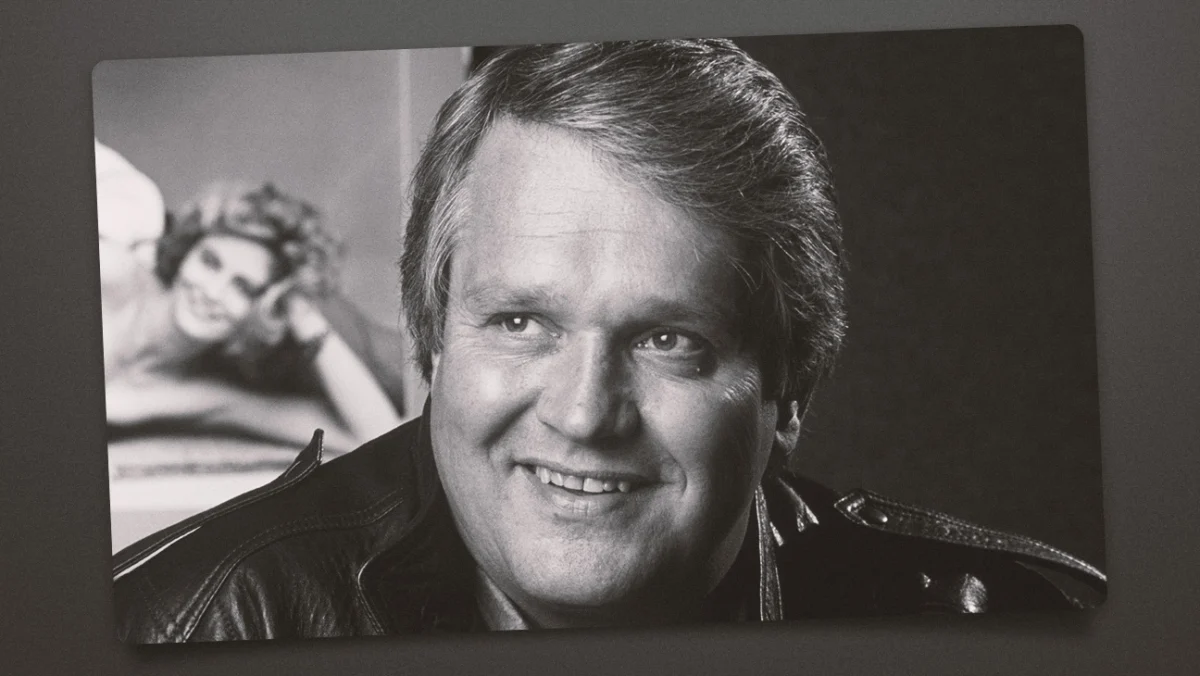
Jay Daniel, the two-time Emmy-nominated producer whose unparalleled ability to navigate the tumultuous waters of television production earned him a legendary status, passed away on Wednesday at Providence Cedars-Sinai Tarzana Medical Center. He was 82 and succumbed to a pneumonia-related illness, his wife, artist Vicky Daniel, confirmed to The Hollywood Reporter. Daniel was widely celebrated for his pivotal role in wrangling the creative chaos on two of ABC’s most popular and challenging series, Moonlighting and Roseanne, demonstrating a rare blend of logistical acumen and diplomatic skill that allowed groundbreaking television to flourish under immense pressure.
Daniel’s career was marked by a series of high-stakes productions where his steady hand proved indispensable. Beyond his work on the iconic detective dramedy Moonlighting and the groundbreaking sitcom Roseanne, he also collaborated with Moonlighting creator Glenn Gordon Caron on the 1988 Warner Bros. film Clean and Sober. This critically acclaimed drama saw Michael Keaton deliver a career-defining performance in his first dramatic role, portraying a real estate agent battling severe cocaine and alcohol addiction. Furthermore, Daniel played a crucial role in bringing Moonlighting star Cybill Shepherd back to television, developing and serving as an executive producer for her successful 1995-98 CBS sitcom Cybill, created by Chuck Lorre. His contributions spanned decades, leaving an indelible mark on both comedic and dramatic television and film.
Early Life and the Path to Production
Born Jay Mills Daniel in Cushing, Oklahoma, on June 1, 1943, Daniel’s initial ambitions lay in front of the camera. He pursued higher education at Oklahoma State University before attending graduate school at UCLA, majoring in theater arts with the goal of becoming an actor. His acting career, though brief, included a notable appearance as a snack bar drive-in attendant in Peter Bogdanovich’s 1968 directorial debut, Targets. However, Daniel soon recognized his true calling lay behind the scenes. This pivotal realization led him to join the Directors Guild of America (DGA) trainee program, a decision that would shape the rest of his illustrious career. His early production credits included a stint as an assistant director on the beloved ABC family sitcom The Brady Bunch, providing him with foundational experience in managing the intricate logistics of a television set.
From 1973 to 1976, Daniel expanded his expertise, serving as a unit production manager, assistant director, and associate producer on NBC’s acclaimed police drama Police Story. This period further honed his organizational skills and deepened his understanding of complex episodic storytelling. His producing credentials continued to grow with the 1979-80 NBC crime series Eischied, starring Joe Don Baker. Demonstrating his versatility and commitment to diverse storytelling, Daniel received a Daytime Emmy Award in 1984 for outstanding children’s informational/instructional special. This award recognized his work producing a CBS Schoolbreak Special episode that featured a man on Death Row advising children against making similar life-altering mistakes, underscoring his early engagement with impactful, socially conscious content.
The Genesis of Moonlighting and a Partnership Forged in Fire
Daniel’s fateful collaboration with Glenn Gordon Caron began in 1984 on Concrete Beat, a pilot for an ABC series starring John Getz as a newspaper columnist. Though the pilot was not picked up, it laid the groundwork for one of television’s most iconic partnerships. Daniel vividly recalled the moment that would define a significant portion of his career: "On June first of 1984, I get a call from Glenn saying, ‘You know, they want me to do this boy/girl detective thing, and they’ve given me a ‘go’ on it. Would you like to do it?’" Daniel recounted. "I said, ‘Sure,’ and that turned out to be Moonlighting. June 1 is my birthday — best present I’ve ever been given."
Moonlighting, which premiered as a midseason replacement in 1985 and ran for five seasons until 1989, quickly became a cultural phenomenon. It starred Cybill Shepherd as Maddie Hayes, a former model who finds herself owning the struggling Blue Moon Detective Agency, and Bruce Willis as David Addison, the wisecracking, playful private eye who works for her. The series was revolutionary for its time, breaking the fourth wall, featuring meta-commentary, and embracing a unique blend of screwball comedy, romantic tension, and intricate mystery plots. The rapid-fire dialogue and palpable chemistry between Shepherd and Willis captivated audiences, transforming both actors into household names.
However, the show’s innovative spirit came with an equally notorious production process. Creator Glenn Gordon Caron was a self-proclaimed perfectionist, often waiting until the last minute to write, shoot, or edit episodes, pushing deadlines to their absolute limits. This creative approach frequently led to scripts being delivered mere hours before shooting, and sometimes even during filming. Further complications arose from Cybill Shepherd’s pregnancy during the series and the widely reported, often volatile feuds between the two lead stars, Willis and Shepherd. These factors combined to create an environment described by many as perpetually on the brink of chaos.
The "Chaos Manager" of Moonlighting
It was in this maelstrom that Jay Daniel’s unique talents shone brightest. He was tasked with the unenviable role of keeping the "train running on time," a challenge he met with extraordinary composure and ingenuity. His approach to managing the inherent unpredictability of Moonlighting became legendary. In a 1986 interview with The New York Times, Daniel famously stated, "we’re just about as close as you can get to being live without being live," encapsulating the show’s frantic, improvisational energy.
Daniel often reflected on the paradox of Moonlighting‘s success stemming directly from its chaotic production. In a 2005 interview, he noted, "I think a lot of the success of Moonlighting, when you look back on it, came out of spontaneity. At the time it was chaos, you know, the script wasn’t ready, Glenn had to go write something now or we’d have to shut down. His back was to the wall, and he’d go in the room and write this thing and you’d look at it and go, ‘OK, let’s shoot it,’ and then it was done. It was written the day before, sometimes the morning of, and done by the end of the day. And you know what? It was pretty damn good. Sometimes it was great." This philosophy underscores Daniel’s deep understanding of the creative process and his ability to transform pressure into performance.
Daniel, Caron, and the Moonlighting team received two Emmy nominations for Outstanding Drama Series in 1986 and 1987, losing to Cagney & Lacey and L.A. Law respectively, but solidifying the show’s critical acclaim. Daniel’s influence extended beyond producing; he also directed four episodes of the series, further demonstrating his comprehensive grasp of the show’s vision and execution. He remained as showrunner for Moonlighting’s final season after Caron was fired, a testament to his indispensable role in maintaining the show’s structure amidst its inherent turbulence.
Venturing into Film: Clean and Sober
Between the third and fourth seasons of Moonlighting, Daniel extended his collaboration with Glenn Gordon Caron to the big screen, producing Clean and Sober. This marked Caron’s directorial debut in film and was a significant dramatic departure for Michael Keaton, then primarily known for his comedic roles. Daniel’s involvement in such a pivotal project further highlighted his versatility and his trust in Caron’s creative vision, even as they navigated new territory. The film was a critical success, showcasing Keaton’s range and establishing Caron as a formidable filmmaker, all under Daniel’s steady production guidance.
Taming the Lion’s Den: The Roseanne Years
Following his tenure on Moonlighting, Daniel moved to another highly successful, yet equally tumultuous, production: the ABC sitcom Roseanne. He joined the series for its third season, stepping into an environment known for the volatile personality of its star, Roseanne Barr, who frequently walked off the set after arguments with writers. Daniel’s reputation as a "chaos manager" from his Moonlighting days preceded him.
He explained the circumstances of his recruitment: "They thought of me because I had somehow kept Moonlighting going in spite of all the tumult, especially the problems between Bruce and Cybill. It was well known that somehow Moonlighting kept going when it could have imploded at any second. So the network brought me onto Roseanne to calm the waters and try to deal with her concerns."
Daniel’s ability to navigate Barr’s strong personality without confrontation became a hallmark of his time on the show. "It was more about the actress than it was about the strong female character she was playing. It was about me going into the lion’s den with a whip and a chair and dealing with an actor who could be very volatile, although I must say she never raised her voice to me, not once. To a lot of other people she did, but for some reason, never to me. I ended up doing that show for the better part of five seasons." His unique approach—a blend of firmness, empathy, and unwavering professionalism—allowed Roseanne to continue its groundbreaking run, depicting a working-class family with unparalleled realism and humor. The show was a critical and ratings juggernaut, pushing boundaries and tackling social issues, all while Daniel provided the essential behind-the-scenes stability.
Bringing Cybill Back to Television and Later Career
After concluding his five-season run on Roseanne in 1994, Daniel once again proved his ability to foster talent and vision. He was instrumental in convincing Cybill Shepherd to return to series television, despite the well-documented difficulties she had experienced on Moonlighting. Daniel served as an executive producer for three seasons on Cybill, the CBS sitcom created by Chuck Lorre. The show chronicled the life of a 40-something career woman navigating two ex-husbands and a teenage daughter, resonating with audiences and earning critical praise. This project underscored Daniel’s deep professional relationships and his commitment to supporting artists he believed in.
His later career continued to see him contribute to a variety of television projects, including serving as a producer on ABC’s The Naked Truth in 1997, The WB’s Maybe It’s Me from 2001-02, and ABC’s Hot Properties in 2005. Throughout his extensive career, Daniel consistently demonstrated a profound understanding of the intricacies of television production, from managing high-profile talent to ensuring creative visions were realized despite formidable logistical hurdles.
A Lasting Legacy of Unflappable Leadership
Jay Daniel’s passing prompted an outpouring of tributes, none more poignant than that from his long-time collaborator, Glenn Gordon Caron. On X (formerly Twitter), Caron wrote on Thursday, "There was no ‘Moonlighting’ without Jay Daniel. Probably no ‘Roseanne’. Definitely no ‘Cybill’. Certainly no ‘Clean and Sober’. He was simply the best. He left us last night. He will be very missed." This powerful statement succinctly captures the depth of Daniel’s impact and the irreplaceable nature of his contributions to some of the most memorable productions in modern television history.
Daniel’s legacy is that of a producer who not only facilitated the creation of iconic television but actively thrived in the challenging, high-pressure environments that often characterize groundbreaking work. He possessed a rare combination of logistical genius, a deep respect for the creative process, and an unflappable demeanor that made him the ideal "chaos manager." His ability to mediate disputes, soothe volatile personalities, and maintain production schedules under extreme duress allowed visionary creators and talented actors to push boundaries and deliver exceptional content. His work ensured that the spontaneity and brilliance born from creative tension could reach audiences, making him an unsung hero behind the golden age of television.
Daniel is survived by his wife of 46 years, Vicky Daniel, with whom he shared a fifty-year relationship; they met when she was a dancer on a set. He is also survived by his niece, Lori. Jay Daniel will be remembered not just for the impressive list of shows and films he helped bring to life, but for the quiet, steady strength he brought to sets that might otherwise have imploded, proving that true leadership often means keeping the show going, no matter the storm.