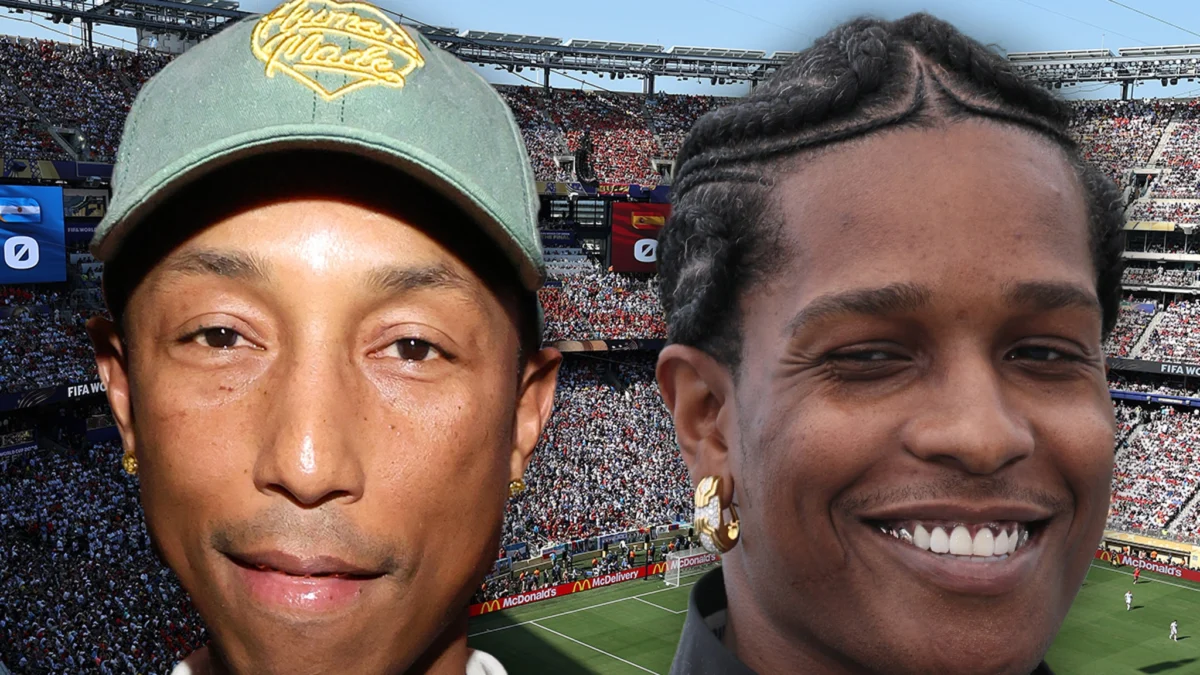
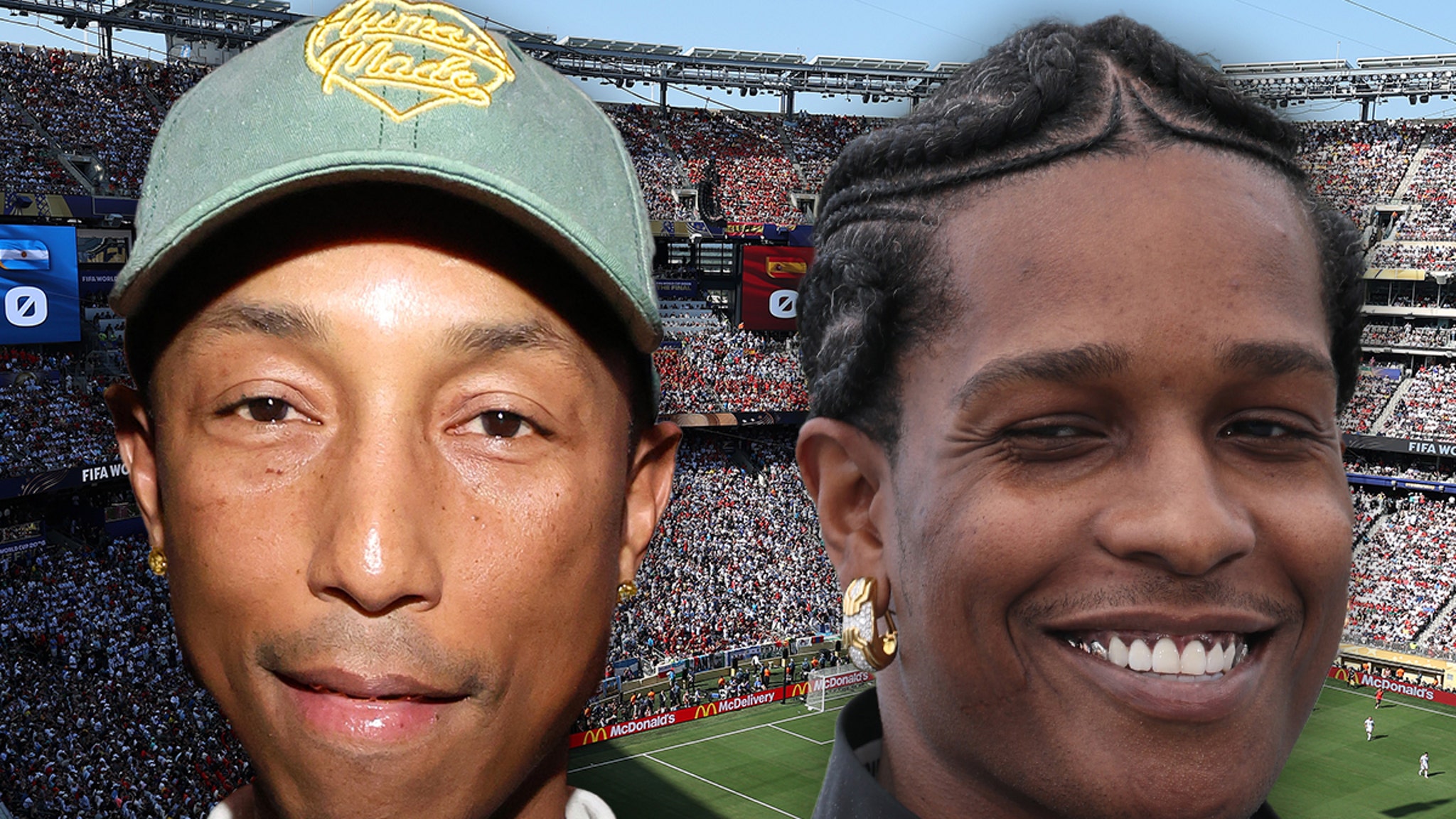
A moment of celebrity identification confusion during the highly anticipated 2026 FIFA World Cup Final saw veteran BBC commentator Guy Mowbray mistakenly identify music icon Pharrell Williams as rapper A$AP Rocky, further compounding the error by initially mispronouncing the latter’s moniker. The incident, which unfolded approximately 15 minutes into the gripping championship match between Spain and Argentina at MetLife Stadium, quickly became a focal point of online discussion, momentarily eclipsing the on-field drama of the world’s most watched sporting event.
The Commentary Conundrum: A Live Broadcast Blunder
The global spectacle of the FIFA World Cup Final, held on July 19, 2026, commanded the attention of billions worldwide. As the cameras panned across the star-studded stands of MetLife Stadium in East Rutherford, New Jersey, showcasing a veritable who’s who of global celebrities, the pressure on commentators to keep pace with both the sporting action and the sideline spectacle was immense. It was during one such panoramic sweep that the broadcast landed on Pharrell Williams, instantly recognizable to many but seemingly a momentary puzzle for Mowbray.
Pharrell, casually dressed in his characteristic backward cap and shades, was observed enjoying the electric atmosphere. As the image filled screens across the globe, Mowbray, in his play-by-play role for the BBC, ventured an identification: "I think that is AKA Rocky," he began, before a swift, self-correction: "Or A$AP Rocky, sorry." The correction addressed the rapper’s stage name, but the underlying error — confusing Pharrell Williams with A$AP Rocky — remained unaddressed in the live moment. This "double whiff," as some online commentators dubbed it, swiftly ignited social media, transforming a minor on-air slip into a viral sensation.
The irony was not lost on viewers who were aware that A$AP Rocky was indeed present at the final, albeit in a different luxury suite. The rapper, whose real name is Rakim Mayers, was reportedly seated alongside his partner, pop superstar Rihanna, as well as fellow musician Future and New York Knicks star Jalen Brunson. This juxtaposition of the actual A$AP Rocky being at the venue while Pharrell Williams was misidentified as him only amplified the humor and virality of the commentary gaffe. Pharrell himself, appearing blissfully unaware of the international kerfuffle unfolding around his identity, continued to watch the match, seemingly unfazed by his momentary transformation into another prominent figure in hip-hop culture.
Contextualizing the Spectacle: World Cup, Celebrities, and Live TV
The FIFA World Cup Final is more than just a football match; it is a global cultural phenomenon, a convergence of sport, entertainment, and national pride. The 2026 edition, co-hosted across North America, brought an unprecedented level of anticipation, particularly with its grand finale staged in one of the world’s most iconic metropolitan areas. MetLife Stadium, with its colossal capacity and history of hosting major events, provided a fitting backdrop for a match that would determine football’s ultimate champion. The presence of A-list celebrities has become a standard feature of such high-profile events, adding an extra layer of glitz and glamour that broadens the appeal beyond traditional sports fans.
The list of luminaries attending the 2026 final was staggering, underscoring the event’s universal appeal. Alongside the mistaken Pharrell and the actual A$AP Rocky, the VIP sections reportedly hosted former U.S. President Donald Trump, Hollywood icon Tom Cruise, legendary Rolling Stones frontman Mick Jagger, reality television personality Kylie Jenner, acclaimed actor Timothée Chalamet, and members of the illustrious Beckham family, among many others. The sheer density of star power in attendance presented a unique challenge for broadcasters. Commentators are tasked with delivering incisive analysis of the game, recounting historical facts, and managing the flow of the match, all while being expected to recognize a diverse array of public figures in fleeting camera shots.
The BBC, as one of the world’s most respected public broadcasters, has a long and storied tradition of covering major sporting events. Its commentary teams are renowned for their professionalism, insight, and often, their distinctive voices that become synonymous with iconic sporting moments. Guy Mowbray, a seasoned football commentator, has been a familiar voice to millions of football fans for decades, celebrated for his eloquent descriptions and knowledge of the beautiful game. The pressure to maintain impeccable standards in live broadcasting, especially during an event of the World Cup’s magnitude, is immense. Every word, every identification, is scrutinized by a global audience equipped with instant access to information and social media platforms ready to amplify any perceived misstep.
The Anatomy of a Viral Moment: Social Media’s Role
The immediate aftermath of Mowbray’s gaffe saw an explosion of activity across social media platforms. Within minutes, clips of the commentary circulated widely, shared by users who found humor in the mix-up. Tweets, TikToks, and Instagram stories dissected the moment, with many questioning how such distinct artists could be confused. Some users playfully suggested that Mowbray’s "celebrity-recognition circuit" was simply overloaded by the sheer volume of A-listers in the stands, a sentiment that resonated with many.
The humor stemmed not only from the initial misidentification of Pharrell but also from the subsequent fumbling of A$AP Rocky’s name. "AKA Rocky" became a trending phrase, mocked and meme-ified by users who reveled in the commentator’s struggle. This rapid dissemination and collective amusement highlight the instantaneous nature of modern media consumption and the power of social platforms to turn fleeting on-air errors into lasting viral content. The incident served as a prime example of how even minor slip-ups in live broadcasting can capture global attention, often overshadowing other aspects of the event. While the gaffe was largely perceived as harmless and amusing, it underscored the heightened scrutiny under which public figures, including broadcasters, operate in the digital age.
Pharrell vs. A$AP Rocky: A Brief Cultural Divide
To fully appreciate the commentary gaffe, it’s useful to briefly contextualize the two artists involved. Pharrell Williams, born in 1973, is a Grammy Award-winning musician, record producer, singer, songwriter, and fashion designer. Known for his work with The Neptunes and N.E.R.D., and his massively successful solo career, including the global hit "Happy," Pharrell has a distinct public persona characterized by innovation, distinctive fashion choices (like his famous Vivienne Westwood hat), and a generally positive, energetic vibe. His influence spans decades and genres, making him a household name across diverse demographics.
A$AP Rocky, born Rakim Mayers in 1988, rose to prominence in the early 2010s as a leading figure in contemporary hip-hop. He is celebrated for his unique flow, fashion-forward aesthetic, and genre-bending music. A$AP Rocky is also known for his high-profile relationship with Rihanna, with whom he shares children. While both artists are titans in the music and fashion industries, they represent different generations and distinct subcultures within hip-hop and popular music. Their visual styles, though both influential, are generally considered quite different, making the live identification error particularly noticeable to fans of either artist.
Broader Implications: Commentary in the Digital Age
While Guy Mowbray’s gaffe was a moment of lighthearted amusement, it prompts a broader discussion about the evolving role and expectations of sports commentators in the digital age. In an era where information is instantly verifiable, and social media acts as a collective fact-checker, the demands on broadcasters extend beyond mere sporting knowledge. They are increasingly expected to be well-versed in pop culture, celebrity news, and various other peripheral aspects that now form part of the grand tapestry of major sporting events.
The incident highlights the inherent challenges of live television. Despite extensive preparation, human error is inevitable, especially under the intense pressure of a global broadcast. While some may argue that commentators should be infallible, others maintain that such authentic, unscripted moments contribute to the charm and relatability of live sports coverage. The immediate, widespread reaction online suggests that audiences are not just tuning in for the sport, but for the entire experience, including the spontaneous human elements that often go viral.
For the BBC, a single misidentification is unlikely to significantly impact its reputation, given its long history of excellence. However, it serves as a reminder of the heightened scrutiny faced by all media professionals in an interconnected world. Commentators, once solely focused on the action on the pitch, now navigate a complex landscape where celebrity spotting is as much a part of the broadcast as tactical analysis.
The Game Continues: Spain Claims Victory
Despite the celebrity-fueled diversion, the main event of the day was the football itself. The 2026 FIFA World Cup Final delivered a thrilling encounter between two of football’s titans, Spain and Argentina. The match remained a tense, goalless stalemate through regulation time, showcasing defensive prowess and strategic play from both sides. It was ultimately decided in extra time when Spain broke the deadlock, scoring the decisive goal to secure a 1-0 victory. This hard-fought win crowned Spain as the World Cup champions, a moment of immense triumph for the nation and its fans.
While Guy Mowbray may have stumbled on his celebrity identifications, his commentary on the football action remained precise and engaging. He accurately called the plays, described the ebb and flow of the game, and conveyed the dramatic tension of a World Cup Final. In the end, the sporting narrative prevailed, with Spain’s victory etched into the annals of football history. The celebrity mix-up, while a memorable and widely discussed footnote, ultimately faded as the roar of the crowd celebrated a new world champion, reminding everyone that while the stars may shine bright in the stands, the true brilliance of the World Cup lies on the pitch.