

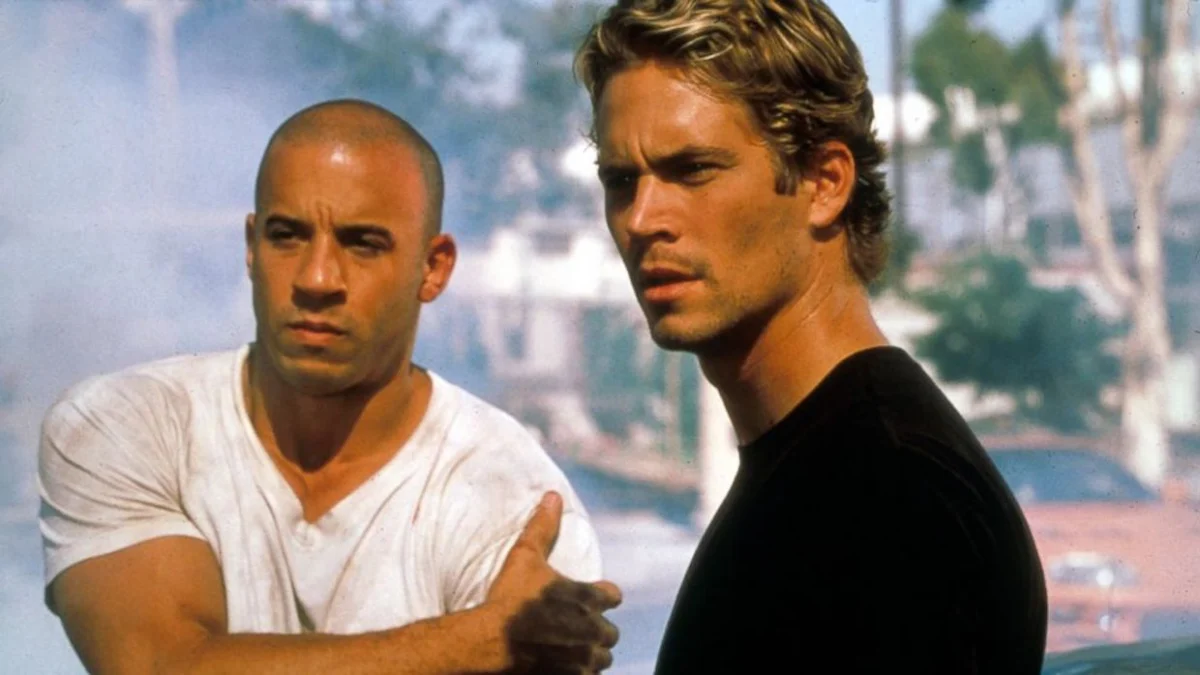
The 77th Cannes Film Festival recently paused its traditional schedule of high-art premieres to host a special midnight screening of the 2001 action-thriller The Fast and The Furious, marking the 25th anniversary of the film that launched one of the most successful franchises in cinematic history. Held at the Grand Théâtre Lumière, the festival’s premier venue, the event served as a retrospective of the Rob Cohen-directed film while emphasizing the enduring cultural and economic impact of the "Fast Saga." The screening was attended by the franchise’s lead actor and producer Vin Diesel, along with long-time co-stars Michelle Rodriguez and Jordana Brewster, and Meadow Walker, daughter of the late Paul Walker.
The inclusion of the street-racing blockbuster in the Official Selection occurred during a festival cycle noted for a reduced presence of major Hollywood studio premieres. Industry analysts suggest the programming choice reflects a strategic effort by festival organizers to balance avant-garde cinema with globally recognized intellectual properties. This follows a precedent set in recent years, such as the 2022 fighter jet-augmented launch of Top Gun: Maverick and the 2023 premiere of Mission: Impossible – Dead Reckoning Part One.
The Red Carpet and Anniversary Commemoration
The atmosphere outside the Grand Théâtre Lumière was characterized by a level of fanfare usually reserved for major competition entries. Festival General Delegate Thierry Frémaux and President Iris Knobloch greeted the cast as they arrived. Vin Diesel, who has become the face of the franchise over the last quarter-century, appeared on the red carpet wearing a custom blazer adorned with the phrase "FAST FOREVER" in crystals.
The event took on a somber yet celebratory tone as the cast paid tribute to Paul Walker, who portrayed Brian O’Conner until his death in 2013. Diesel addressed the capacity crowd of approximately 2,300 attendees before the lights dimmed, delivering an emotional speech that focused on the themes of family and "brotherhood"—concepts that have become the marketing and narrative bedrock of the series. Diesel referred to Walker by the nickname "Pablo" and credited the 2001 film with introducing a new era of diverse, action-oriented storytelling to the new millennium.
The presence of Meadow Walker underscored the multi-generational connection the franchise maintains with its cast and audience. Since her father’s passing during the production of Furious 7, the franchise has frequently integrated his legacy into its promotional cycles, including a cameo by Meadow in the tenth installment, Fast X.
Historical Context: From Independent Roots to Global Franchise
When The Fast and The Furious debuted in the summer of 2001, it was produced on a relatively modest budget of $38 million. Inspired by a Vibe magazine article titled "Racer X," which detailed the underground street-racing scene in New York City, the film exceeded commercial expectations by grossing $207 million worldwide. Unlike the increasingly high-concept sequels—which have featured cars jumping between skyscrapers and traveling into sub-orbital space—the original film was a grounded crime procedural.
The plot centered on an undercover LAPD officer, Brian O’Conner (Walker), who infiltrates a crew of street racers led by Dominic Toretto (Diesel) suspected of hijacking trucks to steal consumer electronics, specifically VCRs and DVD players. Looking back from the vantage point of 2024, the film serves as a time capsule for early 2000s technology and car culture. Critics at the Cannes screening noted that the film’s reliance on practical stunts and real automotive choreography provided a stark contrast to the heavy digital effects utilized in the more recent $300 million-plus budget entries.
Vin Diesel’s Cannes Connection
The 25th-anniversary screening also marked a significant personal milestone for Vin Diesel. During his address, Diesel recounted his first visit to the Cannes Film Festival in 1995 as a 28-year-old aspiring filmmaker. At that time, he was promoting Multi-Facial, a 20-minute short film he wrote, directed, produced, and starred in. The short, which explored the difficulties of being a multi-racial actor in Hollywood, caught the attention of Steven Spielberg, leading to Diesel’s breakout role in Saving Private Ryan.
Diesel noted that Thierry Frémaux had reminded him during a luncheon earlier that day that his career was effectively "born in Cannes." This narrative of the "struggling artist turned global icon" resonated with the festival’s history of discovering talent, even if Diesel’s eventual path led him toward commercial blockbusters rather than the traditional Palme d’Or-style cinema.

Economic Impact and the Future of the Fast Saga
The "Fast and Furious" franchise currently stands as the seventh highest-grossing film series of all time, with a cumulative global box office exceeding $7.3 billion. Its success is often attributed to its early adoption of a diverse, international cast, which allowed it to perform exceptionally well in markets such as China, Brazil, and Mexico.
Despite rumors of the series concluding, the Cannes event provided a platform to discuss the brand’s expansion. While the eleventh and purportedly final main-line installment is currently slated for a 2026 or 2028 release, Universal Pictures and Vin Diesel’s One Race Films are moving into television. Reports confirmed during the festival period indicate that four spin-off series are currently in development for the Peacock streaming platform. This expansion aims to leverage the deep roster of characters established over eleven films, ensuring the IP remains active even after the primary narrative arc involving Dominic Toretto concludes.
Franchise Financial Milestones:
- The Fast and the Furious (2001): $207 million (Budget: $38M)
- Fast Five (2011): $626 million (Reinvented the series as a heist franchise)
- Furious 7 (2015): $1.51 billion (The highest-grossing entry in the series)
- Fast X (2023): $704 million (Highlighting the shift toward massive $300M+ production budgets)
Technical Evolution: Practical Effects to Digital Spectacle
The retrospective screening allowed critics and enthusiasts to analyze the technical evolution of the series. The 2001 film is often compared to the works of Michael Mann due to its gritty cinematography and focus on the professional subculture of its protagonists. The action sequences in the original were largely achieved through "old-school" stunt driving and camera rigs, a method that has been progressively replaced by sophisticated CGI in later years.
The transition from a street-racing drama to a globe-trotting espionage saga has been a point of contention among long-term fans. However, the Cannes screening highlighted that the core "melodramatic" elements—the focus on family loyalty and the blurring of lines between law enforcement and outlaws—have remained consistent. This thematic continuity is cited as the primary reason for the franchise’s longevity compared to other action series that failed to maintain their original audience.
Cannes and the Integration of Popular Cinema
The decision to host a midnight screening for a 25-year-old American action film underscores a shifting philosophy at the Cannes Film Festival. Traditionally viewed as a bastion of high-brow cinema, the festival has increasingly embraced "spectacle" to maintain its global relevance and attract younger audiences.
By honoring The Fast and The Furious, Cannes acknowledges the film not just as a commercial product, but as a "modern classic" that influenced the trajectory of 21st-century action cinema. The event provided a bridge between the festival’s prestigious reputation and the populist appeal of Hollywood.
As the screening concluded at approximately 3:00 a.m., the reaction from the audience—ranging from industry executives to film students—suggested that the franchise’s emphasis on "the big screen experience" remains a potent draw. While the "Fast Saga" may be nearing its theatrical conclusion, its presence at the world’s most prestigious film festival confirms its status as a permanent fixture in the global cinematic landscape.
Implications for the Industry
The celebration of the "Fast" franchise at Cannes signals a broader industry trend where legacy IP is treated with the same reverence as historical masterpieces. For studios like Universal, such events are vital for brand maintenance, especially as the theatrical landscape becomes increasingly competitive against streaming services. For the Cannes Film Festival, these screenings ensure the event remains a central hub for the entire film ecosystem, from the smallest indie shorts to the largest multi-billion dollar franchises.
The "Fast Forever" promise, as displayed on Diesel’s jacket, appears to be a statement of intent for the future of the brand. With spin-offs, final chapters, and retrospective celebrations, the franchise is positioned to remain a dominant force in entertainment for the foreseeable future, continuing to bridge the gap between high-octane action and the enduring appeal of "family" narratives.