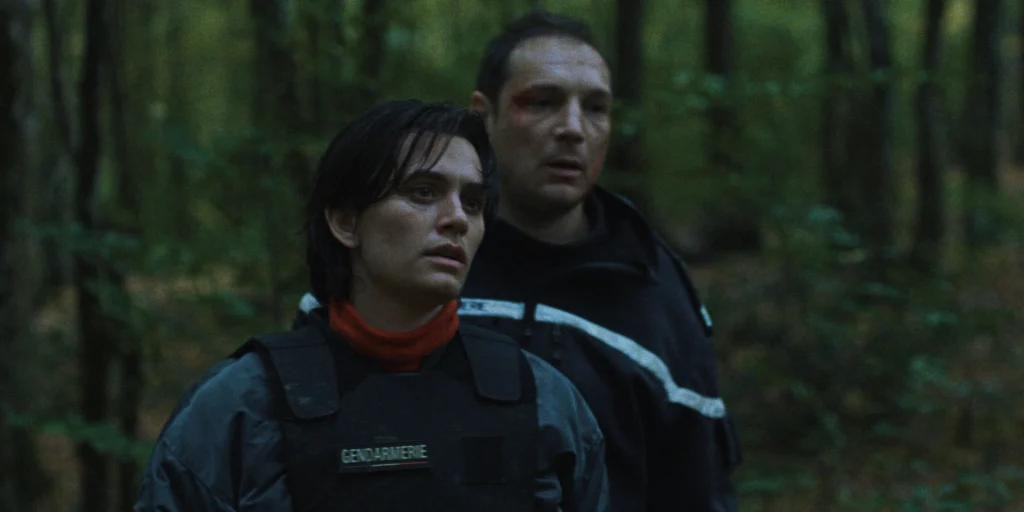
In the heart of northeastern France, a peculiar and escalating conflict has erupted, pitting the agrarian communities against the entrenched traditions of hunting, all under the increasingly destructive shadow of an overpopulation of wild boars. This dramatic tension, set against the backdrop of picturesque yet economically strained countryside, forms the core of the narrative explored in Sarah Arnold’s debut feature film, "Too Many Beasts." The film, a 95-minute cinematic offering, delves into the societal rifts, psychological pressures, and unexpected alliances that emerge when nature’s balance is disrupted and human desperation takes root.
The premise of "Too Many Beasts" is rooted in a very real and increasingly prevalent issue across rural Europe: the ecological and economic havoc wrought by expanding wild boar populations. These robust animals, often bolstered by managed hunting practices designed to ensure ample game, have become a significant threat to agricultural endeavors. In the film’s setting, farmers find their livelihoods decimated by the relentless foraging of these animals, their crops – the very foundation of their existence – systematically destroyed. This ecological imbalance translates directly into a socio-economic crisis for the local farming population, pushing some to the brink of financial ruin.
The narrative’s inciting incident is presented as a direct consequence of this mounting pressure. Brun, a grain farmer depicted as being on the verge of collapse, succumbs to the overwhelming despair and disappears. This disappearance, occurring a year before the main investigative timeline of the film, serves as the catalyst for the subsequent events and introduces an element of mystery that permeates the story. The film thus begins not just as a character study but as an agrarian whodunnit, a countryside crime thriller infused with dark comedic undertones.
Into this volatile environment steps Fulda, an impulsive police officer, and Stéphane, a therapist grappling with her own personal crisis. Their investigation into Brun’s disappearance, and the underlying circumstances that led to it, uncovers a reality that defies conventional understanding. The film positions itself as more than just a crime procedural; it delves into the psychological landscapes of its protagonists, exploring their individual struggles against the backdrop of a community in turmoil.
The Escalating Conflict: Farmers vs. Hunters
The conflict at the heart of "Too Many Beasts" is deeply embedded in the rural French landscape, where traditional land use practices often collide with modern economic realities. Historically, rural France has relied heavily on agriculture, with farming communities forming the bedrock of regional economies. Simultaneously, hunting has long been a cultural pastime and a significant economic driver in certain areas, particularly through hunting associations that manage game populations.
However, the proliferation of wild boars has thrown this delicate ecosystem into disarray. These animals, known for their intelligence and adaptability, can consume vast quantities of crops, leading to devastating losses for farmers. Reports from agricultural bodies in France have consistently highlighted the significant damage wild boars inflict on grain crops, root vegetables, and vineyards. For instance, agricultural cooperatives often document millions of euros in annual crop damage attributed to wild boar incursions, a figure that can be catastrophic for individual farmers operating on thin margins.
In the context of "Too Many Beasts," this ecological imbalance is exacerbated by the practices of wealthy landowners who maintain a boar-hunting association. The film suggests that these individuals deliberately maintain large boar populations to ensure successful hunting expeditions. This practice, while catering to the interests of a select group, directly impacts the livelihoods of the surrounding farmers. The film’s narrative thus draws a clear line between the economic disparity between landowners and farmers, framing the boar issue as a manifestation of broader class tensions.
The animosity between these groups is depicted as having reached a boiling point, culminating in an act of violence – the murder that precedes the film’s primary timeline. This underscores the gravity of the situation, transforming an agricultural nuisance into a matter of life and death. The subsequent disappearance of the perpetrator further amplifies the mystery and the sense of unease pervading the region.
Introducing the Investigators: A Pair of Misfits
A year after Brun’s disappearance, the investigation is taken up by Sgt. Orsino, portrayed by Alexis Manenti, and Stéphane, played by Ella Rumpf. Orsino is presented as a Corsican officer who has been effectively exiled to this provincial outpost following a psychological breakdown. His past trauma and current instability are central to his character, making him an unlikely but potentially effective investigator. The film hints at the slow emergence of the details surrounding his breakdown, suggesting a layered approach to character development.
Stéphane, the therapist, is also portrayed as being in a state of personal crisis. Her role in the film is to engage with Orsino, ostensibly to assess his psychological state. However, their interactions quickly evolve beyond a professional doctor-patient relationship. Stéphane, who previously broke out in Julia Ducournau’s acclaimed film "Raw," brings a nuanced performance to her role, portraying a character with her own set of internal struggles. Her assurance to Orsino, "I’m as incompetent as any man," delivered with a touch of irony, hints at her own vulnerabilities and her willingness to confront challenges, even those that might seem unconventional.
The dynamic between Orsino and Stéphane forms a crucial element of the film. Their shared status as individuals dealing with personal turmoil creates an unexpected bond. Orsino’s demotion and transfer, coupled with his boredom, lead him to take on the cold case of the murder. His investigative style is characterized as being reminiscent of the iconic fictional detective Columbo, shuffling along with an unassuming demeanor that belies a sharp intellect. This approach initially impresses his superiors, but his unconventional methods and underlying instability soon begin to unnerve his colleagues and raise uncomfortable questions for those in positions of authority.
Unraveling the Mystery: Beyond Comprehension
As Orsino delves deeper into the case, the investigation takes unexpected turns, revealing a reality that stretches the boundaries of comprehension. The screenplay, credited to a team of writers including Sarah Arnold, Jérémy Dubois, Olivier Seror, Romain Winkler, and Mehdi Ben Attia, blends elements of crime thriller, dark comedy, and farce. This stylistic fusion allows for moments of genuine hilarity, such as when Orsino and Stéphane accidentally ingest drugs, leading to a sequence of events described as a "quixotic investigation of genuine hilarity."
Manenti and Rumpf are lauded for their performances, bringing depth and complexity to their characters. Orsino’s character is depicted as experiencing "manic joy amid his despair," exemplified by a moment where he deliberately drives his car into a road barrier, seemingly to revel in the resulting sparks. This portrayal suggests a character on the edge, liberated by his fall from grace. Stéphane, too, is shown to harbor her own "skeletons in the closet" and possesses a darker, more primal side, echoing Johnny Cash’s sentiment of "the beast in me."
The film’s exploration of class struggle and societal unrest is particularly resonant. In the contemporary socio-political climate of 2026, any narrative touching upon class disparities inevitably invites considerations of populism. "Too Many Beasts" subtly weaves this undercurrent into its fabric, reflecting the broader societal anxieties and divisions that characterize many contemporary societies. The title itself, "Too Many Beasts," can be interpreted on multiple levels, alluding not only to the literal wild boars but also to the untamed aspects of human nature and the societal forces that can lead to chaos and conflict.
Supporting Data and Background Context
The phenomenon of wild boar overpopulation is not confined to the fictionalized setting of "Too Many Beasts." Across Europe, particularly in France, Germany, Italy, and Spain, wild boar populations have surged in recent decades. Several factors contribute to this:
- Agricultural Practices: Increased cultivation of high-yield crops, such as corn and oilseed rape, provides abundant food sources for wild boars.
- Milder Winters: Climate change has led to shorter, milder winters, resulting in higher survival rates for boar populations, especially young animals.
- Reduced Predation: The decline of natural predators like wolves in many parts of Europe has allowed boar populations to grow unchecked.
- Hunting Management: While hunting is a tool for managing wildlife, in some areas, it may inadvertently favor the survival of larger, more dominant boars, contributing to higher reproduction rates.
These ecological shifts have direct economic consequences. In France, the Ministry of Agriculture and Food has estimated that wild boar damage to crops can cost farmers hundreds of millions of euros annually. This financial burden can be particularly devastating for small-scale farmers, potentially leading to farm closures and contributing to rural depopulation. The conflict between agricultural needs and hunting interests is a recurring theme in rural policy discussions, often involving debates over hunting regulations, compensation for crop damage, and habitat management.
Chronology of Events in "Too Many Beasts"
- Pre-Film: A severe imbalance in the local ecosystem leads to a significant overpopulation of wild boars. Farmers experience escalating crop damage, pushing some, like Brun, to the brink of ruin.
- The Crime: Amidst heightened tensions between farmers and the hunting association, a murder occurs, linked to the boar conflict. The perpetrator subsequently vanishes without a trace.
- One Year Later: Sgt. Orsino, a police officer recovering from a psychological breakdown and demoted, arrives in the region. Stéphane, a therapist also experiencing personal difficulties, is assigned to assess him.
- The Investigation: Orsino, driven by boredom and a desire to engage with a cold case, begins investigating Brun’s disappearance and the related murder. His unconventional methods and underlying instability create friction within the local police force.
- Unforeseen Discoveries: As Orsino and Stéphane collaborate, they uncover a series of events and truths that are "beyond their comprehension," suggesting a conspiracy or a situation more complex than a simple crime.
- Developing Bond: Despite their individual challenges, a unique bond forms between Orsino and Stéphane, suggesting a shared understanding and mutual support in their personal and professional lives.
Official Responses and Broader Implications
While "Too Many Beasts" is a fictional narrative, it taps into real-world concerns that authorities and communities are grappling with. In regions experiencing similar issues, responses have varied. These include:
- Increased Hunting Quotas: Many governments have implemented stricter hunting regulations and increased quotas for wild boars to control population growth.
- Compensation Schemes: Agricultural ministries often operate compensation programs to help farmers recoup losses incurred due to wildlife damage, though these can be complex and insufficient to cover all costs.
- Fencing and Deterrent Measures: Farmers are often encouraged or subsidized to implement protective measures, such as robust fencing and deterrents, to safeguard their crops.
- Habitat Management: Efforts are sometimes made to manage natural habitats to reduce the appeal of agricultural areas to wildlife.
The film’s exploration of class disparity and the potential for societal unrest has significant implications. The narrative highlights how environmental and economic pressures can exacerbate existing social divisions, leading to resentment and conflict. The presence of populism, as alluded to in the film’s commentary, is a testament to the way such issues can be exploited or amplified in the current political landscape. The film suggests that the "beast" in question might not be solely the wild boar, but also the darker aspects of human behavior, societal inequality, and the desperation that can arise from economic hardship.
"Too Many Beasts" is presented as a "whip-smart French comedy with a character all its own." Its ability to blend genres—agrarian whodunnit, countryside crime thriller, and punkish farce—allows it to evade easy categorization, much like the atypical French comedies it is compared to, such as "Delicatessen" and "Love is War." While not reaching the "superlative level" of such established works, Sarah Arnold’s debut feature is recognized as a "highly entertaining piece of work which is far above the average." The film’s success lies in its ability to deliver a compelling narrative, anchored by strong performances, while also engaging with relevant socio-environmental themes. The rich cast, including Vincent Dedienne, Jean-Louis Coulloc’h, Pascal Rénéric, Bertrand Belin, Jade Fiess, Bernard Blancan, and Thierry Godard, further enhances the film’s depth, contributing to a tapestry of characters that populate this increasingly volatile rural French landscape. The film’s 95-minute runtime allows for a focused yet impactful exploration of its complex themes, leaving audiences with much to contemplate about the intricate relationship between humanity, nature, and the societal structures that govern them.