


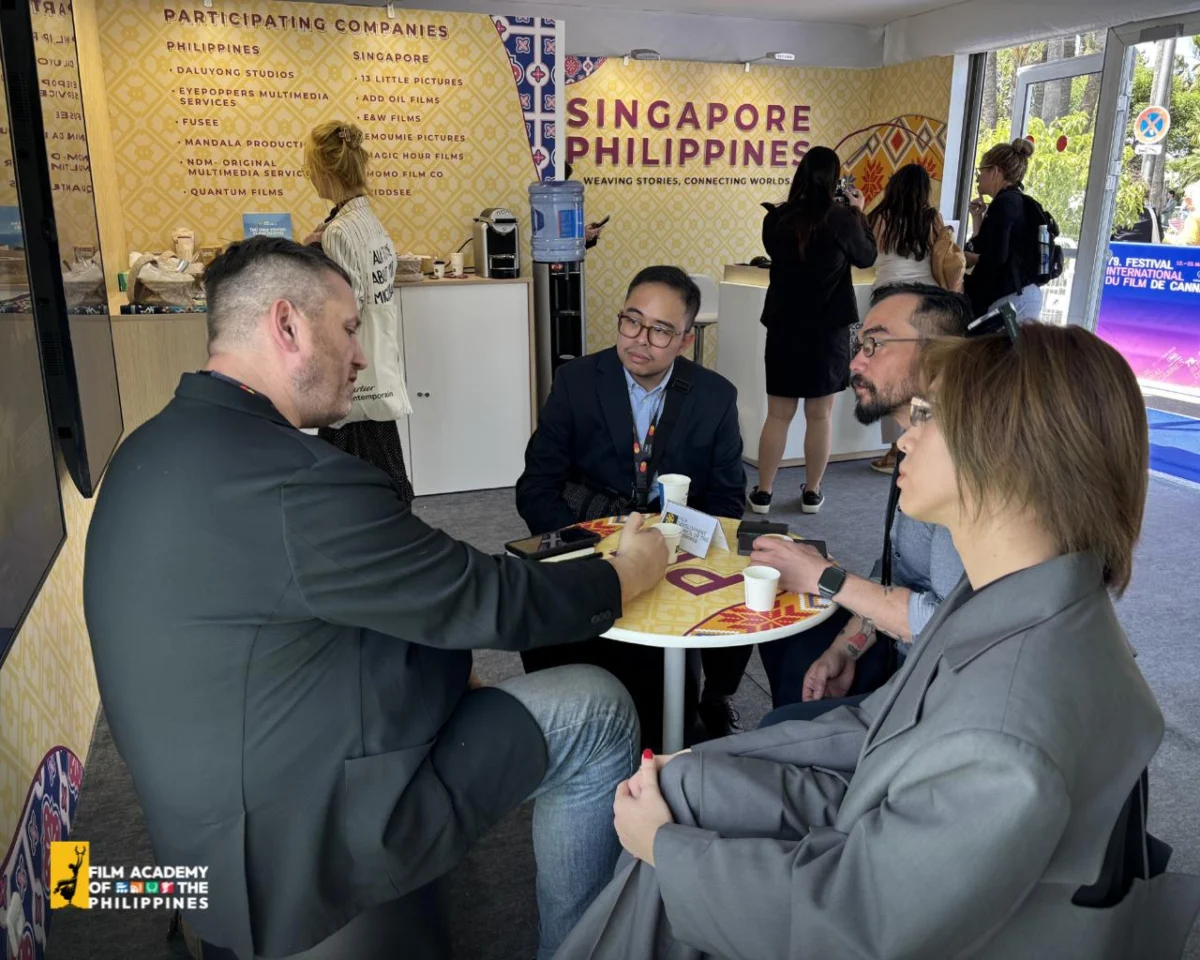
The Film Academy of the Philippines (FAP) marked a significant milestone in its operational evolution by participating in the 79th Festival de Cannes and its accompanying Marché du Film. This strategic engagement, undertaken as a core member of the Philippine delegation, facilitated a series of crucial working meetings with a diverse array of international film organizations, industry award bodies, esteemed training institutions, prominent film festivals, and key global stakeholders. This foray into one of the world’s most prestigious cinematic gatherings represented a pivotal moment for the Academy, operating in its first full year under its newly established governmental agency framework, as it formally introduced its expanded mandate and capabilities to the international film community.
Under the leadership of Director-General Paolo Villaluna, the FAP leveraged its presence at Cannes to cultivate relationships directly aligned with its four foundational pillars: comprehensive guild support, robust worker training and professional development, the administration of prestigious awards and honors, and the essential protection of film industry professionals. These high-level discussions were integral to a broader strategic initiative aimed at enhancing international access for Filipino cinema, elevating the quality and availability of training opportunities, and strengthening the practical and professional support systems for Filipino film workers and the guilds that champion their interests.
"This year marks our first full year operating as a government agency, and our participation in Cannes is a foundational step in introducing ourselves to the global film landscape," stated Director-General Villaluna. "Our objective is to bridge the gap between international resources and expertise and the needs of our local industry, ultimately benefiting our dedicated film workers and the vibrant Philippine film sector as a whole."
Strategic Engagements for Global Recognition and Development
A key highlight of the FAP’s Cannes itinerary involved a substantive meeting between Director-General Villaluna and Kristine Kintana, head of the Academy’s Film Awards and Events Division, with Tom Swayne from the American Academy of Motion Picture Arts and Sciences. The discussions delved into the intricacies of the Oscars submission process, strategies for optimizing awards campaigns, and the long-term capacity-building necessary to effectively support Philippine film entries in major international award circuits. The upcoming 100th edition of the US Academy Awards, scheduled for 2028, served as a significant point of reference for these strategic considerations.
Kintana emphasized the critical role of both substantial resources and established industry connections in mounting a competitive Oscars campaign. She articulated that while Filipino films possess the inherent quality to contend in prestigious award races, they require a more robust and sophisticated support infrastructure. This includes the engagement of seasoned professionals adept at managing screenings, public relations, the distribution of screeners, and the complex, multi-faceted nature of a long-term awards campaign. The lack of such dedicated support can often be a significant impediment to wider international recognition.
Expanding Distribution Horizons for Filipino Films
In an insightful and serendipitous exchange at the Singapore-Philippines Pavilion, co-hosted by the Film Development Council of the Philippines (FDCP) and Singapore’s Infocomm Media Development Authority (IMDA), the FAP team engaged with Richard Lorber, the esteemed chairman and CEO of Kino Lorber. This unplanned but fruitful conversation centered on the North American distribution prospects of "Filipiñana," a critically acclaimed film directed by Rafael Manuel. Kino Lorber had previously acquired distribution rights for the film following its impactful premiere at the 2026 Sundance Film Festival, where it garnered the Special Jury Award for Creative Vision, underscoring its artistic merit and potential for international appeal. The FAP’s involvement in facilitating such discussions underscores its commitment to opening new avenues for Filipino cinematic works on the global stage.
Strengthening Institutional Ties for Film Advancement
The FAP delegation also engaged in productive dialogues with representatives from three influential international film institutions: France’s Centre national du cinéma et de l’image animée (CNC), the British Film Institute (BFI), and Singapore’s Infocomm Media Development Authority (IMDA). These organizations are globally recognized for their extensive experience in nurturing their respective national film industries through comprehensive public funding mechanisms, advanced training programs, the curation of international film festivals, and the implementation of impactful awards initiatives. The FAP sought to glean best practices and explore potential collaborative frameworks that could be adapted to enhance the Philippine film ecosystem.
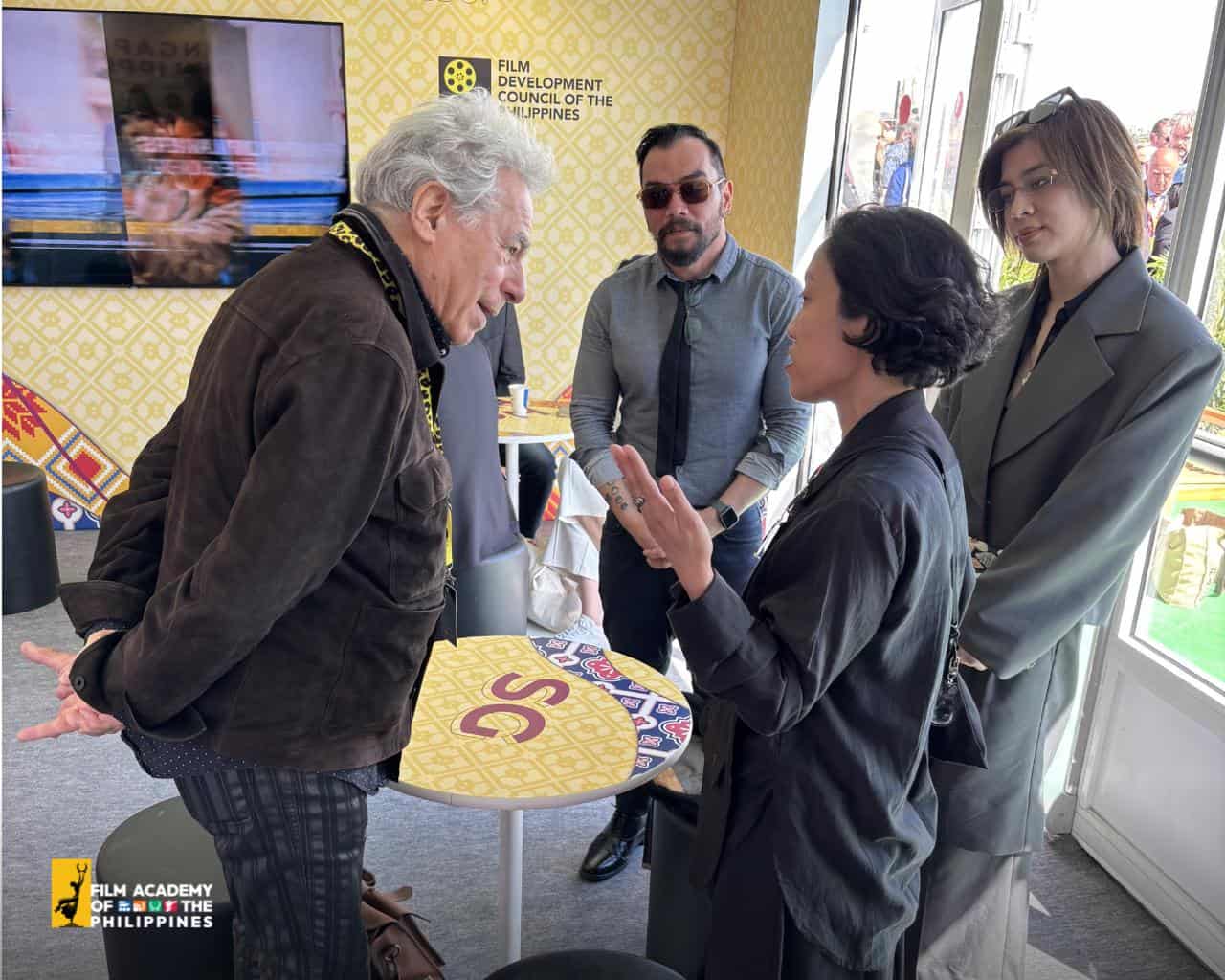
Further discussions of significant consequence were held with delegates from Indonesia’s Ministry of Culture, Kementerian Kebudayaan. A particular point of interest for the Indonesian delegation was the FAP’s comprehensive database of film and audio-visual workers. Celeste Joven, the FAP’s Chief of Staff, revealed that these discussions explored the feasibility of developing a region-wide professional database for film and audio-visual workers across Southeast Asia. This initiative, building upon the pioneering project already underway in the Philippines, holds the potential to create a more interconnected and efficient industry network throughout the region, facilitating talent exchange and collaboration.
Cultivating Professional Development and Training
The FAP’s engagements at Cannes extended to include meetings with prominent film festivals and training labs. The Jakarta Film Week and the Encounters Film Festival in Bristol were among the international festivals that connected with the Academy. Additionally, Tatino Film Lab and Fest Film Lab, alongside the Location Managers Guild International, convened with the FAP to discuss the development of specialized professional training pathways. These sessions were specifically tailored to benefit Filipino location managers, scouts, stunt performers, various film crews, and other essential film industry workers, aiming to equip them with globally recognized skills and certifications.
Dan Morales, who heads the FAP’s Film Worker Training and Research Division, expressed optimism about the outcomes of these meetings, describing them as yielding "real leads to follow up on." He highlighted particular areas of focus, including cinematography, sound design, stunt coordination, and other specialized crafts where the establishment of stronger international training linkages could significantly enhance the skill sets and career opportunities for Filipino professionals. These collaborations are envisioned to bring world-class training directly to the Philippines or facilitate access to international programs for Filipino talent.
Fostering Community and Visibility
In parallel with its intensive working meetings, the FAP, in collaboration with the QCinema International Film Festival, co-hosted a networking mixer for the Filipino film community at L’Atrium in Cannes. This event served as a vital hub, bringing together Filipino filmmakers, industry professionals, and their international counterparts in a Philippine-led gathering designed to foster connections and showcase the nation’s cinematic output. Such events are crucial for building a stronger sense of community and for facilitating organic networking opportunities.
The FAP delegation also actively participated in a series of strategic networking events designed to broaden their understanding of international industry practices and to forge new connections. These included Thai Night Cannes 2026, an Indonesian film networking event that coincided with Indonesia’s significant presence at Cannes, a dedicated networking event for the Korean film industry, and a cocktail reception hosted by Tatino Films. These gatherings provided invaluable insights into how other national film communities effectively utilize the Cannes platform to introduce their talent, ongoing projects, and public support systems to potential international partners and collaborators. Observing these successful models offers a blueprint for enhancing the Philippines’ own global outreach.
Looking Ahead: A Strengthened Philippine Cinema on the World Stage
The Film Academy of the Philippines returns to Manila with a significantly expanded network of working relationships and a clearer roadmap for supporting the growth and internationalization of Filipino cinema and its dedicated workforce. The strategic initiatives and partnerships forged at the 79th Festival de Cannes and Marché du Film are poised to yield tangible benefits in the coming months and years. Further updates on the Academy’s ongoing international engagements and the implementation of its ambitious initiatives are anticipated as these collaborations begin to materialize.
The Film Academy of the Philippines, as a key government agency dedicated to the film and audio-visual sectors, is steadfast in its mission to support and elevate Filipino talent. Its comprehensive mandate encompasses the crucial areas of guild recognition and support, the continuous provision of training and professional development opportunities, and the essential delivery of legal aid and grievance assistance through its specialized Sine-Sandigan and Sine-Legal programs. Furthermore, the Academy plays a vital role in the implementation of the Eddie Garcia Law, which enshrines the rights of film workers, oversees the prestigious Luna Awards, and manages the Philippines’ official submissions for the coveted Oscars. This multi-faceted approach underscores the FAP’s commitment to building a more robust, equitable, and globally competitive Philippine film industry. The engagement at Cannes represents a tangible step towards achieving these critical objectives.