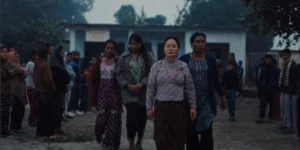
Edmund Yeo’s second feature film, "Aqerat," a powerful cinematic exploration of the Rohingya crisis, has garnered significant international acclaim, including the Best Director Award at the Tokyo International Film Festival. The film delves into the profound human tragedy faced by the Rohingya, a stateless Indo-Aryan ethnic group originating from Rakhine State, Myanmar, offering a stark and unflinching portrayal of their plight.
The Unfolding Rohingya Crisis: A Stateless Existence
The Rohingya, a community with historical roots in Myanmar stretching back to the 8th century, find themselves in a dire legal and social predicament. Decades of discriminatory legislation, notably the 1982 Citizenship Law, have systematically denied them recognition as indigenous citizens, effectively rendering them stateless. This legal void has profound implications, restricting their access to fundamental rights and opportunities. Human Rights Watch has extensively documented how these laws "effectively deny to the Rohingya the possibility of acquiring a nationality."
Beyond the lack of citizenship, the Rohingya face severe restrictions on their freedom of movement, limiting their ability to travel within Myanmar. Their access to state-funded education is also heavily curtailed, perpetuating cycles of disadvantage. Furthermore, they are largely excluded from public service employment, further marginalizing them from national life. The systemic nature of these deprivations has led many international observers, academics, and political figures, including the late anti-apartheid icon Desmond Tutu, to draw parallels between the Rohingya’s situation and the apartheid regime in South Africa. United Nations officials and organizations like Human Rights Watch have unequivocally described the persecution of the Rohingya in Myanmar as ethnic cleansing, highlighting the severity of the human rights violations.
A Narrative of Desperation and Moral Compromise
"Aqerat" weaves its narrative through the story of Hui Ling, a woman living on the volatile Malaysian-Thai border. Driven by the desperate hope for a better future, she works in a restaurant, diligently saving money to pursue opportunities in Taiwan. However, her dreams are shattered when her savings are stolen, plunging her into the clandestine world of human trafficking. It is within this grim enterprise that she encounters the Rohingya, individuals who are desperately fleeing Myanmar to escape persecution and seek refuge.
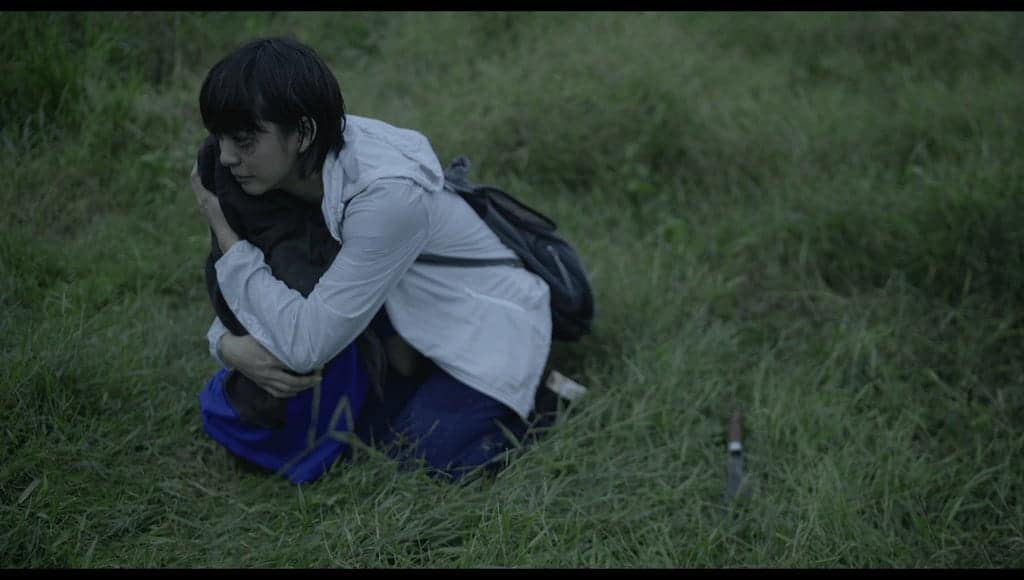
Initially, Hui Ling is repulsed by the brutal and exploitative tactics employed by the human trafficking ring, a trade driven by insatiable greed. Yet, as she becomes more deeply entrenched in the operation, she begins to experience the allure of the substantial sums of money she earns. This descent into moral compromise takes a significant turn when her ventures falter and she forms a connection with Wei, a young hospital worker who frequently tends to Rohingya patients. This encounter serves as a catalyst, forcing Hui Ling to confront the stark realities of her life and the human cost of her involvement.
"Aqerat": Exploring the Afterlife and Human Depths
The title "Aqerat" itself holds profound meaning in the Rohingya language, translating to "afterlife." This symbolism is central to Edmund Yeo’s directorial vision, as the film chronicles Hui Ling’s existential journey. Her narrative arc is framed as a descent into the "deeper depths of humanity," akin to a metaphorical hell, and a subsequent, arduous path towards a perceived "true light," or heaven. This transformative process is depicted as a profound, almost death-like experience, mirroring the concept of an afterlife.
Through this allegorical journey, Yeo confronts the harsh realities faced by the persecuted Rohingya. The film starkly illustrates how escaping the ravages of Myanmar often leads them to similar, and at times even more brutal, fates in Malaysia. The depiction of these experiences is rendered with a striking realism that borders on documentary, as Yeo spares no detail in exposing the violence and suffering endured by the refugees. The harrowing scenes set in the jungle are particularly impactful, reportedly inspired by the discovery of mass graves of refugees along the border, a chilling testament to the dangers of their journey.
The Erosion of Morality and the Search for Redemption
The profound impact of the Rohingya’s lives on the viewer is matched by the compelling portrayal of Hui Ling’s transformation. Her descent into a morally compromised existence serves as a powerful lens through which Yeo examines the fragility of morality and the devastating consequences of its absence. While the Rohingya’s plight is depicted with stark realism, Hui Ling’s personal journey incorporates surrealistic elements, a stylistic choice that, though initially disorienting, ultimately coalesces to form a cohesive and impactful whole.
Cinematographic Excellence and Narrative Pacing
The film’s visual landscape is masterfully crafted by cinematographer Leslie Leon Lee. During scenes involving the Rohingya, the camera maintains an intimate, almost claustrophobic proximity, mirroring Hui Ling’s perspective and immersing the audience in their immediate experiences. This approach lends a palpable documentary feel to these sequences. Conversely, scenes focusing on Hui Ling’s personal journey employ a broader range of shots, from sweeping long takes to intimate close-ups, often utilizing a steady camera to evoke an art-house aesthetic. Edmund Yeo’s skillful editing seamlessly integrates these disparate visual styles, maintaining a compelling pace that enhances the film’s narrative drive and keeps the audience engaged.

Performances that Resonate
Daphne Low delivers a commanding performance as Hui Ling, anchoring the film as the central protagonist. She convincingly portrays a character who loses her moral compass only to embark on a path of profound realization and eventual redemption. Her performance is characterized by a deliberate restraint, a laconic approach that perfectly complements the film’s aesthetic. She conveys Hui Ling’s emotional and psychological turmoil with remarkable subtlety, relying on non-verbal cues and nuanced expressions to convey her inner state.
Kahoe Hon, as Wei, mirrors this understated style in his portrayal of the compassionate hospital worker. The chemistry between Low and Hon is a significant highlight of the film, providing moments of genuine human connection amidst the pervasive darkness. Their interactions offer a glimmer of hope and underscore the film’s exploration of human relationships in the face of adversity.
Broader Implications and Artistic Merit
"Aqerat" transcends a simple narrative to offer a profound examination of a critical sociopolitical issue and the complexities of the human psyche. The film stands as a testament to Edmund Yeo’s directorial prowess, particularly his distinctive narrative style, which allows for a deeply artistic and impactful exploration of difficult themes. By confronting the persecution of the Rohingya and the moral compromises individuals can make when driven by desperation, "Aqerat" serves as a vital cinematic work that sheds light on a humanitarian crisis and the enduring struggle for dignity and survival. The film’s success at international festivals underscores its significance in bringing global attention to the plight of the Rohingya and prompting reflection on universal themes of humanity, morality, and resilience.