

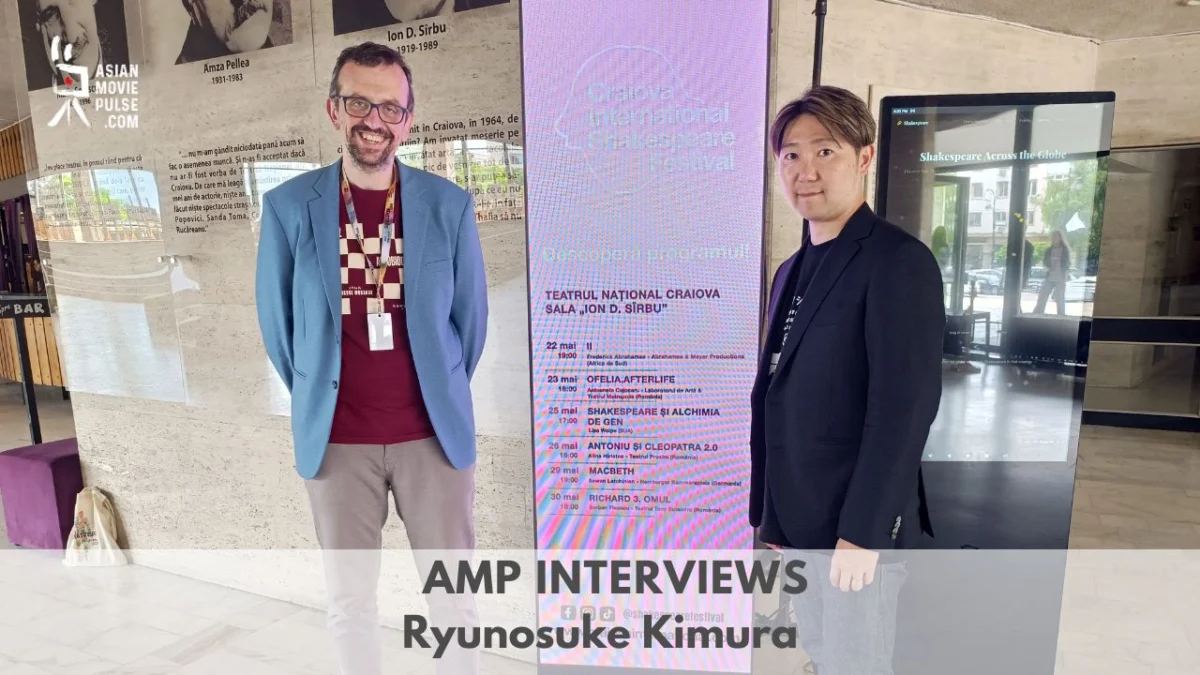
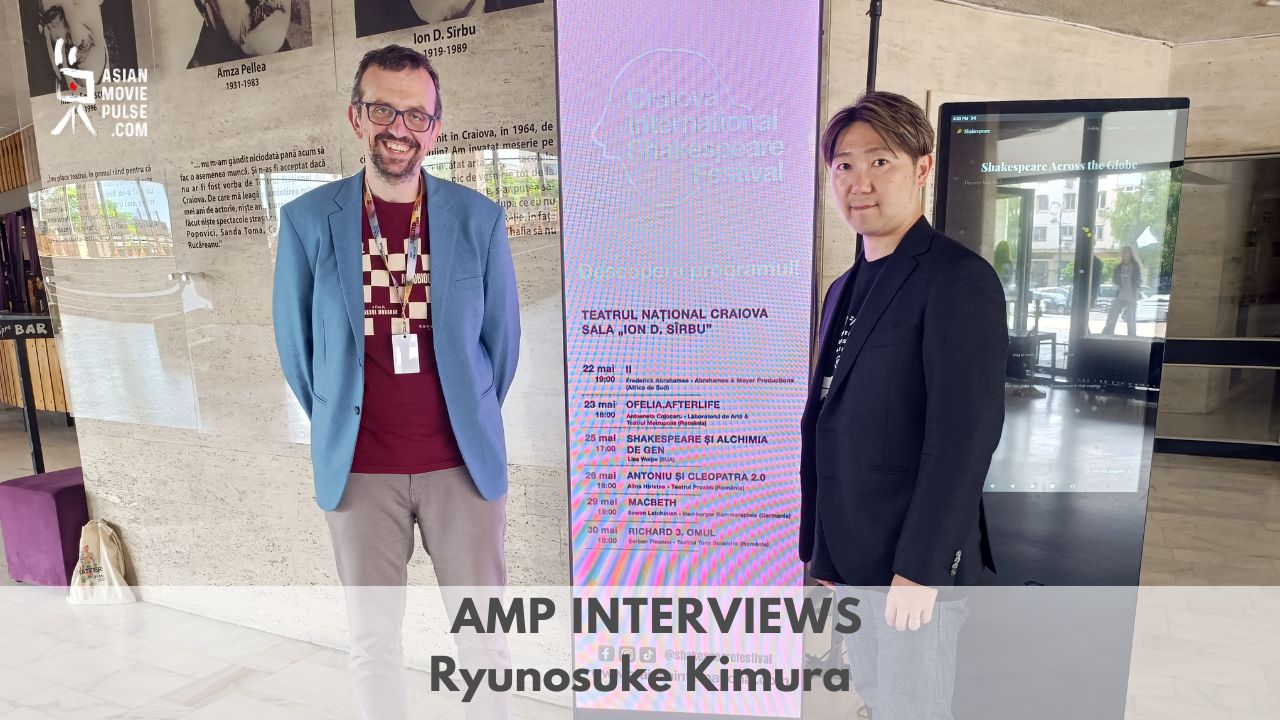
Craiova, Romania – The Craiova International Shakespeare Festival, a renowned platform celebrating the Bard’s enduring legacy, this year cast a spotlight on Japan’s vibrant theatre scene. A significant highlight of this cultural exchange was the presentation of "Titus Andronicus: Reborn," a groundbreaking production by Japanese director Ryunosuke Kimura and his company, Kakushinhan. Kimura, in a series of insightful discussions during the festival, delved into the complex genesis of his visceral interpretation of Shakespeare’s most violent tragedy, weaving together threads of Shakespearean text, the profound aesthetics of Noh theatre, the narrative wit of Rakugo, and the raw power of physical performance.
The journey of "Titus Andronicus: Reborn" to the Romanian stage was far from linear. Kimura revealed that the production underwent numerous metamorphoses, marked by cancellations, revisions, and evolving artistic choices over several years. This arduous creative process underscores a deeply personal and meticulous approach to adapting a classic for contemporary audiences, particularly within the context of Japanese society and its engagement with global events. The festival’s broader focus on Japanese theatre amplified these discussions, offering a comprehensive exploration of modern Japanese stagecraft through panels, talks, and an array of diverse productions.
A Living Shakespeare: Beyond the Literary Monument
Kimura initiated his engagement with the Craiova audience not with a lecture, but with an open dialogue, inviting spectators to share their immediate reactions to "Titus Andronicus: Reborn." One attendee’s observation about the production’s atmospheric power and its ability to evoke historical reflection resonated deeply with Kimura. He articulated his fundamental philosophy regarding Shakespeare: "not as a dead literary monument, but as a living organism that must be adapted to the realities of the contemporary world." This perspective sets the stage for understanding his ambitious reinterpretation.
Kimura’s personal connection to Shakespeare was not forged in academic halls or childhood literary discoveries. Instead, it emerged from a visceral need to grapple with profound questions of violence, catastrophe, and human cruelty that have marked his generation. He cited seminal events that shaped his worldview, including the 1995 Aum Shinrikyo sarin gas attack in Japan, the September 11th attacks in the United States, and the devastating Great East Japan Earthquake and subsequent tsunami of March 11, 2011. As a young man, these tragedies fueled an intense search for understanding the motivations behind such acts of immense suffering.
While theoretical knowledge gained from studying politics and religion offered some intellectual frameworks, Kimura found these insufficient to address the "heart’s" deepest inquiries. The pivotal moment arrived with his encounter with Shakespeare’s "Macbeth." The enigmatic witches, the animate forest, and the indelible image of blood that stains the hands offered a potent dramatic language that seemed to speak directly to the complexities of the human condition he was striving to comprehend.
Embracing Shakespeare: A Personal and Artistic Evolution
This profound realization led Kimura to what he describes as "adopting Shakespeare" into his artistic DNA, cultivating the playwright’s work within his creative practice. His artistic journey was further influenced by the seminal work of Yukio Ninagawa, a titan of Japanese theatre whose innovative Shakespeare productions had a significant impact and were frequently featured at the Craiova festival. It was Ninagawa’s production of "Titus Andronicus," viewed by Kimura on screen, that held particular significance, foreshadowing the path his own career would take.
In the nascent stages of his directing career, Kimura’s approach to Shakespeare was more textually bound. However, the seismic societal shifts following the March 11, 2011 earthquake profoundly impacted his perspective. He perceived a societal rupture, a moment of breakdown that also held the potential for new beginnings. This conviction galvanized him to establish the Kakushinhan Theatre Company, an ensemble dedicated to exploring Shakespeare through the lens of contemporary performance.
Kimura recounted earlier projects where his company engaged with Shakespeare through extended, marathon-style performances, dedicating entire days to dissecting the plays. These immersive experiences allowed him to view history, politics, Japanese society, and culture through Shakespeare’s enduring narratives, transforming the playwright into a vital tool for processing both personal and collective trauma.
"Titus Andronicus": A Timely and Evolving Masterpiece
This deep-seated connection to "Titus Andronicus" stems from its potent relevance to the present day. Kimura views it as a Shakespearean play that contemporary directors "have to face," precisely due to its unflinching portrayal of violence, profound grief, and disturbing prescience. Kakushinhan had previously explored the play’s thematic landscape in earlier iterations, staged around 2016 and again in 2019 or 2020, before culminating in the current iteration, "Titus Andronicus: Reborn," which first premiered in 2023.
The COVID-19 pandemic proved to be a critical, albeit disruptive, catalyst in the production’s development. Two earlier attempts to stage the play were thwarted by cast members contracting the virus, leading to constant shifts in the cast and the very form of the work. Rather than abandoning the project, these interruptions became integral to its evolution. The production underwent continuous updates, including a pivotal decision around 2021 to integrate elements of Noh theatre through the engagement of master Noh actor Tsunao Yamai.
This artistic pivot fundamentally altered Kimura’s directorial approach. Initially, the emphasis lay heavily on the Shakespearean text. However, the integration of Noh shifted the focus dramatically towards the actors and their physicality, with acting itself emerging as the core of the production. The final version, as described by Kimura, prioritizes the performers’ bodies, transcending a purely text-centric interpretation.
The evolution of "Titus Andronicus: Reborn" was also deeply influenced by its creative environment. With theatres shuttered during the pandemic, Kimura and his company found an unconventional rehearsal and performance space: a warehouse outside Tokyo, in Saitama Prefecture. This "primitive" space, devoid of the conventional theatrical apparatus, reportedly brought the production closer to the ritualistic roots of theatre itself.
The Fusion of Noh and Shakespeare: A Transcendent Vision
The incorporation of Noh theatre marked a significant artistic breakthrough. For the titular role of Titus Andronicus, Kimura cast Tsunao Yamai, a distinguished Noh actor and holder of Important Intangible Cultural Property status, affiliated with the esteemed Konparu school. Kimura emphasized the profound lineage and historical depth represented by Yamai’s art, connecting it to the foundational principles of Noh theatre.
Kimura views the discipline and centuries-long continuity of Noh acting as a benchmark of theatrical professionalism. While Yamai’s usual domain is traditional Noh plays, Kimura was driven to persuade him to engage with Shakespeare, believing that the role of Titus, with its immense weight of grief, violence, and sorrow, was intrinsically suited to his capabilities. He perceived in Yamai the profound capacity to embody the character’s immense suffering.
The presence of a Noh performer in a Shakespeare adaptation is a rarity in Japan, a fact Kimura acknowledges as extraordinary. However, his intention was not to position Yamai as a "Noh performer" inserted into a Shakespearean context, but rather as an actor embodying Shakespeare.
The production’s structure is characterized by what Kimura terms "Noh actor centralism." Yamai, as Titus, occupies the central dramatic axis, around which the other performers orbit and exert pressure. Crucially, instead of succumbing to this force, Titus transforms it into potent performance energy. Kimura draws a parallel to Noh, where the dynamic between the Waki and the Shite creates a spiritual and dramatic core. In "Titus Andronicus: Reborn," Titus assumes this pivotal role, becoming the gravitational center of the stage universe.
Despite Yamai’s eminence, Kimura stresses that hierarchy does not exist within the rehearsal room. Equality is a foundational principle for Kakushinhan, ensuring that every voice is heard and considered, even as the director ultimately bears responsibility for the final artistic vision.
Kimura further elucidated the significance of Noh in his interpretation of "Titus Andronicus." He identifies a strong element of "warriorship" within Noh, exploring the complex relationship between the perpetrator and the victim. While rage and fury are palpable, so too are grief and sorrow, which are then artfully transformed and conveyed to the audience. This emotional architecture provided a powerful bridge between Shakespeare’s brutal tragedy and Japanese theatrical tradition.
Kimura is adamant that Noh should not be confined by geographical or ethnic boundaries. He views it as a shared national heritage, a form he desires to offer to the global stage. His vision is one of artistic exchange, where international artists can engage with these forms, just as Japanese performers can inhabit Shakespeare. His overarching mission is to synthesize Eastern and Western theatre theory, fostering a fusion that allows both traditions to converse and enrich each other.
Navigating the Brutality: Form, Metaphor, and Audience Engagement
The pervasive theme of violence in "Titus Andronicus" was a central focus of Kimura’s discourse. He emphasized that the production’s aim was not to be overwhelmed by or to sanitize the brutality, but rather to engage with it in a meaningful way. This delicate balancing act involves navigating tragedy, comedy, surprise, and entertainment, enabling actors to detach from the visceral grip of violence without rendering it meaningless.
To achieve this complex equilibrium, Kimura employs a multifaceted approach, integrating Noh, Rakugo, innovative stage props, and Shakespearean theatricality. He likens the handling of violence to playing with a ball, its force dispersed across various genres and techniques. This refraction through form, rhythm, and theatrical distance ensures that brutality is present but never monolithic.
Addressing one of the play’s most harrowing moments – the cannibalism of children by their mother – Kimura stated that such extreme violence, by its very nature, cannot be depicted realistically. It necessitates transformation into form and metaphor. Theatre, as a space of play, demands that horror be rendered not as direct violence, but as a disturbing yet potentially beautiful or symbolic image that provokes profound contemplation.
The production’s music also plays a crucial role in orchestrating this rhythm of violence and catharsis. Kimura discussed the use of "hayashi," a form of rhythmic accompaniment rather than conventional melody, which contributes to a sense of gradual escalation. The inclusion of Ravel’s "Boléro" serves a similar purpose; its building tension mirrors Titus’s escalating rage, culminating in a crescendo that functions as an integral element of the dramatization. Kimura explained that Titus’s anger is thus embedded within the structure of the bolero, creating a sonic gradation that shapes the work’s atmosphere.
Kimura’s directorial process is intrinsically audience-centric. Every visual element and theatrical choice is considered for its impact and reception. He described the silver sheet used in the production as a piece of modern art, a deliberate provocation. Throughout the creative process, an imagined audience remains at the forefront of his mind, guiding his decisions scene by scene.
The omnipresent red in the production is a deliberate artistic statement. Kimura’s approach to representing blood draws inspiration from theatrical masters like Peter Brook, who utilized cloth, and Yukio Ninagawa, who employed red ropes in his "Titus Andronicus." Kimura sought to honor these precedents while forging his own visual language. In his interpretation, red signifies not only blood but also the grief of the heart.
The Titus Mask: A Symbol of Enduring Grief
A particularly striking element is the mask worn by Yamai, designed specifically for this production. It transcends the typical demon mask, embodying a "Titus" mask crafted by Noh mask artisan Hisahito Iwasaki. This mask artfully blends the visage of a demon with that of a grieving individual. Depending on the viewing angle, it can evoke either profound sorrow or monstrousness. Kimura hopes this mask will achieve the longevity of traditional Noh masks, serving as a memento through which future audiences can interpret not only Japanese grief in the post-World War II era but also the profound experience of returning home.
Shakespeare for a New Generation: Bridging Cultures and Contexts
Kimura also addressed the challenges of adapting Shakespeare for contemporary Japanese audiences. He noted that while many young people recognize Shakespeare’s name, their familiarity with the plays themselves is often limited, and references to places like Elsinore Castle or the core narrative of "Hamlet" may be obscure. To bridge this gap, he frequently situates Shakespearean narratives within contemporary Japanese settings.
He offered his rendition of "Hamlet," set in Shibuya, as an example. Hamlet is depicted seated in a lotus position amidst the iconic Shibuya Crossing, a point of constant flux, while he remains still. For Kimura, this becomes a modern equivalent of Hamlet’s castle. Beneath the crossing, he imagines the buried historical traumas of Japan, while the falling sakura petals evoke the literary motif of corpses buried beneath cherry blossoms.
This method, Kimura explained, is akin to assembling a complex puzzle. His role is to forge connections between Shakespeare, Japanese history, contemporary Japan, memory, violence, and specific locales. Whether engaging with "Macbeth," "Hamlet," or "Titus Andronicus," he seeks the underlying links that enable these plays to resonate with the present day.
International Acclaim and Artistic Independence
Kimura observed that Japanese audiences often value a production more highly once it has garnered international recognition. The announcement of "Titus Andronicus: Reborn’s" engagement in Romania, he noted, heightened local interest, despite "Titus Andronicus" being considered a less prominent work by many. Kakushinhan also benefits from a dedicated base of supporters, with some audiences drawn by the presence of well-known performers.
Kimura’s position within the Japanese theatre landscape is distinct. He does not claim expertise across the entire spectrum of contemporary Japanese theatre, which encompasses thousands of groups and amateur companies. Instead, he operates within his specific niche, concentrating on Shakespeare, a focus that is itself uncommon for a Japanese theatre company.
Looking toward the future, Kimura is restaging "A Midsummer Night’s Dream" with robots and aims to create his own "Hamlet Reborn" within the next four to five years. His current artistic inquiries revolve around transforming language into physical performance and exploring how humans can navigate an increasingly AI-driven world.
Sustainable Theatre: Funding and Regional Support
Kimura also shed light on the financing of his artistic endeavors, highlighting the critical role of crowdfunding, private donors, corporate sponsors, and individuals in Japan who actively support Shakespearean projects. He also emphasized the value of operating outside the confines of Tokyo, fostering connections with prefectures, municipalities, and regional supporters to cultivate a more robust environment for theatre.
Ultimately, Kimura presents "Titus Andronicus: Reborn" not merely as a Japanese rendition of Shakespeare, but as a dynamic theatrical organism shaped by pandemic-induced disruptions, the profound legacy of Noh tradition, the power of physical performance, and a deep commitment to transforming violence into compelling artistic form. Through the Kakushinhan Theatre Company, he continues to treat Shakespeare not as an immutable Western monument, but as a living structure through which Japan, history, grief, catastrophe, and contemporary theatre can converge and find renewed expression.