The Super Bowl halftime show has long served as a lightning rod for cultural and political discourse in the United States, and the most recent performance by Puerto Rican superstar Bad Bunny proved to be no exception. Despite setting a global viewership record with more than 4.157 billion views across broadcast, YouTube, and social media platforms, the performance triggered a significant wave of formal grievances. According to documents obtained by WIRED through a Freedom of Information Act (FOIA) request, the Federal Communications Commission (FCC) received 2,155 formal complaints regarding the broadcast. These filings offer a granular look at the deep cultural divisions currently permeating the American public, ranging from concerns over linguistic shifts and "indecency" to broader anxieties regarding immigration and national identity.
A Statistical Overview of Public Dissent
While the 128 million live broadcast viewers largely embraced the high-energy set, a vocal minority utilized the FCC’s regulatory channels to express their disapproval. An analysis of the 2,155 complaints reveals a concentrated geographic and thematic pattern. The states generating the highest volume of complaints were Texas, Florida, and California—three of the most populous states in the union with significant Hispanic populations and ongoing internal debates regarding bilingualism and border policy.
The thematic breakdown of the complaints highlights specific triggers for the audience. Approximately 919 complaints explicitly named Bad Bunny, while 735 mentioned the use of the Spanish language. Furthermore, 497 filings utilized the word "vulgar" to describe the choreography or lyrical content. Interestingly, a small but notable subset of 30 complaints included the phrase "Thank you for your attention to this matter," a common sign-off used by former President Donald Trump on his Truth Social platform, suggesting a coordinated or at least ideologically aligned effort among certain segments of the viewership.
Chronology of a Controversy: From Pre-Game Rhetoric to Post-Game Filings
The controversy surrounding Bad Bunny’s appearance began well before he stepped onto the field. In the weeks leading up to the Super Bowl, MAGA-aligned influencers and conservative commentators raised objections based on the artist’s history of political activism. Bad Bunny, born Benito Antonio Martínez Ocasio, has been a vocal critic of the U.S. Immigration and Customs Enforcement (ICE) agency and has frequently used his platform to advocate for Puerto Rican autonomy and social justice.
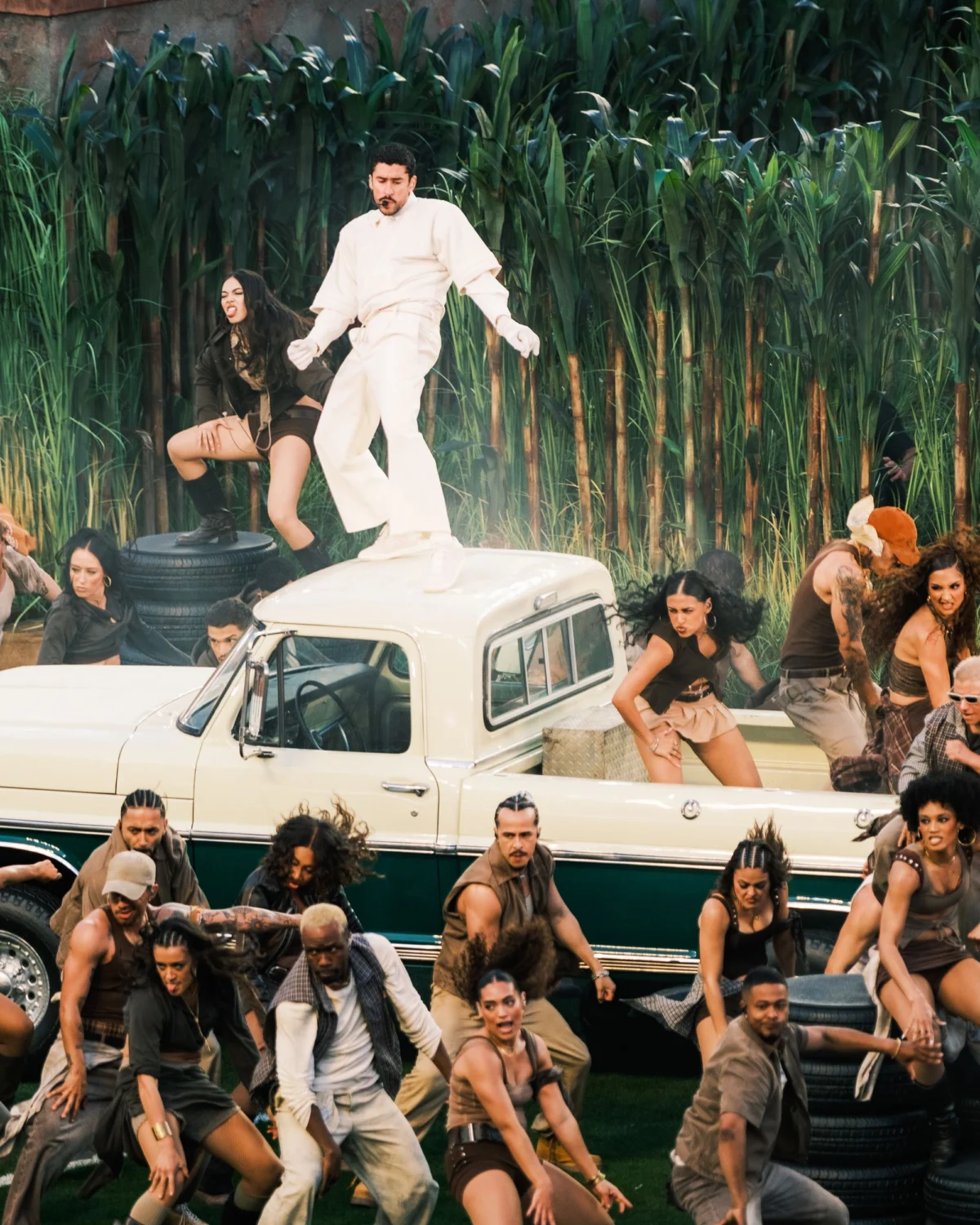
When the performance finally aired on NBC, it featured a complex tapestry of Caribbean culture, including a cameo from Maria Antonia Cay, the proprietor of Brooklyn’s legendary Caribbean Social Club (Tonita’s), a simulated wedding, and a guest appearance by Lady Gaga. However, for many complainants, the artistic merits were overshadowed by the delivery.
Immediately following the broadcast, social media platforms were flooded with criticisms of the artist’s decision to perform primarily in Spanish. This sentiment transitioned into formal FCC complaints within hours. By the following week, the discourse moved from the digital sphere to the halls of government. Republican lawmakers, citing the "explicit" nature of the performance, called for a formal investigation into the NFL and NBC. This pressure prompted FCC Commissioner Anna Gomez to request full transcripts of the performance to determine if any federal regulations regarding indecency or profanity had been breached.
Analyzing the Substance of the Grievances
The complaints filed with the FCC can be categorized into four primary areas of concern: linguistic exclusion, perceived indecency, LGBTQ+ representation, and immigration-related anxieties.
Linguistic and Cultural Friction
A recurring theme in the FOIA-released documents was the frustration over the lack of English lyrics. Many viewers expressed a sense of exclusion, arguing that a premier American sporting event should be conducted in the national’s primary language. One viewer from Indiana noted that while they did not understand the lyrics in real-time, they sought out translations later and were "appalled" by the content. Others argued that the performance was a slight to English-speaking taxpayers.
Perceived Indecency and "Perreo"
The choreography, specifically the inclusion of perreo—a style of dance associated with reggaeton characterized by grinding and rhythmic pelvic motions—drew significant fire. A complainant from Leighton, Alabama, described the dancers as engaging in "intense grinding, hip thrusting, and twerking simulating sex," accusing the camera operators of capturing "close-ups of suggestive contact." Parents also voiced concerns that their Spanish-speaking children were exposed to "explicit" lyrics that were not censored in the same manner as English-language profanity might be.
LGBTQ+ Representation
Approximately 30 complaints specifically targeted a segment of the show featuring two men dancing together. Viewers from various states, including a vocal complainant from Winstead, Connecticut, characterized this as "depictions of gay sex" and "inappropriate sexual innuendos." These complaints often emphasized the presence of children in the audience, framing the inclusion of LGBTQ+ themes as a violation of the "family-friendly" nature of the Super Bowl.
Immigration and National Identity
Perhaps the most politically charged complaints touched on the immigration status of the performers. Despite Bad Bunny being a native-born citizen of Puerto Rico—and therefore a U.S. citizen—at least one viewer from Raleigh, North Carolina, stated, "There are illegals on my TV screen." This sentiment reflects a broader conflation in some sectors of the public between Spanish-language media and undocumented immigration, illustrating how the halftime show became a proxy for the national debate on border security and the "Great Replacement" theory often cited in right-wing circles.
Official Responses and Regulatory Findings
Despite the volume of complaints and the political pressure from Capitol Hill, the regulatory response was definitive. After a thorough review of the performance transcripts and visual recordings, FCC Commissioner Anna Gomez announced that no violations of agency rules had occurred.
"I reviewed them carefully, and I found no violation of our rules and no justification for harassing broadcasters over a standard live performance," Gomez told Reuters in February. The FCC’s mandate regarding "indecency" is specifically tied to content that describes or depicts sexual or excretory organs or activities in a patently offensive manner as measured by contemporary community standards. The commission concluded that the choreography and lyrics, while provocative to some, did not meet the legal threshold for censorship or fines.
Representatives for Bad Bunny and NBC have remained largely silent regarding the specific FCC filings, though the NFL and its production partners at Roc Nation and Apple Music have pointed to the record-breaking viewership numbers as a validation of the show’s global appeal.
Historical Context and Comparative Analysis
To understand the scale of the Bad Bunny controversy, it is helpful to compare it to previous halftime shows. The 2,155 complaints represent a significant spike compared to the previous year’s performance by Kendrick Lamar, which drew 125 complaints. The grievances against Lamar were largely focused on "Diversity, Equity, and Inclusion" (DEI) concerns, with many viewers complaining about a perceived lack of white performers.
Historically, the benchmark for Super Bowl controversy remains the 2004 "wardrobe malfunction" involving Janet Jackson and Justin Timberlake, which resulted in over 500,000 complaints and a fundamental shift in how live events are broadcast (including the implementation of five-second delays). In more recent years, Jennifer Lopez and Shakira’s 2020 performance drew roughly 1,300 complaints, many of which mirrored the "indecency" and "anti-American" sentiments found in the Bad Bunny filings.
Implications for the Future of Broadcast Media
The backlash against Bad Bunny’s performance highlights a growing challenge for broadcasters and the NFL. As the league attempts to expand its global footprint and appeal to a younger, more diverse demographic, it increasingly runs afoul of traditionalist segments of its domestic audience.
The data suggests that the "culture war" is no longer confined to news cycles but is actively integrated into the consumption of mass entertainment. For the FCC, the influx of complaints represents a logistical burden that rarely results in actionable violations, yet serves as a vital barometer for national sentiment.
The fact that the show was watched over 4 billion times suggests that the "controversy" may actually serve to increase the cultural capital of the performers, even as it alienates a specific subset of the population. As the United States continues to diversify linguistically and culturally, the Super Bowl halftime show will likely remain the primary stage where these growing pains are performed, debated, and documented in the public record.