


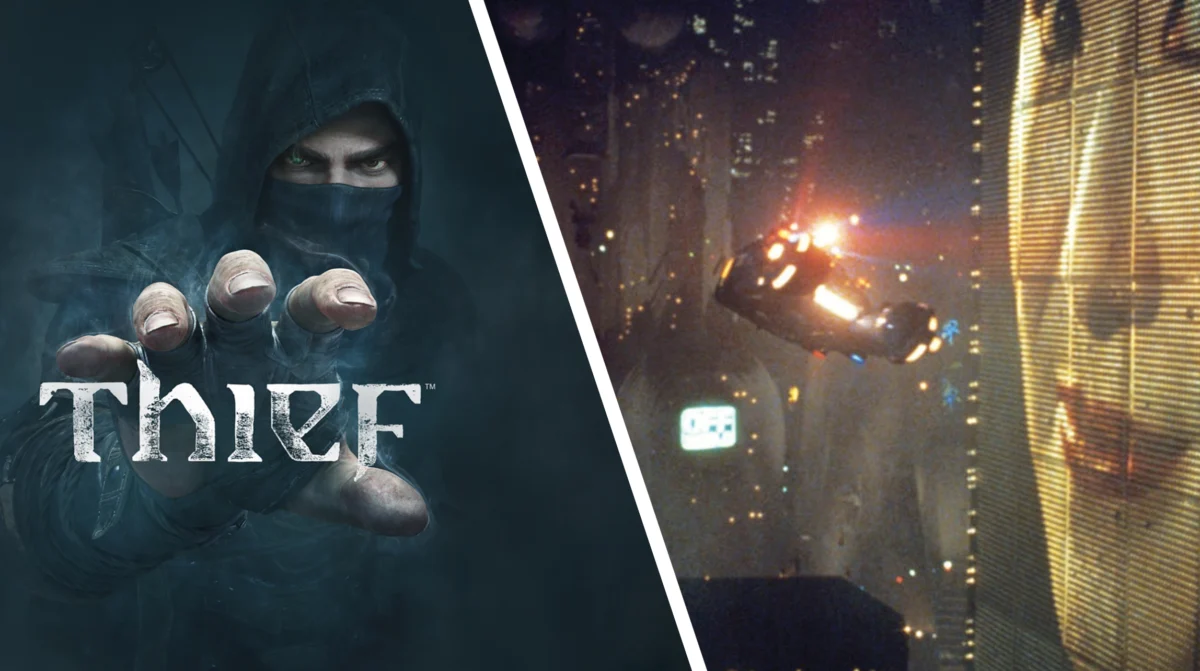
In a comprehensive retrospective on the evolution of one of the video game industry’s most respected development houses, former Arkane Studios co-directors Raphael Colantonio and Harvey Smith have disclosed that the studio was originally slated to develop either a fourth entry in the Thief franchise or a high-profile Blade Runner adaptation. These revelations, shared during a recent collaborative video series documenting the history of the studio, shed new light on the origins of the critically acclaimed Dishonored franchise and the precarious financial state of Arkane Studios during the late 2000s. According to the developers, the concepts for these two iconic intellectual properties served as the foundational bedrock for what would eventually become Dunwall and the journey of Corvo Attano.
The Bethesda Proposition and Arkane’s Financial Crossroads
The narrative of Arkane Studios’ rise to prominence is often associated with its acquisition by ZeniMax Media, the parent company of Bethesda Softworks, in 2010. However, the period immediately preceding this acquisition was marked by significant business instability. Colantonio and Smith revealed that before the studio began work on the original Dishonored, they were in a "dire situation" from a business perspective. Following the release of Dark Messiah of Might and Magic in 2006, the studio faced challenges with cancelled projects, including the ambitious "The Crossing"—a game intended to blend single-player and multiplayer narratives—and a collaboration with Steven Spielberg on a project known as "LMNO."
During this vulnerable period, Bethesda Softworks approached Arkane with a transformative proposition. Bethesda, which at the time was looking to expand its portfolio beyond the internal development of The Elder Scrolls and Fallout, recognized Arkane’s unique expertise in the "immersive sim" genre—a design philosophy emphasizing player agency, emergent systems, and atmospheric storytelling.
"Bethesda approached us with the proposition, ‘Hey, we have the Thief franchise, and we know the people to make that game, and it’s you,’" Colantonio stated. The offer was described by Smith as being presented with "two bags of catnip," referring to the Thief and Blade Runner intellectual properties. For a studio built on the legacy of Looking Glass Studios—the original creators of Thief—the opportunity to helm a fourth installment was viewed as a homecoming. Simultaneously, the chance to adapt the noir-cyberpunk world of Blade Runner offered a creative frontier that aligned perfectly with Arkane’s aesthetic and mechanical strengths.
Engineering the Vision: Thief 4 and the First-Person Blade Runner
The developers confirmed that their involvement went beyond mere conceptualization. Arkane had produced internal pitches, design documents, and even video demonstrations for both projects. The vision for Thief 4 was intended to be a direct evolution of the stealth mechanics established in Thief: The Dark Project (1998) and Thief II: The Metal Age (2000). Colantonio noted that Dishonored eventually "started on the base of Thief 4," explaining why the 2012 title felt like a spiritual successor to the adventures of Garrett.
The Blade Runner project, however, represented a more distinct departure into sci-fi territory. Smith detailed a focus on first-person combat and the physiological differences between humans and Replicants. To ensure the authenticity of the experience, the team consulted with Doug Church, a legendary figure in game design often cited as a pioneer of the immersive sim.
Smith recounted insights from Church regarding the uncanny nature of Replicants: "Even sitting around in a room together, they would be doing things with their bodies that humans couldn’t do. Like, reaching in and grabbing the eggs out of the boiling water." This focus on superhuman physical capabilities led to the development of specialized animations and combat maneuvers, including flips and advanced agility systems, intended to make the player feel like a Replicant or a Blade Runner engaged in high-stakes confrontation.
The Pivot to Dishonored: From Licensed IP to Original World-Building
Despite the enthusiasm for both Thief and Blade Runner, the projects did not move forward in their licensed forms. At the time, Arkane was not yet a subsidiary of ZeniMax, and the complexities of intellectual property rights and publishing agreements created a period of uncertainty. Ultimately, Bethesda encouraged the studio to pivot away from existing franchises and instead channel their ideas into an original property.
This directive resulted in the birth of Dishonored. Bethesda’s instruction to "keep what you’re doing and call it Dishonored" allowed Arkane to retain the core stealth and traversal mechanics they had developed for Thief 4 while building a unique "Whale-punk" setting. The Victorian-inspired city of Dunwall replaced the medieval-industrial "City" of the Thief series, and the supernatural influence of The Outsider replaced the more traditional fantasy elements of the earlier pitches.
This transition proved to be a turning point for the studio. While Thief 4 was eventually developed and released by Eidos-Montréal in 2014 to mixed reviews, Arkane’s Dishonored was released in 2012 to universal acclaim, winning numerous Game of the Year awards and establishing Arkane as a premier AAA developer.
Chronology of Development and Studio Milestones
To understand the impact of these scrapped projects, it is essential to view them within the broader timeline of Arkane Studios’ history:
- 1999: Arkane Studios is founded in Lyon, France, by Raphael Colantonio.
- 2002: Release of Arx Fatalis, a spiritual successor to Ultima Underworld.
- 2006: Release of Dark Messiah of Might and Magic, showcasing the studio’s prowess in first-person combat.
- 2006–2009: A period of instability involving the cancellation of The Crossing and LMNO.
- 2009: Bethesda approaches Arkane with the Thief 4 and Blade Runner propositions.
- 2010: ZeniMax Media acquires Arkane Studios; development of Dishonored begins in earnest.
- 2012: Dishonored launches, selling over 3 million copies and revitalizing the immersive sim genre.
- 2014: Eidos-Montréal releases the Thief reboot, which lacked the involvement of Arkane.
- 2016–2021: Arkane expands with Dishonored 2, Prey, and Deathloop, further refining the systems first conceptualized during the Thief/Blade Runner era.
Supporting Data: The Legacy of the Immersive Sim
The decision to entrust Arkane with the Thief franchise was backed by the studio’s deep connection to the genre’s progenitors. Harvey Smith himself had been a lead designer on Deus Ex at Ion Storm, working alongside Warren Spector. The "immersive sim" genre, while historically a "niche" in terms of sales compared to arcade shooters, has maintained a high level of critical influence.
Data from the era shows that the stealth-action market was undergoing a significant shift in 2010. Titles like Assassin’s Creed were moving toward open-world action, leaving a void for the hardcore, systemic stealth that Thief pioneered. Bethesda’s interest in Arkane was a strategic move to capture this loyal audience. The eventual success of Dishonored—which currently holds a Metacritic score of 91—validated this strategy, proving that original IP could outperform established franchises if the mechanical depth was sufficient.
Implications for the Gaming Industry and Future Projects
The revelation of Arkane’s "lost" projects provides a fascinating "what if" scenario for the industry. Had Arkane proceeded with Blade Runner, the landscape of cyberpunk games might have looked very different years before the arrival of CD Projekt Red’s Cyberpunk 2077. The studio’s focus on environmental storytelling and "show, don’t tell" narrative design would have likely resulted in a highly atmospheric rendition of Los Angeles 2019.
Furthermore, the news highlights the often-invisible influence of cancelled or repurposed projects on the final products consumers see on shelves. The "Blink" teleportation mechanic in Dishonored, for instance, can be seen as an evolution of the extreme agility concepts developed for the Blade Runner Replicants.
The discussion between Colantonio and Smith is part of a larger effort to document the studio’s legacy following a period of transition. Raphael Colantonio departed Arkane in 2017 to found WolfEye Studios (releasing Weird West in 2022), while Harvey Smith remains a key figure at Arkane Austin. The studio recently faced a difficult period with the release of Redfall and the subsequent closure of the Austin branch by Microsoft (which acquired ZeniMax in 2021). However, the Lyon branch continues to work on high-profile projects, including the upcoming Marvel’s Blade.
Conclusion
The history of Arkane Studios is a testament to the resilience of creative vision in the face of commercial pressure. By choosing to build Dishonored from the remnants of Thief 4 and Blade Runner, Arkane did more than just survive a business crisis; they defined a new standard for first-person action games. As the industry continues to grapple with the rising costs of AAA development and the risks associated with new IP, the story of Arkane’s pivot serves as a reminder that the most enduring games are often those born from a blend of established legacy and the courage to innovate.
The full video series featuring Colantonio and Smith is expected to continue exploring the development of Dishonored’s sequels and the studio’s later works, providing an invaluable resource for game historians and fans of the immersive sim genre. For now, the knowledge that Dishonored was almost a Blade Runner or Thief title adds a new layer of depth to every shadow-drenched corner of Dunwall.