

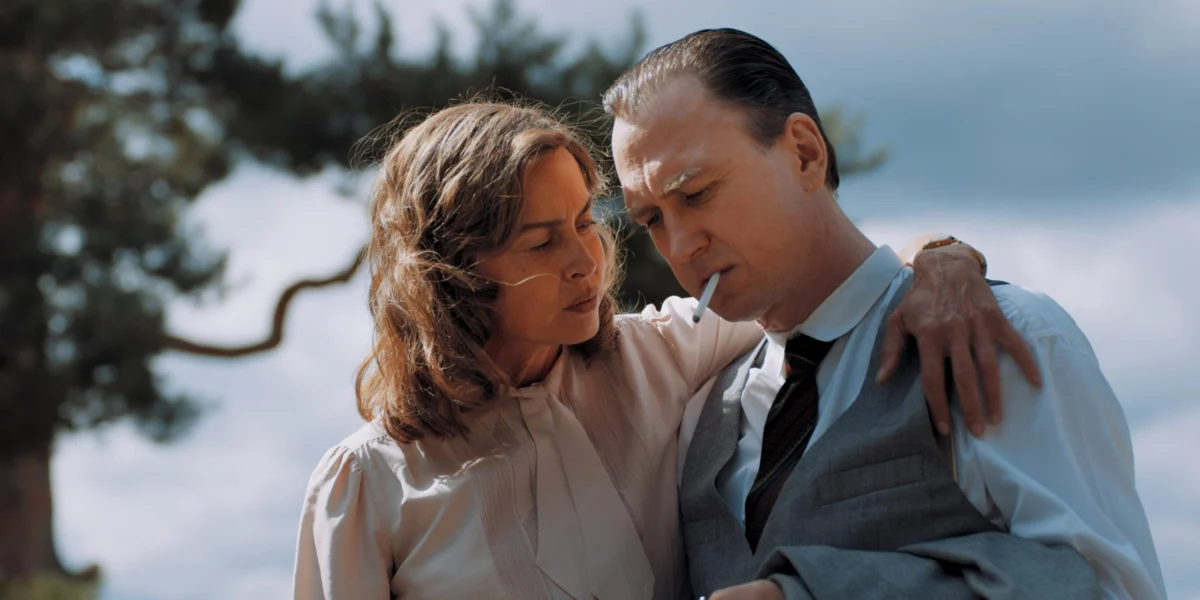
A plot of land, a house by the lake, its changing inhabitants. This one plot of land reflects 70 years of German history from Weimar, the Nazis, the war, the Soviet occupation and reconstruction to the fall of the GDR. The cast includes Lars Eidinger, Martina Gedeck, Ulrich Matthes, Michael Maertens & Susanne Wolff. The team consists of Volker Schlöndorff (Director/Writer). The running time is 118 Minutes.
Veteran filmmaker Volker Schlöndorff returns to the festival circuit with "Visitation," a deeply resonant cinematic exploration that unfurls across seven decades of German history, meticulously observed through the lens of a single, enduring plot of land on a tranquil lake. Adapted from Jenny Erpenbeck’s acclaimed novel "Heimsuchung," the film interrogates the very essence of home, belonging, and the often-unseen undercurrents of personal and national trauma that shape human lives. The narrative, spanning from the twilight of the Weimar Republic through the tumultuous Nazi era, the devastation of war, the subsequent Soviet occupation, and the eventual reunification of Germany, uses this specific geographical anchor to weave a multi-generational fable of resilience, loss, and the indelible marks left by historical forces on the landscape and its inhabitants.
The title itself, "Visitation," carries a profound duality. While in English it suggests a benign presence or a social call, its German root, "Heimsuchung," also encompasses connotations of plague, disaster, and affliction. This inherent ambiguity is central to Schlöndorff’s thematic approach, highlighting how seemingly idyllic settings can become sites of profound suffering and how the passage of time, while healing some wounds, can also reveal deeper scars. The film’s French title, "Le Bois De Klara," introduces the character of Klara, a young girl whose personal tragedy—an abusive father and an unwanted pregnancy—serves as an initial, foundational trauma that echoes through subsequent generations, underscoring the idea that personal histories are inextricably linked to broader societal and political upheavals.
Schlöndorff, a director renowned for his nuanced storytelling and ability to elicit powerful performances, brings his characteristic gentle yet emotionally charged style to "Visitation." The film masterfully blends the beauty of its natural setting with the harsh realities of historical events, creating a poignant counterpoint that drives the narrative. The lakeside property, more than just a backdrop, functions as a silent, enduring witness to the shifting tides of German life. From the initial story of a young woman whose dowry is lost due to a clandestine relationship, the film establishes a pattern of collision between the serenity of the environment and the inevitable tragedies that unfold beneath its surface.
The ensemble cast assembled for "Visitation" is a testament to the film’s ambition and thematic weight. Leading actors such as Martina Gedeck, Lars Eidinger, Susanne Wolff, and Ulrich Matthes inhabit multiple roles across different eras, embodying the shifting identities and fortunes of the families who call the lakeside property home. This casting strategy allows for a compelling visual and emotional continuity, emphasizing the cyclical nature of human experience and the shared inheritance of history. Other notable performers, including Josefin Platt, Stella Denis-Winkler, and Ava Wisbrod, further enrich the tapestry of lives depicted.
A Chronology of Transformation: The Lakeside Plot Through German History
The film meticulously charts the historical trajectory of Germany through the experiences of those who reside on this particular plot of land.
- Weimar Republic Era: The early segments of the film likely depict the burgeoning artistic and intellectual freedoms of the Weimar period, juxtaposed with underlying social tensions and economic instability. The land might represent a nascent dream of domestic tranquility, soon to be overshadowed by encroaching political radicalism.
- Nazi Era (1933-1945): This period is marked by profound ideological shifts and the systematic persecution of minorities. The presence of an architect with ties to the Nazi party, struggling to find footing under Albert Speer’s regime, illustrates the entanglement of personal ambition with state ideology. Crucially, the film highlights the plight of a neighboring Jewish family who, despite their efforts to build a modest life, are ultimately forced to flee, leaving behind poignant remnants of their existence, such as unsent letters to loved ones destined for the concentration camps. The narrative here underscores the devastating impact of antisemitism and the systematic erasure of Jewish life from German society.
- World War II and Soviet Occupation (1945-1949): The film portrays the brutal realities of war, with startling and impactful moments depicting the Russian advance. The distant sounds of bombing and the altered landscape serve as stark reminders of the pervasive violence. The subsequent Soviet occupation brings a new set of political and social dynamics, fundamentally altering the lives of those remaining on the land. The concept of "Heimsuchung" takes on a particularly potent meaning during this period of displacement and rebuilding.
- Post-War Reconstruction and Divided Germany (1949-1989): The decades following the war are characterized by Germany’s division into East and West. The lakeside property, depending on its geographical location within this divided nation, would have experienced different trajectories. The film likely touches upon the challenges of rebuilding, the ideological divides, and the lingering memories of the war. The fall of the Berlin Wall in 1989, depicted with what appears to be the director’s own archival footage, signifies a pivotal moment of reunification and a potential for a new chapter, yet one built upon the accumulated weight of past experiences.
- Reunification and Beyond: The film concludes by reflecting on the legacy of these historical periods. The question of what constitutes a "home" becomes even more complex in a reunified Germany, as the nation grapples with reconciling its past and forging a shared future.
The House as a Character: Echoes of History
The architectural setting of "Visitation" is not merely incidental; it is a vital element of the storytelling. Reportedly shot at or inspired by the former summer home of physicist Albert Einstein in Caputh, the building itself carries a layered historical significance. Designed by a Nazi sympathizer and later inhabited by Einstein, a Jew forced to flee Nazi Germany, the house embodies the profound contradictions and upheavals of the era. Its walls, like the land it sits upon, are presented as witnesses to the passage of time, each occupant leaving subtle imprints. The eventual decay of the structure is linked to the absence of human life, suggesting that buildings, much like history, derive their meaning and vitality from the people who inhabit them and the stories they tell. This poetic rendering of the built environment underscores Schlöndorff’s thematic concerns about memory, presence, and absence.
The Subtlety of Impact: Beyond the Obvious
Schlöndorff’s approach in "Visitation" is characterized by a profound subtlety, particularly in its handling of sensitive historical moments. While the film does not shy away from depicting the horrors of the Nazi regime or the brutalities of war, it often opts for a more understated, observational style. This approach allows for a deeper contemplation of the human condition amidst overwhelming historical forces. The film engages with complex themes such as bureaucratic manipulation, the instinct for survival, and the moral compromises individuals are forced to make. Even acts of extreme violence, such as those perpetrated by an abusive father or an assaulting soldier, are contextualized not to excuse them, but to provide a more profound understanding of the circumstances that shape human behavior, preventing a facile descent into nihilism.
The inclusion of seemingly minor characters, such as a taciturn gardener who appears ageless across different timelines, adds a layer of magical realism and emphasizes the enduring presence of nature and certain archetypes amidst human flux. This figure, tied to the land as intrinsically as the view of the lake or the rustling trees, serves as a constant, a reminder that the earth persists, absorbing and bearing witness to the ephemeral lives that pass over it.
A Legacy of Storytelling
While "Visitation" may not reach the epic scale or the immediate visceral impact of Schlöndorff’s Palme d’Or-winning masterpiece, "The Tin Drum," it nonetheless stands as a significant and valuable addition to his distinguished oeuvre. The film demonstrates that the director’s gifts for nuanced storytelling and eliciting compelling performances remain undimmed. The integration of archival footage, particularly of the fall of the Berlin Wall, feels less like an external journalistic interjection and more like a personal reflection woven into the fabric of the film, a testament to Schlöndorff’s enduring engagement with German history.
The film’s enduring appeal lies in its ability to connect the personal to the political, the individual to the collective. It poses fundamental questions about what it means to be German, to belong to a place, and to carry the weight of a nation’s past. By focusing on the intimate experiences of individuals within the grand sweep of history, Schlöndorff offers a deeply humanistic perspective, reminding audiences that even in the darkest of times, stories of resilience, love, and survival persist. The film’s strength lies not in sensationalism, but in its quiet power to provoke thought and evoke empathy, leaving a lasting impression on those who contemplate the intricate tapestry of memory and history. The implications of "Visitation" extend beyond the realm of cinema, serving as a poignant reminder of the importance of understanding historical context to navigate contemporary challenges and to build a more just and equitable future.