
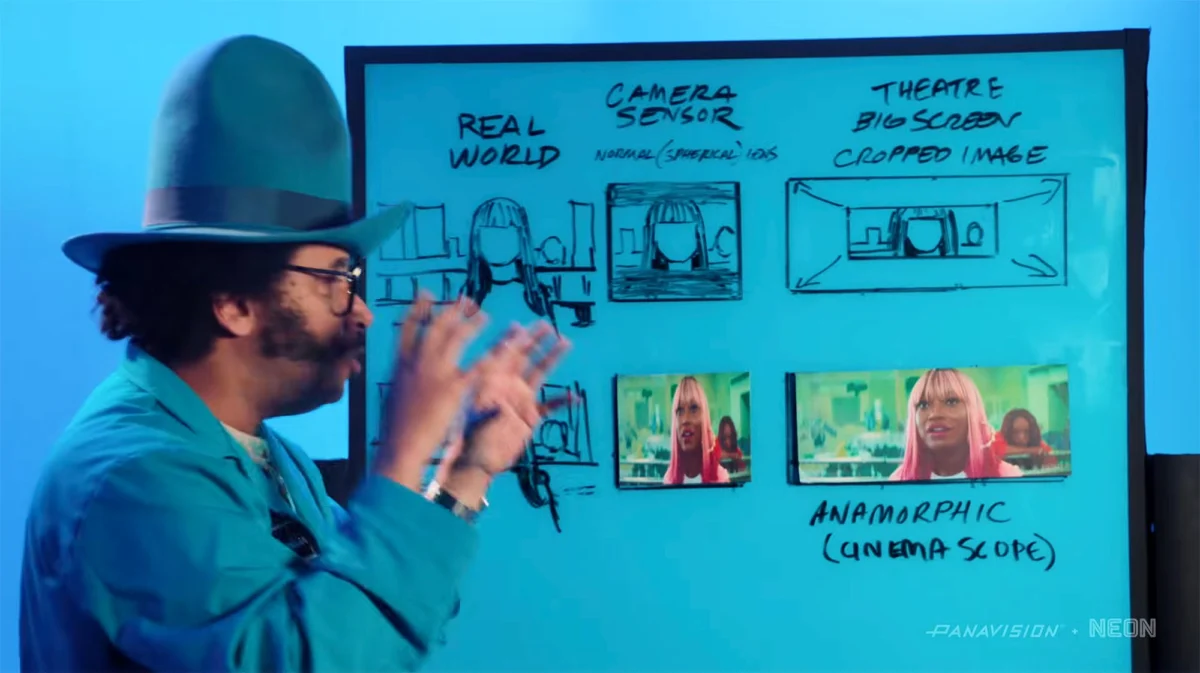
In a compelling demonstration of cinematic craftsmanship, Panavision and distributor NEON have jointly released an illuminating behind-the-scenes featurette titled "Big Idea to the Big Screen," offering an unprecedented look into the meticulous filmmaking process behind visionary writer-director Boots Riley’s forthcoming feature, I Love Boosters. The video underscores Riley’s steadfast commitment to the theatrical experience, encapsulated by his declaration: "We need to make a movie that doesn’t play on the little screen. It plays on the big screen." This deep dive into the production’s technical and artistic intricacies arrives as I Love Boosters prepares for its highly anticipated theatrical debut in select US cinemas on May 22nd, 2026, positioning it as a significant cultural and cinematic event for the summer movie season.
Boots Riley’s Unique Artistic Trajectory and Theatrical Imperative
Boots Riley, known for his distinctive blend of surrealism, sharp social commentary, and biting satire, has carved out a singular niche in contemporary American cinema. His transition from a celebrated musician and activist with The Coup to a critically acclaimed filmmaker began with his groundbreaking 2018 debut, Sorry to Bother You. That film, lauded for its audacious narrative, innovative visual language, and trenchant critique of capitalism, established Riley as a formidable new voice. He further cemented this reputation with the Amazon Prime Video series "I’m a Virgo," which continued his exploration of absurdist realities to comment on systemic issues. With I Love Boosters, Riley seemingly doubles down on his commitment to crafting narratives that demand the grand scale of a cinema screen, asserting that his intricate visual storytelling and thematic complexities are best absorbed in an immersive theatrical setting, free from the distractions inherent in home viewing environments. This philosophy is not merely an artistic preference but a strategic choice, designed to maximize the impact of his carefully constructed worlds and narratives.
Deconstructing the Craft: From Storyboard to Screen

The "Big Idea to the Big Screen" featurette meticulously unpacks the myriad creative and technical decisions that underpinned the production of I Love Boosters. Riley, alongside his key collaborators – production designer Christopher Glass, cinematographer Natasha Braier ASC, and Panavision’s legendary lens expert Dan Sasaki – guides viewers through a detailed exposition of how an abstract cinematic vision is meticulously translated into a tangible, large-screen reality.
Central to Riley’s pre-visualization process are hand-drawn storyboards. In an era increasingly dominated by digital pre-visualization, Riley’s reliance on hand-drawn sketches speaks to a hands-on, artisanal approach to filmmaking. These storyboards serve as the foundational blueprint, articulating shot compositions, character blocking, and scene transitions with a tactile precision that helps to unify the creative team’s understanding of the director’s intent. This method not only preserves a direct link to Riley’s initial artistic impulse but also fosters a collaborative environment where every department can visualize the director’s unique aesthetic before a single frame is shot.
The featurette also highlights the ingenious use of miniature sets, a technique that has seen a resurgence in recent years as filmmakers seek to imbue their worlds with a tangible, handcrafted quality often lacking in purely digital environments. For a film like I Love Boosters, which is described as "colorful & extra fun" and is expected to carry Riley’s signature blend of the fantastical and the grounded, miniature sets offer a unique opportunity to create visually distinct and elaborate environments with controlled artistry. This choice underscores a preference for practical effects that contribute to a film’s unique texture and immersion, allowing for a distinct aesthetic that can feel both playful and profoundly real.
Beyond set design, the featurette delves into the critical roles of costumes and lighting in shaping the film’s vibrant visual identity. Riley’s previous works are characterized by their bold color palettes and deliberate aesthetic choices, and I Love Boosters appears to continue this tradition. The interplay of costume design, which likely contributes to the "zany, funky style Boots is known for," and sophisticated lighting techniques are crucial in crafting the film’s distinct mood and character. Each element is carefully considered to enhance the narrative, establish the film’s tone, and draw the audience deeper into its idiosyncratic world.
The Panavision Partnership: Anamorphic Lenses and Bespoke Innovation

A significant focus of the "Big Idea to the Big Screen" featurette is the film’s use of anamorphic cinematography and the bespoke lens development undertaken in collaboration with Panavision. Cinematographer Natasha Braier ASC, celebrated for her work on films like The Neon Demon and Gloria Bell, brings her exquisite eye for light and composition to Riley’s vision. Anamorphic lenses are a cornerstone of classic widescreen cinema, known for their distinctive oval bokeh, unique lens flares, and ability to capture a wider field of view, creating an expansive, immersive visual experience. This choice aligns perfectly with Riley’s insistence on a "big screen" presentation, as anamorphic cinematography inherently optimizes images for grand theatrical projection, offering a visual depth and breadth that transcends the capabilities of smaller screens.
The collaboration with Panavision extended to the development of custom prototype lenses specifically for I Love Boosters. This bespoke approach, facilitated by Panavision’s legendary Senior Vice President of Optical Engineering, Dan Sasaki, is a testament to Riley’s uncompromising artistic vision and the technical prowess of his team. Sasaki is renowned within the industry for his ability to engineer and modify lenses to achieve specific aesthetic effects, often working directly with directors and cinematographers to translate their unique visual requirements into tangible optical tools. Custom lenses can introduce particular characteristics, such as unique aberrations, sharpness fall-off, or flare patterns, that contribute significantly to a film’s overall look and feel, making I Love Boosters a truly singular visual endeavor. This level of technical customization underscores a commitment to artistic purity, ensuring that every visual element serves Riley’s distinctive narrative and aesthetic goals.
"I Love Boosters": A Glimpse into Plot, Themes, and Stellar Cast
The narrative of I Love Boosters follows a "ragtag group of shoplifters who take aim at a cutthroat fashion maven." The film’s title and the provided definition of a "Booster" – "Somebody who steals clothes from a store and sells them at a discount price, aka community service" – immediately hint at Riley’s signature thematic concerns. His work frequently explores the complexities of capitalism, class struggle, and the blurred lines between legality and moral imperative, often through the lens of community action and satirical critique. The concept of "community service" attached to shoplifting suggests a subversive exploration of economic survival and resistance within a consumer-driven society, echoing the anti-capitalist undertones prevalent in Sorry to Bother You.
The film boasts an impressive ensemble cast, featuring a mix of established talent and rising stars, many of whom have demonstrated a natural affinity for Riley’s unique style:

- Keke Palmer: A dynamic performer who previously collaborated with Riley on Sorry to Bother You, bringing a vibrant energy and sharp comedic timing.
- LaKeith Stanfield: Another Riley veteran, having starred in Sorry to Bother You and "I’m a Virgo," known for his nuanced performances in quirky and thought-provoking roles.
- Naomi Ackie: Gaining prominence for her versatile roles, suggesting a capacity to handle the film’s unique tone.
- Demi Moore: A Hollywood icon whose presence lends gravitas and perhaps a touch of classic glamour to the proceedings.
- Don Cheadle: A highly respected actor known for his range and ability to embody complex characters, promising a compelling performance.
- Eiza González, Will Poulter, Poppy Liu, and Taylour Paige: A diverse group of talents who are likely to bring depth and idiosyncratic charm to Riley’s distinctive world.
The reunion of Palmer and Stanfield with Riley suggests a creative synergy and a shared understanding of his unconventional cinematic language, promising performances that are perfectly attuned to the film’s expected blend of humor, social commentary, and surrealism.
The Broader Industry Context: A Return to Theatrical Grandeur
The release of "Big Idea to the Big Screen" for I Love Boosters is part of a growing trend within Hollywood to re-emphasize the unique value proposition of the theatrical experience. In an era dominated by streaming platforms, major studios and independent distributors alike are increasingly investing in marketing campaigns that highlight the meticulous craftsmanship and technical artistry involved in creating films designed for the big screen. This strategy aims to remind audiences that certain cinematic works are crafted with such precision and scale that their full impact can only be realized in a dedicated cinema environment.
Previous examples of this trend include Ryan Coogler’s "Sinners" video, which delved into film formats and projection options, and a featurette for Project Hail Mary that explored directors’ choices regarding screen formats. These initiatives serve a dual purpose: they educate the public about the intricacies of filmmaking and actively encourage moviegoers to choose the communal, immersive experience of the cinema over the convenience of home viewing. For independent films like I Love Boosters, which often rely on critical acclaim and word-of-mouth to build momentum, these featurettes are particularly valuable. They provide an opportunity to showcase the artistic ambition and technical excellence that might otherwise be overlooked, demonstrating that independent cinema is just as committed to pushing the boundaries of the medium as its blockbuster counterparts. This concerted effort to celebrate theatricality underscores a collective industry drive to preserve and revitalize the cultural significance of the cinema.
Production Timeline and Strategic Release

The journey of I Love Boosters to the screen began with its production in Atlanta, Georgia, a city that has rapidly emerged as a major filmmaking hub due to its robust infrastructure and incentive programs. The film’s initial premiere at the prestigious 2026 SXSW Film Festival in March served as a crucial launchpad. SXSW is renowned for showcasing innovative independent cinema and often serves as an indicator of critical and audience reception for upcoming releases. A strong showing at such a festival can generate significant early buzz, attracting media attention and positioning the film favorably for its wider release.
NEON, the distributor for I Love Boosters, is celebrated for its discerning taste and successful track record with critically acclaimed, often unconventional independent films, including Academy Award winners like Parasite and Titane, as well as other notable titles such as Palm Springs. Their decision to acquire and distribute I Love Boosters speaks volumes about their confidence in Riley’s vision and the film’s potential to resonate with audiences. NEON’s marketing strategy often emphasizes the unique artistic merit of its films, making them an ideal partner for a director like Boots Riley, whose work thrives on distinctiveness.
The decision to release I Love Boosters in select US theaters on May 22nd, 2026, places it strategically within the competitive summer movie season. While this period is traditionally dominated by tentpole blockbusters, a platform release for an indie film of this caliber allows it to build momentum through strong critical reviews and targeted audience engagement, gradually expanding to more screens based on performance. This release strategy underscores the film’s positioning as a must-see event for cinephiles and those seeking original, thought-provoking cinematic experiences that stand apart from mainstream offerings.
The Enduring Impact of Boots Riley’s Cinematic Voice
As I Love Boosters approaches its theatrical release, the "Big Idea to the Big Screen" featurette serves as a potent reminder of Boots Riley’s unwavering commitment to artistic integrity and the power of cinema. From his origins in music and activism to his burgeoning career as a filmmaker, Riley has consistently leveraged his platform to challenge norms, provoke thought, and entertain with unparalleled originality. His latest endeavor, meticulously crafted with an emphasis on practical artistry and technical innovation, promises to be another compelling chapter in his evolving legacy. By inviting audiences behind the curtain to witness the painstaking process of bringing his vibrant, satirical, and deeply human stories to life on the grandest possible canvas, Riley not only elevates the anticipation for I Love Boosters but also reaffirms the enduring magic and necessity of the theatrical experience in a rapidly changing media landscape. The film stands poised to deliver not just a story, but an immersive cinematic journey, challenging viewers to engage with its themes and marvel at its unique visual splendor, precisely as its visionary creator intended.