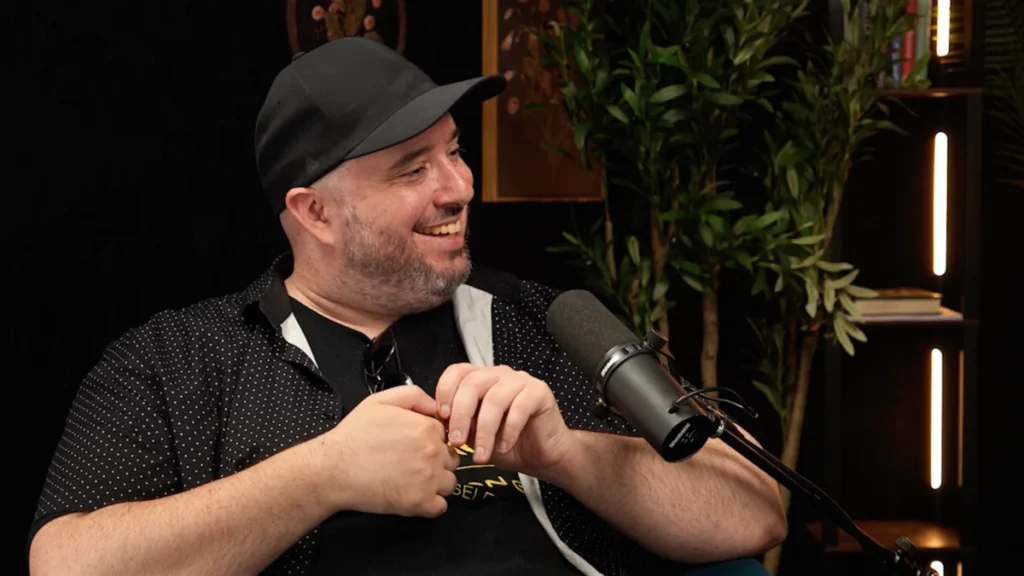
When wildlife television personality Forrest Galante convened for his monthly strategy session with YouTube consultant Paddy Galloway, the agenda focused on a surprising data-driven directive: the removal of turtles from his upcoming content. Galante, a seasoned professional with over a decade of experience producing wildlife programming for major networks like Animal Planet and the History Channel, maintains a subscriber base of 2.5 million on YouTube. Despite his extensive background in traditional media and owning his own production company, Galante found that his intuition did not always align with the granular data provided by modern digital analytics.
Galloway, who has emerged as a prominent figure in the rapidly professionalizing creator economy, identified a specific trend in Galante’s viewership data. Whenever turtles were featured prominently, audience engagement experienced a consistent and measurable decline. According to Galloway, viewers appeared to perceive turtles as commonplace and lacking the dynamic action found in other wildlife segments, leading to significant audience drop-off. This level of forensic analysis is why some of the world’s most successful digital creators, including Jimmy Donaldson, known globally as MrBeast, and sports content creator Jesse Riedel, known as Jesser, have sought Galloway’s expertise.
As the creator economy matures into a multi-billion-dollar industry, a specialized class of "YouTube whisperers" or strategists has become essential for those operating at the highest levels of the platform. These consultants provide the technical and psychological insights necessary to navigate an algorithm that dictates the viewing habits of billions. The stakes are increasingly high; for top-tier creators, the difference between a video that garners one million views and one that reaches 100 million can represent hundreds of thousands of dollars in advertising revenue and brand deals.
The Dominance of YouTube in the Modern Media Landscape
The professionalization of YouTube consulting mirrors the platform’s rise to the top of the media hierarchy. In New York City, YouTube recently held its annual "Brandcast" event at Lincoln Center, a high-profile advertising presentation designed to showcase its top talent to major brands and agencies. The event underscores YouTube’s transition from a video-sharing site to a dominant force in mainstream entertainment.
According to the most recent data from Nielsen’s "The Gauge" report, YouTube accounts for 12.7% of all streaming viewership in the United States. This figure places it significantly ahead of major subscription-based rivals; Netflix holds the second-largest share at 8.4%, while Disney+ follows at 5%. This shift in viewership has created a massive economic engine. A 2025 report from Goldman Sachs estimates that there are currently 67 million online content creators worldwide, a figure projected to surpass 100 million by 2030.
Within this ecosystem, approximately 10,000 YouTube channels in the United States have surpassed the one-million-subscriber milestone. For these individuals, content creation is no longer a hobby but a high-stakes business. To sustain this growth, many have turned to strategists like Aniket Mishra, who notes that while a creator might reach one million subscribers through talent alone, scaling to 10 million or 100 million requires a dedicated strategist to manage the complexities of the platform’s evolving recommendation engine.
The Chronology of Professional Strategy: From Vlogs to Data Science
The emergence of the YouTube consultant can be traced back to the early 2000s, but the role has evolved from simple advice to rigorous data science. Paddy Galloway began his journey in 2006, shortly after the platform’s inception. His initial interest was rooted in self-improvement for his own channel, but he soon transitioned into a "YouTube Masterclass" format, analyzing the growth patterns of breakout stars like Peter McKinnon and MrBeast.
Galloway’s analytical approach eventually caught the attention of MrBeast, the platform’s most-subscribed individual creator with over 483 million subscribers. By working directly with high-profile clients, Galloway demonstrated that virality could be engineered rather than left to chance. A primary example of this success is Jesse Riedel (Jesser), who had seen his growth plateau at three million subscribers. Under Galloway’s guidance, Riedel shifted his focus from internal jokes and daily vlogs to broad-concept videos designed for a universal audience. Today, Riedel is the leading sports creator on the platform with more than 41 million subscribers.
The strategic shift often involves moving away from "niche" personality-driven content toward "high-concept" ideas that appeal to the platform’s general recommendation algorithm. This evolution has coincided with a shift in hardware; more viewers are watching YouTube on television screens rather than mobile devices. Alphabet, YouTube’s parent company, has responded by favoring longer-form content—often exceeding 30 minutes—which mimics the production values of traditional television.

The Economics of High-Level Consulting
The services of a top-tier YouTube strategist come with a significant price tag. Galloway typically charges a flat monthly fee starting at $15,000, which can escalate depending on the complexity of the project. For this investment, clients receive daily communication, diagnostic reports on video performance, and intensive collaborative sessions focused on "the packaging"—the title and the thumbnail image.
The ROI on these services is often substantial. Galloway claims an average year-on-year increase in views of 350% for his clients. Other strategists, such as Aniket Mishra, offer tiered pricing ranging from $1,500 to $12,000 per month. These consultants often advise a "copy with taste" strategy, which involves identifying successful content formats within a specific niche and replicating the pacing and structure while adding a unique creative angle.
The industry has developed its own internal hierarchy. Mario Joos, a former retention director for MrBeast, categorizes the roles into three levels:
- Coaches: Individuals who provide initial guidance and basic platform knowledge, often charging around $250 for a consultation.
- Consultants: Professionals who provide high-level advice but leave the implementation to the creator.
- Strategists: Deeply embedded partners who participate in the ideation process, analyze retention charts, and directly influence the production and editing of the content.
Technical Optimization: Thumbnails, Titles, and Retention
The core of a strategist’s work lies in the technical optimization of a video’s "packaging" and "retention." The "packaging"—the combination of a thumbnail and a title—is the primary driver of the Click-Through Rate (CTR). Humphrey Yang, a financial creator with over two million subscribers, noted that a 30-minute deliberation over a single title is common, as changing even two words can drastically alter a video’s performance.
Once a viewer clicks, the focus shifts to retention. YouTube Studio provides creators with a "retention chart" that tracks audience drop-off second by second. Strategists use this data to identify "dips" where viewers lose interest. Gabriel Leblanc-Picard, a former head of ideation for MrBeast, emphasizes that simplicity is key to maintaining high retention. He advocates for content that is understandable even to a six-year-old, ensuring that the language and concepts do not create barriers to engagement.
Leblanc-Picard’s work also highlights the use of strategy to expand a creator’s demographic. To help MrBeast reach more female viewers, he developed a survival-themed video involving an ex-girlfriend. The resulting video, "Survive 30 Days Stranded With Your Ex, Win $250,000," garnered over 120 million views in its first few months, demonstrating how strategic ideation can break through traditional audience silos.
Internal Support and Institutional Growth
Recognizing the value of high-performing creators, YouTube has established its own internal support systems. Reed Fernandez, a strategic partner manager at YouTube, leads a team that works with the top 10% of creators on the platform. These managers provide free services, including guidance on guest ideas, thumbnail art, and monetization strategies.
Internal data from YouTube shows that since 2021, the platform has paid out more than $100 billion to creators through its partner program. A significant portion of this growth is driven by Connected TV (CTV) viewership. YouTube reported a 45% year-over-year increase in the number of channels earning more than $100,000 specifically from content viewed on television screens. Fernandez and his team help creators optimize for this by suggesting minor adjustments, such as extending a video’s length by 30 seconds to meet the eight-minute threshold required for mid-roll advertisements—a change that can significantly impact a creator’s bottom line.
Broader Implications for the Media Industry
The rise of the YouTube strategist signals a permanent shift in how media is consumed and produced. The traditional "gatekeepers" of the entertainment industry are being replaced by data-driven consultants who understand the psychology of the digital viewer. This professionalization has turned YouTube into a viable alternative to traditional television, not just for viewers, but for advertisers and professionals.
The implications are clear: the digital creator economy is no longer a frontier of amateur enthusiasts but a sophisticated industry where data is the most valuable currency. As YouTube continues to claim a larger share of the global media market, the demand for "YouTube whisperers" who can interpret the algorithm’s whims is expected to grow, further blurring the lines between viral internet content and high-budget television production. For creators like Forrest Galante, the lesson is simple: in the age of the algorithm, even a decade of television experience is no match for the hard data that says the audience has had enough of turtles.