

The 59th season premiere of 60 Minutes is poised to command significant public and political attention as it prepares to broadcast a deep-dive investigation into the controversial utilization of the presidential pardon during the Donald Trump administration. This investigative segment, titled "The Pardon Economy," serves as the anchor for a premiere episode that arrives at a critical juncture for CBS News, marking a strategic effort to reassert the program’s dominance in the landscape of American investigative journalism amidst a period of significant internal transition.
The Investigative Focus: Unpacking the Pardon Economy
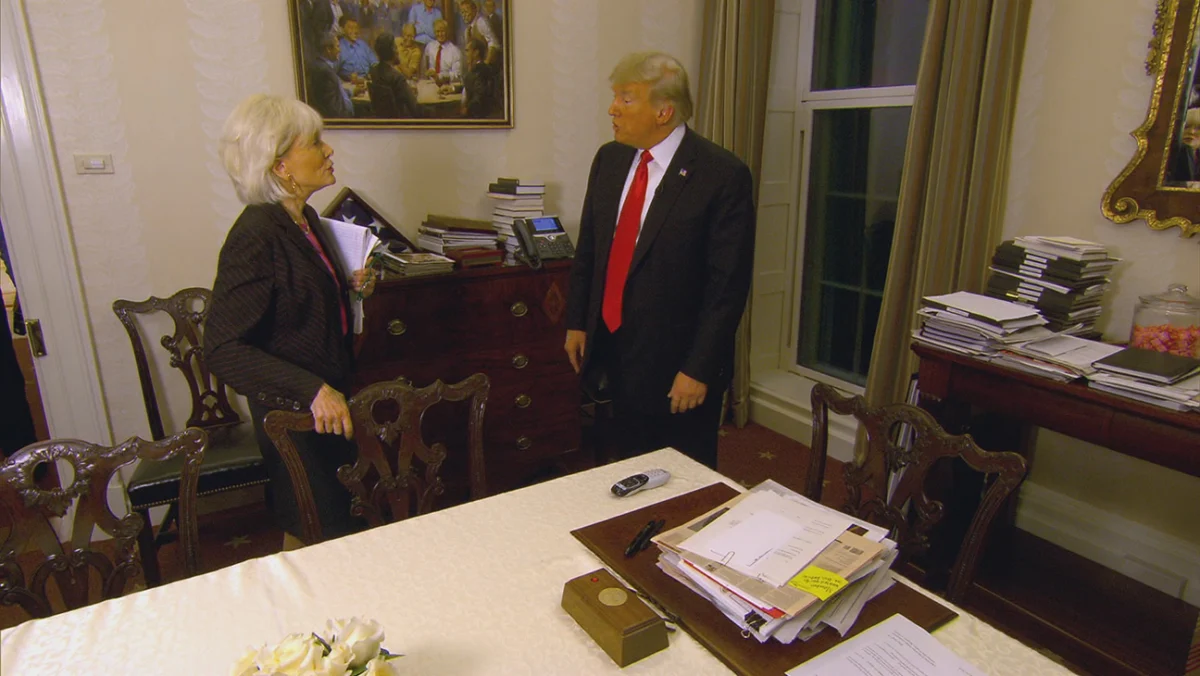
"The Pardon Economy," spearheaded by veteran correspondent Lesley Stahl, promises to peel back the layers of a burgeoning industry that has emerged around the executive clemency process. While the power of the pardon is a foundational constitutional authority granted to the President under Article II, Section 2 of the U.S. Constitution, the narrative surrounding its application has shifted dramatically in recent years.
The segment, produced by Shachar Bar-On and Michael Kaplan, explores how a specialized ecosystem of high-profile lawyers and lobbyists has developed, effectively creating a marketplace where access to the Oval Office for the purpose of seeking clemency can be commodified. The investigation seeks to answer how influence, professional networking, and financial resources have intersected with the presidential prerogative, raising ethical questions about the transparency and equity of the justice system at its highest level.
This scrutiny of the Trump administration’s pardon record is not occurring in a vacuum. Throughout his term, Donald Trump utilized his pardon and commutation powers in ways that departed from traditional executive norms. Unlike his predecessors, who often relied on the rigorous vetting process of the Office of the Pardon Attorney at the Department of Justice, the Trump administration frequently bypassed these established institutional guardrails, opting instead for a more direct, often personal, assessment of applicants. This unconventional approach led to the pardon of high-profile political allies, controversial figures, and individuals whose cases were championed by media personalities or well-connected legal conduits.
A Season of Transition at 60 Minutes
The premiere episode arrives as 60 Minutes undergoes a profound structural and personnel transformation. Under the guidance of newly appointed executive producer Nick Bilton, the venerable news magazine is navigating a landscape defined by both voluntary staff departures and forced restructuring. The objective is to stabilize the program’s output while integrating fresh talent with the established veteran presence of correspondents such as Stahl, Bill Whitaker, Jon Wertheim, and Norah O’Donnell.
The premiere episode’s lineup underscores a reliance on these proven anchors to project stability. Beyond the Stahl investigation, the broadcast features a profile by Jon Wertheim on the Los Angeles Rams and their head coach, Sean McVay, and a high-stakes exclusive interview conducted by Norah O’Donnell with a U.S. pilot who was shot down and subsequently rescued in Iran—a segment that highlights the show’s enduring capacity for high-access, global reporting.
Wendy McMahon, the chief of CBS News, has publicly characterized the premiere as a "banger," expressing confidence in the editorial direction of the new season. However, industry analysts have noted that the real test for the Bilton administration lies in the subsequent weeks. McMahon hinted that while the first show serves as a foundational statement, the true evolution of the program—potentially incorporating new formats like hidden-camera investigations, end-of-show debates, and expanded commentary segments—will manifest in episodes three, four, and five.
Contextualizing the Presidential Pardon: A Historical Perspective
To understand the weight of the "Pardon Economy" segment, it is necessary to view the history of the clemency power. Since George Washington granted the first presidential pardon to participants of the Whiskey Rebellion in 1795, the power has served as a "fail-safe" in the justice system, intended to rectify miscarriages of justice, provide mercy for rehabilitated offenders, or serve the national interest during times of crisis.
However, the power has frequently sparked political controversy. From Gerald Ford’s pardon of Richard Nixon in 1974, which arguably cost him his re-election, to Bill Clinton’s controversial pardons in the final hours of his presidency, the power has always been a subject of intense public debate. The distinction in the modern era, as 60 Minutes aims to illustrate, is the transformation of the process from a formal legal petition into an informal, interest-driven endeavor.
Data from the Department of Justice indicates that the volume and nature of pardons have fluctuated wildly based on the administrative philosophy of the sitting president. The Trump administration’s willingness to grant clemency to individuals with direct personal or political ties to the White House created a perception of a "pay-to-play" dynamic, a claim that the upcoming investigation will likely interrogate through interviews with those involved in the lobbying process.
Legal and Political Implications
The decision to feature a segment critical of Donald Trump carries significant implications, particularly given the current climate of litigation between the former president and CBS News. Trump has previously initiated legal action against the network regarding an interview with Vice President Kamala Harris, alleging deceptive editing practices—a claim that CBS has vigorously denied. This ongoing adversarial relationship ensures that any content produced by the network concerning the former president will be subject to extreme scrutiny from both his political base and independent media watchdogs.
The legal reality is that the presidential pardon power is virtually absolute; it is not subject to judicial review, nor is it constrained by the same transparency requirements as other executive actions. Consequently, investigations like the one conducted by Stahl serve as the primary mechanism for public accountability. By exposing the mechanics of the "pardon economy," the show is not merely reporting on past actions but is actively engaging in the debate over whether the constitutional power requires legislative reform or greater transparency mandates.
The Road Ahead for CBS News
The strategic imperative for CBS is clear: the network must revitalize 60 Minutes for a fragmented media environment without alienating its loyal, older demographic. The infusion of new blood into the correspondent roster, coupled with potential format shifts—such as the integration of more aggressive investigative techniques—suggests that Bilton is looking to increase the show’s digital footprint and relevance among younger viewers who are accustomed to more rapid-fire, debate-oriented news programming.
For now, the focus remains on the "familiar." By leveraging the expertise of Stahl, O’Donnell, and Wertheim for the premiere, the network is minimizing the risks associated with its transition. The internal mood is reportedly one of cautious optimism, tempered by the knowledge that the industry’s eyes are on the ratings of the premiere and the consistency of the subsequent episodes.
As the 59th season gets underway, the tension between maintaining the prestige of a legacy brand and the need for modern innovation remains the central narrative. The success of the "Pardon Economy" segment will likely be measured not only by its Nielsen ratings but by its ability to generate the kind of substantive, nationwide discourse that has defined 60 Minutes for over half a century. Whether the investigation will satisfy critics who demand higher levels of transparency in the federal government remains to be seen, but it is certain to remain a focal point of political discussion in the days following the broadcast.
In an era where institutional trust is at a premium, the ability of a broadcast program to successfully hold the powerful to account—while navigating its own internal restructuring—remains the ultimate barometer of its continued relevance in the American media landscape. As the clock ticks down to the premiere, the audience awaits a signal of whether this new chapter of 60 Minutes will honor its investigative heritage or redefine it for a more polarized future.