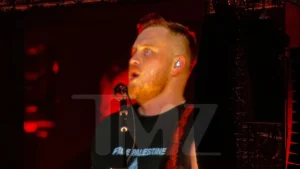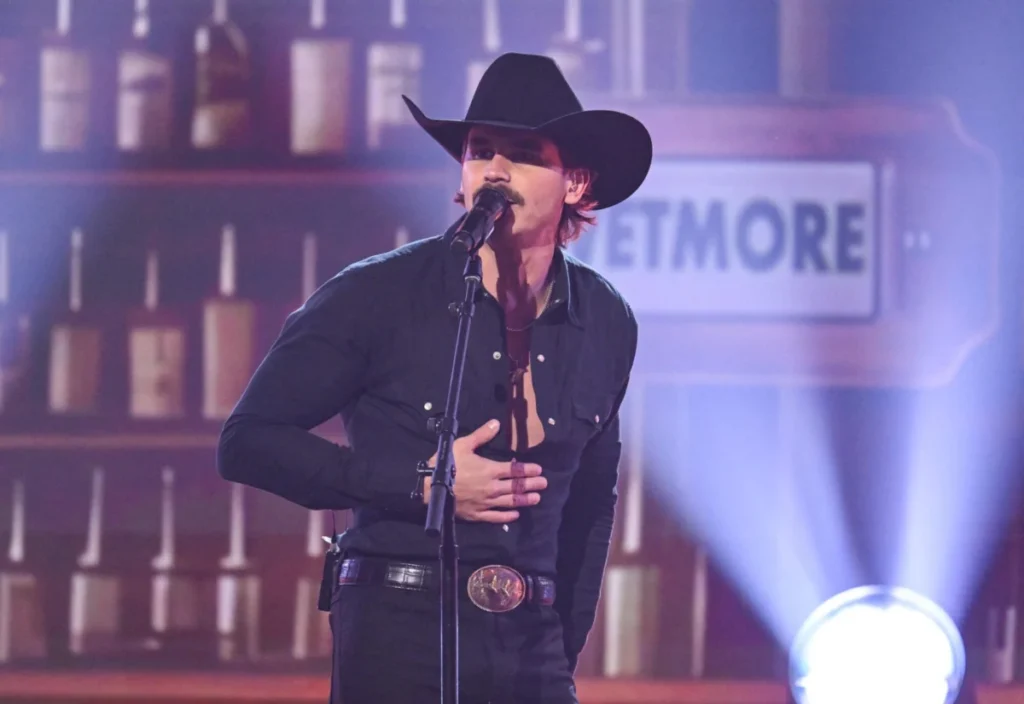
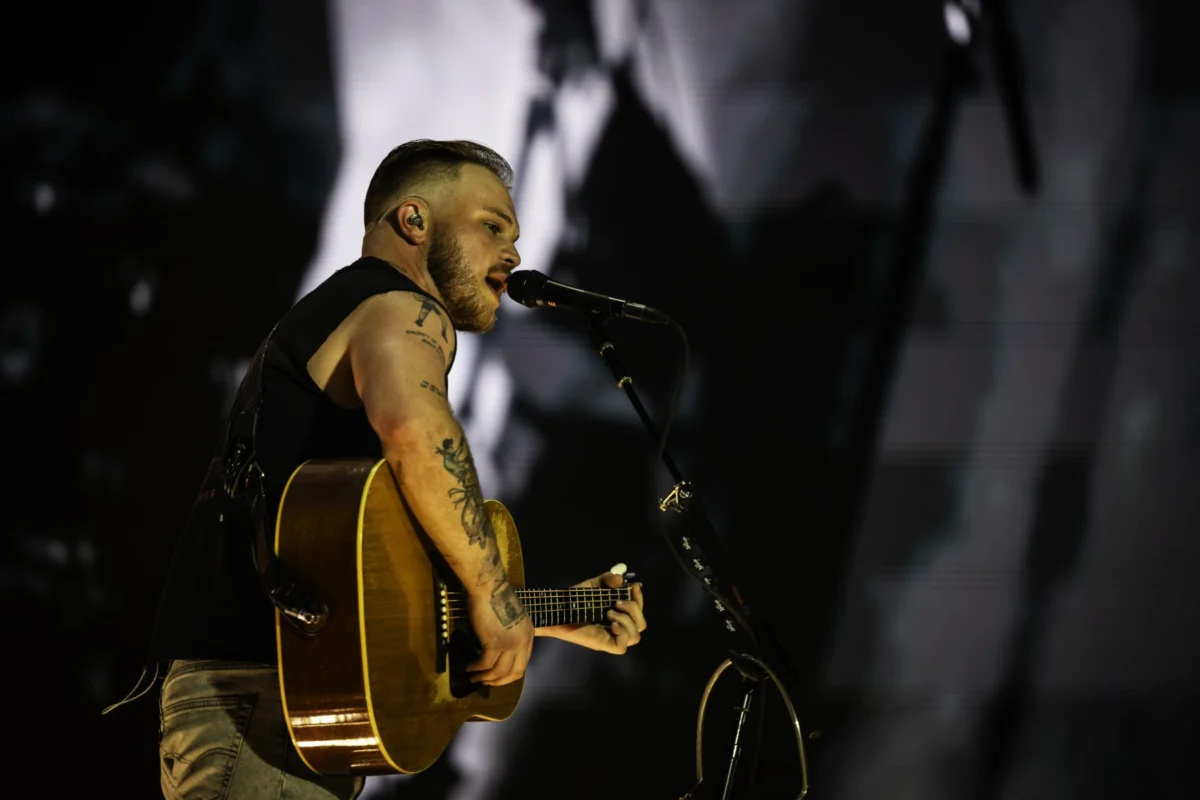
Grammy Award-winning country-folk artist Zach Bryan made a distinct political statement during his headlining concert at Gillette Stadium in Foxborough, Massachusetts, stepping onto the stage wearing a t-shirt emblazoned with the words Free Palestine. The wardrobe choice, worn during the opening night of his With Heaven on Top tour stop, immediately drew widespread attention across social media platforms and mainstream news outlets alike. The performance comes just weeks after a high-profile controversy involving rapper Macklemore, whose removal from Ed Sheeran’s ongoing U.S. tour ignited intense industry debates regarding artistic expression, political speech, and the boundaries of corporate-sponsored live entertainment.
The selection of Gillette Stadium for this demonstration added considerable weight to the gesture. The venue is owned and operated by the Kraft Group, headed by billionaire businessman and New England Patriots owner Robert Kraft. Kraft played an instrumental role in the September events that led to Macklemore being dropped from the remaining domestic dates of Ed Sheeran’s Loop Tour. The intersection of music, high-profile venue ownership, and geopolitical commentary has turned the stadium circuit into an unexpected flashpoint for discussions surrounding the ongoing Israel-Hamas conflict.
Background Context of the Stadium Tour Controversy
The friction between touring artists and venue leadership escalated significantly earlier in September when rapper Macklemore served as a supporting act for Ed Sheeran during consecutive stadium performances in East Rutherford, New Jersey. During his sets at MetLife Stadium on September 4 and September 5, Macklemore openly addressed the audience, declaring "Free Palestine" and performing his topical 2024 protest track, "Hind’s Hall." On the second evening, the rapper explicitly clarified his position to Jewish concertgoers, emphasizing that his vocal criticism of the Israeli government was directed at state policies rather than the Jewish community.
Despite these caveats, the statements triggered an immediate and organized backlash. The Israeli-American Council spearheaded a formal petition demanding the artist’s removal from the remaining tour dates. Within days, mounting pressure from prominent NFL stadium owners—who reportedly threatened to cancel upcoming concert dates if the rapper remained on the bill—forced the hand of the tour’s promoters. On September 14, the Messina Touring Group officially confirmed that Macklemore would no longer appear on the remainder of the U.S. schedule.
Robert Kraft subsequently confirmed his direct involvement in the decision-making process. In a public statement released on the same day, Kraft defended his intervention, arguing that he felt a fundamental responsibility to oppose rhetoric he viewed as crossing the line into antisemitism, while simultaneously acknowledging the profound suffering experienced by Palestinian civilians. Ed Sheeran distanced himself from the administrative decision, releasing a statement the following day clarifying that the removal was executed by the promoter rather than at his direct behest, though he acknowledged having engaged in conversations with Kraft in an effort to reach a viable compromise.
Chronology of Industry Fallout and Solidarity Actions
The fallout from Macklemore’s dismissal rippled rapidly through the live music industry, prompting a wave of solidarity actions and canceled appearances. Several supporting acts scheduled for the Loop Tour—including indie-pop artist Finneas, singer-songwriter Aaron Rowe, and pop artist Lukas Graham—withdrew from the remaining dates in protest. They were joined by the traditional Irish folk ensemble Beoga, who had maintained a long-standing collaborative relationship with Sheeran.
In the wake of his removal, Macklemore took to social media to detail the financial and professional toll his advocacy had taken, citing lost brand partnerships, canceled festival appearances, and private performance cancellations. Nevertheless, the rapper doubled down on his political stance. He pledged $1 million of his touring revenue to various Palestinian humanitarian aid organizations and announced a short, highly publicized European run titled the Free Palestine Tour. Spanning venues in Dublin, Paris, and London between October 26 and October 30, the mini-tour reportedly sold out within minutes of going on public sale.

Irony shadowed the conclusion of the domestic leg of Sheeran’s tour when his two scheduled performances at Gillette Stadium—the very venue at the center of the venue-owner pressure campaign—were ultimately canceled entirely due to severe weather conditions. Despite the tour management’s compliance with ownership demands to purge the lineup of political speech, natural elements intervened, depriving the stadium of the scheduled concerts.
Zach Bryan’s History of Confronting Institutional Power
Zach Bryan’s decision to wear the controversial apparel at a Kraft-owned venue aligns with a documented pattern of the artist challenging institutional authority and political friction. Unlike many mainstream commercial artists who deliberately avoid polarizing sociopolitical topics to safeguard their marketability, Bryan has repeatedly waded into contentious public debates through his music and public persona.
In October 2025, Bryan released a preview of his unreleased track "Bad News," which featured lyrical references to Immigration and Customs Enforcement (ICE) raids. The teaser immediately drew sharp rebukes from high-ranking federal officials, including the Department of Homeland Security and the White House. Then-Homeland Security Secretary Kristi Noem publicly expressed disappointment over the clip, arguing that it mischaracterized federal enforcement operations.
Bryan firmly pushed back against the governmental criticism at the time. He defended the composition by arguing that the track reflected the complex realities experienced by communities across the political spectrum, while urging his fanbase to reject polarizing social media narratives designed to foster division. The song ultimately secured a place on his studio album, With Heaven on Top, which dropped on January 9, 2026.
Implications for Live Entertainment and Freedom of Expression
The appearance of Bryan and his bandmates in matching "Free Palestine" attire at Gillette Stadium highlights a growing tension within the contemporary live entertainment landscape. As concert venues increasingly fall under the ownership or influence of prominent corporate entities and high-net-worth figures with distinct political alignments, the stage is shifting from a purely commercial space to a contested arena for ideological expression.
Industry analysts note that while artists traditionally enjoy wide latitude regarding stage banter and wardrobe choices, the convergence of major sports franchise ownership and massive stadium infrastructure introduces corporate governance into artistic curation. Venue owners control logistical access, security contracts, and scheduling permissions, giving them significant leverage over promoters who rely on massive capacities to sustain profitable tours.
Furthermore, Bryan’s silent protest—refraining from verbalizing political statements from the microphone while relying entirely on visual imagery—represents a calculated tactical evolution. By letting the apparel speak for itself while flanked by his band in identical garments, Bryan minimized the immediate justification for venue intervention while maximizing visual impact and media dissemination.
As Zach Bryan prepares for subsequent performances on his tour circuit, observers and industry stakeholders remain focused on the broader implications of these events. The willingness of top-tier touring acts to absorb potential professional fallout in exchange for ideological expression signals a shifting paradigm where an artist’s personal convictions increasingly supersede traditional industry caution. Whether venue owners, promoters, and corporate sponsors will recalibrate their policies regarding political speech in response to these ongoing demonstrations remains one of the most critical unanswered questions facing the live touring sector.