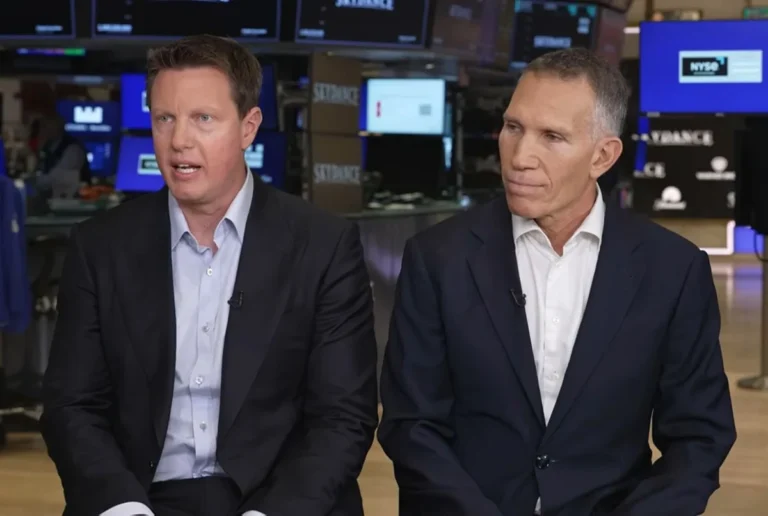



The board of directors at Warner Bros. Discovery is reportedly weighing a pivotal shift in its corporate strategy, considering a return to the negotiating table with Paramount Skydance following a series of lucrative amendments to a previous hostile bid. According to reports from Bloomberg News and internal sources familiar with the deliberations, the media conglomerate is reviewing an updated proposal that significantly sweetens the financial terms of a potential merger, potentially upending an existing multi-billion dollar agreement with Netflix. This development marks a significant escalation in the consolidation of the global media landscape, as two of the industry’s most prominent titans vie for control of the historic Warner Bros. film studio and its flagship streaming platform, HBO Max.
The current friction stems from a competitive bidding war that began in late 2025. In December of that year, Warner Bros. Discovery (WBD) had reached a definitive agreement to sell its prestigious film studio and the HBO Max streaming service to Netflix for $27.75 per share. However, Paramount Global—backed by Skydance Media—intervened almost immediately with a hostile all-cash bid valued at $30 per share. The latest maneuvers by Paramount, which include substantial "ticking fees" and the assumption of massive termination penalties, have forced the WBD board to reassess its fiduciary obligations to shareholders.
The Evolution of a Media Mega-Deal: A Timeline of Events
The battle for Warner Bros. Discovery has been characterized by aggressive financial posturing and rapid-fire counter-offers. To understand the current state of negotiations, it is essential to look at the chronological progression of the deal:
- September 2025: Warner Bros. Discovery signals a willingness to explore strategic alternatives for its content and streaming divisions to address long-term debt and market valuation concerns.
- December 5, 2025: WBD announces a blockbuster deal with Netflix. The agreement, valued at $27.75 per share, is positioned as a way for Netflix to secure a massive library of intellectual property and for WBD to streamline its operations.
- December 8, 2025: Paramount Skydance launches a hostile counter-bid. Offering $30 per share in an all-cash transaction, Paramount aims to merge its assets—including CBS and MTV—with WBD’s premium content engine.
- February 10, 2026: Paramount sweetens its offer by introducing a "ticking fee" of 25 cents per share for every quarter the deal remains unclosed past a certain deadline, addressing concerns over prolonged regulatory scrutiny.
- February 15, 2026: Reports emerge that the WBD board is formally considering reopening talks with Paramount, viewing the new terms as potentially superior to the Netflix agreement.
Analyzing the "Sweetened" Terms: Ticking Fees and Termination Coverage
Paramount’s strategy to break the Netflix-WBD agreement relies on removing the financial risks associated with a change in direction. The most significant addition to the bid is the "ticking fee." In the context of large-scale mergers, a ticking fee is a mechanism designed to compensate the seller if regulatory approvals take longer than anticipated.
According to financial data, Paramount’s proposed ticking fee of $0.25 per share equates to approximately $650 million in cash value per quarter. This fee would trigger if the deal fails to close by December 31, 2026. This move is specifically designed to alleviate board concerns regarding the Department of Justice (DOJ) or Federal Trade Commission (FTC) blocking or delaying a merger between two traditional media giants like Paramount and WBD.
Furthermore, Paramount has pledged to cover the $2.8 billion termination fee that WBD would owe Netflix if it exits the December agreement. By absorbing this penalty, Paramount effectively removes the immediate "break-up cost" as an obstacle for the WBD board. Additionally, Paramount has offered to eliminate $1.5 billion in potential debt refinancing costs, further cleaning up the balance sheet of the combined entity.
Competitive Stakes: Netflix vs. Paramount Skydance
The competition between Netflix and Paramount represents two different visions for the future of entertainment. For Netflix, the acquisition of Warner Bros. would represent a transition from a tech-centric distribution platform to a traditional studio powerhouse. Owning the Warner Bros. lot in Burbank and the HBO library would give Netflix undisputed control over some of the most valuable intellectual property in history, including the DC Universe, the Wizarding World of Harry Potter, and a century of cinematic classics.
For Paramount and Skydance, the acquisition is seen as a "once-in-a-lifetime opportunity," as noted by industry analysts. A merger would create a massive media conglomerate capable of rivaling Disney in terms of both linear broadcasting (CBS) and streaming reach. The synergy between Paramount’s sports broadcasting and WBD’s premium drama and film production is viewed by some investors as a more natural fit than the Netflix alternative.

Financial and Regulatory Implications
The WBD board’s decision to reconsider Paramount’s offer is rooted in its legal duty to maximize shareholder value. With Paramount’s offer sitting at a nearly 10% premium over Netflix’s $27.75 per share—combined with the ticking fee and the coverage of the break-up fee—the financial argument for Paramount has become difficult to ignore.
However, the regulatory landscape remains a significant hurdle. A Netflix-WBD deal would be seen as a "vertical" merger (a distributor buying a content creator), which historically faces less scrutiny than a "horizontal" merger (two content creators merging). A Paramount-WBD merger would consolidate two of the "Big Five" Hollywood studios, potentially raising antitrust concerns regarding market share in film production, television broadcasting, and advertising.
The inclusion of the ticking fee is a direct response to this risk. It signals Paramount’s confidence that the deal can pass regulatory muster, or at the very least, its willingness to pay for the privilege of trying.
Industry Reaction and Market Sentiment
Market analysts have reacted with cautious optimism to the news of reopened talks. WBD shares have seen increased volatility as investors bet on a potential bidding war. If Netflix decides to raise its offer to match or exceed the $30 per share mark, it could lead to one of the most expensive acquisitions in the history of the entertainment industry.
While official statements from Warner Bros. Discovery, Netflix, and Paramount have been minimal, sources indicate that Netflix is not yet ready to concede. The streaming giant has hinted at its own willingness to adjust terms, though it remains to be seen if it will match the cash-heavy, fee-absorbing structure of the Paramount proposal.
The broader implications for the industry are profound. If Warner Bros. Discovery aligns with Paramount, it could trigger a "domino effect" of further consolidation among mid-sized media players who find themselves unable to compete with the scale of the new entity. Conversely, if Netflix prevails, it would mark the final transformation of the "Silicon Valley" disruptor into the new "Hollywood" establishment.
Potential Outcomes and Future Outlook
As the WBD board continues its deliberations, several scenarios remain on the table:
- The Paramount Pivot: The board determines that Paramount’s $30 per share offer, plus the $2.8 billion termination coverage, is a "Superior Proposal" under the terms of the Netflix contract. They terminate the Netflix deal and enter a definitive agreement with Paramount.
- The Netflix Counter: Netflix, unwilling to lose the HBO Max library and the Warner Bros. studio, raises its bid to $32 or $33 per share, potentially adding its own regulatory protections to satisfy the board.
- The Regulatory Standoff: The board remains split, fearing that a Paramount merger will be tied up in court for years, ultimately deciding to stick with the "safer" Netflix deal despite the lower immediate share price.
The coming weeks will be critical for the future of Burbank’s most iconic water tower. With billions of dollars and the future of global streaming at stake, the WBD board’s decision will redefine the entertainment landscape for the next decade. As of mid-February 2026, the ball remains in the board’s court, with the sweetened terms from Paramount Skydance providing a compelling, if complex, alternative to the Netflix status quo.