The intersection of industrial-grade precision and the domestic breakfast table has found an unlikely champion in a German citizen known to the digital world simply as Jan. Operating under the social media moniker "Germanbreadcutter," Jan has transformed the mundane act of slicing a loaf of bread into a high-stakes discipline that mirrors the rigors of competitive sports and mechanical engineering. Since launching his presence across Instagram, TikTok, and YouTube in February 2024, he has cultivated an audience exceeding 100,000 followers, all drawn to a singular, obsessive goal: the achievement of a slice of bread with zero variance in thickness. This phenomenon represents a broader trend in digital media where hyper-niche, "oddly satisfying" content meets the traditional cultural values of German craftsmanship, creating a viral sensation rooted in the pursuit of objective perfection.
The Genesis of a Precision Discipline
The origins of the Germanbreadcutter project are found not in a professional kitchen or a laboratory, but in a casual breakfast encounter. Jan, who maintains a career outside of the food industry and has requested that his last name be withheld to maintain professional boundaries with his colleagues, cites a specific moment of inspiration involving a friend. During a meal, the friend produced a slice of bread of such exceptional uniformity that it prompted a shift in Jan’s perception of daily tasks. He describes the experience as a transformative moment where the aesthetic and structural integrity of a staple food item became a primary focus of his daily routine.
This inspiration led to the formalization of the "bread-cutting morning" ritual. Every day, Jan approaches a new loaf with the solemnity of a technician. The process is standardized: he greets his audience, selects his tools, and attempts a freehand cut. The subsequent measurement phase utilizes a digital caliper, a tool more commonly found in machine shops than in kitchens, to quantify the success of the attempt. This data-driven approach has resonated with a global audience, many of whom view Jan not merely as a content creator, but as an athlete competing against the inherent irregularities of organic matter.

Technical Methodology and the "Breadsheet"
The technical execution of Jan’s craft relies on a specific inventory of high-performance cutlery. He primarily alternates between two brands: Piklohas and Hoshanho. Piklohas, a brand associated with German design principles, and Hoshanho, which draws on Japanese bladesmithing traditions, provide the necessary edge retention and geometry to minimize "crushing" the bread’s internal structure, known as the crumb. The choice of these tools highlights the international nature of modern precision cooking, where the metallurgical standards of Solingen and Seki City are applied to a sourdough loaf.
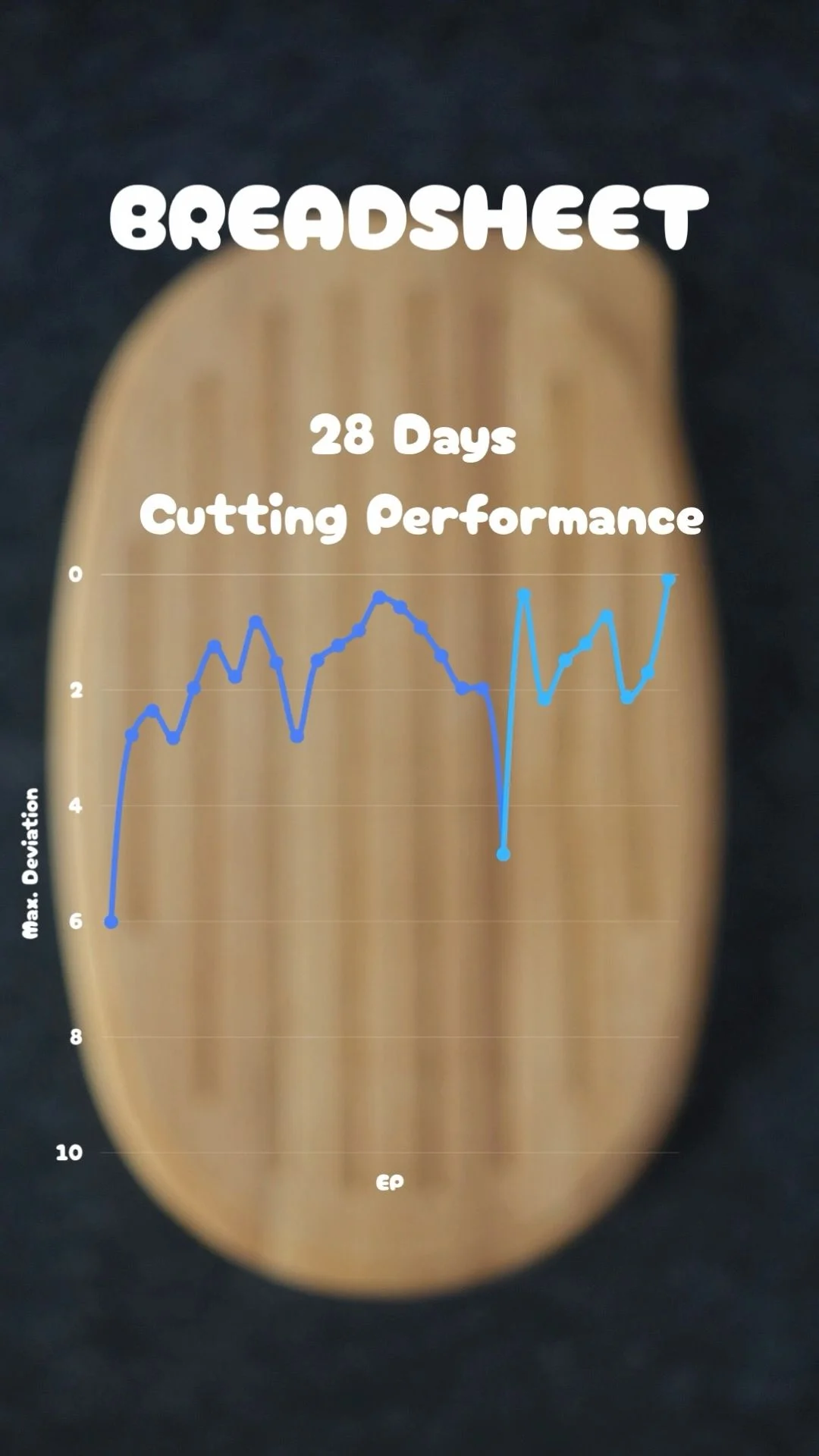
Upon completing a cut, Jan employs a Kynup digital caliper to measure the slice at multiple points around its perimeter. The results are recorded in what he calls the "breadsheet"—a comprehensive spreadsheet that tracks his performance over time. This document allows Jan to visualize trends in his accuracy, identifying variables such as the type of bread, the age of the loaf, and the specific knife used.
The pinnacle of this data-tracking occurred on June 27, 2024, during "episode 136." Jan successfully produced what is now referred to as the "Golden Slice." Utilizing a Frankenlaib—a traditional round German sourdough—he achieved a maximum thickness deviation of just 0.08 millimeters. To put this in perspective, the average human hair is approximately 0.07 millimeters thick. This level of manual precision, achieved without the aid of a mechanical slicer or guide, has been hailed by his community as a landmark achievement in the "sport" of bread cutting.
A Chronology of the Rise of Germanbreadcutter
The trajectory of Jan’s social media presence follows a rapid arc of growth and refinement:

- February 2024: Jan launches his accounts on Instagram and TikTok, introducing the concept of measured bread slicing.
- March – April 2024: The "breadsheet" is introduced, shifting the content from purely visual to data-centric. His following begins to grow as the algorithm identifies the content as "oddly satisfying."
- May 2024: Jan encounters the "Achilles’ heel" of his discipline—the end-piece. He begins documenting the struggle of stabilizing the final portion of a loaf, which earns him praise for his accountability and transparency.
- June 27, 2024: The "Golden Slice" is cut. The video goes viral, amassing millions of views and solidifying his status as a leading figure in niche hobbyist content.
- July 2024 – Present: Jan surpasses the 100,000-follower milestone. He begins organizing his content into "seasons," with each season dedicated to a single loaf of bread, ensuring a narrative structure to his daily posts.
Cultural Context: Germany’s Bread Heritage and Engineering Identity
The success of the Germanbreadcutter cannot be viewed in isolation from the cultural landscape of Germany. The country is home to over 3,200 registered varieties of bread, and German bread culture was officially recognized by UNESCO as an Intangible Cultural Heritage in 2014. Jan’s preference for traditional loaves like the Frankenlaib over mass-produced square loaves reflects a deep-seated respect for the artisanal bakery trade, or Bäckerhandwerk. He has noted that while square loaves are easier to cut with precision, they lack the "soul" and challenge of a traditionally shaped round loaf.
Furthermore, the project taps into the global reputation of German engineering—the Vorsprung durch Technik philosophy. By applying the same level of scrutiny to a slice of bread that a Mercedes-Benz engineer might apply to a piston ring, Jan creates a parody of national stereotypes that is both humorous and genuinely impressive. This blend of high-level skill and humble subject matter is a hallmark of the "New Sincerity" movement in digital media, where creators take seemingly trivial tasks with extreme seriousness.
Community Dynamics and Public Reaction
The response from the digital community has been characterized by a unique blend of hyperbole and genuine emotional investment. Comments on Jan’s videos often frame his work in the context of legendary sporting feats. The "Golden Slice" video, in particular, elicited responses that compared the achievement to a World Cup victory or a moon landing.
One notable aspect of Jan’s community is the supportive nature of the feedback during "off days." When a slice exhibits a deviation of 1.0 mm or more—a failure in Jan’s eyes but an unnoticeable difference to the average person—followers provide words of encouragement. This dynamic suggests that the audience is not just interested in the perfect slice, but in the human narrative of persistence and the "zen" of a repetitive, difficult task. One follower’s comment—claiming that watching a perfect slice provided peace during a hospital stay—underscores the unexpectedly profound impact of Jan’s pursuit of order in a chaotic world.

Analysis of Implications: The Future of Niche-Tok
Jan’s rise offers a case study in the evolution of the "influencer" economy. Unlike traditional lifestyle influencers who focus on broad appeal, Jan’s success is built on "micro-expertise." This trend suggests that as social media platforms become increasingly saturated, the path to visibility lies in extreme specialization.
From a commercial perspective, Jan represents a potent opportunity for brand integration. While he currently maintains independence, the specific tools he uses—calipers, high-end knives, and even the bakeries he frequents—receive significant exposure. His commitment to ensuring his tools are available worldwide via his "linktree" indicates a sophisticated understanding of his global reach.
However, Jan remains steadfast in his core philosophy: the project is about the bread, not the fame. He emphasizes that every slice measured is eventually consumed, often with simple accompaniments like butter, jam, or cheese. This "zero-waste" approach grounds the project in domestic reality, preventing it from becoming a purely academic or wasteful exercise.
Conclusion
The Germanbreadcutter phenomenon is a testament to the indomitable human spirit’s desire to find perfection in the everyday. By combining the rigorous standards of German engineering with the ancient art of baking, Jan has created a digital space that celebrates patience, precision, and the beauty of the mundane. Whether he eventually achieves a "0.00 mm" deviation remains to be seen, but for his 100,000 followers, the journey through the "breadsheet" is already a triumph of human skill over the uneven crust of reality. As Jan continues to slice through the seasons of his show, he reminds us that even the most basic elements of our lives—like a morning piece of toast—are worthy of our highest level of attention and care.