
The history of the Holocaust is an immense and harrowing chronicle of systemic industrial mass murder, authoritarian cruelty, and the near-total destruction of European Jewish communities during the Second World War. Among the millions of recorded tragedies and monumental losses, countless smaller, localized acts of profound human resilience, quiet defiance, and unexpected compassion remain buried beneath the broader historical narrative. While popular culture often focuses on the grand resistance movements or the sheer scale of the devastation, individual micro-histories frequently capture the indomitable spirit of humanity at its darkest hour. One such remarkable, lesser-known account from 1938 Cologne, Germany, has now been immortalized through the medium of 2D animation, emerging as a universal testament to how a single note of hope can shatter the architecture of oppression.
The new animated short film, The Whistle, produced by Six Point Harness and Solis Animation, brings to life an extraordinary true account of survival, shared cultural memory, and clandestine human empathy. Directed by Greg Franklin and produced by Nancy Diamond alongside executive producer Nancy Dickenson—who heard the narrative directly from the adult son of the anonymous physician—the short film adopts a daringly minimalist approach. Eschewing traditional dialogue entirely, the production relies exclusively on evocative visual storytelling and a singular, meticulously crafted acoustic motif to convey an intricate emotional landscape. As the film makes its circuit through prominent autumn festival screenings, including the Gold Coast International Film Festival, the Newport Beach Film Festival, DIFF Shorts, and FilmQuest, it invites audiences worldwide to reflect on the enduring repercussions of moral courage during an era of totalizing tyranny.
Historical Context and the Genesis of a Forgotten Account
To fully grasp the gravity of the events depicted in The Whistle, one must contextualize the socio-legal environment of Germany in 1938. Following the Nazi Party’s consolidation of power in 1933, the regime embarked on a relentless, legally codified campaign of systemic isolation, economic disenfranchisement, and dehumanization directed at the Jewish population. The Nuremberg Laws of 1935 had already stripped Jewish citizens of their citizenship and basic civil rights, laying the bureaucratic groundwork for total segregation. By 1938, the legislative machinery was accelerating toward complete exclusion. New decrees systematically barred Jewish professionals from operating within mainstream German society.

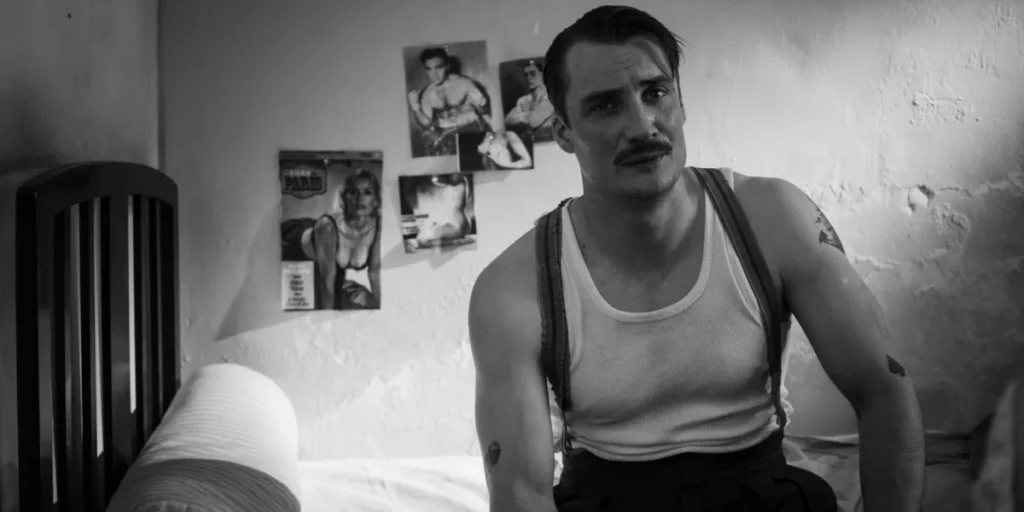
Among these oppressive measures was a specific, lesser-known law enacted in 1938 making it strictly illegal for Jewish physicians to provide medical treatment to non-Jewish patients. In an authoritarian state governed by racial ideology, the universal Hippocratic Oath was forcefully subordinated to Nazi racial hygiene policies. It was within this suffocating climate of fear and state-mandated segregation that an anonymous Jewish doctor practicing in Cologne chose defiance over compliance. Refusing to let racial statutes dictate the ethical boundaries of his medical practice, he continued to treat patients regardless of their background.
This act of defiance inevitably drew the attention of the authorities. The doctor was arrested, stripped of his autonomy, and cast into a prison cell, facing the grim prospect of deportation or worse. Yet, his imprisonment was remarkably short-lived, truncated by a twist of fate rooted in a shared cultural background and a recognizable melody. According to the historical account passed down to executive producer Nancy Dickenson by the doctor’s son, a prison guard making his rounds heard the captive physician whistling a specific tune from within his cell. Recognizing the melody, the guard realized an invisible bond connected them across the rigid ideological divides enforced by the state. Moved by this shared humanity and historical consciousness, the guard risked his own life, position, and safety to orchestrate a daring escape for the doctor, guiding him out of captivity and onto a path toward freedom.
Translating Oral History to Visual Poetry
The transition of this harrowing narrative from an oral family history to a cinematic work of art required a delicate balance of historical fidelity and artistic abstraction. Producer Nancy Diamond, who had previously collaborated with Six Point Harness and director Greg Franklin on the 2D public service announcement The Birds and the Bees, immediately recognized the cinematic potential of the Cologne doctor’s story after hearing it from Dickenson.
"Nancy Dickenson, our executive producer, is a friend and patient of the doctor’s son," Diamond explains, reflecting on the project’s inception. "So she had heard the story from him and thought it was beautiful and so compelling and thought it would really make a good film. That’s how it started. I had suggested we do it in animation without any dialogue."

Opting to omit dialogue was not merely an aesthetic choice, but a deliberate narrative strategy designed to elevate the film’s core themes into a universal emotional register. Director Greg Franklin championed this vision, noting that the absence of spoken words allows viewers from diverse cultural and linguistic backgrounds to project their own understandings of endurance onto the screen.
"This is the kind of project I love to do," shares Franklin. "It’s all told visually and I love that we’re able to have this visual representation of what gets us through the most difficult times in our lives. We wanted to think about, and see, this whistle as a beautiful trail of musical breadcrumbs that you could follow to get out of the darkness. The fact that there’s no dialogue makes it more universal. The circumstances are very specific, but the message of how hope can lead us and how the actions of just one person can make all the difference is something we all can connect to."
The Mechanics of Abstract Visual Design
To effectively translate an auditory phenomenon like a whistle into a driving visual narrative, the creative team embarked on an extensive, multi-month developmental phase. Escrewing conventional realistic depiction, Franklin and the animation teams at Six Point Harness and Solis Animation experimented with a wide array of visual techniques, testing watercolors, traditional CG animation, and iterative tests within 3D modeling software like Blender before arriving at a distinct visual language.
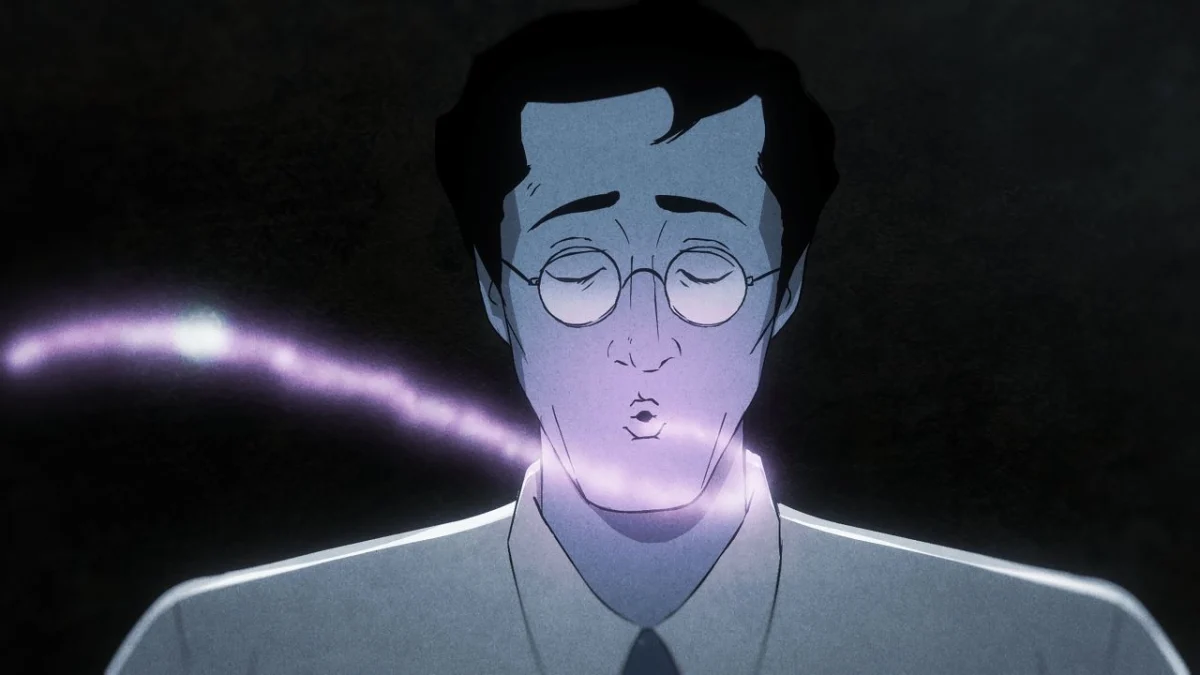
The defining aesthetic choice of The Whistle centers on the physical manifestation of the doctor’s whistle as a smoky, ethereal trail composed of luminous, shifting orbs of color. This creative direction was deeply informed by the perceptual phenomenon of synesthesia—a neurological condition in which the stimulation of one sensory pathway leads to involuntary experiences in a second, separate sensory or cognitive pathway, such as hearing sounds as distinct colors.

Franklin credits personal auditory-visual experiences for inspiring this stylistic approach, recalling time spent among audiophile friends in a secluded cabin in the Northern California woods. "Sometimes, I would hear the bass and it would remind me of slabs of wet clay going all over the floor. There was also a Jimi Hendrix guitar stab that sounded like an arrow that went right through my body. And I’m like, ‘What are these visions that I’m having?’ I have these thoughts all the time. And that was absolutely an inspiration for how we designed the look of the whistle."
This abstract trail serves multiple storytelling functions throughout the short film. It functions as the sole "voice" of the narrative, carrying the emotional weight of the protagonist’s internal state. The design deliberately evolves in concert with the narrative arc: when the doctor runs from the confines of the prison toward the precipice of liberation, the sound of the whistle grows more insistent, while its accompanying colors brighten, transforming into vibrant, optimistic hues. Furthermore, subtle visual motifs tie the whistle back to missed opportunities and narrow escapes, such as the smoke billowing from the steam train the doctor nearly boards, weaving a complex web of thematic resonance without relying on exposition.
Acoustic Authenticity and the Human Voice
While the visual components of the film required immense technological and artistic experimentation, the auditory heart of The Whistle demanded an equally rigorous approach to sound design and musical execution. Because the whistle acts as the protagonist’s primary vocalization and emotional anchor, Diamond and Franklin understood that synthetic audio would fail to capture the raw, organic humanity required for the piece.
To achieve this level of authenticity, Franklin turned to his brother, Dan Franklin, an accomplished multi-instrumentalist and recording artist noted for his exceptional whistling talent. "My brother is a multi-talented recording artist and musician who just happens to have one of those great whistles," Greg Franklin notes. "It’s like, if you’ve ever been somewhere, like the grocery store, and you hear the most gorgeous warble one aisle over. Dan has that kind of whistle. It’s one of his best instruments. And he knows how to record. So we ended up using his talents to get our pro whistle for the film."

The integration of an organic, human-produced whistle grounded the animated environments in tangible reality. Diamond emphasizes this point, noting that utilizing a genuine acoustic performance added a profound layer of emotional verisimilitude to the scenes depicting the doctor isolated within his bleak, authoritarian cell.
This dedication to authentic collaboration extended far beyond the immediate production family, ultimately shaping the cross-border and cross-generational ethos of the entire project. The film’s musical score was composed by Frank Herrlinger, a musician residing in Austria. For Diamond, Herrlinger’s involvement underscored the profound, healing potential of artistic cooperation across historical divides.
"What’s interesting is the music in the film, which is beautiful, is done by Frank Herrlinger, who lives in Austria," Diamond explains. "And when we had our first meeting together, he started by saying, ‘I just have to let you know, my grandfather was a Nazi. And now, you and I are working together on this film.’ Isn’t that beautiful? I mean, this is what life should be like. No matter where we’re from, everybody has the opportunity to do the right thing. We just have to look at each other like humans."
Intergenerational Legacies and the Ripple Effect of Compassion
The historical impact of the events depicted in The Whistle extends far beyond the immediate escape of the Cologne physician. The survival of the doctor allowed for the continuation of a family line that has since generated its own profound contributions to culture and society. The doctor’s son, who originally transmitted the narrative to executive producer Nancy Dickenson, pursued a dual path as both a medical professional—following in his father’s courageous footsteps—and a working musician, performing in a folk-rock band.

Greg Franklin points to this intergenerational trajectory as a prime illustration of the vast, unforeseeable consequences inherent in a single compassionate act. "He ended up being in a folk rock band," Franklin shares. "And none of that would have happened if it hadn’t been for that hope that got his father through. The ripple effects for something like that are enormous."
In contemporary sociopolitical landscapes marked by rising polarization, xenophobia, and authoritarian regression, the thematic relevance of The Whistle resonates with urgent clarity. The short film, bolstered by executive producers Josh Gad, Jenniphr Goodman, Lorraine Gallard, and Nancy Dickenson, serves as a poignant reminder that structural injustice is sustained by passive compliance, but can be disrupted by individual moral agency.
As The Whistle continues its successful festival run, gathering critical acclaim and emotional responses from audiences worldwide, its creators hope that its central message will inspire viewers to evaluate their own responsibilities within their communities. The film argues that systemic darkness does not require an army of saviors to be pierced; often, it requires only one person willing to make a humane choice, initiating a ripple effect that alters the course of history for generations to come.
"One person, that’s all it takes," Diamond concludes. "And then there’s a ripple effect. If we can just change one person’s mind to realize that, to do the right thing, then we’d be happy."