



On October 7, 2024, at Montana State University, Vivek Ramaswamy, the former Republican presidential candidate and a prominent surrogate for the Trump movement, faced a series of pointed questions that underscored a growing ideological and racial rift within the modern conservative coalition. Speaking at an event hosted by Turning Point USA, a right-wing youth organization, Ramaswamy sought to reinforce his commitment to "America First" principles. However, the closing segment of the event shifted from policy discussions to a direct interrogation of his religious and cultural identity. Two students questioned the compatibility of Ramaswamy’s Hindu faith with the leadership of a nation they argued should be guided primarily by Christian voices. One attendee accused him of "masquerading as a Christian," while another suggested that as an Indian American of Hindu descent, he was inherently bringing "change" rather than "conserving" the country’s traditional foundations.
This incident was not an isolated occurrence but rather a public manifestation of a broader tension. Despite South Asian Americans holding unprecedented levels of influence within the Republican Party and the Trump administration, they are increasingly finding themselves at the center of a vitriolic surge in online and offline rhetoric. This friction raises fundamental questions about the future of the GOP’s "big tent" strategy and the definition of American identity in the eyes of the party’s most ardent supporters.
A Chronology of Rising Rhetorical Tension
The confrontation in Montana follows a series of high-profile instances where South Asian conservatives have been targeted by members of their own political movement. In early 2024, conservative commentator Ann Coulter told Ramaswamy during a podcast that she would not have voted for him specifically because he is "an Indian." While Ramaswamy later stated he respected her for her candor, the comment signaled a segment of the base’s refusal to accept non-white, non-Christian leadership regardless of ideological alignment.
By late 2024 and early 2025, the focus shifted toward legal immigration, specifically the H-1B visa program. On December 26, 2024, Ramaswamy posted a lengthy critique on X (formerly Twitter) regarding the American education system and the tech industry’s reliance on foreign workers, which garnered over 127 million views. While intended as a critique of "mediocrity" in American institutions, the post became a lightning rod for anti-Indian sentiment. The comments section was flooded with ethnic slurs and demands for the total abolition of legal immigration pathways commonly used by South Asian professionals.
This internal pressure reportedly contributed to Ramaswamy’s early departure from his role in the Department of Government Efficiency (DOGE) in January 2025. Simultaneously, other South Asian figures who have long been staples of the conservative movement, such as Dinesh D’Souza, began to face similar backlash. D’Souza, a prominent voice since the Reagan era, found himself targeted by the "Groyper" movement—a loose collection of white nationalist activists—after he criticized their extremist rhetoric. Despite his decades of service to the Republican cause, he was frequently told to "go back to India" by users on social media platforms.
The Paradox of Representation in the Trump Administration
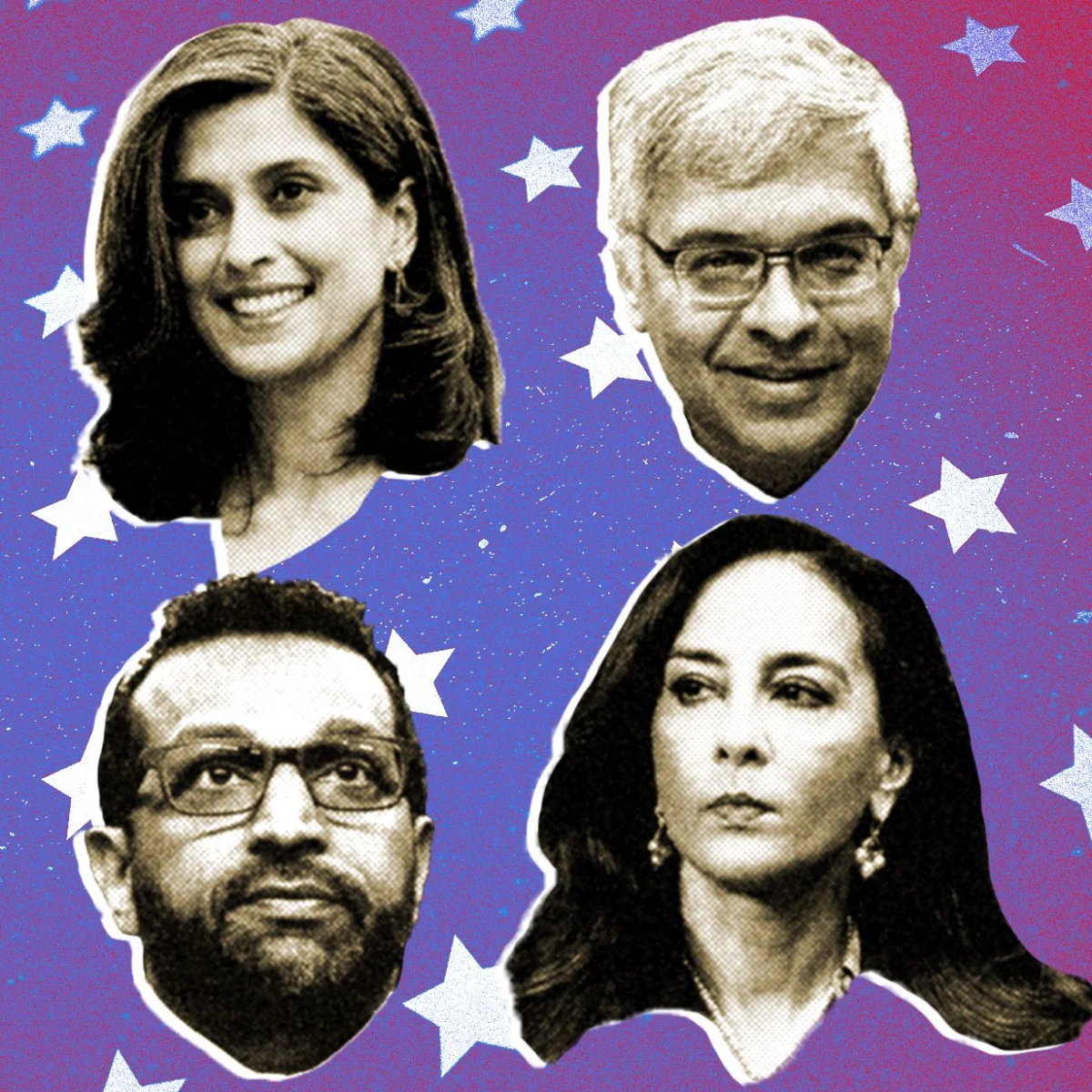
The rise in hostile rhetoric coincides with a period of historic South Asian representation within the executive branch. The Trump administration has appointed numerous Indian Americans to pivotal roles, creating a visible presence in an administration that is otherwise demographically homogeneous. Key figures include:
- Kash Patel: Director of the FBI, a central figure in the administration’s national security and intelligence apparatus.
- Harmeet Dhillon: Assistant Attorney General for Civil Rights at the Department of Justice, a prominent conservative litigator.
- Kush Desai: White House Deputy Press Secretary, serving as a primary voice for the administration’s communications.
- Sriram Krishnan: White House AI Adviser, reflecting the influence of South Asians in the technology sector.
- Usha Vance: The Second Lady of the United States, an accomplished attorney and daughter of Indian immigrants.
Despite these appointments, the administration’s policy platform often stands in opposition to the demographic interests of the very community these officials represent. The administration has championed an end to birthright citizenship—a move currently facing a Supreme Court challenge—and has seen several GOP governors, including Greg Abbott of Texas and Ron DeSantis of Florida, move to restrict or ban the hiring of H-1B visa holders in state government and universities.
Kush Desai, in a statement to the media, defended the administration’s record, noting that "Indian Americans were an important bloc in the historic coalition that resoundingly reelected President Trump in 2024." He emphasized that the President "remains focused on restoring prosperity, safety, and freedom for every American citizen." However, the disconnect between official statements and the lived experience of South Asian conservatives remains a point of contention.
Supporting Data: Demographics and Voting Patterns
To understand the stakes of this friction, it is necessary to examine the demographic and economic profile of Indian Americans. According to the Pew Research Center, Indian Americans are the highest-earning ethnic group in the United States, with a median household income significantly above the national average. They are also among the most highly educated cohorts, with a heavy concentration in healthcare, engineering, and technology.
Historically, this community has leaned heavily toward the Democratic Party. In the 2024 election, the majority of Indian Americans voted for the Democratic ticket. However, the Republican Party has made incremental gains, particularly among business owners and tech entrepreneurs drawn to the GOP’s deregulation and tax policies.
Data from a 2026 survey by the Carnegie Endowment for International Peace highlights a precarious situation for the GOP:
- Approval Ratings: While President Trump’s general approval rating hovers around 35 percent, it drops to 29 percent among Indian Americans.
- Immigration Sentiment: While many Indian Americans support "legal immigration" over "illegal immigration," the shift in GOP rhetoric to target H-1B visas has alienated a significant portion of the naturalized citizen base.
- Social Media Harassment: Reports from the Center for the Study of Organized Hate indicate a 400 percent increase in the use of anti-South Asian slurs on X since the 2024 election cycle began.
The "Heritage American" Ideology and the Model Minority Myth
The tension within the party is driven in part by a shift in how the "model minority" myth is applied. For decades, conservative politicians praised Asian immigrants as examples of successful assimilation to contrast them with other minority groups. However, a new strain of "identitarian" conservatism has replaced this praise with suspicion.
The concept of the "Heritage American"—popularized by influencers like Nick Fuentes and adopted by some mainstream Republican figures—posits that the only "true" Americans are those descended from white, European Christians. In this worldview, even highly successful, legal immigrants are viewed as a threat to the nation’s cultural and economic integrity.
Anang Mittal, a creative strategist who served under House Speaker Mike Johnson before resigning in 2024, noted that the party’s "purity tests" are increasingly becoming racialized. "After the victory of Trump, a lot of people started looking for the next enemy," Mittal said. "We’re the more visible members of the Republican Party, and now we’re the target."
This sentiment is echoed by Sidharth (a pseudonym), a conservative tech entrepreneur and naturalized citizen who voted for Trump in 2024. He expressed concern that the party is being "lost to alt-right, Nazi behavior." Sidharth pointed to Vice President JD Vance’s rhetoric as an example of the compromise South Asian conservatives must make. At a Turning Point event in Mississippi, Vance was asked about his wife’s Hindu faith; he responded by expressing hope that she would eventually "come to see" the Christian Gospel, a comment some viewed as a necessary appeasement of the religious right.
Broader Impacts and the Path to 2028
The implications of this internal conflict extend beyond the personal experiences of South Asian officials. As the Republican Party looks toward the 2028 presidential election, it faces a strategic dilemma. To maintain a winning coalition, the party must appeal to a diversifying electorate, yet its most energized base is increasingly hostile to that very diversity.
Scholars suggest that the South Asians currently serving in the administration represent what is historically termed a "comprador class"—individuals who intermediate between a powerful ruling structure and a minority population. Siddhartha Deb, an associate professor at The New School, argues that many Indian Americans in the GOP "wish to identify with the winners" in terms of power and material wealth, even if it requires navigating an environment that is fundamentally hostile to their background.
The "dick eating Indians" (DEI) label used by critics on the left to mock these officials highlights the reputational risk they face within their own community. If the Republican Party continues to allow anti-Indian rhetoric to flourish among its most prominent influencers, it risks a total collapse of the modest gains it has made with Asian American voters.
Ultimately, the events at Montana State University and the subsequent digital fallout suggest that for a segment of the Republican base, ideological alignment is secondary to racial and religious identity. Whether the GOP can reconcile its "America First" nationalism with the reality of its diverse leadership will be a defining factor in its long-term viability. For figures like Vivek Ramaswamy and Harmeet Dhillon, the challenge is not just winning the policy debate, but proving their right to belong in a movement that is increasingly questioning their presence.