


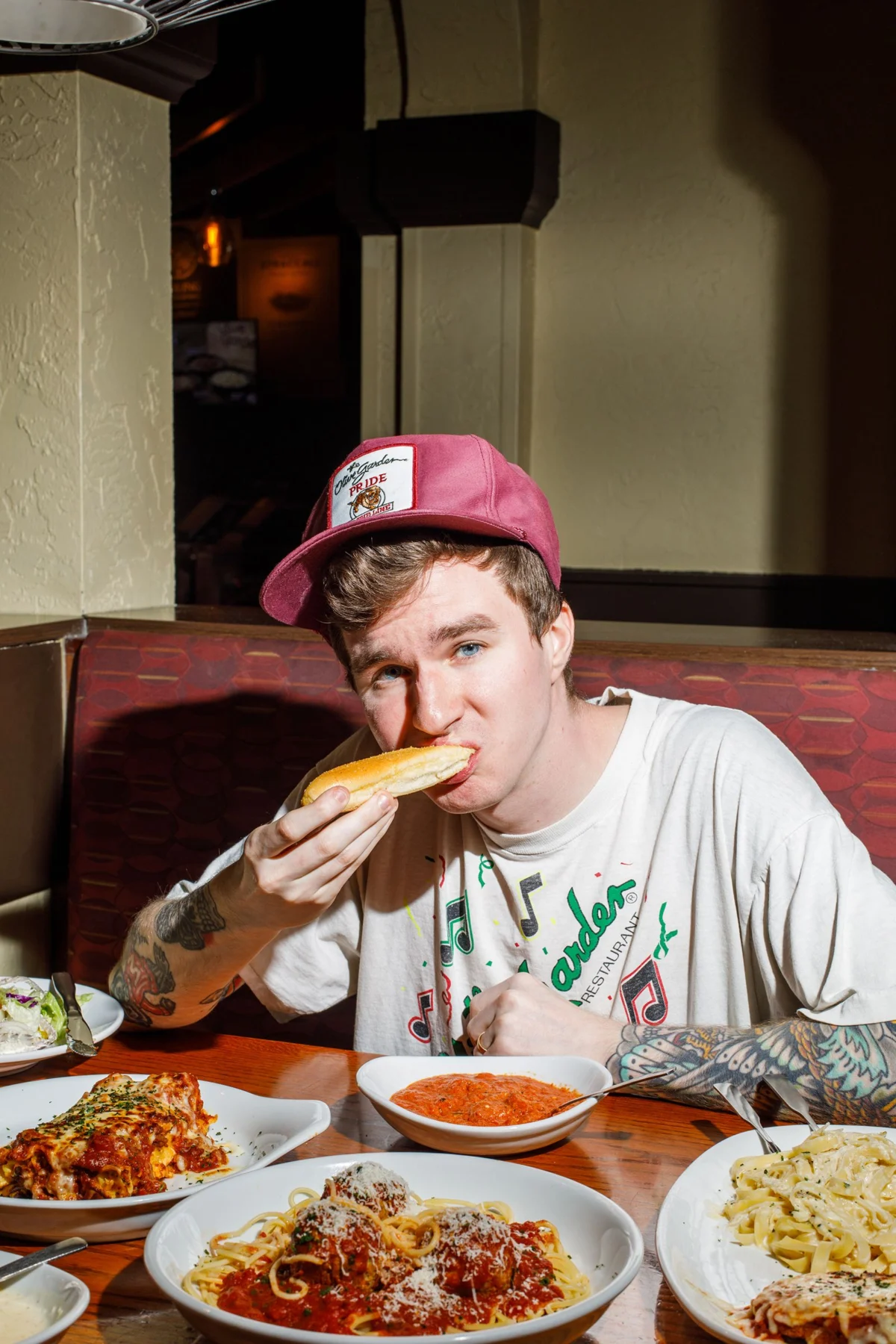
For millions of consumers worldwide, casual dining chains represent a reliable cornerstone of suburban culinary culture. Among these, Olive Garden—a subsidiary of Darden Restaurants, Inc.—has maintained a dominant presence in the American landscape for more than four decades. Known for its ubiquitous tagline, "When you’re here, you’re family," the brand has cultivated a fiercely loyal customer base through unlimited soup, salad, and breadstick offerings. However, among the millions of patrons who walk through its doors annually, few have integrated the brand into their personal identity quite like Braden Sinclair.
In 2019, Sinclair secured an asset that remains one of the most elusive novelties in corporate promotional history: the Olive Garden Lifetime Pasta Pass. One of only 50 individuals globally to hold the heavy gold-plated credential, Sinclair has transformed a corporate marketing gimmick into a multi-year sociological and data-driven case study. Through a meticulously maintained digital dashboard, Sinclair documents every calorie, dollar, and carbohydrate associated with his rare status, offering a unique window into brand loyalty, consumer analytics, and the modern intersection of internet culture and corporate promotions.
The Genesis of an Unlikely Culinary Iconography
Sinclair’s affinity for the restaurant predates his adult life, tracing back to childhood relocations and formative youth sports experiences. Growing up between Maine and Wisconsin, the regional restaurant locations provided a familiar, comforting constant during periods of transition. This affinity reached a humorous peak during his Little League baseball days.
Following a birthday celebration at the chain that resulted in an overindulgence of pasta and a missed game, Sinclair’s coach cemented his legacy. Combining his initials (B.S.), his jersey number (11, which the coach noted resembled breadsticks), and the restaurant mishap, Sinclair was nicknamed "Breadsticks" for the duration of the season.
Decades later, this lighthearted childhood association manifested into a tangible corporate relationship. Sinclair developed an active, playful rapport with the brand’s social media team, exchanging casual commentary via Instagram over several years. This digital familiarity would prove pivotal when Olive Garden introduced a milestone promotional event that permanently altered Sinclair’s relationship with the company.
Evolution of the Pasta Pass: From Promotional Gimmick to Lifetime Status
To fully understand the weight of Sinclair’s gold card, one must examine the history of Olive Garden’s promotional campaigns. Beginning in 2014, the restaurant introduced the "Never Ending Pasta Pass," a seasonal ticket granting holders 13 weeks of unlimited access to the restaurant’s signature pasta combinations. These passes consistently generated immense public demand and acute scarcity. In subsequent years, batches of 10,000 passes priced at $100 frequently sold out within fractions of a second, crashing servers and generating viral media attention.
The watershed moment arrived in 2019 when Olive Garden announced a major escalation for its loyal customer base: the first 50 individuals to secure a standard seasonal pass would be granted the exclusive option to upgrade to a Lifetime Pasta Pass for an additional $400.
For Sinclair, the acquisition felt almost surreal. Upon successfully purchasing the initial pass and executing the upgrade, he received a FaceTime call from an Olive Garden vice president of marketing confirming his status. The physical card, forged in heavy gold-toned metal, bears no expiration date. It guarantees the bearer unlimited pasta, sauces, toppings, breadsticks, and beverages for the duration of the chain’s operational existence, provided the diner adheres to dine-in protocols (delivery orders are explicitly excluded from the lifetime agreement).
Data Analytics Meets Comfort Food: Lifetimepastapass.com
Now a 33-year-old data analyst and father of two residing in South Portland, Maine, Sinclair utilized his professional background to quantify his unique consumer privilege. In 2023, he launched Lifetimepastapass.com, a comprehensive digital archive tracking every facet of his ongoing relationship with the brand.

The website functions as both a personal memoir and an intricate analytics dashboard. According to the platform’s metrics, Sinclair has documented 112 restaurant visits since acquiring the pass in 2019. Across these visits, he has consumed 152 bowls of pasta, accounting for roughly 154,817 calories. While the cumulative retail value of these meals totals $1,878.87, Sinclair maintains a strict ethical code regarding his patronage, supplementing his zero-dollar food bills with generous gratuities totaling $607.00 across the same timeframe.
The platform breaks down his consumption habits with granular precision:
- Favorite Pasta Shape: Rigatoni
- Preferred Sauce: Alfredo
- Top Topping: Crispy Chicken Fritta
- Peak Visit Frequency: 20 visits in October 2019 (immediately following the pass acquisition); 9 visits in August of the tracking year.
- Geographic Reach: Primarily centered around his home base in South Portland, Maine, with exploratory visits spanning multiple locations along the Eastern Seaboard.
Beyond personal tracking, the website features a democratic interactive element. Sinclair embedded a crowdsourced polling system allowing internet users to vote on his next menu selection. Initially conceived as a short-lived joke intended for a small circle of friends on Instagram, the project gained unexpected traction after being shared across niche internet forums. Within days, the poll amassed over 700 votes, compelling Sinclair to venture outside his culinary comfort zone—leading to successful flavor discoveries such as alfredo paired with meatballs, a combination he previously overlooked.
Operational Realities and Staff Reactions
Wielding a lifetime corporate pass in a standard commercial dining environment presents unique logistical and interpersonal hurdles. Front-of-house and kitchen staff responses typically range from profound curiosity to initial skepticism.
According to Sinclair, servers frequently take the gold card back to the kitchen to show colleagues, while store managers occasionally approach the table to verify its authenticity. Sinclair expresses complete understanding regarding these precautions, noting that if he managed a dining establishment and a patron presented an unexpiring, zero-balance gold credential, he would similarly require verification.
Furthermore, Sinclair consciously moderates his usage to maintain a respectful, low-impact presence within the restaurants. Mindful of viral internet videos depicting extreme promotional passholders exploiting policies—such as stockpiling excessive bowls of grated parmesan cheese—Sinclair avoids requesting excessive refills or behaving disruptively. His digital dashboard mirrors this reverence through a system of virtual trophies awarded for achieving milestones, such as cumulative breadsticks consumed (progressing toward bronze and gold tiers at 100 and 1,000 units, respectively) and maintaining consecutive weekly dining streaks.
Broader Implications and Sociological Impact
The existence of the Lifetime Pasta Pass highlights evolving paradigms in brand loyalty, digital marketing, and consumer engagement. In an era where corporate entities increasingly rely on algorithmic personalization and loyalty points programs, physical tokens of extreme brand affinity remain rare anomalies.
However, Sinclair’s experience also sheds light on the unexpected isolation inherent in extreme niche fandom. The onset of the COVID-19 pandemic shortly after the 2019 promotion effectively halted any coordinated community-building initiatives Olive Garden may have initially planned for the 50 lifetime passholders. Consequently, Sinclair has connected with only a tiny fraction of his fellow lifetime holders via social media, leaving the true collective habits of the group largely unknown.
Additionally, personal logistics present ongoing challenges. Convincing friends or family members to repeatedly frequent a single casual dining establishment solely because one member eats for free has natural limitations. While Sinclair’s wife—a long-time patron since their high school years who famously included an Olive Garden contingency in her wedding vows—remains supportive, the couple generally opts for alternative culinary experiences during child-free date nights.
Nevertheless, the legacy appears secure for the next generation. Sinclair notes that his four-year-old son exhibits a profound affinity for pasta, suggesting that the family tradition will persist into the future—provided future visits are scheduled responsibly around athletic commitments, ensuring no future Little League games are missed in the pursuit of breadsticks.