
The narrative of a washed-up tennis professional reluctantly embracing pickleball to mend a fractured relationship with his father and reclaim his respect is at the heart of the new film, "The Dink." This cinematic endeavor, featuring a star-studded cast including Jake Johnson, Mary Steenburgen, Ed Harris, Aaron Chen, Chloe Fineman, Ben Stiller, and a special cameo by tennis legend Andy Roddick, explores themes of ambition, regret, familial duty, and the unexpected joys found in life’s second acts.
At its core, "The Dink" taps into the universally resonant appeal of the underdog sports story. These narratives, characterized by characters who possess both talent and a profound passion for their craft, often find themselves perpetually on the brink of success, perpetually one crucial play away from achieving their dreams. It is this inherent human struggle, this persistent striving against odds, that typically ignites an audience’s desire to champion these individuals and become invested in their journeys. The film aims to capture this sentiment by introducing audiences to Dusty "The Hammer" Boyd, portrayed by Jake Johnson.
Dusty Boyd was once a prodigious talent in the world of professional tennis, a player whose trajectory suggested he was destined to become one of the sport’s all-time greats. His early professional seasons were marked by promise and fierce competition, a period when his father and coach, Chuck Boyd (Ed Harris), harbored equally ambitious aspirations for his son. However, a devastating wrist injury sustained during one of his inaugural professional seasons abruptly halted this ascent. The injury not only shattered Dusty’s career aspirations but also deeply impacted his relationship with his father, whose own dreams were inextricably linked to his son’s success.
Years later, the dynamic between father and son has become strained. Chuck Boyd now presides over a respected country club, a position that places him at the helm of a community built around traditional athletic pursuits. Within this setting, Dusty finds himself coaching the junior tennis team, a role that offers a shadow of his former glory and a constant reminder of what might have been. The once-vibrant connection between father and son has been replaced by a palpable distance, a quiet tension born from unfulfilled potential and unspoken disappointments. Dusty’s internal struggle revolves around finding a path to reconciliation with his father, a desire for a conventional, loving paternal bond that has eluded him for years.
However, Chuck Boyd is confronted with a more immediate and, in his view, existential threat to the very fabric of his club. The burgeoning popularity of pickleball, a sport characterized by its less physically demanding nature and more relaxed pace, has created a surge in demand for dedicated courts. This rising tide of interest in pickleball directly challenges the dominance of tennis within the club’s facilities. The prospect of converting existing, cherished tennis courts into pickleball courts represents, to Chuck, an alarming decline in the sport that has defined his life and legacy. He perceives this shift not merely as a change in recreational preference but as an "epidemic" and a significant threat to the sport of tennis itself.
Refusing to cede ground without a formidable defense, Chuck devises a plan to assert tennis’s continued relevance. He proposes a high-stakes tournament, a duel between the champions of each sport to determine the future allocation of the club’s courts. The winner would secure the majority of the courts, effectively cementing their sport’s dominance within the country club’s ecosystem. For Dusty, this proposition presents a unique, albeit unconventional, opportunity. Driven by a desperate longing to earn his father’s approval and step out of the shadow of his past failures, Dusty volunteers to represent tennis in this pivotal match. His professional background and enduring tennis acumen make him a logical choice, a symbol of the sport’s former glory.
Yet, Dusty’s attempt to recapture his past prowess is fraught with peril. His unpredictable nature and the lingering effects of his previous injury lead to a swift re-aggravation of his wrist. This setback renders him incapable of competing in tennis for the foreseeable future, throwing his participation in the tournament into question and jeopardizing his father’s plan. In a twist of fate, and a move that forms the comedic and dramatic crux of the film, Dusty finds himself needing to regain strength and dexterity, and the only avenue available to him is through the very sport he vehemently opposes: pickleball.
The film’s comedic engine is largely fueled by Dusty’s reluctant immersion into the world of pickleball. His unwilling acclimation to this more serene sport provides a rich vein of humor. Johnson’s portrayal of Dusty is marked by an endearing blend of innocence and quirky, offbeat charm. This allows the audience to initially find amusement in his struggles, watching him endure defeats and be outmaneuvered by the seasoned players of the local pickleball club. This "fish-out-of-water" scenario generates substantial comedic effect as the audience witnesses a once-arrogant athlete grapple with the indignity of being a "loser" in a sport he dismisses.
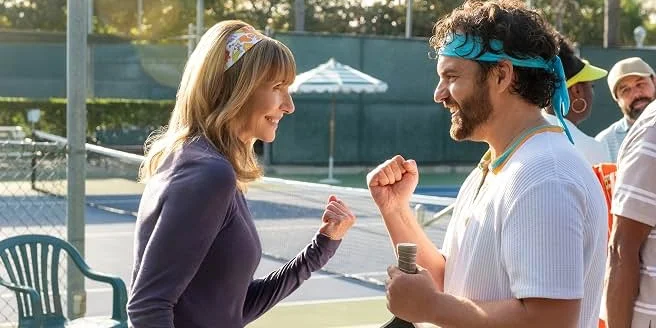
However, "The Dink" transcends the typical sports comedy by imbuing Dusty’s character with a subtle layer of poignancy. Beneath the surface of comedic mishaps lies a profound yearning for community, love, and acceptance. This emotional undercurrent becomes particularly evident when Dusty encounters Candace, a recently divorced woman played by Mary Steenburgen. Candace’s genuine interest in Dusty, devoid of ulterior motives, begins to crack his carefully constructed emotional defenses. Through their interactions, Dusty starts to comprehend what an authentic and honest relationship truly looks and feels like.
These scenes between Johnson and Steenburgen are pivotal, serving as the film’s emotional anchor. While the comedic absurdity of pickleball and its diverse players provides ample entertainment, "The Dink" ultimately underscores a fundamental truth about sports that is often overlooked: the importance of enjoyment. Candace acts as a catalyst, dismantling Dusty’s ingrained belief system that sports are solely about winning. She helps him realize that the true essence of athletic pursuit lies in the joy of participation and the camaraderie shared with fellow players. This is a profound lesson for someone whose life has been so singularly defined by the pursuit of victory in tennis. Their performances, much like their characters’ evolving relationship, are perfectly synchronized as they navigate their respective identity crises later in life, following significant personal transformations.
Director Josh Greenbaum, known for his previous works such as "Barb & Star Go To Vista Del Mar" and "Hal & Harper," has crafted "The Dink" into an all-encompassing enjoyable experience. The film offers a potent combination of robust humor and a genuinely touching narrative core. The familiar narrative beats are embraced with a welcoming spirit, and the comedic moments provide audiences with a much-needed respite, offering pleasant smiles during what can often be perceived as challenging and serious times.
For dedicated tennis aficionados, the film is sprinkled with delightful cameos, including a notable appearance by Andy Roddick portraying himself, alongside inside jokes and references tailored specifically for this audience. However, for the broader viewing public, "The Dink" presents itself as a warm, lighthearted, and ultimately heartwarming summer film. In an era that often demands more from cinematic offerings, the simple yet profound power of such a film, one that prioritizes genuine connection and uncomplicated joy, can be precisely what is needed to uplift and entertain. The film’s exploration of intergenerational dynamics, the clash of traditional sports with newer trends, and the personal journeys of its characters offer a multi-faceted appeal that extends beyond the confines of sports enthusiasts. The narrative serves as a gentle reminder that personal growth and the discovery of new passions can emerge from the most unexpected circumstances, often leading to a richer and more fulfilling life.