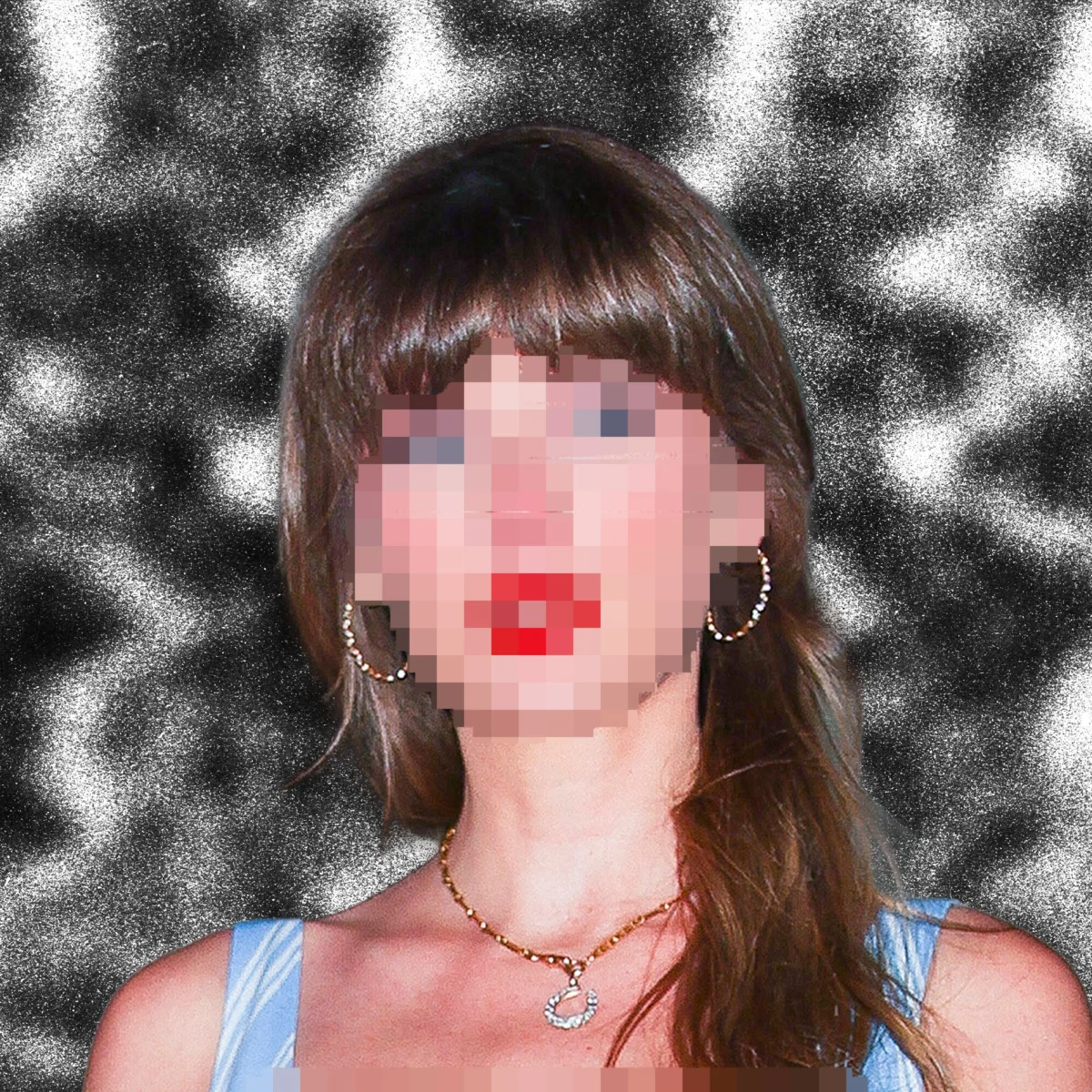
Taylor Swift has officially moved to fortify her intellectual property against the rising tide of artificial intelligence by filing a trio of trademark applications aimed at protecting her physical likeness and distinctive voice. The filings, submitted to the United States Patent and Trademark Office (USPTO), represent a significant escalation in the artist’s efforts to maintain control over her "billion-dollar brand" in an era where deepfake technology has made celebrity impersonation nearly instantaneous and increasingly difficult to distinguish from reality.
The trademark applications cover three specific identifiers associated with the pop icon. The first is a visual trademark for a widely recognized photograph of Swift performing on her record-breaking Eras Tour, specifically an image of her holding a pink guitar—a visual staple of the tour’s aesthetic. The remaining two filings are sound trademarks for short, identifying vocal phrases: “Hey, it’s Taylor Swift” and “Hey, it’s Taylor.” By seeking federal protection for these specific audio and visual markers, Swift’s legal team is attempting to create a more robust framework for taking down unauthorized AI-generated content that leverages her persona for commercial or fraudulent purposes.
The Proliferation of AI-Generated Celebrity Scams on Social Media
Swift’s legal maneuver comes at a critical juncture as the digital landscape is flooded with sophisticated "deepfakes"—media generated by artificial intelligence that replaces the likeness of one person with another. While deepfakes have long been used for entertainment or "memes," they are increasingly being weaponized by malicious actors to orchestrate financial scams.
A recent investigative report by the AI detection firm Copyleaks has shed light on a coordinated campaign of fraudulent advertisements currently circulating on TikTok. According to the report, a cluster of sponsored videos has been identified featuring realistic AI-generated versions of Taylor Swift, Kim Kardashian, and Rihanna. These videos are designed to look like authentic interviews or social media updates but are actually lures for "potentially fraudulent or malicious services."
The researchers at Copyleaks noted that the creators of these ads use "textured filters" to mask the subtle digital artifacts and glitches that often give away AI-generated visuals. Furthermore, the ads utilize "realistic-sounding voices" that mimic the tone, cadence, and inflection of the celebrities. In one specific instance, a deepfaked Taylor Swift appears in footage manipulated from a 2022 appearance on The Tonight Show Starring Jimmy Fallon. In the manipulated clip, the AI-generated Swift discusses a fictional testing feature called “TikTok Pay,” claiming that users can be paid for offering feedback on content.
The fake Swift encourages viewers to act quickly, stating, “If the page opens for you, don’t overthink it.” When users click the link, they are directed to a third-party site—often built using AI-assisted web platforms like Lovable—where they are prompted to enter sensitive personal information under the guise of signing up for the rewards program.
A Chronology of Legal and Technological Escalation
The timeline of the current crisis highlights how quickly the law and the technology industry are struggling to keep pace with generative AI.
- October 2022: Taylor Swift appears on The Tonight Show Starring Jimmy Fallon to promote her album Midnights. This footage would eventually become the source material for the TikTok scams identified in 2026.
- Early 2024: High-profile incidents of non-consensual AI-generated explicit imagery involving celebrities, including Swift, go viral on X (formerly Twitter), leading to calls for federal legislation.
- March 2024: Tennessee passes the ELVIS Act (Ensuring Likeness Voice and Image Security), the first state law specifically designed to protect artists’ voices from AI misappropriation.
- April 2024: An Ohio man becomes the first individual convicted under a new federal law criminalizing the creation and distribution of "intimate" deepfakes. This conviction marks a major precedent in the criminal justice system’s handling of AI-generated visual deceptions.
- Late April 2026: Taylor Swift’s legal team files the three trademark applications for her voice and Eras Tour imagery.
- April 27, 2026: The Consumer Federation of America files a lawsuit against Meta, alleging the company allowed scam ads to proliferate on Facebook and Instagram despite public promises to the contrary.
- April 28, 2026: The U.S. Federal Trade Commission (FTC) releases a report showing a record surge in social media-initiated scams, with financial losses reaching new heights, particularly on platforms owned by Meta and ByteDance.
Supporting Data: The Rising Cost of Social Media Fraud
The surge in AI scams is not merely a celebrity problem; it is a systemic issue with significant financial consequences for the general public. Data from the FTC’s most recent consumer alert indicates that social media has become the most profitable environment for scammers.
In the last fiscal year, reported losses from scams starting on social media surpassed $1.2 billion in the United States alone. Facebook scams accounted for the highest total of financial losses, while TikTok saw the fastest growth in fraudulent "rewards" and "get-rich-quick" schemes. The FTC report highlights that the use of celebrity likenesses increases the "trust factor" of an advertisement by nearly 40%, making users significantly more likely to click on malicious links if they believe a trusted figure like Taylor Swift is endorsing the product.
Furthermore, Copyleaks’ analysis of the "TikTok Pay" scam revealed that the infrastructure behind these ads is becoming increasingly automated. By using platforms like Lovable to "vibe code" websites—creating sites that mimic the aesthetic and user interface of legitimate apps like TikTok—scammers can launch hundreds of unique phishing pages in a matter of hours.
Official Responses and the Legal Battle Against Meta
While Taylor Swift has not issued a personal statement regarding the trademark filings, her actions align with a broader industry push for "Right of Publicity" protections in the digital age. Legal experts suggest that trademarking a voice phrase like “Hey, it’s Taylor” gives her team a powerful tool for "Notice and Takedown" requests. Under the Digital Millennium Copyright Act (DMCA) and trademark law, platforms are often quicker to remove content that violates a registered trademark than they are to adjudicate complex "right of publicity" claims.
The tech giants themselves are under increasing fire for their perceived inaction. The lawsuit filed by the Consumer Federation of America against Meta alleges that the company has "profited by allowing scam ads to proliferate." The plaintiffs argue that Meta’s algorithms prioritize engagement over safety, often serving scam ads to the most vulnerable users. In response to similar criticisms in the past, Meta has claimed it uses a combination of AI and human reviewers to block millions of fake accounts and ads daily, but the lawsuit contends these measures are insufficient and "systemically flawed."
TikTok has also faced scrutiny. While the platform’s policies explicitly prohibit "synthetic media" that misleads users or causes harm, the Copyleaks report demonstrates that "textured filters" and subtle voice modifications are successfully bypassing automated moderation systems.
Broader Impact and Implications for the Future of IP
The move by Taylor Swift to trademark her voice and likeness represents a fundamental shift in how intellectual property is managed. Historically, trademarks were reserved for logos, brand names, and slogans. By extending these protections to a person’s voice and specific concert photography, the boundary between "person" and "brand" is effectively erased.
This shift has several long-term implications for the media landscape:
- The "Democratization" of Protection: While a billionaire artist like Swift can afford the legal fees to file and defend these trademarks, smaller artists and private individuals remain vulnerable. The Ohio conviction shows that criminal law is beginning to address "intimate" deepfakes, but "commercial" deepfakes remain a murky legal territory for those without the resources of a global superstar.
- The Arms Race of Detection: As AI detection companies like Copyleaks develop better tools to identify deepfakes, scammers are using AI to create "counter-detection" filters. This technological arms race suggests that the visual and auditory authenticity of the internet may be permanently compromised.
- Legislative Pressure: Swift’s filings may serve as a catalyst for the "No FAKES Act," a bipartisan bill currently being debated in the U.S. Senate. The act aims to provide a federal "right of publicity," which would grant all individuals—not just celebrities—the right to control their image and voice in the face of generative AI.
- Reputational Risks: For a brand as carefully curated as Taylor Swift’s, the risk is not just financial. The association of her likeness with "potentially fraudulent or malicious services" can erode the hard-won trust of her fan base. By taking proactive legal steps, she is signaling to both fans and scammers that her digital persona is not public domain.
As Taylor Swift continues her Eras Tour and expands her global influence, her legal battle against AI-generated deception will likely serve as a blueprint for other public figures. The outcome of her trademark applications at the USPTO will set a precedent for whether the human voice can be legally cordoned off as private property in an increasingly synthetic world. For now, the "pink guitar" and the familiar greeting of "Hey, it’s Taylor" remain the front lines of a high-stakes conflict over the future of identity in the digital age.