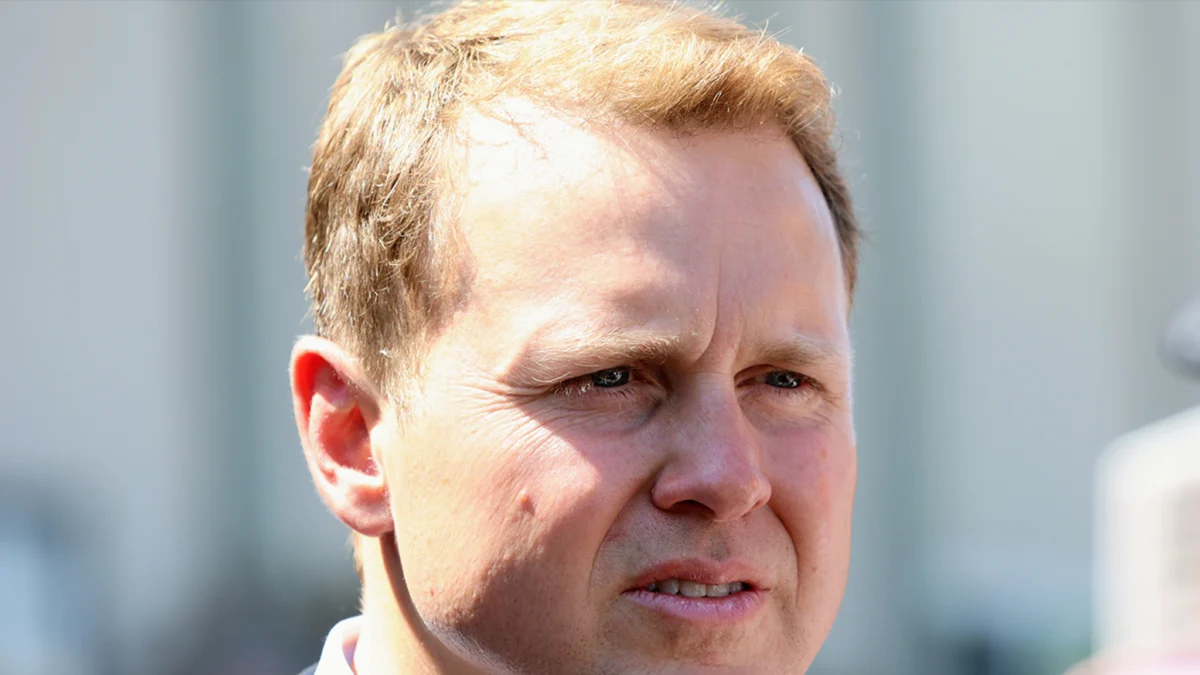
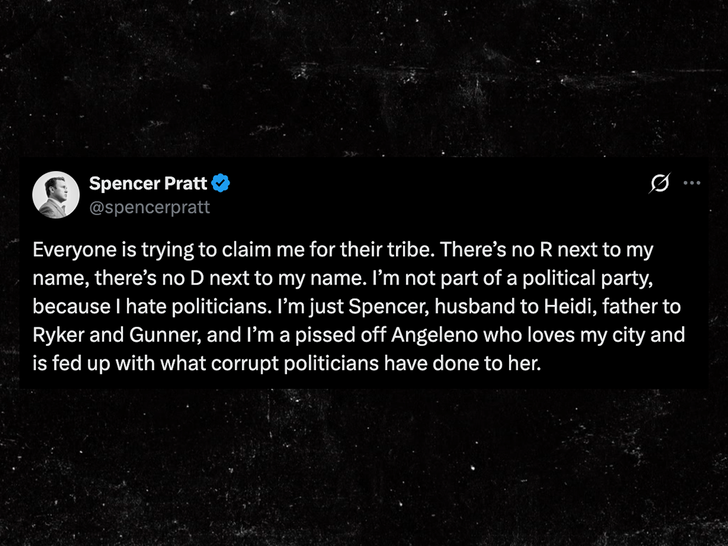
Reality television personality turned aspiring political figure, Spencer Pratt, has publicly clarified his stance on party affiliation, asserting his independence from both the Republican and Democratic parties as he campaigns for Mayor of Los Angeles. The declaration, made via social media platform X (formerly Twitter) on a recent Saturday, underscores Pratt’s desire to transcend traditional partisan divides, positioning himself as a concerned Angeleno rather than a standard politician. His statement comes amidst heightened scrutiny of his political leanings, particularly after a recent interview where he discussed his past alignment with the Republican Party, and subsequent endorsements from prominent conservative figures.
A Candidacy Without Party Lines
Pratt’s recent social media post featured an image of his name appearing on a ballot, explicitly highlighting the absence of any party designation – neither a "D" for Democrat nor an "R" for Republican. This visual emphasis reinforced his verbal assertion: "My name doesn’t have a ‘D’ for Democrat or ‘R’ for Republican on it… I’m not part of either tribe, as he calls them." He elaborated on his motivation, stating his general disdain for conventional politicians and his commitment to addressing the needs of Los Angeles residents without the perceived constraints of party platforms. This move is a strategic one, aiming to appeal to a broader electorate often disillusioned with the two-party system. In a diverse metropolis like Los Angeles, where voter concerns span a wide spectrum of issues from homelessness and public safety to economic development and environmental protection, a non-partisan appeal could resonate with a significant portion of the population.
The Roots of a Republican Affinity
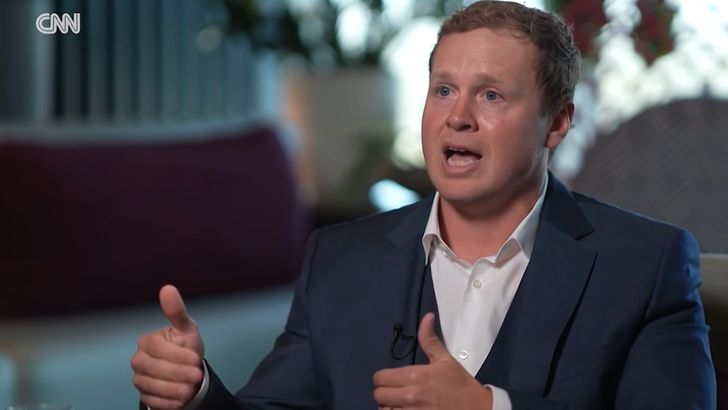
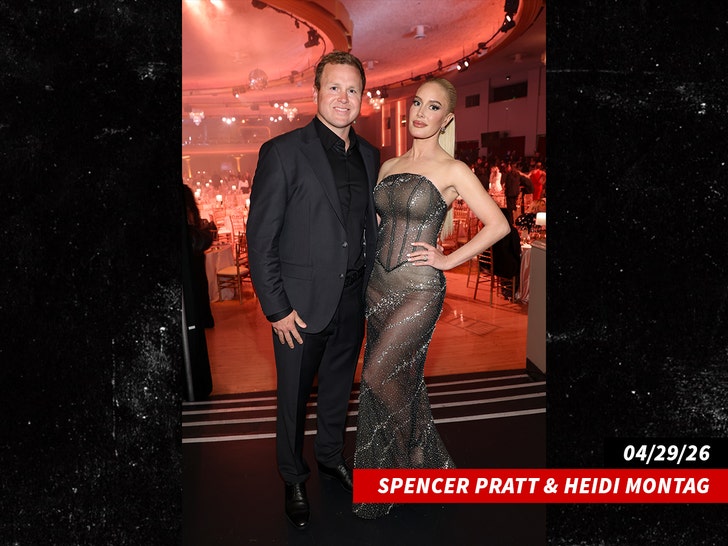
The reality star’s current declaration of independence marks a nuanced evolution from previous public statements. Just days prior, Pratt had engaged in a candid discussion with Elex Michaelson, a prominent political journalist, where he explained the origins of his past identification as a Republican. During the interview, Pratt recounted a period of intense public scrutiny and personal threats directed at him and his wife, Heidi Montag, during their peak fame on the reality show The Hills. Faced with what he described as a hostile environment, law enforcement officials reportedly advised the couple to acquire firearms for self-protection. Pratt stated that this experience led him to embrace the Republican Party, primarily due to its staunch advocacy for Second Amendment rights and a generally pro-gun stance, which he felt was absent or actively opposed by Democrats.
This personal history provides crucial context for understanding Pratt’s political journey. The threats he and Montag faced were not isolated incidents but rather part of a broader phenomenon of intense media scrutiny and fan/hater engagement that characterized the early era of reality television. For many celebrities, navigating such public pressure often leads to seeking practical solutions for personal safety, and for Pratt, this path led him to align with a political ideology that prioritized individual gun ownership. His narrative suggests that his initial political identification was less about comprehensive policy alignment and more about a specific, deeply personal issue concerning safety and self-preservation.
Navigating Endorsements and Non-Partisan Rules
Pratt’s evolving political identity has been further complicated by recent high-profile endorsements. Former President Donald Trump and conservative activist Erika Kirk publicly threw their support behind his mayoral bid. Trump, known for his ability to sway segments of the Republican base, notably expressed his backing, a move that could potentially energize conservative voters in Los Angeles, despite the city’s predominantly liberal leanings.
Pratt’s response to Trump’s endorsement was notably circumspect. He acknowledged the support but reframed it, stating, "Everybody wants me to succeed because L.A. is the most important city in the country." This carefully worded statement allowed him to accept the visibility and potential voter engagement that comes with such an endorsement, without fully aligning himself with the broader Republican agenda or the former president’s specific political platform. It served as a rhetorical bridge, allowing him to maintain his independent stance while benefiting from the political capital of a major endorsement. This approach is typical of candidates in non-partisan races who seek to gather support from across the political spectrum without being irrevocably branded by any single party or leader.
Crucially, the Los Angeles mayoral election operates under a non-partisan system. This means that candidates’ party affiliations are not listed on the ballot, regardless of their personal leanings or past political service. This electoral structure is designed to encourage voters to focus on individual candidates’ qualifications, policy proposals, and leadership abilities rather than their party labels. Even seasoned politicians with long histories of party affiliation, such as Karen Bass, who served for over a decade as a Democratic representative in Congress before becoming Mayor of Los Angeles, run without a party designation on the municipal ballot. This fundamental rule of L.A. city elections provides the structural framework that allows Spencer Pratt to declare himself an "Independent" candidate, even if his personal political philosophy might align more closely with one party on certain issues. The non-partisan nature of the race allows him the flexibility to appeal to a wider range of voters who may be wary of partisan politics but are open to supporting a candidate based on their individual merits and vision for the city.
The Broader Landscape of Celebrity Politics
Spencer Pratt’s foray into the Los Angeles mayoral race is not an isolated incident but rather part of a growing trend of celebrities entering the political arena. From actors and athletes to reality TV stars, public figures increasingly leverage their name recognition and media platforms to pursue political office. This phenomenon reflects a broader cultural shift where celebrity status often translates into public influence, sometimes bypassing traditional political pathways and party structures.
However, celebrity candidacies come with unique challenges. While high name recognition can provide an initial advantage, candidates must quickly demonstrate a substantive understanding of policy, governance, and the specific needs of their constituents. Voters often demand more than just fame; they seek genuine commitment, practical solutions, and the ability to navigate complex political landscapes. For Pratt, this means moving beyond his reality TV persona and articulating a clear vision for Los Angeles that addresses critical issues like housing affordability, public safety, homelessness, and economic development.
The appeal of "independent" or "non-partisan" labels in contemporary American politics is also on the rise. A significant and growing segment of the electorate identifies as "No Party Preference" or "Independent," expressing dissatisfaction with the perceived gridlock and polarization of the two major parties. In California, for instance, the percentage of registered voters identifying as "No Party Preference" has steadily increased over the past two decades, now constituting a substantial bloc that candidates cannot afford to ignore. These voters are often seen as swing voters, open to considering candidates from various backgrounds who promise pragmatic solutions over ideological purity. Pratt’s explicit embrace of independence could, therefore, be a calculated move to tap into this segment of the electorate, portraying himself as a unifying force capable of bridging divides rather than exacerbating them.
Implications for the Los Angeles Mayoral Race
Pratt’s self-identification as an independent candidate, combined with his celebrity background, adds an intriguing dynamic to the Los Angeles mayoral race. While he may be a long-shot candidate against more established political figures, his campaign serves as a barometer for several broader trends in American politics.
Firstly, it highlights the continuing blurring of lines between entertainment and politics. In an era dominated by social media and constant public engagement, the skills honed in reality television – self-promotion, narrative control, and direct communication with a fanbase – can be surprisingly transferable to political campaigning.
Secondly, it underscores the strategic value of non-partisanship in municipal elections, particularly in large, diverse cities. By eschewing party labels, Pratt attempts to position himself as a candidate for all Angelenos, free from the dictates of party headquarters or national political agendas. This can be particularly appealing in local elections where issues like potholes, public transport, and local zoning often transcend traditional left-right divides.
Finally, Pratt’s campaign invites a broader discussion about what qualifies someone to lead a major city. While his background is unconventional for a mayoral candidate, his willingness to engage directly with political issues and articulate his evolving perspectives adds a unique voice to the public discourse. His journey from "The Hills" to the ballot box reflects a changing political landscape where authenticity, perceived or real, and a direct connection with voters can sometimes rival traditional political experience.
As the Los Angeles mayoral race progresses, Spencer Pratt’s independent candidacy will be watched closely. His ability to translate celebrity into sustained political support, navigate the complexities of urban governance, and convince voters of his commitment to public service beyond partisan divides will be the ultimate test of his political aspirations. His clear message – that he is not a "D" or an "R" but an independent Angeleno seeking to make a difference – sets a distinctive tone in an increasingly fragmented political environment.