




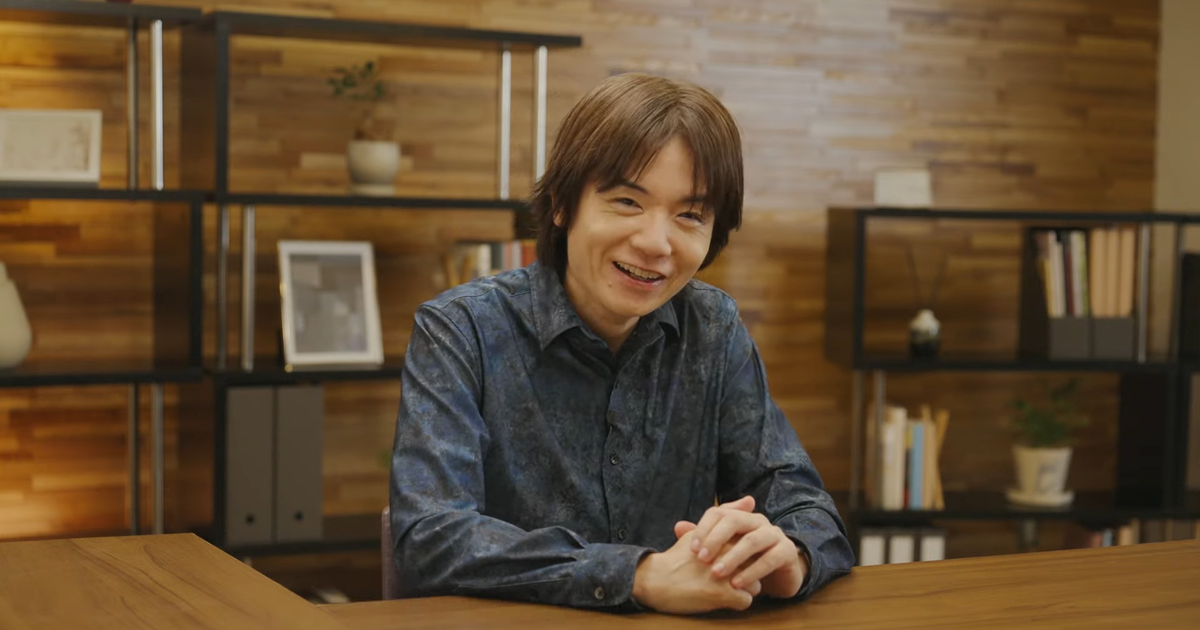
The landscape of modern game development is undergoing a seismic shift as the barrier to entry for creators continues to plummet. According to legendary game designer Masahiro Sakurai, the creator of the Super Smash Bros. and Kirby franchises, this democratization of production comes with a significant caveat: the rise of generative artificial intelligence is poised to saturate the global market with "unprofitable" and derivative titles. In a recent interview with Japanese media outlet Denfaminicogamer, Sakurai argued that while technology is making it easier than ever to build games, the lack of genuine, forward-thinking human creativity in AI-generated projects will lead to a collapse of quality and market viability.
The Explosion of Market Volume
To understand the gravity of Sakurai’s concerns, one must look at the data surrounding digital storefronts. In 2010, the Steam platform—the world’s largest digital distribution service for PC gaming—hosted approximately 275 new game releases. By contrast, the current year has seen that figure skyrocket to over 19,000 releases. This exponential growth is not merely a product of traditional development cycles; it is fueled by a combination of accessible engine tools like Unity and Unreal, and, increasingly, the integration of generative AI.
Sakurai posits that this trend is only in its infancy. As AI models become more adept at generating code, assets, and level design, the volume of games released annually will continue to climb. However, he warns that this proliferation will result in a "noise" problem, where the sheer quantity of games makes it impossible for consumers to find high-quality, meaningful experiences. Most of these AI-assisted titles, Sakurai argues, are essentially mechanical rehashes—games that pull from existing tropes, systems, and aesthetics without introducing any conceptual novelty.
The Trap of Replicability
The issue, according to Sakurai, lies in the fundamental nature of how generative AI functions. Large language models and generative image engines are trained on massive datasets of existing work. Consequently, they are excellent at mimicking what has already been done, but they lack the capacity to innovate or "forge a path" into entirely new genres or philosophical experiences.
Sakurai pointed to the recent rise of "simulator" games—simple, repetitive titles that task players with mundane chores like organizing shelves or sorting items—as the primary victims of this trend. These titles are often characterized by viral, "meme-worthy" concepts that are easily cloned. When a game like Needle in a Haystack Simulator gains traction, the ease with which AI can replicate the core gameplay loop leads to a flood of copycat products. This phenomenon forces legitimate developers to implement measures such as "originality" branding just to distinguish their work from AI-generated imitators.
The Irreplaceability of Human Vision
While generative tools can emulate the structure of a game, Sakurai insists they cannot replicate the soul of a visionary designer. He specifically cited Fumito Ueda, the mastermind behind titles such as Ico, Shadow of the Colossus, and The Last Guardian, as the antithesis of the AI-driven production model.
Ueda’s work is characterized by a specific, highly personal artistic sensibility that dictates the pacing, emotional weight, and minimalist design of his games. Sakurai suggests that while AI might be able to piece together a game that looks or plays like a generic puzzle or action title, it cannot conceive of the "unique flavor" that defines a creator’s signature style. For Sakurai, the future of the industry belongs to those who possess the human capacity to synthesize experience into art—an act of creation that requires a perspective that AI simply does not possess.
Industry Implications and Developer Anxiety
The impact of this technological shift is already being felt across the industry, manifesting as a mixture of opportunity and existential dread. Valve’s Steam Next Fest, a biannual event designed to showcase upcoming indie titles, has seen the number of available demos more than double compared to the previous year. While this highlights a vibrant community of developers, industry analysts note that a significant portion of this growth is attributed to low-effort, AI-assisted projects—often referred to in the community as "AI slop."
The consequences for independent developers are severe. Several studios have reported pulling their game demos and playtests from public platforms, fearing that their proprietary concepts, art styles, or mechanics will be "scraped" and replicated by AI-powered competitors before their full games can reach the market. This defensive posture is creating a climate of suspicion, where the fear of being copied is stifling the open collaboration that has historically defined the indie gaming scene.

Chronology of the AI Shift in Gaming
- 2010: Steam releases reach roughly 275 titles, marking a relatively curated era of digital distribution.
- 2020–2022: The emergence of advanced generative AI models (Midjourney, DALL-E, GPT-4) begins to capture the interest of software developers.
- 2023: Early adopters begin integrating AI into asset generation, leading to an immediate uptick in low-fidelity game releases on storefronts.
- 2024: Industry discourse shifts toward "AI slop," as the number of Steam releases hits record-breaking levels, causing visibility issues for developers.
- 2025: High-profile industry veterans like Masahiro Sakurai begin speaking publicly on the risks of market oversaturation and the devaluation of human design.
A Call for Intentionality
Sakurai’s analysis serves as a stark reminder of the distinction between "production" and "creation." As the technical labor of game development becomes cheaper and faster, the value of the "human element"—the intentionality behind every decision—increases in relative importance.
Economically, this suggests a bifurcated future for the gaming market. On one side, a massive, automated ocean of generic experiences will compete for attention, largely driven by algorithms and AI efficiency. On the other side, there will likely be a premium placed on titles that demonstrate a clear, singular human vision. Developers who prioritize depth, original narrative, and distinct artistic choices may find themselves in a better position to survive the impending glut of content.
Ultimately, Sakurai’s message is one of cautious pragmatism. He acknowledges that AI is an inevitability of the modern era, but he rejects the notion that it should replace the designer. Instead, he calls for a focus on what makes a creator a "pioneer." In an era where anything can be mass-produced, the only true competitive advantage for a developer is the ability to create something that has never existed before—a feat that, according to Sakurai, remains firmly in the domain of the human spirit. The coming years will serve as a stress test for the industry, determining whether players will continue to seek out the hand-crafted and the profound, or whether they will be content with the endless, self-referential output of a machine.