

The Genesis of a Personal Vision
The journey of Propeller One-Way Night Coach from page to screen spanned nearly three decades. John Travolta originally authored the story in 1993, intending it as a private gift for his family members. The narrative was inspired by his own experiences as a young boy, particularly a pivotal flight in 1962 that cemented his lifelong obsession with aviation. After the manuscript received enthusiastic responses from his inner circle, Travolta released it as a novella in 1997 through Warner Books.
Despite immediate interest from various production houses in the late 1990s, Travolta opted to retain the rights, citing the intimate and subjective nature of the material. In recent interviews, the director explained that the project required a specific level of creative control that only independent financing and personal oversight could provide. At age 70, Travolta finally moved the project into active production, financing the film himself to ensure that his specific aesthetic and emotional vision remained uncompromised by traditional studio mandates.
A Meticulous Recreation of 1962
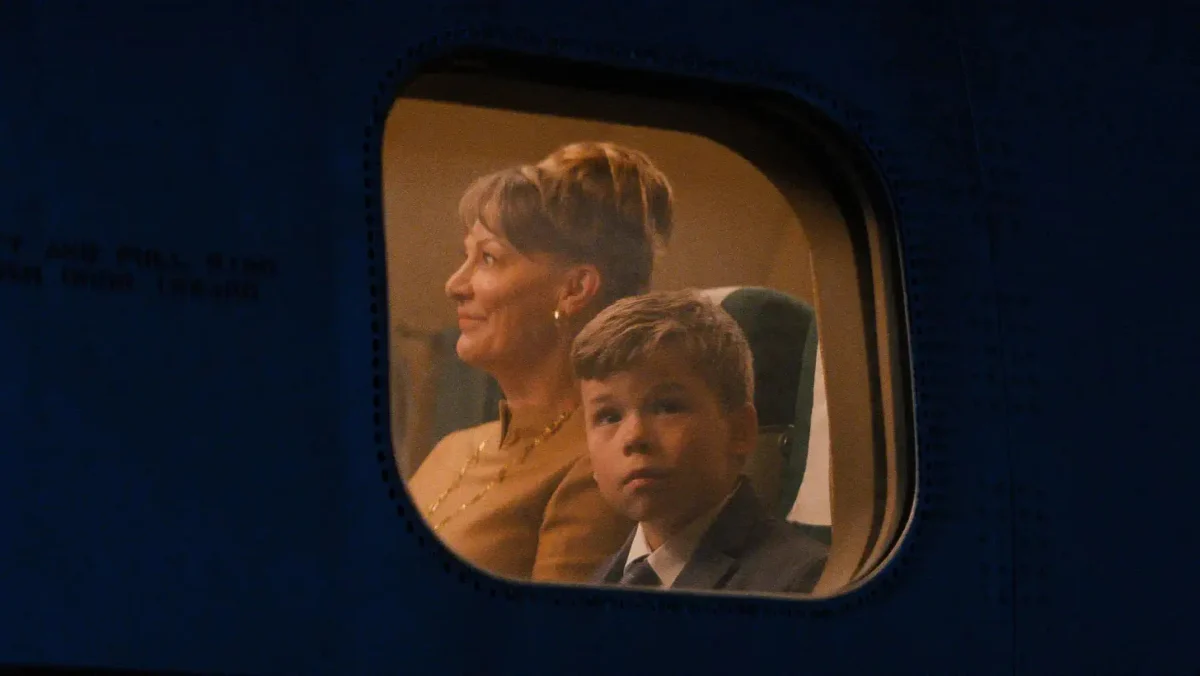
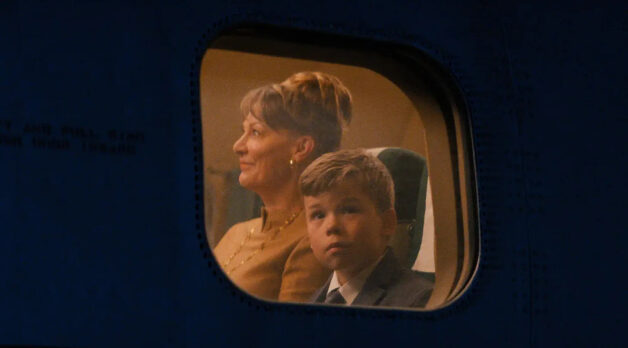
Set against the backdrop of 1962, the film follows a young boy named Jeff, played by Clark Shotwell, as he embarks on a night coach flight. The production is characterized by an extraordinary attention to "sense memory," a term Travolta uses to describe the vivid, non-judgmental way children absorb their surroundings.
To achieve the authentic look of the early 1960s, the production team focused on the specific design language of the era. This included the recreation of the TWA Flight Center at Idlewild Airport (now John F. Kennedy International Airport), designed by Eero Saarinen. The film emphasizes the architectural optimism of the time, utilizing the "Jetson-esque" curves and bold red corridors that defined mid-century modernism.
The attention to detail extended to the cabin interiors, where the director insisted on accurate depictions of 1960s airline service. Unlike the utilitarian nature of modern air travel, the film showcases a time when flying was an elite experience. This includes the depiction of "Night Coach" service, featuring colorful meal presentations—such as Chateaubriand and chicken cordon bleu—served on fine china and glassware. The costumes, particularly the flight attendant uniforms, were modeled after designs by legendary couturiers like Don Loper and Dior, who were frequently commissioned by airlines during that period to bring high fashion to the skies.
Casting and Performance Dynamics
The film’s emotional core is anchored by a cast that balances professional expertise with personal connections. Clark Shotwell’s portrayal of Jeff has been praised for capturing the precocious yet innocent nature of a child who observes the world without the burden of adult cynicism. Travolta’s daughter, Ella Bleu Travolta, plays a flight attendant who becomes a central figure in Jeff’s journey. Her performance has been noted for its "slow-motion" elegance, a stylistic choice intended to reflect how a child perceives a person of great beauty and kindness.
Kelly Eviston-Quinnett plays Jeff’s mother, Helen, a character based largely on Travolta’s own mother. The performance captures the complexities of a woman with a deep interest in the world, characterized by her "joie de vivre" and a certain theatrical flair. The film utilizes a sophisticated voiceover narration, written by Travolta, which provides an internal monologue for Jeff. This narration serves as a bridge between the child’s immediate observations and an adult’s reflective memory, creating a "stream of consciousness" effect that critics have compared to the works of mid-century European directors.
Production Logistics and Technical Precision
Despite its rich visual palette, Propeller One-Way Night Coach was produced with notable efficiency. The film was shot over a concentrated 15-day period following six weeks of intensive pre-production. The shooting schedule was divided equally among three locations:
- New York: Focusing on airport exteriors and the iconic TWA terminal atmosphere.
- Kansas: Utilized for specific interior sets and regional aesthetics.
- Los Angeles: Housing the primary cabin sets and technical soundstage work.
Travolta’s approach to directing was influenced by his decades of experience working with legendary filmmakers such as Quentin Tarantino, Brian De Palma, and Mike Nichols. From Tarantino, Travolta adopted a philosophy of narrative efficiency—trusting the audience to understand transitions without over-explaining every plot point. From Nichols and De Palma, he drew the importance of precise casting, operating under the belief that 90% of a director’s job is accomplished by placing the right actors in the right roles. This streamlined approach allowed the production to maintain high aesthetic standards while keeping costs low, a feat that garnered significant praise at the Cannes Film Festival.
The Cannes Premiere and Global Reception
The world premiere of Propeller One-Way Night Coach at the Cannes Film Festival was a landmark event. Before the screening, Festival Director Thierry Frémaux presented John Travolta with an honorary Palme d’Or, recognizing his five-decade contribution to world cinema. The 60-minute film received a standing ovation, with critics highlighting its "uncynical" and "oasis-like" quality amidst a festival often dominated by heavy drama and social commentary.
Thierry Frémaux described the film as more than a tribute to aviation, calling it a "homage to movies, actors, and the spirit of mid-century creativity." He specifically noted the film’s ability to demonstrate that high-impact art can be created with a modest budget and a clear, personal vision.
Following its festival success, the film transitioned to Apple TV, where it achieved immediate commercial success. According to data provided by the director and streaming analytics, the film became the most-streamed title on the platform within its first week of release. This success is particularly notable given the film’s 60-minute runtime, a "mid-form" length that challenges traditional categorization but appears to resonate with modern streaming audiences.
Aural Landscape: The Soundtrack of an Era
Music plays a foundational role in the film’s narrative structure. Travolta curated a soundtrack that reflects the "onslaught of Brazilian samba" and popular jazz that defined the early 1960s. The film features works by:
- Antônio Carlos Jobim and Sérgio Mendes: Providing the bossa nova rhythms that underscore the "Girl from Ipanema" aesthetic of the flight attendants.
- Dave Brubeck: His "Take Five" is used to complement the Saarinen architecture of the airport terminals.
- Frank Sinatra and Tony Bennett: Representing the sophisticated American pop standards of the era.
- Barbra Streisand: Her rendition of "Lazy Afternoon" is used to underscore a pivotal, golden-hued scene between Jeff and his mother.
The director synchronized the dialogue and narration to the specific cadences of these tracks, creating a "kismetic" relationship between sound and image. This meticulous audio-visual integration reinforces the film’s theme of memory as a collection of sensory vignettes.
Historical Context and Broader Implications
Propeller One-Way Night Coach arrives at a time when the film industry is increasingly exploring nostalgia and personal "autofiction." However, Travolta’s film distinguishes itself by focusing on resilience and hope. While the narrative acknowledges the darker undercurrents of the 1960s—including references to the Cold War, the Cuban Missile Crisis, and the lingering trauma of World War II—it filters these through a child’s capacity for empathy and recovery.
Industry analysts suggest that the success of the film could signal a new trend in "legacy projects," where established stars utilize their resources to produce highly personal, medium-length features that bypass the traditional studio system. The partnership between Travolta’s independent production and Apple TV’s global distribution network serves as a model for how specialized, "boutique" cinema can reach a mass audience.
Ultimately, Propeller One-Way Night Coach is a testament to the enduring power of childhood wonder. By meticulously reconstructing a specific moment in time—the intersection of mid-century design, the birth of the jet age, and the intimate bond between a mother and son—John Travolta has created a film that functions as a living time capsule. Its success at Cannes and on digital platforms reaffirms that deeply personal stories, when told with technical precision and emotional honesty, possess a universal appeal that transcends the boundaries of era and genre.