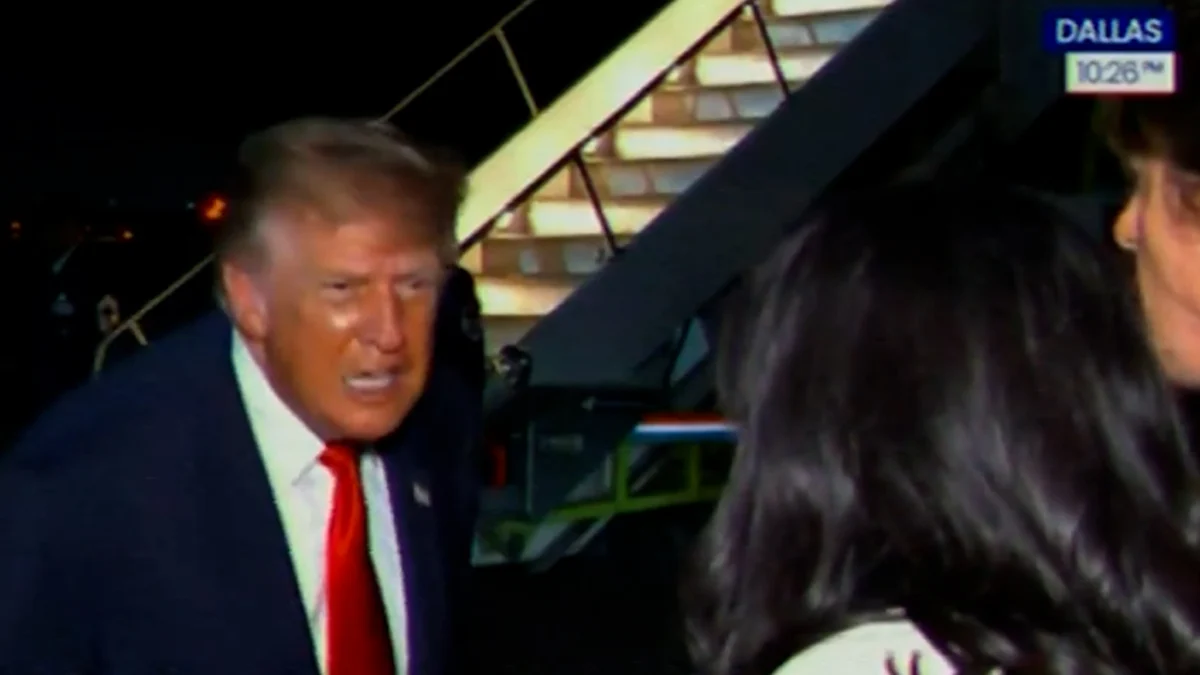
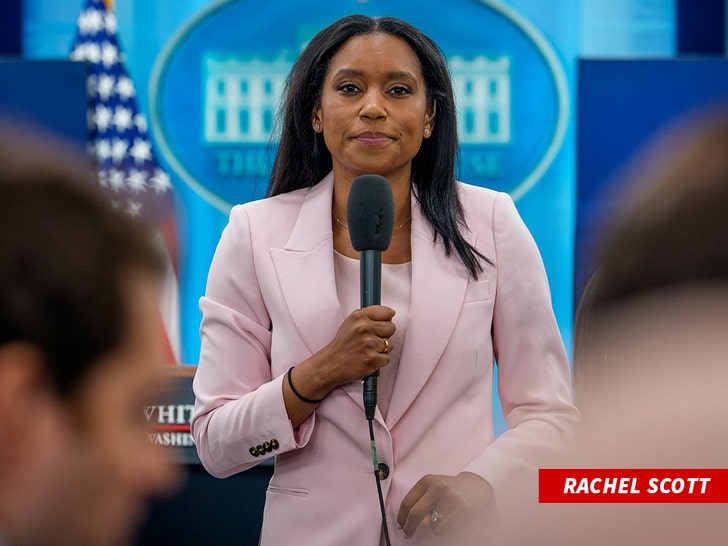
The intersection of national economic policy, electoral strategy, and high-stakes media relations erupted into public view during a tense tarmac exchange in Dallas, Texas. President Donald Trump, having just arrived to address supporters and party officials ahead of a Republican National Committee event, clashed visibly with ABC News senior congressional correspondent Rachel Scott. The confrontation, which quickly circulated across digital platforms and broadcast networks, centered on a proposed $5,000 voter incentive program, the burgeoning $40 trillion national debt, and the long-standing friction between the administration and major news organizations.
The incident underscores the delicate and often volatile nature of political discourse as both parties gear up for pivotal midterm elections. While supporters view the president’s direct and combative media interactions as a sign of authenticity and strength, critics and media advocacy groups argue that personal attacks on journalists undermine the principles of a free press and deflect from substantive policy debates.
Chronology of the Tarmac Exchange
The confrontation unfolded on the tarmac of Dallas Love Field as President Trump disembarked from Air Force One. Media representatives, traveling with the presidential press pool, had gathered to capture arrivals and pose impromptu questions regarding the administration’s legislative agenda and upcoming campaign stops.
The exchange began when Rachel Scott posed a direct question concerning a recently announced policy proposal: a $5,000 direct payment intended for American taxpayers, ostensibly framed by proponents as an economic relief measure and by critics as a direct electoral incentive ahead of the midterms. Scott pressed the president on the fiscal rationale of the initiative, juxtaposing it against broader economic concerns, including a national debt that has recently surpassed the $40 trillion threshold.

President Trump initially addressed the question by rejecting the premise that the financial proposal constituted vote-buying. Instead, he attributed the necessity of such relief measures to the lingering effects of the previous administration’s economic policies, which he asserted had caused inflationary pressures and systemic economic stagnation during the initial phase of his second term. Furthermore, the president widened the scope of his response to criticize prior governance on issues related to border security, national crime rates, and federal spending.
As the exchange continued, Scott attempted to interject with a follow-up question. Before she could finish formulating her query, the president abruptly cut her off. Visibly irritated and stepping forward, Trump pointedly directed his remarks at the reporter, shouting, "Not you!" and declaring her "the worst" before turning his attention to other members of the press corps. The abrupt shift in tone brought the impromptu press conference to an abrupt halt, leaving political commentators and media analysts to dissect the interaction.
Economic Policy and the $5,000 Proposal
At the heart of the journalistic inquiry lies a controversial fiscal proposal: the distribution of $5,000 checks to eligible American citizens. Proponents within the Republican party argue that the measure serves as a vital economic booster designed to return capital directly to households struggling with the cumulative effects of inflation and elevated interest rates.
However, macroeconomic analysts and fiscal watchdogs have raised serious concerns regarding the timing and inflationary impact of such a broad spending measure. Economists point out that injecting large sums of liquidity into the consumer market can reignite inflationary cycles, counteracting the Federal Reserve’s efforts to stabilize prices. Moreover, critics from the opposition party argue that the proposal lacks long-term structural reform, functioning instead as a transparent mechanism to influence voter behavior ahead of high-stakes congressional elections.
The debate over the $5,000 initiative is further complicated by the state of federal finances. With the national debt having officially crossed the $40 trillion mark, policymakers face mounting pressure to address structural deficits through entitlement reform, tax adjustments, or federal spending cuts. Introducing large-scale cash distribution programs without corresponding revenue enhancements or expenditure reductions has intensified scrutiny from both conservative deficit hawks and liberal fiscal analysts, who question the long-term sustainability of such policies.

Media Relations and the White House Press Corps
The hostile interaction between President Trump and Rachel Scott is the latest chapter in a long history of adversarial relations between the executive branch and specific members of the mainstream media. Throughout his political career, Trump has frequently categorized critical reporting as "fake news" and has singled out individual journalists from networks such as ABC, CNN, and NBC for direct criticism.
Media ethicists note that while political figures have historically maintained a contentious relationship with the press, the escalation to personal insults and direct verbal rebuffs represents a departure from traditional norms of executive decorum. Defenders of the president, conversely, argue that mainstream reporters frequently operate with an institutional bias, framing policy questions in a manner designed to elicit negative coverage or damage the administration politically. From this perspective, the president’s aggressive pushback is seen as a necessary defense mechanism against hostile media framing.
Organizations advocating for press freedom have routinely condemned such verbal attacks, arguing that they create a hostile working environment for journalists striving to hold public officials accountable. The White House Correspondents’ Association and similar bodies maintain that robust, unfiltered questioning is a constitutional necessity, regardless of how challenging or uncomfortable the inquiries may be for the administration in power.
Broader Implications for the Midterm Elections
The Dallas incident occurs against the backdrop of an intensely competitive political landscape. As both political parties vie for control of Congress in the upcoming midterm elections, economic messaging has emerged as the central battleground for voters.
For the Republican Party, the primary objective is to maintain voter enthusiasm by highlighting economic populist measures, border enforcement, and public safety initiatives while laying the blame for systemic financial burdens on previous legislative actions. Conversely, the Democratic opposition has sought to weaponize fiscal indicators—such as the escalating national debt and lingering cost-of-living challenges—to undermine the credibility of the administration’s economic platform.
Incidents like the tarmac confrontation carry significant weight in contemporary media ecosystems. Rather than remaining isolated local events, such exchanges are rapidly amplified across social media platforms, shaping public perceptions of leadership style, media credibility, and political competence. For supporters, the president’s refusal to entertain what he perceives as biased questioning reinforces his image as a fighter who refuses to be intimidated by institutional critics. For detractors, the outburst is cited as evidence of volatility and an intolerance for democratic oversight.
As the campaign cycle progresses, the tension between the executive branch and the press corps is unlikely to abate. Both sides remain locked in a continuous struggle over narrative control, where policy debates, economic data, and personal confrontations routinely intersect on the national stage.