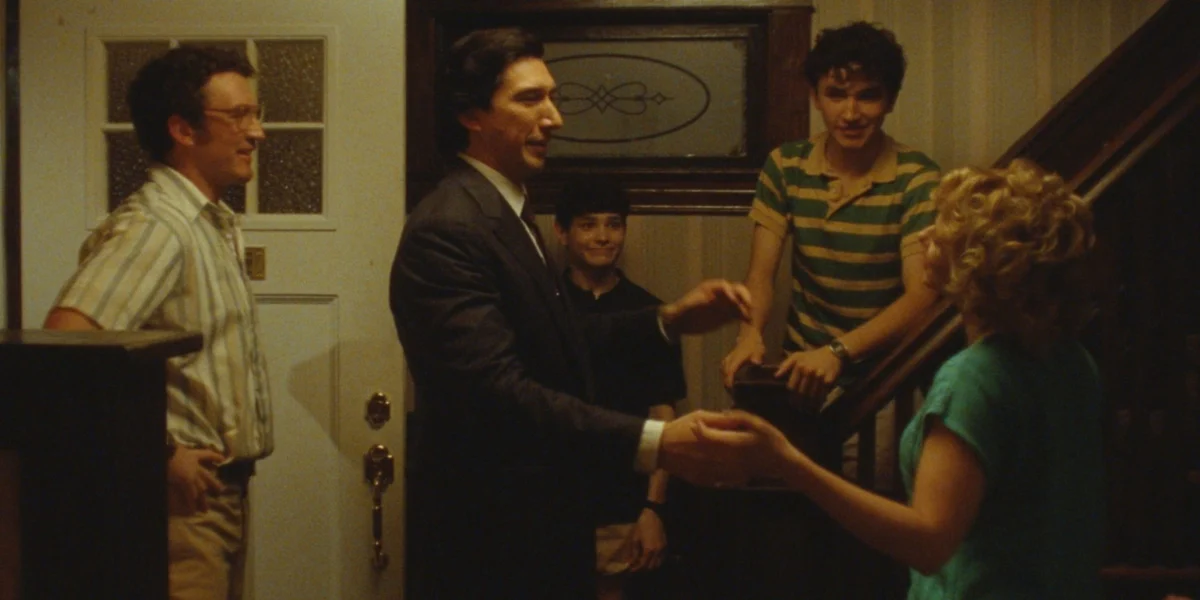
James Gray’s latest cinematic offering, "Paper Tiger," a meticulously crafted crime drama set against the gritty backdrop of 1980s Queens, New York, has arrived with significant anticipation, particularly following its screening at the prestigious 2026 Cannes Film Festival. This film marks a return to the director’s earlier thematic territory, echoing the atmospheric intensity of his seminal indie crime dramas like "Little Odessa" and "The Yards," while also exhibiting the ambition seen in "We Own The Night." However, early critical assessments suggest that while the film showcases Gray’s undeniable directorial prowess and a stellar cast, it may not reach the heights of his most celebrated works, presenting a complex narrative of familial ambition entangled with dangerous organized crime.
The narrative centers on the Pearl family, striving to achieve the quintessential American Dream in the vibrant, yet often unforgiving, landscape of Queens. The year is 1986, a period marked by significant economic shifts and the burgeoning influence of new criminal elements. Irwin Pearl, portrayed by Miles Teller, a skilled engineer, finds his stable life with his wife Hester (Scarlett Johansson) and their two teenage sons disrupted by an alluring, yet perilous, proposition from his elder brother, Gary (Adam Driver). Gary, a former police officer with an innate ability to navigate the city’s underbelly and a magnetic personality, has become entangled with a new wave of Russian organized crime figures who have effectively supplanted the established Italian mafia in controlling key port operations along the Gowanus Canal.
The Lure of Opportunity and the Shadow of Crime
The Gowanus Canal area, historically a hub of industrial activity and a complex network of logistical challenges, had become a focal point for lucrative, albeit legally ambiguous, operations. As the power vacuum left by the Italian mafia began to be filled, ambitious individuals, including Gary Pearl, saw an opportunity. Gary, leveraging his past law enforcement connections and his natural charisma, positioned himself as a crucial intermediary between the burgeoning Russian syndicate and the city’s infrastructure. He envisioned a partnership where Irwin’s technical acumen in engineering would be instrumental in navigating the intricate regulatory and logistical hurdles associated with port operations, while Gary would handle the more sensitive, direct negotiations with the Russian crime bosses.
This partnership, born out of a desire for financial security and a belief in their collective ability to overcome any obstacle, quickly plunges the Pearl brothers into a world far removed from their suburban aspirations. Irwin, the methodical engineer, finds himself out of his depth, grappling with the unspoken rules and brutal realities of a criminal enterprise. Gary, conversely, seems to thrive in this environment, his street smarts and confidence allowing him to navigate the volatile relationships with the Russian mafia. The film meticulously chronicles their descent, highlighting how a seemingly straightforward business venture transforms into a dangerous game of survival, where paranoia and distrust are the dominant currencies.
A Deep Dive into Familial Bonds Under Duress
At its core, "Paper Tiger" explores the profound impact of external pressures on familial bonds. The narrative arc is deeply intertwined with the test of brotherhood between Irwin and Gary. As the stakes escalate, the film probes the potential for betrayal, the erosion of trust, and the lengths to which individuals will go to protect their loved ones. The Russian mafia, depicted as a ruthless and highly territorial organization, operates with a code of conduct that prioritizes loyalty and swift retribution. Any perceived transgression, misstep, or sign of weakness can have dire consequences, not only for those directly involved but also for their families.
The film’s tension is amplified by the palpable threat to the Pearl family. The Russian gangsters, accustomed to operating with impunity, begin to exert pressure, making the brothers’ lives increasingly precarious. The narrative builds to intense sequences, including fraught negotiations between Gary and the syndicate’s leaders, where a single misspoken word or a dismissive glance can have fatal repercussions. Gray’s directorial skill is evident in his ability to craft these scenes with a palpable sense of dread, immersing the audience in the escalating danger.
Character Performances: A Mixed Landscape
The ensemble cast of "Paper Tiger" features some of Hollywood’s most recognizable talents, each bringing their distinct gravitas to the proceedings. Adam Driver delivers a standout performance as Gary Pearl, embodying a charismatic and seemingly invincible figure who believes he can control any situation. Driver’s portrayal captures Gary’s swagger and confidence, a man walking a tightrope between ambition and destruction. His character is the epitome of the "fixer," attempting to maintain equilibrium in a world spiraling out of control.
Miles Teller, as Irwin Pearl, provides a grounding presence. He portrays the more reluctant participant, a man whose primary motivation is the protection of his family, but who is ultimately ill-equipped for the dangerous world his brother has drawn him into. Teller effectively conveys Irwin’s increasing desperation and the psychological toll of his involvement.
Scarlett Johansson, as Hester Pearl, faces the challenges of a character who, while central to the family’s emotional core, appears somewhat underserved by the screenplay. Her role involves significant emotional moments, conveying her anxieties about her sons and dealing with personal health struggles that impact her disposition. While these scenes are designed to elicit a strong audience response, the script, according to some analyses, does not consistently provide the character with the depth necessary to fully support the dramatic weight placed upon her.
The Visual and Tonal Landscape
A notable aspect of "Paper Tiger" is its visual presentation, which deviates from the polished aesthetic often associated with James Gray’s previous works like "The Immigrant," "The Lost City of Z," and "Ad Astra." The film adopts a rougher, more unvarnished look, which effectively captures the gritty, transitional atmosphere of late 1980s New York. The cinematography often leans towards a muddy, drab palette, immersing the viewer in the grime and shadows of a city in flux. This visual choice, while intentional in its evocation of the period and setting, has been noted by some critics as occasionally feeling at odds with Gray’s typically refined directorial sensibilities. The editing, too, has been described as uneven at times, contributing to a sense of rawness that may not align with the director’s established reputation for meticulous craft.
However, this stylistic approach also serves to heighten the film’s tension. The constant feeling of dread and the escalating danger faced by the Pearl family are underscored by this less-than-pristine visual language. Gray’s command over suspenseful sequences is undeniable, whether it’s the direct threats from the Russian gangsters against the Pearl family, the tense dialogues between Gary and the crime bosses, or the climactic confrontations that punctuate the narrative. The film effectively conveys a sense of impending doom, with Irwin’s honest, though ultimately ill-advised, decisions inadvertently fueling the paranoia of the Russian syndicate.
Thematic Resonance and Critical Reception
"Paper Tiger" delves into classic themes of ambition, the corrupting influence of wealth, and the inherent dangers of pursuing the American Dream through illicit means. The film positions the Pearl brothers as individuals caught between their aspirations for success and the harsh realities of a criminal underworld. The narrative is framed by the societal context of the 1980s, a decade characterized by economic boom, increased globalization, and the persistent allure of upward mobility, often accompanied by significant risks. The rise of Russian organized crime in major American cities during this period, particularly in the aftermath of the collapse of the Soviet Union, provides a compelling and historically resonant backdrop for the story.
The film’s retrospective on these themes, while engaging, has also drawn commentary regarding its tonal balance. While Gray is acknowledged for his skill in building suspense, some critics suggest that a degree of romanticism toward the period and its inhabitants occasionally softens the edges of the crime narrative, pushing it towards melodrama. This sentimental inclination, a recurring element in Gray’s filmography, is seen by some as overwhelming the harder-edged crime elements that form the story’s core, thereby impacting the overall perception of the film and, consequently, the performances within it.
Despite these observations, "Paper Tiger" is not without its merits. It presents moments where Gray’s distinctive storytelling prowess shines through, reminding audiences of his status as a compelling American filmmaker. The film’s exploration of brotherhood under extreme duress, coupled with its atmospheric depiction of a specific time and place, offers a thought-provoking cinematic experience. Yet, as a collective piece, "Paper Tiger" is perceived by many as a less impactful entry in Gray’s already distinguished filmography, particularly within the crime genre he has so effectively navigated. The film’s ambition to be both a star-studded crime drama and a profound tragedy is evident, but its ultimate success in balancing these elements remains a subject of critical debate. The conclusion, for many, echoes the plight of the Pearl family itself – a dream that, for all its effort, remains just out of reach.