

Nexstar Media Group has officially closed its $6.2 billion acquisition of Tegna Inc., a move that fundamentally reshapes the American media landscape by uniting two of the nation’s largest owners of local television stations. The completion of the deal follows a pivotal period of regulatory review and political maneuvering, culminating in a green light from the Federal Communications Commission (FCC) and the Department of Justice (DOJ). However, the merger’s finalization occurs under a cloud of significant legal opposition, as a coalition of state attorneys general and industry competitors have launched federal antitrust lawsuits to dismantle the tie-up, alleging it will lead to higher consumer costs and a degradation of local news competition.
With the integration of Tegna’s portfolio, Nexstar now controls more than 260 local broadcast stations across the United States. This vast network includes affiliates of all major national broadcasters, including ABC, CBS, NBC, and Fox. The acquisition solidifies Nexstar’s position as the dominant force in local television, reaching a footprint that covers the vast majority of American households. The deal’s closure is seen as a watershed moment for the broadcast industry, which has struggled to maintain its relevance and revenue streams in an era increasingly defined by digital streaming services and the decline of traditional pay-TV subscriptions.
The Regulatory Path and the 39 Percent Ownership Cap
The primary hurdle for the Nexstar-Tegna merger was the long-standing federal regulation known as the national audience reach cap. Under current FCC rules, no single company is permitted to own a group of broadcast stations that reach more than 39% of U.S. television households. Historically, this cap has served as a firewall against excessive media consolidation, ensuring a diversity of voices in local markets.
To facilitate the closing of the Tegna deal, the FCC and the DOJ granted a rare waiver of this 39% rule. Regulators argued that the evolving nature of the media market—specifically the rise of "Big Tech" platforms and global streaming giants—necessitates a reevaluation of traditional broadcast limits. The decision reflects a shift in regulatory philosophy, suggesting that local broadcasters must achieve greater scale to compete for advertising dollars and carriage rights against unregulated digital entities.
The waiver was heavily influenced by the political climate. In February, President Donald Trump publicly endorsed the merger via his TruthSocial platform, characterizing the deal as a necessary step to strengthen American media companies against foreign and tech-sector competition. FCC Chairman Brendan Carr echoed these sentiments, noting that the traditional distinctions between broadcast, cable, and streaming have blurred, and that regulatory frameworks must adapt to allow legacy media to survive.
A Chronology of the Acquisition
The path to the $6.2 billion closing was marked by several critical milestones and shifts in market expectations:
- August 19, 2025: Nexstar Media Group officially announces its intent to acquire Tegna for $3.54 billion in cash, plus the assumption of debt, bringing the total enterprise value to approximately $6.2 billion.
- Late 2025: Industry analysts express skepticism regarding regulatory approval, citing the 39% ownership cap and potential pushback from consumer advocacy groups. Nexstar and Tegna begin an intensive lobbying campaign in Washington D.C.
- February 2026: President Trump issues a formal endorsement of the merger. This endorsement is seen as a turning point, signaling to the FCC and DOJ that the administration favors consolidation in the broadcast sector.
- March 19, 2026: Eight states, led by New York and California, file a federal antitrust lawsuit to block the deal, arguing that it would harm consumers and reduce the quality of local journalism.
- Late March 2026: DirecTV, one of the nation’s largest satellite TV providers, files its own independent antitrust lawsuit, alleging that the combined Nexstar-Tegna entity would use its massive market share to engage in "predatory" pricing during carriage negotiations.
- April 2026: Despite the pending litigation, the FCC and DOJ provide the necessary regulatory clearances and waivers. Nexstar moves quickly to finalize the transaction, officially closing the deal ahead of the originally projected late-2026 timeline.
Financial Dynamics and the Shift in Revenue Models
The $6.2 billion price tag reflects the high value Nexstar places on "retransmission consent fees." For decades, broadcast stations relied primarily on local and national advertising. However, in the last 15 years, the industry has shifted toward a model where cable, satellite, and streaming providers (like Comcast, DirecTV, and YouTube TV) must pay broadcasters a fee per subscriber to carry their local signals.
For Nexstar, acquiring Tegna’s 64 stations provides immense leverage. By controlling a larger share of the stations that carry essential programming—such as the NFL, major sporting events, and high-rated local news—Nexstar can demand higher retransmission fees from distributors. This revenue is critical for offsetting the "cord-cutting" trend, where millions of Americans are canceling traditional cable packages.
According to industry data, retransmission revenue for the top broadcast groups has grown from roughly $200 million in 2006 to over $14 billion in recent years. Analysts suggest that the Nexstar-Tegna entity will be able to generate billions in annual free cash flow, which Nexstar CEO Perry Sook has indicated will be used to pay down debt, return capital to shareholders, and reinvest in digital initiatives.
Legal Opposition and the Threat of "Blackouts"
The closing of the deal has not silenced its critics. The lawsuits filed by the eight state attorneys general and DirecTV represent a significant legal threat that could theoretically lead to a court-ordered divestiture or strict behavioral remedies.
The core of the legal argument against Nexstar is that the merger creates a "virtual monopoly" in several key markets. The plaintiffs argue that when one company owns too many stations, it can force distributors to accept massive price hikes. If a distributor refuses to pay, the broadcaster "pulls the signal," leading to a station blackout for consumers.
"The combination of Nexstar and Tegna is anticompetitive and not in the public interest," stated Michael Hartman, General Counsel and Chief External Affairs Officer at DirecTV. "This merger will trigger a wave of similar consolidation, ultimately leading to higher bills for every American family and more frequent blackouts of the local news and sports they rely on."
The states’ lawsuit also focuses on the impact on local newsrooms. History has shown that when large media conglomerates acquire local stations, they often consolidate operations to save costs. This frequently results in "hubbing," where news content for multiple cities is produced in a single central location, leading to fewer local reporters on the ground and a decrease in the diversity of local reporting.
Official Responses and Strategic Vision
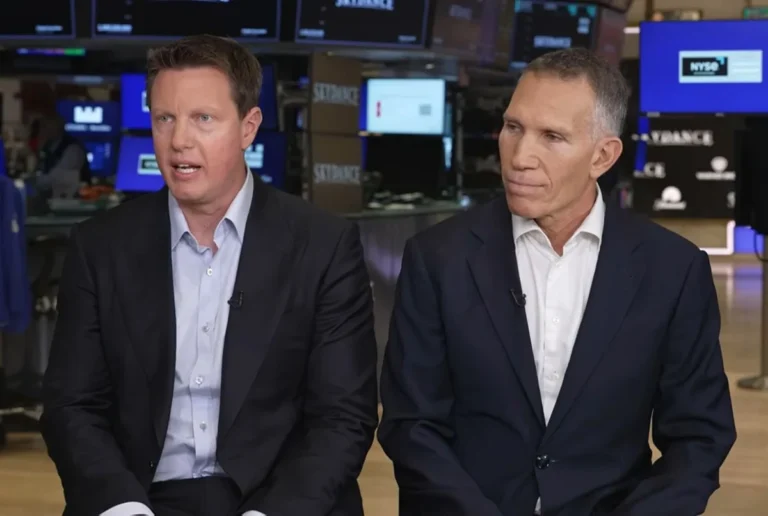
In a statement following the closing, Nexstar CEO Perry Sook defended the merger as a "pro-consumer" move that ensures the long-term viability of local television. Sook emphasized that the scale of the new company would allow for greater investment in investigative journalism and technological upgrades, such as the rollout of ATSC 3.0 (NextGen TV).
"This transaction is essential to sustaining strong local journalism in the communities we serve," Sook said. "By bringing these two outstanding companies together, Nexstar will be a stronger, more dynamic enterprise—better positioned to deliver exceptional journalism and local programming with enhanced assets, capabilities, and talent."
Sook also expressed gratitude toward the Trump administration and FCC Chairman Carr for "recognizing the dynamic forces shaping the media landscape." The company maintains that the consolidation is a defensive necessity against the "existential threat" posed by digital platforms like Google, Meta, and Netflix, which currently capture the lion’s share of the domestic advertising market.
Broader Impact and Industry Implications
The Nexstar-Tegna merger is likely to trigger a domino effect across the media industry. Other major station owners, such as Sinclair Broadcast Group and Gray Television, are expected to seek similar waivers and acquisitions to maintain their competitive standing. This could lead to a future where three or four massive corporations own nearly every local television station in the United States.
For the consumer, the implications are mixed. On one hand, a more financially stable Nexstar may have the resources to keep local stations operational in smaller markets that might otherwise go dark. On the other hand, the concentration of power raises concerns about the homogenization of news content and the rising cost of television service.
Furthermore, the legal battle ahead will be closely watched by antitrust experts. If the courts rule in favor of the states or DirecTV, it could set a new precedent that limits the power of the FCC to waive ownership caps. Conversely, a victory for Nexstar would effectively signal the end of the 39% rule as a meaningful regulatory barrier.
As Nexstar begins the complex process of integrating Tegna’s operations—which include prominent stations like WUSA in Washington, D.C., and WFAA in Dallas—the eyes of the industry remain on the federal courts. While the deal is closed in the eyes of the market, the legal fight to determine the future of American local broadcasting is only just beginning.