

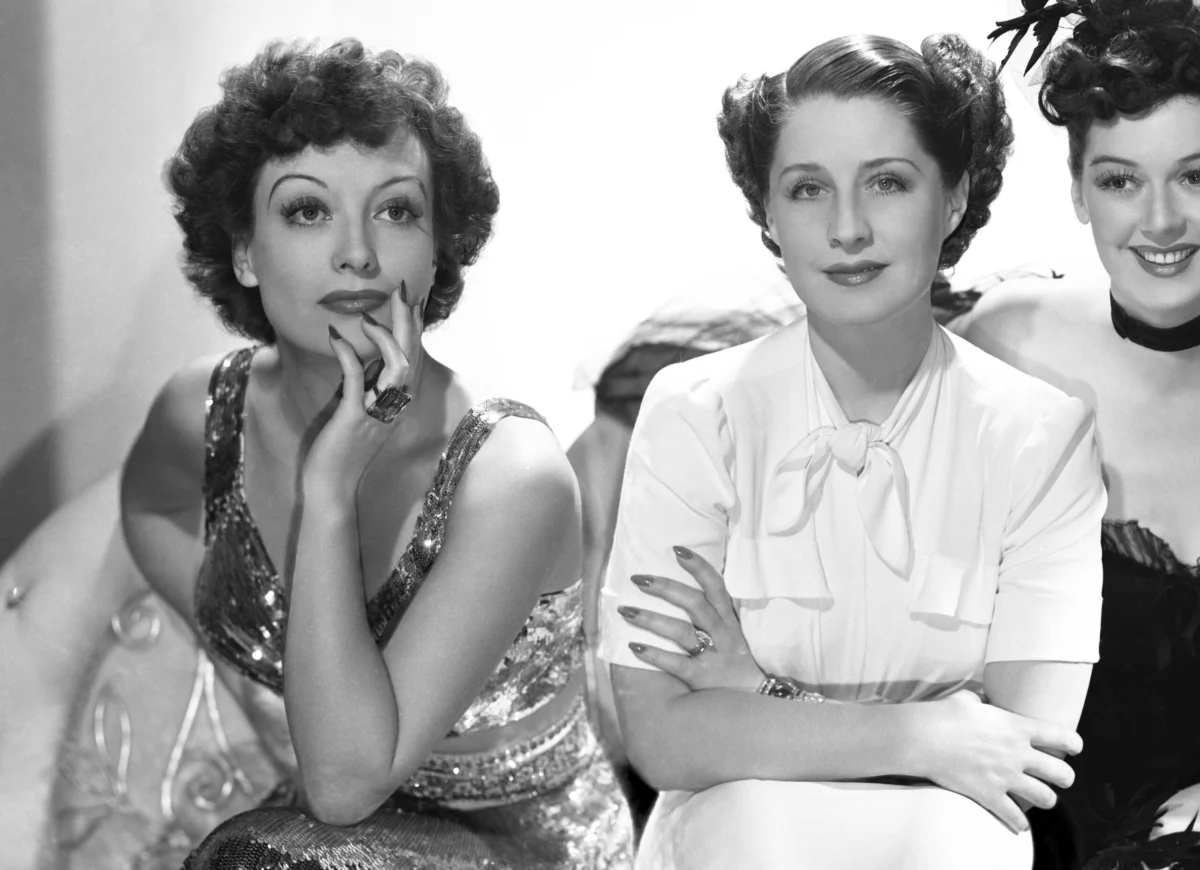
The 1939 Metro-Goldwyn-Mayer production of The Women, directed by George Cukor, remains a cornerstone of Hollywood history not merely for its pioneering all-female cast—which included luminaries such as Joan Crawford, Norma Shearer, Rosalind Russell, Paulette Goddard, and Joan Fontaine—but for the legendary interpersonal conflicts that occurred behind the camera. Illeana Douglas’s recent book, Jungle Red! The Making of MGM’s The Women, published by Lyons Press on September 15, provides a definitive account of these tensions, positing that the friction between Joan Crawford and Norma Shearer served as the definitive Hollywood feud of the Golden Age.
A Study in Contrasts: The Roots of a Rivalry
The tension between Crawford and Shearer was deeply embedded in the hierarchy of the MGM studio system. Norma Shearer, often referred to as the "First Lady of MGM," held a position of significant influence, cemented by her marriage to the studio’s production chief, Irving Thalberg. In contrast, Joan Crawford, who rose to prominence through her work in dance-oriented films like Our Dancing Daughters, was viewed by the studio elite as an ambitious newcomer.
The animosity began in 1925 when Crawford served as a body double for Shearer in Lady of the Night. Over the following decade, the two actresses occupied different professional spheres. While Shearer enjoyed prestige roles and consistent Academy Award recognition, including a Best Actress win for The Divorcee (1930), Crawford struggled for parity, often feeling relegated to lesser projects. The death of Irving Thalberg in 1936 fundamentally altered the power dynamics at MGM. With the loss of her primary protector, Shearer’s status became vulnerable, and Crawford, sensing a shift in the studio’s internal politics, began to assert herself more aggressively.
Chronology of a Production Conflict
The casting of The Women served as the catalyst for the ultimate confrontation between the two stars. The film was originally envisioned as a vehicle for Shearer, who was eager to maintain her star power following her husband’s death. However, as the film’s development progressed throughout early 1939, the production scope expanded.
- February 1939: George Cukor is attached to direct. Norma Shearer is confirmed as Mary Haines.
- March 1939: The trade press begins reporting on the search for the antagonist, Crystal Allen. Joan Crawford, actively seeking a high-profile role to rehabilitate her image after being labeled "box office poison," begins lobbying for the part.
- April 1939: Production officially commences. MGM’s publicity machine, led by Howard Strickling, immediately capitalizes on the known personal dislike between the two stars, even authorizing a Look magazine cover that depicted the pair glaring at one another.
- Production phase: The set became a battlefield of micro-aggressions, ranging from competing trailer placement and billing disputes to Crawford’s insistence on vocalizing during Shearer’s rehearsal times.
Strategic Publicity and the "Catfight" Narrative
While the rivalry had genuine personal origins, both Shearer and Crawford were savvy professionals who understood the value of publicity. Anita Loos, the film’s screenwriter, noted that the two actresses, despite their personal disdain, were fully aware that their public feud generated significant interest in the project.
The studio’s promotional efforts were relentless. By framing the film as the "Catfight of the Century," MGM ensured that the audience’s focus remained on the off-screen drama as much as the on-screen performances. This strategy, while effective at the time, also served to marginalize the contributions of the other ensemble members. The publicity campaign eventually led to a fractured promotional cycle, characterized by missed wrap parties and, notably, Shearer’s attempt to distance herself from the film in an open letter to trade publications, wherein she claimed she never wanted the role and was acting only out of loyalty to the studio.

Technical and Operational Realities on Set
The logistical management of the production fell to George Cukor, whose primary task became the physical separation of his leads. According to records from the set, Cukor utilized a strict scheduling regimen to ensure that Crawford and Shearer remained in different areas of the lot whenever possible.
The physical space of the set became an extension of the feud. The trailers assigned to the actresses were a source of constant negotiation. Shearer, as the top-billed star, demanded strict adherence to seniority, while Crawford, through her contract clauses and the presence of her personal staff and pet, challenged the established boundaries. These incidents were not mere trivialities; they reflected the intense, zero-sum environment of the late 1930s studio system, where space and billing were direct proxies for status.
Implications for the Hollywood Studio System
The feud between Crawford and Shearer highlights a broader shift in the 1930s film industry. As studios moved away from the absolute control of the early talkie era, stars began to exert more leverage, and the competition for "plum" roles became increasingly desperate. The case of The Women serves as a primary example of how studio executives like Louis B. Mayer and producers like Hunt Stromberg utilized the personal lives and rivalries of their talent to manufacture buzz.
Furthermore, the film’s success proved that a female-driven ensemble could be a commercial juggernaut. Despite the internal strife, the finished product was a critical and financial triumph. It provided a structural template for future projects, ranging from the interpersonal dynamics seen in 1960s dramas to the modern tropes popularized by reality television franchises like The Real Housewives.
Legacy and Analysis
The resolution of the production of The Women saw Crawford emerge with increased professional capital. By effectively "stealing" scenes from Shearer, Crawford solidified her reputation as a formidable talent who could thrive even without the backing of the studio’s traditional hierarchy. For Shearer, the film marked the beginning of a gradual transition away from the star-driven power she had held for over a decade.
Modern analysis of the production suggests that the "feud" was a symbiotic relationship. Both women were victims of a system that pitted female performers against one another to maintain control. While they were undoubtedly professional rivals, their mutual animosity was often amplified by the institutional structures that benefited from their competition. Today, The Women is remembered not just as a landmark in cinematic history, but as a fascinating case study in how personal identity and corporate strategy collided in the heart of Hollywood’s Golden Age. The enduring nature of their rivalry continues to fascinate film historians, serving as a reminder of the high stakes and fragile egos that defined the early era of the motion picture industry.