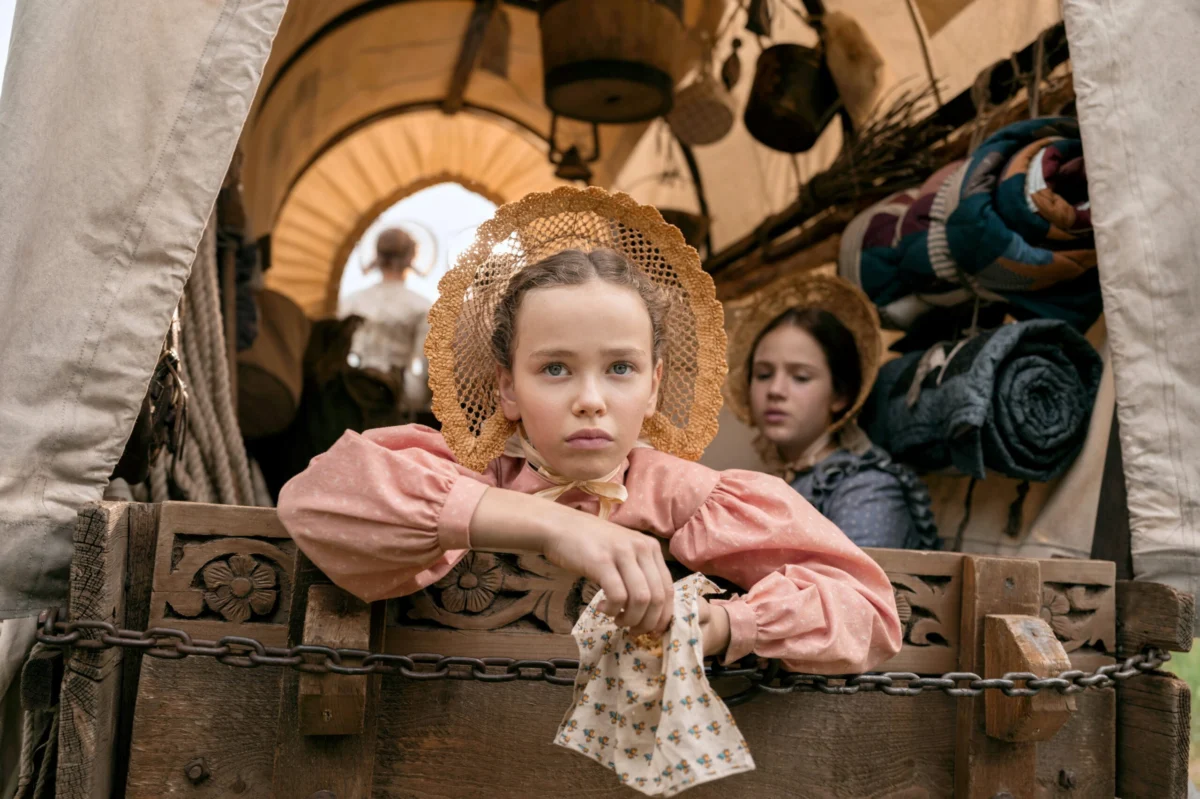
Netflix has released a second, more expansive teaser trailer for its highly anticipated series adaptation of Laura Ingalls Wilder’s iconic Little House on the Prairie. The new footage, which debuted on May 11, 2026, intensifies the focus on the Ingalls family’s arduous journey westward and their struggle to forge a new life on the vast American frontier. Scheduled to stream globally starting July 9, 2026, the series promises a sweeping, emotional reimagining of the beloved semi-autobiographical book series, aiming to introduce the timeless narrative to a new generation while honoring the spirit of the original.
A Deeper Look into the Prairie’s Heart: The Second Teaser’s Unveiling
The latest teaser, shared via YouTube, delves more intimately into the emotional core of the Ingalls family’s experience, providing a poignant glimpse into their resilience and the profound challenges they face. Unlike the initial "first look" teaser, which offered a broader introduction to the landscape and the premise, this second preview concentrates on the family unit and their initial interactions within the fledgling town of Independence. A central quote from the teaser, "The truth is… none of us can make it alone here. The prairie is so big, and we’re so small… We need help from each other," encapsulates the overarching theme of community, interdependence, and the sheer scale of the frontier’s demands.
Visually, the teaser showcases expansive cinematography, capturing the breathtaking yet unforgiving beauty of the prairie landscape. Shots of covered wagons traversing endless plains, rudimentary log cabins being erected, and the tender moments of family interaction underscore the series’ commitment to both epic scale and intimate character development. The trailer highlights key narrative elements such as the family’s departure from a known life, their arduous travel, and their efforts to establish a home amidst unfamiliar territory. It also offers fleeting but impactful glimpses of supporting characters, suggesting a rich tapestry of human connections that will define their new existence. The choice to release a second, more character-driven teaser signals Netflix’s intent to build anticipation by progressively revealing the depth and emotional resonance of the adaptation.
The Ingalls Family Reimagined: Cast and Character Portrayals
Central to any adaptation of Little House on the Prairie is the portrayal of the Ingalls family, and Netflix has assembled a cast to bring these iconic characters to life for contemporary audiences. Alice Halsey steps into the pivotal role of Laura Ingalls, the observant and spirited protagonist whose experiences form the basis of the entire saga. Her portrayal is expected to capture Laura’s journey from childhood innocence to a young woman grappling with the realities of frontier life.

Luke Bracey takes on the role of Charles Ingalls, affectionately known as Pa, the resourceful and steadfast patriarch. Bracey’s casting suggests a portrayal of Charles as a man of quiet strength, determination, and deep familial love, whose pioneering spirit drives the family’s westward expansion. Opposite him, Crosby Fitzgerald embodies Caroline Ingalls, or Ma, the resilient and nurturing matriarch. Fitzgerald’s interpretation is anticipated to highlight Caroline’s unwavering resolve, practical wisdom, and the emotional anchor she provides for her family.
Skywalker Hughes is cast as Mary Ingalls, Laura’s elder sister, whose journey is marked by both academic promise and profound personal challenges. The series will likely explore Mary’s intellectual curiosity and her eventual path, which deeply impacts the family dynamic. Beyond the immediate Ingalls family, the ensemble cast includes several compelling figures integral to their new life on the prairie. Jocko Sims joins as Dr. George Tann, a character whose presence hints at the medical realities and social fabric of frontier settlements. Warren Christie takes on the role of John Edwards, a figure whose interactions with the Ingalls family will likely explore themes of neighborliness and mutual support. The casting also includes Wren Zhawenim Gotts as Good Eagle, Meegwun Fairbrother as Mitchell, and Alyssa Wapanatahk as White Sun, signaling an intentional effort to incorporate Indigenous perspectives and interactions into the narrative, a crucial aspect of American frontier history often underrepresented or misrepresented in earlier adaptations. This diverse casting promises a more comprehensive and nuanced portrayal of the various communities inhabiting the prairie during this period.
Behind the Scenes: Creative Vision and Production Team
The creative engine behind Netflix’s Little House on the Prairie is showrunner and writer Rebecca Sonnenshine. Sonnenshine brings a diverse background to this project, having previously contributed to critically acclaimed series such as "The Boys," "The Vampire Diaries," "Archive 81," and "The Crossing." Her experience across various genres, including supernatural thrillers and complex character dramas, suggests a unique approach to the historical and emotional landscape of the Little House saga. This choice of showrunner indicates a desire to infuse the classic story with fresh narrative energy and a modern sensibility, moving beyond a simple period piece to explore deeper psychological and social themes.
The series is produced by CBS Studios and Anonymous Content, two powerhouses in television production, known for their high-quality dramatic offerings. Executive producers include Rebecca Sonnenshine, Joy Gorman Wettels for Joy Coalition, Trip Friendly for Friendly Family Productions, and Dana Fox. This robust production team signifies a substantial investment in the series’ quality and its potential to resonate with a broad audience.
Furthermore, the directorial lineup for the first season is notably diverse and accomplished, featuring Kat Candler, Sydney Freeland, Julie Anne Robinson, Sarah Adina Smith, and Erica Tremblay. This collection of directors, each with a distinct artistic voice, promises a visually rich and dynamically directed series. Their collective work on various projects, from independent films to major television dramas, suggests a commitment to nuanced storytelling and character development, which will be vital in bringing the Ingalls family’s journey to life with depth and authenticity.
The Enduring Legacy of Laura Ingalls Wilder’s "Little House" Series

The foundation of this new Netflix series lies in Laura Ingalls Wilder’s semi-autobiographical "Little House" book series, a collection that has captivated readers for generations. First published between 1932 and 1943, the nine-book series chronicles Laura’s childhood and adolescence as her family moved across the American Midwest during the late 19th century. These books, starting with Little House in the Big Woods (1932), offered a vivid, personal account of pioneering life, detailing the hardships, joys, and daily routines of a family building a home on the frontier.
Wilder’s meticulous descriptions of homesteading, farming, dealing with natural elements, and the simple pleasures of family life resonated deeply with readers, establishing the series as a cornerstone of American children’s literature. The books are not merely historical records but profound explorations of themes such as resilience, self-sufficiency, family bonds, and the pursuit of the American dream. Their enduring appeal lies in their ability to transport readers to a bygone era, offering insights into a pivotal period of American history through the eyes of a child. The series has sold tens of millions of copies worldwide and has been translated into numerous languages, cementing its status as a global literary phenomenon. Its cultural impact is undeniable, shaping perceptions of the American frontier for generations.
Interestingly, the Netflix adaptation’s first season is stated to be inspired by The Little House on the Prairie, which is actually the third book in Wilder’s series. This creative decision allows the narrative to immediately plunge into the family’s iconic move to Kansas and their establishment of the "little house" on the prairie, a location synonymous with the entire saga. However, the showrunners have also indicated an intention to explore their past and future, suggesting a non-linear narrative approach that can weave in elements from other books or original content to provide a comprehensive look at the Ingalls family’s broader journey. This flexibility could allow the series to delve into stories before the prairie, or to foreshadow events from later books, offering a fresh perspective on a familiar story.
From Page to Screen: Previous Adaptations and Their Impact
The "Little House" books have a rich history of adaptation, most notably the highly successful television series that aired from 1974 to 1983 on NBC. Starring Michael Landon as Charles Ingalls, Karen Grassle as Caroline Ingalls, and Melissa Gilbert as Laura Ingalls, this adaptation became a cultural phenomenon, drawing millions of viewers weekly and earning numerous awards. The 1970s series, while taking significant liberties with the original books, captured the hearts of a generation with its portrayal of family values, community spirit, and the struggles of pioneer life. It idealized much of the frontier experience, often omitting or simplifying the harsher realities and complex social dynamics of the era.
The impact of the 1970s series cannot be overstated. For many, it is "Little House on the Prairie," defining the visual and emotional landscape of the story. Its enduring popularity, through syndication and streaming, means that any new adaptation faces the dual challenge of honoring this beloved legacy while simultaneously carving out its own identity. Fans of the original series hold deep affection for its characters and storylines, creating a high bar for any reimagining.
Netflix’s decision to embark on a new adaptation comes at a time when streaming services are increasingly looking to intellectual property with built-in fanbases. The success of previous literary adaptations, particularly those with a nostalgic appeal or family-friendly themes, likely played a role in this strategic move. However, the landscape of historical storytelling has also evolved significantly since the 1970s. Modern audiences expect greater historical accuracy, more nuanced character development, and a broader representation of the diverse perspectives present during the period of westward expansion. The inclusion of Indigenous characters and storylines, as indicated by the casting, suggests Netflix’s adaptation aims to address some of the historical oversights and simplified narratives of past versions, offering a more complete and potentially more challenging portrayal of the American frontier.

Netflix’s Strategic Play in Family-Friendly and Period Dramas
The launch of Little House on the Prairie aligns with several key aspects of Netflix’s content strategy. Firstly, it taps into the lucrative and highly competitive market for family-friendly content. In an era where streaming platforms vie for subscribers across all demographics, a series like Little House on the Prairie offers broad appeal, capable of attracting both parents seeking wholesome viewing for their children and adults nostalgic for the original books or the 1970s series. This move diversifies Netflix’s extensive catalog, which ranges from adult dramas and thrillers to animated features, reinforcing its position as a comprehensive entertainment provider.
Secondly, the series fits within Netflix’s ongoing investment in high-quality period dramas. Titles like "The Crown," "Bridgerton," and "All Quiet on the Western Front" demonstrate the platform’s commitment to producing visually stunning and narratively rich historical pieces. Little House on the Prairie extends this trend into the American frontier, offering a distinct cultural and historical lens. These period pieces often garner critical acclaim and prestigious awards, enhancing Netflix’s brand image as a producer of prestige television.
Finally, the adaptation represents a strategic effort to leverage established intellectual property. In an increasingly crowded content landscape, recognizable titles offer a significant advantage in attracting initial viewership. The global recognition of "Little House on the Prairie" provides Netflix with a built-in audience, both domestically and internationally. This reinterpretation allows Netflix to breathe new life into a classic, potentially introducing it to millions who may be unfamiliar with the books or previous adaptations, while simultaneously satisfying the nostalgic desires of long-time fans. The challenge, as with all beloved reboots, will be to strike the right balance between fidelity to the source material and innovative storytelling that justifies its existence.
Navigating the Frontier: Modern Perspectives and Historical Context
A significant challenge and opportunity for this new adaptation lie in its approach to historical context. The original Little House books, while cherished, have faced scrutiny in recent decades for their portrayal of Indigenous peoples and the simplified narrative of westward expansion. The "American frontier" was not an empty wilderness but a land inhabited by diverse Indigenous nations, whose displacement and suffering are integral to the true history of the period.
Netflix’s adaptation, by including characters like Good Eagle, Mitchell, and White Sun, appears to be making a conscious effort to incorporate Indigenous perspectives, potentially offering a more balanced and historically accurate portrayal of the interactions between settlers and Native Americans. This is a crucial step for any modern adaptation of such a foundational American narrative. It allows the series to engage with the complexities of the past, moving beyond a romanticized view of pioneer life to acknowledge the multifaceted realities of the era.

Moreover, the series has the potential to explore themes relevant to contemporary audiences, such as environmental stewardship, the challenges of migration and displacement, the resilience of the human spirit in the face of adversity, and the definition of "home." By grounding these timeless themes in a historically nuanced setting, the series can offer both entertainment and valuable insights into the formation of American identity and the ongoing conversations about land, belonging, and cultural heritage. The creative team’s decision to present it as "part hopeful family drama, part epic survival tale, and part origin story of the American West" underscores this ambition to provide a kaleidoscopic and comprehensive view.
Anticipation Builds for a Summer Premiere
With the second teaser now released, anticipation for Netflix’s Little House on the Prairie is steadily building towards its global premiere on July 9, 2026. The combination of a beloved literary classic, a fresh creative vision from showrunner Rebecca Sonnenshine, a diverse and talented cast, and Netflix’s significant production capabilities suggests a series that could redefine the "Little House" legacy for a new era.
The decision to launch in the summer positions the series as a potential cornerstone of family viewing during a period when audiences are seeking engaging and often nostalgic content. Whether it will capture the hearts of millions as its predecessors did, while simultaneously addressing the complexities of its historical setting, remains to be seen. However, the early glimpses promise a visually stunning and emotionally resonant journey, inviting viewers to once again discover what "home" truly means on the vast and challenging American prairie. The series offers a chance for both devoted fans and new audiences to connect with the enduring spirit of the Ingalls family, reaffirming the timeless appeal of their story of survival, community, and the relentless pursuit of a better life.