




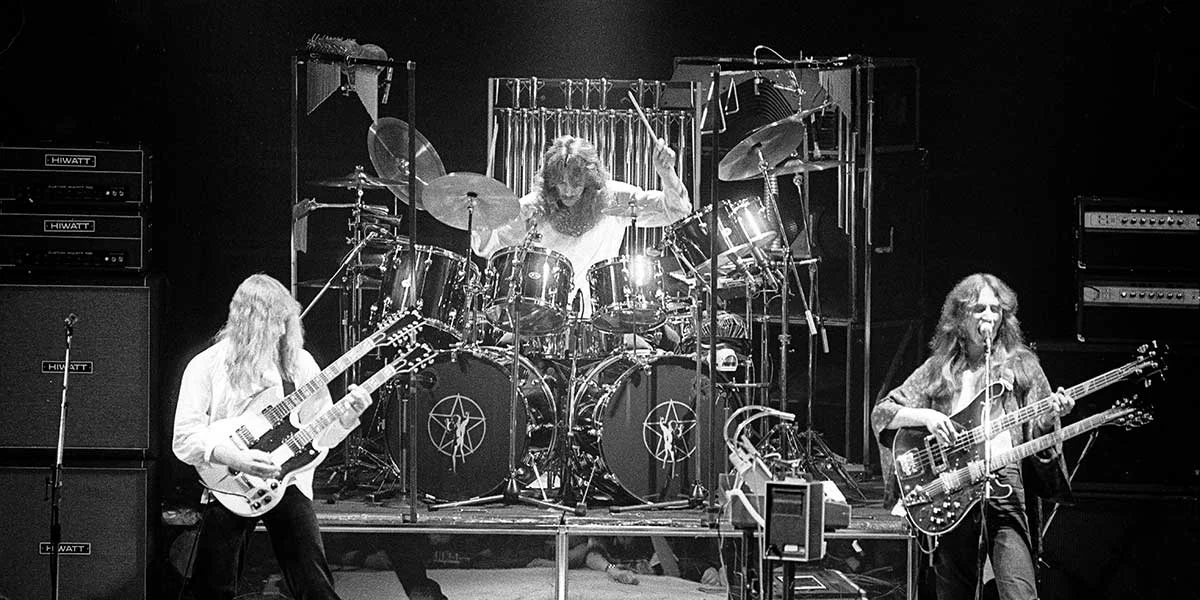
The passing of Neil Peart in January 2020 marked the end of an era for progressive rock, leaving a void in the music industry that extended far beyond his technical mastery of the drum kit. As the primary lyricist and rhythmic engine of the Canadian trio Rush, Peart’s influence remains a cornerstone of modern percussion. Now, filmmakers Scot McFadyen and Sam Dunn, known for their definitive 2010 documentary Beyond the Lighted Stage, have returned to the Rush narrative with Neil Peart: No One’s Disciple. This 106-minute feature film serves not merely as a retrospective, but as an active, living tribute, featuring bandmates Geddy Lee and Alex Lifeson as they collaborate with a curated group of legendary drummers to re-examine the intricate catalog that defined a generation.
A Chronology of Collaboration and Tribute
The impetus for the film emerged from a profound sense of unfinished business. When Peart succumbed to glioblastoma at the age of 67, the world was on the precipice of a global pandemic, which imposed severe limitations on public gatherings and memorial services. For Lee and Lifeson, who had spent 42 years as Peart’s musical partners, the sudden silence was disorienting.
The documentary tracks a timeline that begins in the wake of this forced isolation, evolving into a creative summit. McFadyen and Dunn organized a series of sessions at a rehearsal studio, bringing together four drummers—Stewart Copeland (The Police), Danny Carey (Tool), Chad Smith (Red Hot Chili Peppers), and Gavin Harrison (Porcupine Tree, King Crimson)—to perform alongside the surviving members of Rush. The film documents these sessions not as a competitive exhibition of skill, but as a cathartic process of shared mourning and musical conversation. This approach allows the film to bypass the traditional "talking head" interview format, instead using the shared language of rhythm to explore Peart’s personality and professional ethos.
Technical Prowess and Artistic Influence
Neil Peart’s technical contribution to music is often distilled into the "air drumming" phenomenon, but the documentary argues that such a reduction ignores his intellectual depth. Statistically, Peart’s output with Rush remains staggering: across 19 studio albums, he authored the vast majority of the band’s lyrics while maintaining a rigorous touring schedule that often saw the band performing three-hour sets.
The film highlights the "black page" level of complexity present in his arrangements. Gavin Harrison, known for his clinical approach to rhythmic displacement, is shown dissecting Peart’s compositions with a level of scrutiny that underscores the difficulty of the material. Similarly, Danny Carey—a drummer whose own style is characterized by polyrhythmic complexity—navigates the mathematical density of tracks like "YYZ" and "La Villa Strangiato," demonstrating how Peart utilized the drum kit not just for timekeeping, but as a lead melodic instrument.
Data regarding the technical demands of these songs remains a point of study for professional percussionists. Peart’s ability to weave odd time signatures—such as the 7/8 pulse found in the iconic "Tom Sawyer"—into mainstream radio success remains one of his most significant contributions to music theory in a popular context.
The Human Behind the Myth
A crucial aspect of the documentary is its refusal to engage in hagiography. The film portrays Peart as a multifaceted human being, acknowledging his reputation as a reserved, often enigmatic figure. His well-documented discomfort with the trappings of celebrity—often manifesting as a reluctance to engage in the typical rituals of fan interaction—is addressed with transparency.
By interviewing those who knew him intimately, the directors present a balanced portrait of a man who was simultaneously an obsessive student of his craft and a private individual who valued intellectual autonomy above fame. This dimension of the documentary provides a necessary counterpoint to the "rock god" narrative, suggesting that Peart’s distance was a protective mechanism for his creative focus. The inclusion of these personal anecdotes humanizes the "professor" persona, illustrating that his dedication to his instrument was, in part, a response to the pressures of his public-facing life.
Broader Impact on the Industry
The implications of Neil Peart: No One’s Disciple extend beyond the legacy of one musician; the film serves as a case study on the nature of the professional performer. It explores the psychological toll of touring, the evolving relationship between an artist and their audience, and the shifting dynamics of band chemistry as members age.
When Stewart Copeland joins Lee and Lifeson for a rendition of "New World Man," the film captures a rare moment of cross-generational synergy. Copeland’s style, rooted in reggae and punk, provides a stark contrast to Peart’s precision-oriented approach. This interaction serves as a metaphor for the adaptability of the music itself. The documentary posits that the songs, having been written with such architectural intent, possess a structural integrity that allows them to survive the departure of their original architect.
Legacy and Future Outlook
The epilogue of the project marks a significant shift for the surviving members of Rush. The process of making this documentary appears to have served as a catalyst for Lee and Lifeson’s creative re-engagement. The film introduces Anika Nilles, a contemporary drummer tasked with mastering over 40 songs for live performance, signaling a transition from memorialization to continuation.
The success of recent collaborative performances indicates that the audience for progressive rock remains robust. As new generations of fans discover Rush, the documentary provides a historical anchor, ensuring that the nuances of Peart’s drumming—the grace notes, the intentional silence, and the complex limb independence—are understood by modern musicians.
From an industry perspective, the documentary functions as a high-water mark for music journalism. By eschewing sensationalism and focusing on the mechanics of the art form, the filmmakers have preserved a technical and emotional history that might otherwise have been lost. The film does not claim to define Peart once and for all; rather, it invites the viewer into the rehearsal space to observe a process of discovery.
Conclusion
Neil Peart: No One’s Disciple stands as a testament to the enduring power of collaborative musicianship. By focusing on the interplay between the late drummer’s legacy and the peers he influenced, the film transcends the genre of the music documentary. It offers a sophisticated, sometimes raw look at the intersection of grief and creative expression. For the listener who has spent decades miming the complex fills of "Tom Sawyer" or analyzing the lyrical themes of Moving Pictures, the film provides a necessary and moving closure. As the industry continues to evolve, the documentation of Peart’s methods and the honest examination of his character ensure that his influence will continue to ripple through the world of percussion for decades to come. The documentary not only honors a legend but reinforces the importance of the professional musician’s ongoing commitment to excellence and evolution, regardless of the challenges posed by time or personal tragedy.