The cinematic landscape of Los Angeles welcomed a transformative new cultural institution on September 22 with the grand opening of the Lucas Museum of Narrative Art, located in the heart of Exposition Park. Among the core offerings of this long-anticipated museum is an inaugural film program that highlights the historical and artistic weight of international animation and documentary filmmaking. Prominently featured in this opening lineup is a curated selection of 19 works from the National Film Board of Canada (NFB). Running continuously across the museum’s two state-of-the-art theaters, this special showcase spans nearly seven decades of visionary filmmaking, offering visitors a deep dive into the evolution of visual storytelling, independent production, and cinematic experimentation.
The inclusion of these 19 works represents a significant milestone for the NFB, cementing its legacy as a global incubator for artistic innovation. Founded in 1939, the federal agency has long operated as a unique cultural laboratory, providing independent creators with the institutional backing necessary to push the technical and thematic boundaries of the medium. The collection chosen for the Lucas Museum covers a broad temporal span—from 1941 to 2009—and encompasses 15 animated shorts, three documentary features, and one groundbreaking experimental film. This comprehensive curation serves not only as a retrospective of Canadian cinematic excellence but also as an educational cornerstone for a museum dedicated to exploring how images communicate universal human narratives.

A Chronological Journey Through Seven Decades of Innovation
To understand the magnitude of the NFB’s presence at the Lucas Museum, one must examine the chronological breadth of the curated program. The selection begins in the early years of the NFB’s animation unit, tracing an artistic lineage that paved the way for modern digital and traditional visual arts. Early pioneers such as Norman McLaren and Evelyn Lambart anchor the historical foundation of the screening schedule. McLaren, whose pioneering techniques involved drawing and painting directly onto film stock, is represented by iconic titles including his Academy Award-winning 1952 allegorical masterpiece Neighbours, as well as Begone Dull Care (1949), which he co-directed with Lambart. These works demonstrate how early abstract animation could evoke complex emotional responses through rhythmic movement and synchronized sound, aligning perfectly with the museum’s mission to explore the emotional resonance of narrative art.
Moving forward through the decades, the selection reflects the shifting paradigms of cinematic expression. The inclusion of Arthur Lipsett’s influential 1963 experimental film 21-87 introduces audiences to early collage-based filmmaking, a technique that utilized archival footage and sound bites to critique modern technological society. In the realm of documentary, Jean-Claude Labrecque’s 1974 60 Cycles captures the grueling physical reality of the Tour du Saint-Laurent bicycle race, treating sport as a cinematic canvas of human endurance.

As the decades progress into the late 20th and early 21st centuries, the program highlights international and diverse perspectives within the NFB roster. Ishu Patel’s intricately crafted Bead Game (1977), which uses thousands of tiny glass beads on a light table to explore the history of competition and conflict, represents a masterclass in tactile animation. Similarly, Martine Chartrand’s Black Soul (2001), a winner of the prestigious Golden Bear at the Berlin International Film Festival, utilizes paint-on-glass techniques to trace the rich history and cultural heritage of Black music and freedom struggles. The retrospective extends to 2009 with Theodore Ushev’s constructivist-inspired Tower Bawher, ensuring that contemporary techniques and historical avant-garde aesthetics are both well-represented in the continuous loop.
Institutional Perspectives and Shared Legacies
The partnership between the Lucas Museum of Narrative Art and the National Film Board of Canada is rooted in a shared appreciation for visual culture and the democratization of storytelling. Suzanne Guèvremont, Government Film Commissioner and Chairperson of the NFB, emphasized the historical ties between the Canadian institution and the museum’s founders during the announcement of the program.

"For 87 years, the NFB has advanced the art and technology of cinematic storytelling, giving creators a unique space for experimentation and risk-taking," Guèvremont stated. She added a personal note regarding the institution’s far-reaching global influence, explicitly highlighting "a young USC film student named George Lucas," whose formative years in Southern California coincided with an era when NFB works were widely studied by emerging filmmakers seeking alternative narrative structures.
Ryan Linkof, senior curator and head of film programs at the Lucas Museum, echoed these sentiments, underscoring the vital role that institutional archives play in preserving moving image history. "Their immense catalog and ongoing support of independent filmmakers is deeply important to the history and practice of moving image art," Linkof noted, pointing to the necessity of screening these works in a dedicated theatrical environment rather than strictly within digital or domestic spaces.
Architectural Context and the Museum’s Broader Mission

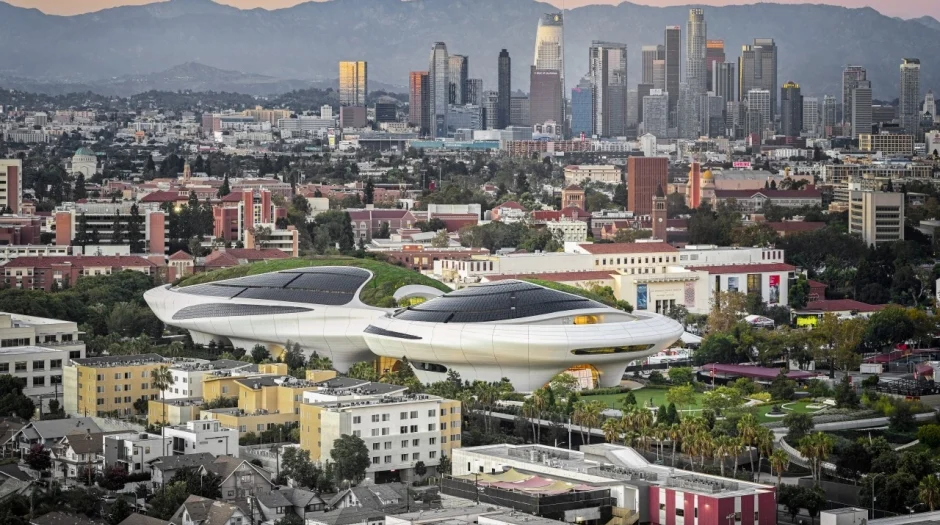
The Lucas Museum of Narrative Art represents a monumental addition to Los Angeles’s cultural landscape. Conceived and co-founded by filmmaker George Lucas and businesswoman and philanthropist Mellody Hobson, the institution was established to honor the universal tradition of storytelling through images. The museum’s curatorial scope defies traditional boundaries, encompassing everything from prehistoric cave paintings and classical illustration to comic art, photography, and contemporary digital screen media. By placing these diverse mediums in direct conversation with one another, the museum aims to demonstrate how visual narratives inspire individuals, articulate cultural beliefs, and forge community bonds.
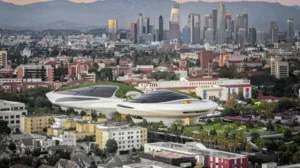
The physical home of this ambitious vision is a striking 300,000-square-foot architectural marvel situated in Exposition Park. Designed by Ma Yansong of the Beijing-based firm MAD Architects, working in collaboration with Stantec, the building’s sweeping, organic curves are engineered to evoke a sense of wonder and emotional connection. The structure is integrated into an expansive 11-acre campus featuring a newly designed park by Mia Lehrer of Studio-MLA. This green, multilayered public space is intended to serve as an outdoor engagement resource for local communities, blending urban architecture with natural gathering environments.
Implications for Moving Image Art and Public Access

The integration of a robust, retrospective NFB film program into a major new fine arts museum signals a growing institutional recognition of cinema as a foundational pillar of narrative art. For decades, animation and short-form documentary works have frequently been relegated to specialized film festivals or academic archives, away from the mainstream museum circuit. By establishing continuous screenings in dedicated theaters, the Lucas Museum validates these cinematic formats as museum-grade artifacts worthy of sustained, contemplative viewing by the general public.
Furthermore, this collaboration extends beyond the physical confines of the Exposition Park campus. To ensure broad accessibility, all 19 NFB titles featured in the museum’s inaugural program have been compiled into a dedicated digital playlist on the official NFB website (nfb.ca). This dual-track approach—combining immersive, in-person theatrical screenings in Los Angeles with digital access for international audiences—underscores a modern philosophy of cultural stewardship that values both localized community engagement and global reach.
As the Lucas Museum of Narrative Art welcomes its first wave of visitors through February 2027—with tickets currently available via lucasmuseum.org—the presence of the National Film Board of Canada serves as a reminder of the enduring power of collaborative, publicly supported cinema. Through these 19 carefully curated films, visitors are invited to witness how generations of Canadian artists transformed the moving image into an instrument of profound human expression, poetic experimentation, and shared cultural memory.