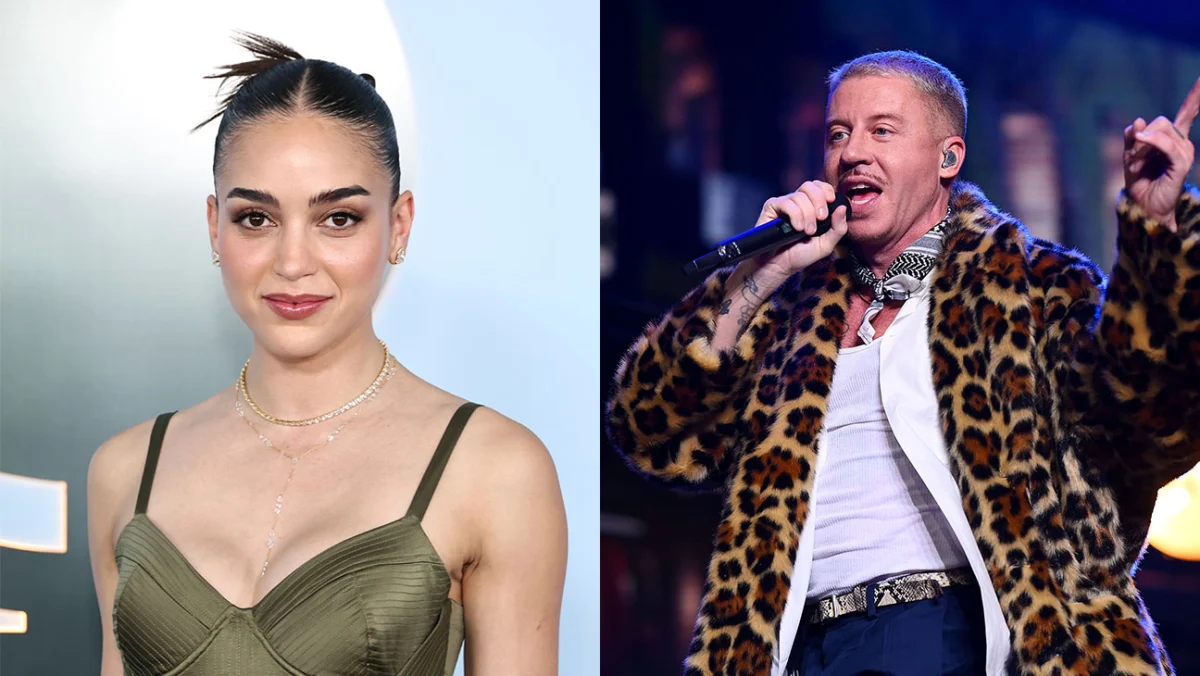
The landscape of celebrity activism and the professional consequences of political speech in Hollywood have undergone a marked evolution over the past year, a shift recently highlighted by actress Melissa Barrera. Following her high-profile departure from the Scream franchise in late 2023 due to her public stance on the Israel-Hamas war, Barrera has observed a palpable change in how the entertainment industry responds to artists who voice support for Palestine. Her recent commentary comes in the wake of the controversy surrounding rapper Macklemore, who was removed from Ed Sheeran’s tour after making pro-Palestine statements during his performances.
A Chronology of the Macklemore-Sheeran Controversy
The situation surrounding Macklemore’s removal from the Mathematics Tour began in early September 2024. During performances on September 4 and 5 at MetLife Stadium in East Rutherford, New Jersey, Macklemore, who was serving as a supporting act, explicitly stated "Free Palestine" from the stage. These remarks triggered a swift backlash from various interest groups and venue stakeholders.
By mid-September, it was confirmed that the "Thrift Shop" artist would no longer be participating in the remainder of the tour. The exclusion prompted a flurry of public speculation regarding the motivations behind the decision. Ed Sheeran, the tour’s headliner, issued a statement to clarify his position, asserting that the decision to drop Macklemore was mandated by concert promoters rather than originating from his own management team.
According to subsequent disclosures from Macklemore, the pressure was rooted in a coordinated effort by stadium leadership. Macklemore alleged that Robert Kraft, owner of Gillette Stadium in Foxborough, Massachusetts, had acted as a central figure in orchestrating a collective ultimatum. According to this account, several stadium owners threatened to block Sheeran from performing at their venues unless Macklemore was removed from the lineup. This revelation framed the event not merely as a disagreement over personal political views, but as a systemic issue involving venue access and the leverage exerted by corporate interests over touring artists.
Industry Solidarity and the Departure of Supporting Acts
In an unprecedented move, the professional fallout from Macklemore’s removal triggered a chain reaction among the remaining opening acts. Musicians Finneas, Lukas Graham, and Aaron Rowe announced their departure from the tour shortly thereafter, citing solidarity with Macklemore. This collective withdrawal marked a significant divergence from the industry standard, where supporting acts rarely jeopardize their association with major headliners over political disputes.
For Melissa Barrera, the sight of these artists sacrificing their own professional opportunities to stand by a peer served as a stark contrast to the isolation she experienced in 2023. Barrera, who had been a lead in the revived Scream series, was terminated by Spyglass Media Group following a series of Instagram Stories in which she characterized the situation in Gaza as a "concentration camp" and a "genocide." At the time of her firing, the industry reaction was largely muted, with many public figures remaining silent or distancing themselves from the controversy.
The Evolution of Political Discourse in Hollywood
Reflecting on these events, Barrera articulated a sense of progress in how political dissent is managed within the entertainment sector. In an interview with the Associated Press, she noted that the response to her own firing was defined by fear, suggesting that the industry was not yet prepared to navigate such polarized discourse. "I didn’t get that when it happened to me," Barrera stated. "People were too scared. But it’s good to see that almost three years later, at least things have changed."
The change to which Barrera refers is the increasing willingness of artists to prioritize ideological alignment over career stability. From an analytical perspective, this shift reflects a broader tension between the corporate management of talent and the increasing demand for social accountability. As artists gain more direct access to their fan bases through social media, the traditional "gatekeeper" model—in which studios or promoters can silence dissent through contract termination—is facing significant challenges.
Institutional Perspectives and Corporate Governance
The official stance from corporations involved in such disputes often centers on policies regarding hate speech and neutral venue operation. When Spyglass Media Group released its statement regarding Barrera, they emphasized a "zero tolerance" policy for antisemitism, specifically citing concerns regarding "Holocaust distortion" and the usage of language they deemed inflammatory. This legalistic approach allows production companies to frame termination as a adherence to corporate conduct codes rather than an ideological purge.
However, the Macklemore incident highlights the role of third-party stakeholders, such as stadium owners and venue operators. By acting as a collective body, these entities can effectively bar artists from major touring circuits, creating a "blacklisting" effect that operates outside the direct control of the primary touring artist. This institutional pressure places performers in a precarious position: they must balance their own creative autonomy against the requirements of the high-stakes, high-revenue infrastructure required for global stadium tours.
Implications for Future Touring and Activism
The potential for "real change," as Barrera characterizes it, lies in the economic viability of solidarity. If a significant number of opening acts and technical staff are willing to boycott venues that engage in censorship, the cost of enforcing such policies may eventually outweigh the perceived benefits for venue owners. Barrera suggested that had Ed Sheeran taken a more defiant stance—essentially "calling the bluff" of the stadium owners—the outcome might have been different. She speculated that even if specific dates had been cancelled, the resulting public support could have allowed for the rebooking of alternative venues, ultimately strengthening the artist’s position.
"I wish that the people that have power understood the power that they have," Barrera told the AP. Her assessment underscores the collective influence that A-list artists hold. When major stars fail to challenge institutional constraints, they inadvertently validate the censorship of their peers. Conversely, the solidarity displayed by acts like Finneas suggests a growing realization among artists that their combined leverage is substantial.
Data and Trends in Artist Activism
While there is no singular metric to quantify the shift in political speech within the arts, data from talent management agencies indicates a rise in "reputational risk" clauses in contracts over the last 24 months. These clauses are designed to provide studios and labels with broader grounds for termination in the event of public controversy. Despite this, the frequency of public declarations regarding international conflict has remained high, particularly among younger cohorts of artists who prioritize authenticity and social engagement as core components of their public persona.
The ongoing discourse around these events suggests that the entertainment industry is currently in a period of recalibration. The tension between the financial interests of large-scale promoters and the moral imperatives expressed by performers is likely to persist as long as global conflicts remain high on the public agenda.
As Sheeran prepared to resume his tour in Philadelphia, the industry remains focused on whether the events of the last month will establish a new precedent for touring logistics. For Barrera and others who have faced similar professional setbacks, the support garnered by Macklemore is viewed as a foundational step toward a more open environment where, as Barrera noted, "the more that happens, the less that the people in power are going to try to censor it, because eventually it’s not gonna work." Whether this optimism holds will depend on the continued willingness of high-profile creators to risk their platforms in the name of their convictions.