

Lightcraft Technology has announced the immediate availability of a rolling beta for Spark Story, its innovative rapid virtual shot system designed to revolutionize the pre-production process for filmmakers. This powerful tool empowers storytellers to begin collaboratively workshopping their visions from the earliest stages of development, enabling immediate 3D visualization of projects. With the official release slated for Fall, Spark Story promises to integrate realistic digital environments, physically accurate motion, and authentic camera and lens models, ensuring that early creative decisions remain robust and adaptable throughout the production pipeline, all the way to the physical set. The system will be showcased at SIGGRAPH 2026, held from July 21-23, at Booth 512, providing industry professionals with a hands-on demonstration of its capabilities.
Revolutionizing Pre-Production with Spark Story
Spark Story is engineered to significantly reduce production costs and enhance the creative control filmmakers have over their shots. By enabling the visualization of original stories in three dimensions through a user-friendly browser or dedicated mobile application, it democratizes access to advanced pre-production tools. Global teams can now engage in live collaboration, seamlessly integrating scripts, Gaussian splats, imported USD assets, and camera motion. The platform functions as a centralized hub for production planning, fostering alignment among team members and proactively identifying and resolving potential issues before they escalate into costly problems later in the production cycle. This proactive approach is particularly valuable in today’s complex and often geographically dispersed filmmaking environments.
Eliot Mack, CEO and co-founder of Lightcraft Technology, expressed his enthusiasm for the launch, stating, "A new day is dawning for filmmakers who want to break free from old formulas; Backrooms and Obsession are only the beginning. With Spark Story, ambitious teams can rewrite the rules of Hollywood, making the projects they want to see, without the massive costs and infrastructure usually required for big ideas." This sentiment underscores Lightcraft Technology’s ambition to empower independent filmmakers and smaller studios to tackle ambitious projects that might otherwise be out of reach due to budget or resource constraints.
Key Features Driving Innovation
The rolling beta of Spark Story introduces a suite of powerful new features, enhancing its utility and accessibility.
Enhanced 3D Asset and Environment Library
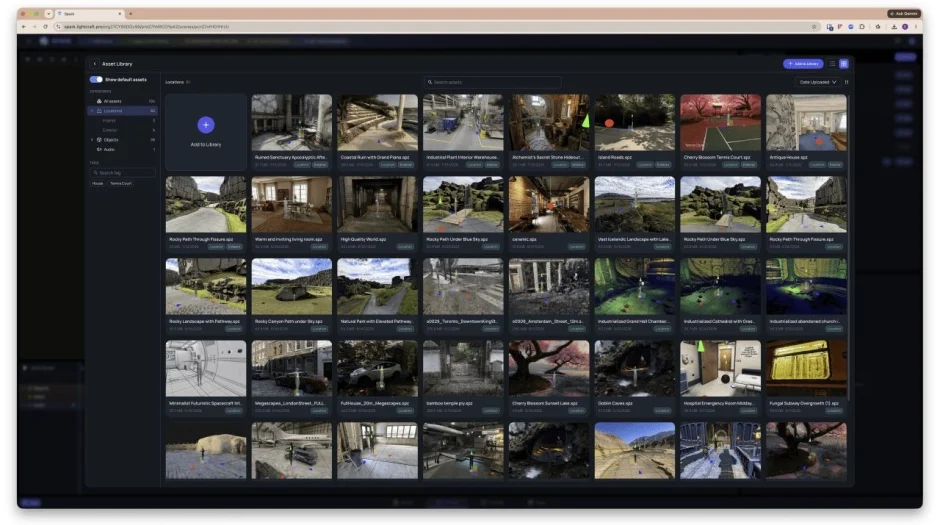
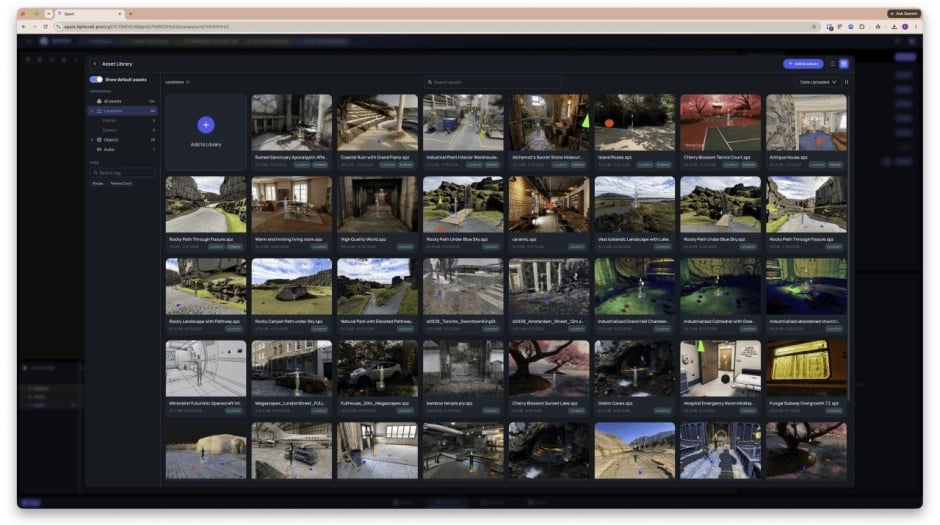
A significant addition is the new 3D Asset and Environment Library, which aims to provide filmmakers with readily available, high-quality digital assets. This library boasts over 25 meticulously crafted Marble environments from World Labs, offering a diverse range of realistic backdrops for scene building. Complementing these environments are more than 300 3D assets, carefully curated to support the common needs of various film genres. This comprehensive collection is designed to expedite the scene-building process, allowing directors and cinematographers to quickly populate their virtual sets with relevant props and elements.
Real-Time Compositing and Mobile Integration
The Spark Story iOS application has been significantly upgraded to include one-click, real-time 24 frames per second (fps) and 25 fps live-action compositing. This groundbreaking feature allows users working with advanced AI or traditional blue/green screen keyers to generate full-quality "Superdailies" directly on their mobile devices during the capture process. This capability streamlines the feedback loop between on-set capture and post-production review, enabling immediate assessment of visual effects integration and shot composition. The ability to render high-quality dailies from a phone drastically reduces the turnaround time and logistical challenges typically associated with this process.
Spark Atlas: Streamlined Data Transfer
Lightcraft is also introducing Spark Atlas, a cross-platform application designed for high-speed video and metadata transfer. Spark Atlas automatically syncs each captured take to the Spark database, meticulously associating it with the correct 3D scene and the relevant script section. This ensures that all captured footage is organized and contextualized within the project’s virtual environment from the moment of capture, eliminating the need for manual logging and organization of large volumes of data. This feature is crucial for maintaining continuity and efficiency on set, especially in productions involving extensive B-roll or multiple camera setups.
Direct USD File Loading
Addressing a critical need for interoperability within the 3D animation and visual effects pipeline, Spark Story now supports direct USD (Universal Scene Description) file loading. This means users can import USD files directly from popular 3D applications such as Blender, Unreal Engine, and Maya without the need for intermediate conversion to formats like USDZ. This direct integration simplifies the workflow for artists and technicians who rely on these industry-standard tools, reducing friction and preserving the integrity of complex 3D assets and scenes. The adoption of USD as an industry standard is growing rapidly, and Spark Story’s native support aligns it with the future of digital asset management.
Background and Context: The Evolving Landscape of Pre-Production
The launch of Spark Story comes at a time of significant transformation within the film and television industry. Traditional pre-production workflows, often characterized by extensive storyboarding, physical model building, and lengthy previs sessions using dedicated software, are being challenged by the increasing demand for speed, flexibility, and cost-efficiency. The rise of real-time rendering engines like Unreal Engine and Unity, coupled with advancements in virtual production technologies, has created a fertile ground for tools that can bridge the gap between creative ideation and technical execution.
SIGGRAPH, the premier conference for computer graphics and interactive techniques, serves as a crucial platform for unveiling cutting-edge technologies that shape the future of visual media. Its attendees—comprising researchers, developers, artists, and industry leaders—are keenly interested in innovations that can enhance creative workflows, improve efficiency, and push the boundaries of visual storytelling. Lightcraft Technology’s choice to debut Spark Story at SIGGRAPH underscores the tool’s technical sophistication and its potential to impact a broad spectrum of the industry, from independent filmmakers to major studio productions.
The evolution of digital filmmaking has seen a steady increase in the complexity of visual effects and the demand for photorealistic imagery. This has placed greater emphasis on the pre-production phase, where critical decisions about camera angles, lighting, character blocking, and environmental design are made. Inaccurate or incomplete previs can lead to costly reshoots, production delays, and compromises in the final visual output. Spark Story aims to mitigate these risks by providing a dynamic and collaborative environment where these decisions can be made with greater confidence and clarity.
Chronology and Development
While specific dates for the early development phases of Spark Story have not been publicly disclosed, its launch into a rolling beta signals a mature stage of development. The announcement of a Fall release indicates that Lightcraft Technology is actively engaging with early adopters to refine the product based on real-world usage. The inclusion of features like real-time compositing and direct USD import suggests a development trajectory focused on addressing immediate industry pain points and integrating with existing professional pipelines.
The decision to build Spark Story as a "rapid virtual shot system" implies an iterative development process, likely involving extensive testing and feedback loops. The company’s co-founding by Eliot Mack, an Emmy-winning inventor, and Bill Warner, the founder of Avid Technology, suggests a strong foundation in both innovative technology development and practical application within the media industry. Avid’s legacy in non-linear editing has profoundly shaped modern post-production, and Warner’s involvement hints at a strategic understanding of workflow optimization and user experience.
The inclusion of specific asset counts (25 Marble environments, 300 3D assets) and the mention of "World Labs" as a provider of these assets suggest established partnerships and a commitment to populating the platform with robust content from the outset. This attention to detail in the beta offering points to a well-planned rollout designed to showcase the tool’s immediate utility.
Supporting Data and Industry Trends
The global film and television production market is experiencing substantial growth, driven by the proliferation of streaming services and the increasing demand for high-quality content. Projections from various market research firms indicate a continued upward trend, with significant investment in visual effects and post-production services. For instance, reports by Mordor Intelligence and Grand View Research consistently highlight the expanding market for visual effects, often citing a compound annual growth rate (CAGR) in the high single digits or even low double digits.

This market expansion is accompanied by a growing emphasis on technological adoption. Studies on production workflows reveal a significant portion of budgets being allocated to pre-production and virtual production. The increasing adoption of real-time rendering technologies in film and television is a key indicator of this trend. Tools like Unreal Engine, which were once primarily used in gaming, are now being utilized for virtual scouting, virtual set creation, and even in-camera visual effects in live-action productions. This shift necessitates tools that can seamlessly integrate with these real-time engines and facilitate collaborative workflows.
Furthermore, the industry is witnessing a surge in the use of AI in content creation, from script analysis to automated editing and visual effects generation. While Spark Story doesn’t explicitly position itself as an AI-driven creation tool, its integration with AI keyers for compositing and its ability to handle complex digital assets are indicative of a platform designed to leverage and complement emerging AI technologies within the filmmaking process. The focus on intuitive interfaces and accessibility also aligns with the industry’s broader goal of democratizing content creation, making advanced tools available to a wider range of creators.
Official Statements and Industry Reactions
While direct reactions from external parties have not yet been formally documented in the provided text, the implications of Spark Story’s launch can be inferred. The company’s co-founder, Eliot Mack, has articulated a clear vision for how Spark Story will empower filmmakers, suggesting a proactive approach to addressing industry challenges. His statement about "rewriting the rules of Hollywood" and enabling ambitious projects without "massive costs and infrastructure" resonates with the aspirations of many independent creators and mid-sized production houses struggling to compete with larger studios.
Industry analysts are likely to view Spark Story as a significant development in the convergence of virtual production, real-time technologies, and traditional filmmaking. Its ability to facilitate early collaboration and 3D visualization could lead to more efficient production pipelines, reduced budgets, and a higher quality of final output. The focus on direct USD support is particularly noteworthy, as it demonstrates an understanding of the evolving standards in digital asset management and pipeline integration.
The partnership with World Labs for environments and the integration of advanced compositing capabilities suggest a strategic approach to building a comprehensive ecosystem. This could attract a broad user base, from small independent directors to larger studios looking to streamline their pre-production processes. The accessibility via browser or mobile app further broadens its appeal, democratizing access to powerful previs tools.
Broader Impact and Implications
The introduction of Spark Story has the potential to significantly impact filmmaking workflows in several key areas:
- Democratization of Pre-Production: By offering advanced 3D visualization and collaborative tools through accessible platforms like web browsers and mobile apps, Spark Story lowers the barrier to entry for filmmakers who may not have access to expensive, specialized previs software or large pre-production teams. This could foster greater creativity and innovation, particularly among independent filmmakers and emerging talent.
- Enhanced Collaboration and Efficiency: The ability for global teams to collaborate in real-time on 3D scenes, scripts, and camera motion promises to accelerate the decision-making process, reduce misunderstandings, and improve overall project alignment. The integration of Spark Atlas for data management further streamlines workflows, saving valuable time and resources.
- Cost Reduction: The ability to visualize projects accurately from the outset, identify potential issues early, and reduce the need for costly reshoots or extensive post-production fixes can lead to substantial cost savings for productions of all sizes. The inclusion of realistic digital environments and assets also reduces the reliance on expensive physical set builds or stock footage.
- Integration with Evolving Technologies: Spark Story’s support for direct USD file loading and its integration with AI keyers for compositing position it as a forward-thinking tool that can seamlessly integrate with the latest advancements in real-time rendering, virtual production, and artificial intelligence within the creative industries. This adaptability is crucial for long-term relevance in a rapidly evolving technological landscape.
- Bridging the Gap Between Concept and Execution: By providing a robust platform for early-stage visualization and iterative development, Spark Story helps to ensure that the creative vision conceived in the script and storyboard phases can be faithfully translated into the final on-screen product. This tighter integration between creative intent and technical execution is a hallmark of modern, efficient production pipelines.
As Lightcraft Technology continues to develop and refine Spark Story, its impact on how films are conceived, planned, and ultimately brought to life is poised to be substantial, marking a significant step forward in the evolution of digital filmmaking.