

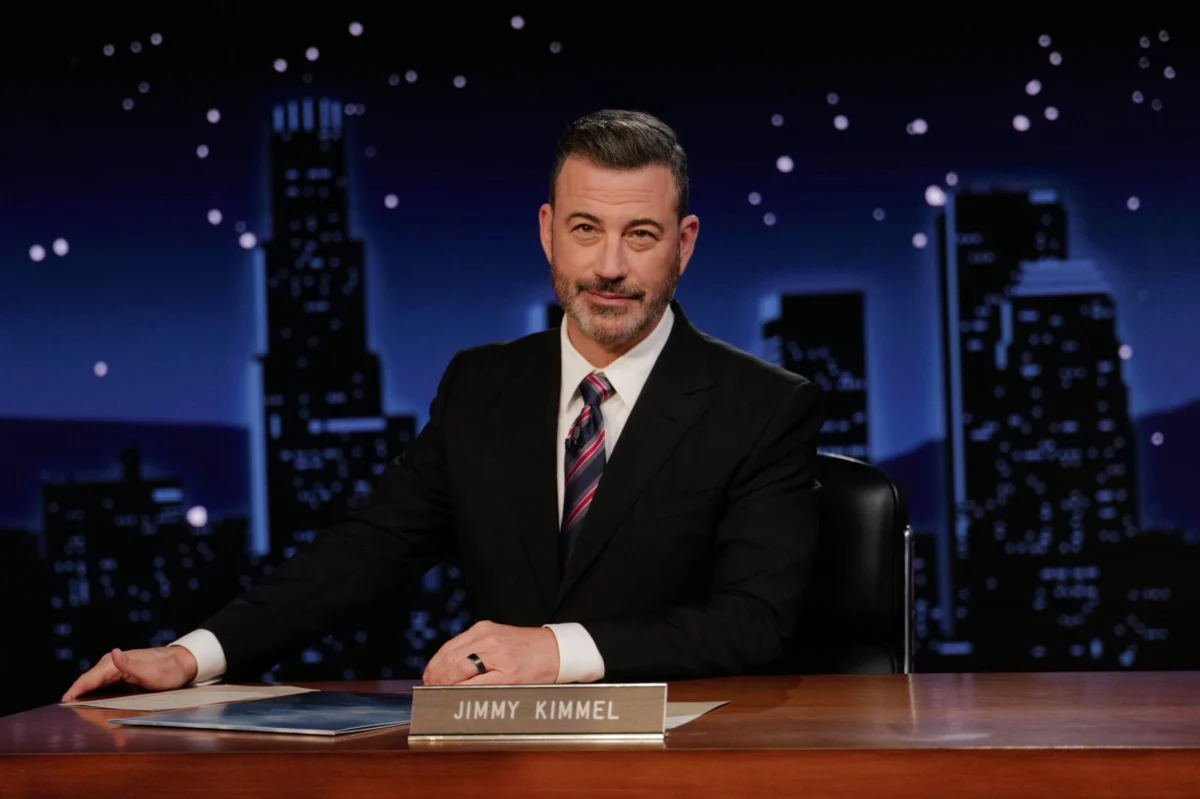
Late-night television host Jimmy Kimmel has announced a significant shift in his program’s distribution strategy, confirming that a scheduled interview with Democratic U.S. Senate candidate James Talarico will bypass the traditional broadcast airwaves in favor of a digital-only release. The decision, revealed during Wednesday’s broadcast of Jimmy Kimmel Live!, underscores a deepening tension between the Disney-owned ABC network and the Federal Communications Commission (FCC) under the current administration.
Kimmel cited mounting pressure and explicit threats of regulatory retaliation against the network and its local affiliates as the primary drivers behind the move. By shifting the Talarico interview to YouTube for a Thursday release, the show aims to circumvent the "equal airtime" doctrine and other broadcast regulations that the current FCC has increasingly scrutinized in relation to late-night talk shows.
The Regulatory Landscape and the Bona Fide News Debate
At the heart of the current dispute is the long-standing regulatory classification of late-night talk shows. Under federal law, broadcast stations must provide "equal opportunities" to legally qualified political candidates. However, this rule contains exemptions for "bona fide" news programs, such as regularly scheduled newscasts, interviews, or documentaries.
In January 2026, the FCC began signaling a restrictive interpretation of these exemptions. The commission has increasingly questioned whether programs like Jimmy Kimmel Live! and ABC’s The View—which frequently blend comedy, cultural commentary, and political discourse—qualify for the "bona fide news" exemption. If the FCC were to determine that these programs do not meet the criteria, the network would be legally obligated to provide equivalent airtime to every competing candidate for any political office featured on the show, a logistical and programming impossibility for a variety-based talk show.
Industry analysts suggest this re-classification effort is a strategic pivot by the FCC to curb the political influence of major media networks. By forcing stations to choose between airing a candidate or risking their broadcast licenses, the agency effectively creates a "chilling effect" on political content.
A Timeline of Escalating Hostilities
The friction between the current administration and the Disney-ABC media conglomerate is not a sudden development but the culmination of a series of confrontations over the past 18 months.
- September 2025: ABC suspended Jimmy Kimmel Live! for approximately one week following a controversial monologue regarding the death of Charlie Kirk. The incident prompted a widespread outcry and resulted in several ABC-affiliated stations choosing to preempt the show. Kimmel later issued a clarification, stating he never intended to trivialize the tragedy.
- January 2026: The FCC initiated a formal inquiry into the status of late-night talk shows as "bona fide" news programs, setting the stage for potential enforcement actions regarding equal time requirements.
- April 2026: In a move industry observers described as unprecedented, the FCC launched an early renewal process for ABC-owned broadcast licenses. The commission cited an investigation into the company’s internal diversity, equity, and inclusion (DEI) policies as the justification for the expedited review, a timeline that arrived years ahead of the standard renewal cycle.
- August 2026: Disney and ABC filed a federal lawsuit against the FCC, alleging that the commission’s actions constitute a "retaliatory campaign" aimed at punishing the network for its editorial content. The suit argues that the FCC’s actions violate the First Amendment protections afforded to news and entertainment organizations.
The Talarico-Paxton Senate Race
The specific interview triggering this week’s decision involves Texas state representative James Talarico, who is currently engaged in a high-stakes campaign for a U.S. Senate seat. Talarico’s opponent is Texas Attorney General Ken Paxton, a figure who has secured a high-profile endorsement from President Donald Trump.
The race has become a flashpoint for political polarization in Texas. Paxton, who survived an impeachment trial in the state Senate following allegations of corruption, remains a polarizing figure. Conversely, Talarico has gained traction by positioning himself as a reform-minded alternative. Recent polling data indicates a narrow lead for Talarico, making any media exposure for either candidate a matter of intense strategic importance. By pulling the interview from broadcast, Kimmel has effectively neutralized a potential "equal time" challenge from the Paxton campaign, while still ensuring the content reaches the public through digital channels.
Institutional Responses and The First Amendment
The FCC has yet to issue a formal statement regarding the specific claims made by Kimmel on Wednesday night. However, the commission’s public stance has consistently been that it is merely upholding the Communications Act of 1934 and subsequent amendments designed to ensure a "fair and balanced" political landscape on the public airwaves.
Legal scholars note that the current administration’s approach represents a departure from traditional FCC oversight. "The core issue here is whether the government can use the lever of license renewal to dictate the editorial tone of a private network," says one constitutional law expert familiar with the ABC lawsuit. "If the courts find that the FCC is using the equal-time rule as a weapon against specific political viewpoints, it would represent a significant shift in media law."
ABC, meanwhile, remains in a defensive posture. In its August filing, the network maintained that the government’s intrusion into its operations—ranging from investigations into corporate DEI policies to the accelerated license review—is an abuse of administrative power intended to silence dissent.
Broader Implications for the Media Industry
The ramifications of this standoff extend far beyond a single late-night show. If the FCC successfully reclassifies entertainment-heavy talk shows as non-news programs, the industry could face a radical restructuring of political engagement.
Late-night programs have historically served as a bridge between the electorate and political candidates, providing a forum that is more accessible and conversational than traditional hard-news segments. A permanent move toward digital-only interviews could result in a "two-tier" information system: one consisting of heavily regulated, sanitized content on broadcast television, and another consisting of unregulated, potentially more radical content on digital platforms like YouTube, X, or TikTok.
For Disney, the financial and operational risks are significant. The company’s broadcast division relies heavily on the stability of its affiliate network. If affiliates continue to face pressure from the FCC—or if they face legal liability for airing content that the commission deems a violation of the equal-time rule—the value of the broadcast network could be severely compromised.
As the November elections approach, the scrutiny on late-night programming is expected to intensify. For now, Kimmel’s decision to move his content to YouTube serves as a temporary safeguard, but it also highlights a growing reality in American media: the digital space is becoming the primary sanctuary for political discourse that the federal government seeks to constrain on the airwaves.
Whether this transition proves to be a temporary tactical retreat or a permanent shift in the landscape of American late-night television remains to be seen. What is clear, however, is that the intersection of federal regulatory authority and First Amendment expression is currently under a level of strain unseen in decades, with the final resolution likely to be determined by the federal judiciary rather than the broadcast booth.