


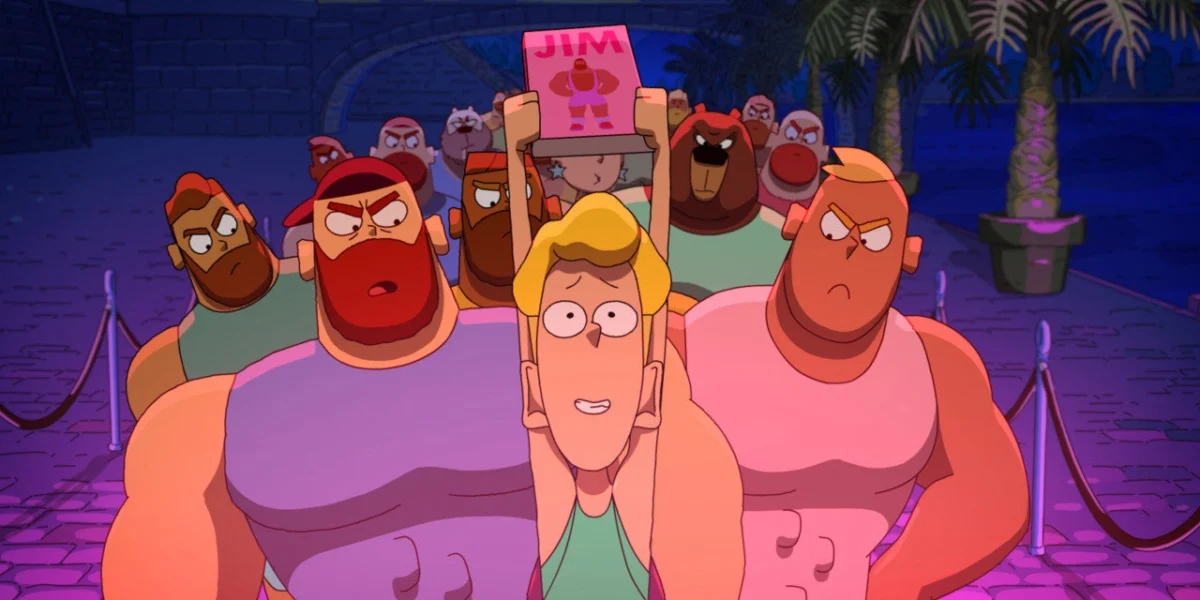
The vibrant heart of Paris’s LGBTQ+ scene, once dominated by the magnetic presence of Jim, a celebrated fitness influencer and social media luminary, is now grappling with an unprecedented crisis. Jim, affectionately known as the "ultimate Gym Queen" and an object of widespread admiration, finds his reign abruptly dismantled by a bewildering phenomenon: a novel virus, dubbed "Heterosis," that inexplicably causes gay men to develop heterosexual attractions. This existential threat to identity and community has sent shockwaves through the Marais district, leaving many adrift and stripped of their established social standing. In this atmosphere of queer chaos, Jim finds an unexpected anchor in Lucien, a loyal but unassuming admirer, whose unwavering devotion becomes the unlikely catalyst for a desperate quest to find a cure. Their journey takes them deep into the labyrinthine alleys of the Marais, in pursuit of a rumored rogue doctor believed to hold the key to reversing the epidemic.
The film, a raucous animated musical adventure titled "Jim Queen," presents a narrative that, while seemingly unconventional, is deeply rooted in traditional storytelling structures, reminiscent of classic hand-drawn fantasy tales. Through its inventive plot, the film dissects and satirizes unique aspects of queer culture and identity. It is a knowingly absurd yet ultimately empowering story, designed to resonate profoundly with a specific audience while offering entertainment and insight to a broader spectrum of viewers, irrespective of their background. The film’s audacious embrace of its queer sensibilities and its bold stylistic choices position it as a significant entry in contemporary animated cinema, sparking conversations about representation and cultural specificity.
The Genesis of Heterosis and Jim’s Fall from Grace
The narrative centers on Jim Perfect, portrayed by Alex Ramirès, a charismatic French fitness influencer who embodies the dual lifestyle of rigorous physical training by day and vibrant nightlife by night. With the strategic assistance of his confidante, Dr. Nina (Shirley Souagnon), Jim has meticulously cultivated an online persona built on an edifice of narcissism, fueled by an endless stream of "thirst trap" content. His digital empire boasts a vast and devoted following. Among his most ardent admirers is Lucien (Jérémy Gillet), a young, unassuming individual, whose sheltered existence is meticulously managed by his overprotective mother, Christine Bayer (Elisabeth Wiener).
The unsettling unraveling of Jim’s world begins with a deeply personal and perplexing transformation: his meticulously sculpted abdominal muscles, a symbol of his status and identity, start to vanish. This alarming physical change is not an isolated incident. Across the globe, gay men are experiencing a disconcerting metamorphosis: their physiques are deflating, their libidos are waning, and their interests are shifting away from the cultural touchstones of the queer community towards more mainstream preoccupations. The terrifying implication dawns: could they be, against all odds, turning straight? Dr. Nina’s diagnosis confirms this chilling prognosis, identifying a new, de-queerifying disease termed "heterosis" as the cause of this widespread affliction. The scientific and social implications of such a malady are profound, threatening to dismantle the very fabric of gay identity and community.
The Unlikely Alliance and the Quest for a Cure
In the face of this existential threat, Jim and Dr. Nina deduce that Lucien, for reasons yet to be fully understood, holds the potential key to a cure for heterosis. This revelation propels Jim and Lucien into an improbable partnership, embarking on a perilous journey through the heart of Paris’s LGBTQ+ district, the Marais. Their mission is to locate a reclusive, possibly disgraced, doctor rumored to possess the antidote before the insidious effects of heterosis irrevocably alter the landscape of the gay community, transforming vibrant gay clubs into mundane sports bars. This quest is not merely a search for a medical remedy; it is a race against time to preserve an entire culture and way of life.
The film’s creative team, comprising directors Marco Nguyen and Nicolas Athané, and writers Brice Chevillard and Simon Balteaux, has crafted a narrative that is both deeply specific to the LGBTQ+ experience and universally resonant in its themes of identity, belonging, and the struggle against external forces that threaten to erase who one is. The running time of 85 minutes allows for a brisk and engaging pace, packed with a barrage of references and humor that cater to those intimately familiar with the nuances of queer culture.
A Satirical Lens on Queer Identity and Community
"Jim Queen" is unapologetically and, at times, aggressively queer in its presentation. Virtually every scene is replete with references and jokes that tap into specific elements of the LGBTQ+ community, ranging from sexual paraphernalia to widely recognized stereotypes. This rich tapestry of inside jokes and cultural allusions ensures that the film will particularly delight those who are deeply immersed in queer life, offering a mirror to their own experiences and understandings. For those less familiar, the rapid-fire delivery of humor and references might necessitate a deeper dive into the cultural context, but the film’s exuberance and visual dynamism offer ample entertainment value regardless.
The film’s relentless pace, while largely beneficial, occasionally threatens to overwhelm the viewer with its sheer density of information and humor. However, the filmmakers demonstrate a keen awareness of this potential pitfall, strategically incorporating moments of respite that allow the audience to absorb the unfolding narrative and thematic explorations. This narrative pacing ensures that the film remains engaging without becoming exhausting, striking a delicate balance between rapid-fire comedy and moments of genuine emotional resonance.
Beyond its comedic surface, "Jim Queen" possesses a substantive core, addressing significant issues faced by the LGBTQ+ community. The film critiques the tendency for subgroups within the community to fragment and diverge, often prioritizing individual letter identities over a cohesive, unified front. "Jim Queen" emerges as a heartfelt plea for solidarity and unity within the queer community. This message is delivered with remarkable exuberance, even as the film primarily focuses on the "G" in the LGBTQ+ acronym, acknowledging and celebrating the diverse subsets within that community, from bears and fetish queens to cruising daddies, each receiving their own moments in the spotlight. The film’s ability to both satirize and appreciate these distinct identities underscores its nuanced approach to representation.
Visual Innovation and Thematic Depth
The animation style of "Jim Queen" mirrors the inherent vibrancy and dynamism of the LGBTQ+ community it portrays. The visuals are characterized by their bright palette, ebullient energy, and a glorious excess that eschews convention. While parodying tropes often associated with classic Disney animations – a particularly hilarious early homage to Ariel’s “Part of Your World” from "The Little Mermaid" is a prime example – the drawing style leans more towards anime. This is evident in the shimmering eyes, dramatic poses, and the use of slow-motion to heighten emotional impact. The animation occasionally ventures into the grotesque, a deliberate choice that aligns with the film’s intentional departure from conventional notions of beauty and normalcy. This artistic decision further reinforces the film’s commitment to celebrating the unconventional and the unique.
At its heart, "Jim Queen" embodies the aspirations of exemplary LGBTQ+ cinema. It tells a story built upon a familiar narrative framework but imbues it with distinctly queer sensibilities and choices. The film offers a delightfully silly and campy experience that its intended audience is sure to embrace, punctuated by moments that elicit joyous applause alongside the abundant laughter. Regardless of one’s position within the queer community or their familiarity with the gym culture, "Jim Queen" promises to be a guaranteed delight, a testament to the power of authentic representation and exuberant storytelling. The film’s success lies in its ability to connect with viewers on multiple levels, offering humor, heart, and a timely message of unity.
Broader Implications and Cultural Resonance
The emergence of "Jim Queen" at a time when discussions around LGBTQ+ rights, representation, and the challenges of community cohesion are at the forefront of cultural discourse, is particularly significant. The film’s central premise, while fantastical, touches upon anxieties surrounding the erosion of identity and the potential for external forces to dictate or alter one’s fundamental sense of self. The virus "Heterosis" can be interpreted as a metaphor for societal pressures, assimilationist expectations, or even internal conflicts that can challenge and dilute queer identities.
The film’s focus on the "G" aspect of the LGBTQ+ acronym, while seemingly narrow, allows for a deep exploration of the internal dynamics and diversity within the gay male community itself. By highlighting different archetypes and subcultures, the film implicitly advocates for a more inclusive understanding of gay identity, challenging monolithic portrayals. This emphasis on internal diversity and the need for unity resonates with ongoing conversations about intersectionality and solidarity within the broader LGBTQ+ movement.
The artistic choices, particularly the anime-inspired animation, contribute to the film’s unique cultural footprint. This stylistic approach not only distinguishes it from mainstream animated features but also signals an intentional embrace of aesthetics that hold particular significance within global queer communities. The deliberate use of exaggeration and stylized visuals allows for a heightened emotional and comedic impact, further solidifying the film’s camp sensibilities and its appeal to audiences who appreciate bold, unconventional storytelling.
The commercial and critical reception of "Jim Queen" will undoubtedly offer valuable insights into the evolving landscape of animated cinema and its capacity to engage with complex social and cultural themes. As the film finds its audience, it is poised to spark further dialogue about the importance of authentic representation, the power of satire in addressing serious issues, and the enduring strength of community in the face of adversity. Its success could pave the way for more diverse and niche-focused animated projects, expanding the horizons of what animated storytelling can achieve. The film’s 85-minute runtime suggests a focused narrative, designed for maximum impact without overstaying its welcome, a strategy that has proven effective in reaching contemporary audiences accustomed to concise and engaging content. The ensemble cast, featuring Alex Ramirès and Jérémy Gillet in pivotal roles, alongside seasoned performers like Shirley Souagnon and Elisabeth Wiener, further bolsters the film’s artistic credibility and its potential to deliver compelling performances that drive the narrative forward. The collaborative efforts of directors Marco Nguyen and Nicolas Athané, and writers Brice Chevillard and Simon Balteaux, underscore a unified vision that has translated into a cohesive and impactful cinematic experience.