


The landscape of stereoscopic 3D entertainment is undergoing a profound paradigm shift following a major consolidation of technological power within the motion picture industry. Lightstorm Vision, the advanced imaging and technology company founded by visionary filmmaker James Cameron, has officially acquired Outsyders, an innovative creative-tech collective renowned for its groundbreaking, machine-learning-driven stereoscopic pipeline. This strategic acquisition unites Outsyders’ rapid 2D-to-3D conversion platform with Lightstorm Vision’s industry-leading native 3D capture and post-production ecosystem. By fusing these two cutting-edge frameworks, the combined entity has established what is being heralded as the industry’s first truly comprehensive, end-to-end 3D production solution. The development promises to drastically alter how studios approach both new stereoscopic motion pictures and the lucrative enterprise of upconverting extensive legacy libraries of 2D cinematic content for modern theatrical, broadcast, and immersive virtual reality platforms.
The Genesis and Rise of Outsyders
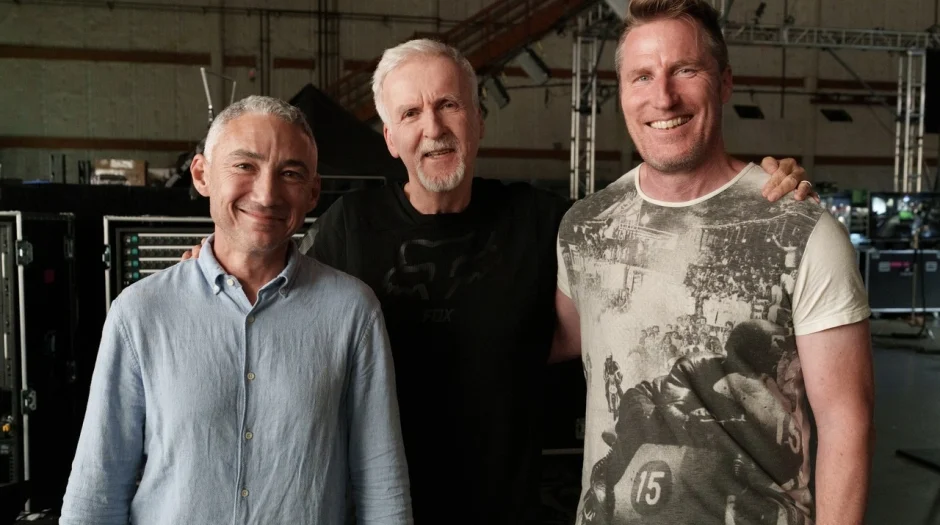
Outsyders burst onto the entertainment technology scene in April 2024, founded by a trio of seasoned industry veterans: Paul Becker, Jared Sandrew, and Chris Harvey. Before launching the collective, the founders accumulated decades of prestige and technical expertise holding prominent leadership positions at major visual effects powerhouses such as DNEG and Industrial Light & Magic (ILM), serving as stereo supervisors for The Walt Disney Company, and engineering complex software solutions at Unity. Their collective cinematic credits include monumental visual effects achievements such as Steven Spielberg’s Ready Player One, Sam Esmail’s Leave the World Behind, and Kathryn Bigelow’s Zero Dark Thirty.
The collective was established with a singular, disruptive mission: to solve the historically exorbitant costs, immense time constraints, and labor-intensive bottlenecks associated with high-end stereoscopic conversion. Traditional 2D-to-3D conversions have long required massive teams of artists manually painting depth maps, warping image planes, and painstakingly rotoscoping objects frame by frame over the course of many months or even years. Outsyders fundamentally upended this workflow by engineering proprietary machine-learning tools tailored explicitly for stereoscopic pipelines.
Designed to empower lean, highly efficient teams rather than necessitate sprawling offshore workforces, Outsyders’ artificial intelligence framework demonstrated unprecedented speed and precision. The technology made global headlines in September 2024 when the collective publicly revealed its transformative work on several high-profile projects. Most notably, Outsyders utilized its AI-driven platform to convert the vast majority of Disney’s traditionally animated 2D feature film Lilo & Stitch into vivid, immersive stereoscopic 3D in a staggering timeframe of just eight weeks. In addition to Lilo & Stitch, the collective’s impressive production roster quickly expanded to include high-profile endeavors such as IMAX’s documentary Blue Angels, Doug Liman’s Asteroid, Disney’s Moana, and Marvel and Disney adjacent properties like Tron: Ares. Furthermore, the collective recently collaborated directly with Lightstorm Vision on Paramount Pictures’ immersive concert film Billie Eilish — Hit Me Hard and Soft: The Tour (Live in 3D), expertly matching digitally converted archival footage with native stereoscopic capture.
Lightstorm Vision and the Cameron Technological Imperative
On the other side of the acquisition stands Lightstorm Vision, an enterprise established by James Cameron in 2024 specifically dedicated to pushing the absolute boundaries of stereoscopic capture, advanced imaging, and computational processing technology. James Cameron’s historic commitment to the 3D format is well-documented; through revolutionary cinematic milestones such as Avatar and Avatar: The Way of Water, Cameron continuously redefined audience expectations for depth, clarity, and visual immersion in motion pictures.

Lightstorm’s underlying technologies and proprietary camera rigs have historically supported over 80 feature films and documentaries. Collectively, projects utilizing Lightstorm methodologies have amassed more than $15 billion at the worldwide box office, alongside powering more than 600 live sports broadcasts requiring complex multi-camera stereoscopic setups. Furthermore, Lightstorm Vision operates under a vital, multi-year strategic partnership with Meta. This alliance positions Lightstorm’s advanced imaging ecosystem at the center of the burgeoning spatial computing and virtual reality market, where stereoscopic-native VR headsets represent a hungry, rapidly expanding mass audience for premium 3D content.
However, despite the incredible fidelity and box office dominance of native 3D productions, the wider film and television industry has faced a persistent economic and logistical dilemma. While audiences routinely reward high-quality 3D presentations, the prohibitive cost and extended schedules required to convert legacy 2D libraries or augment modern hybrid productions have stalled widespread industry adoption. With the acquisition of Outsyders, Lightstorm Vision is uniquely positioned to bridge this historical chasm, offering studios, television broadcasters, and streaming platforms a turnkey methodology to convert existing 2D assets into pristine 3D at commercial scale.
Chronology of the Collaboration and Deal
The integration of Outsyders into the Lightstorm architecture is not a sudden business maneuver, but rather the culmination of a deeply collaborative technical relationship that has matured over several years. According to internal statements from both corporate entities, Lightstorm and Outsyders have maintained an active working partnership for nearly two years prior to the formal buyout announcement.
During this extended incubation period, Paul Becker and his engineering team worked closely with James Cameron, whose famously uncompromising standards for stereoscopic geometry, parallax alignment, and visual depth provided the ultimate stress test for Outsyders’ machine-learning algorithms. By deploying Outsyders’ AI tools alongside Lightstorm’s native photographic 3D systems on confidential and commercial projects, the technical teams proved that automated conversion could successfully reach the gold standard demanded by Cameron without sacrificing artistic integrity.
Official Statements and Industry Reactions
The formal announcement of the acquisition elicited strong enthusiasm from both leadership camps, underscoring a shared philosophical and technical vision for the future of spatial media.
James Cameron emphasized the rigorous vetting process his company applied to Outsyders’ technology over their multi-year working relationship. "At Lightstorm we’ve been working with Paul Becker and his team for almost two years, and really enjoyed the collaboration," Cameron stated. "As everyone knows, I’ve got a very exacting eye for 3D, and I can confidently say that their work and their AI tools are world class. Together we will provide end-to-end solutions for productions and for studios, as we merge the worlds of conversion and native photographic 3D."

Paul Becker, CEO and co-founder of Outsyders, echoed these sentiments, highlighting the natural synergy between the two organizations. "We’ve always shared Jim’s vision for stereo," Becker remarked. "Our work with Jim confirmed that our combined technologies were the most logical and effective step for the format. We are excited to join and bolster Lightstorm Vision’s mission."
Broader Implications for the Visual Effects and Entertainment Industries
The union of Lightstorm Vision and Outsyders carries profound operational and economic implications for the global entertainment sector. For years, the visual effects industry has grappled with severe capacity crunches, rising labor costs, and controversial practices surrounding the geographic offshoring of digital artistry. Outsyders’ foundational philosophy—that artificial intelligence should be leveraged to supercharge the productivity of elite, local human artists rather than replace them or outsource their labor—represents a sustainable model for the future of digital content creation.
By packaging Outsyders’ machine-learning stereoscopic pipeline directly alongside Lightstorm’s native 3D capture systems, the combined company offers a compelling value proposition to major Hollywood studios. Historically, studio executives seeking to monetize extensive back-catalogs of 2D films through 3D theatrical re-releases or premium home entertainment formats faced paralyzing financial calculations. An 8-week turnaround time for a feature film conversion, as demonstrated during Outsyders’ work on Lilo & Stitch, fundamentally alters the economic equation. It transforms stereoscopic conversion from a high-risk, specialty gamble into a routine, scalable asset-management strategy.
Furthermore, as streaming services and consumer electronics manufacturers continue to invest heavily in spatial computing ecosystems, augmented reality, and next-generation 3D display hardware, the demand for high-fidelity volumetric and stereoscopic content has never been higher. Content owners are currently sitting on vast libraries of archival film and television assets that are entirely unoptimized for modern immersive viewing environments.
By commanding the ultimate end-to-end production pipeline—capable of seamlessly blending live-action native stereoscopic capture, advanced computational imaging, and lightning-fast AI-assisted 2D-to-3D conversion—Lightstorm Vision has positioned itself as the undisputed gatekeeper and premier service provider for the next era of dimensional entertainment. As studios race to populate emerging VR platforms and premium cinematic screens with compelling three-dimensional content, the technological foundation laid by Cameron and the Outsyders team will likely dictate the industry standard for decades to come.