


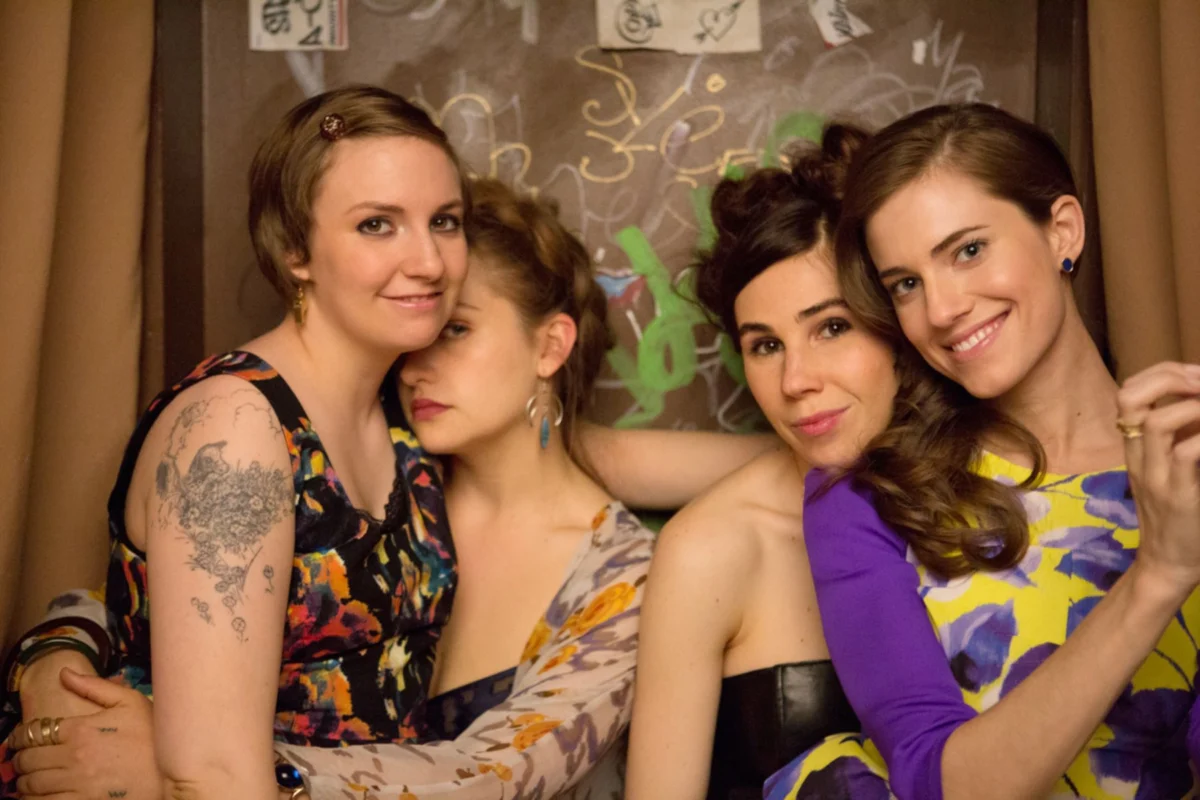
The millennial cultural landscape of the early 2010s was defined by a singular, polarizing television event: the premiere of Lena Dunham’s Girls on HBO. More than a decade after its initial broadcast, the landmark series is officially returning to television. HBO announced a five-episode limited revival, a development driven largely by a grassroots digital reclamation campaign led by Generation Z. While the original run of the series was defined by intense public scrutiny, critical backlash, and fierce cultural debates regarding representation, privilege, and aesthetics, contemporary audiences have successfully engineered a long-overdue redemption arc for the show.
The revival bridges a generational divide, reframing a series that once symbolized the anxieties of the millennial experience into a cherished piece of satirical pop culture for a demographic that was barely in middle school when it first aired. This unexpected resurrection highlights a broader shift in digital media consumption, where algorithmic nostalgia, fan-driven podcasts, and the passage of time can fundamentally alter the historical legacy of a piece of television.
From Cataclysmic Premiere to Cultural Lightning Rod
When Girls debuted on April 15, 2012, it arrived with immense critical acclaim, positioning itself as a raw, unfiltered look at twenty-something life in New York City. However, the initial wave of praise was swiftly overshadowed by a relentless wave of social commentary, controversy, and public fatigue. Lena Dunham, serving as creator, writer, director, and star, found herself cast as a lightning rod for broader societal anxieties surrounding millennial privilege, nepotism, and the specific socio-economic realities of young white women navigating the post-2008 recession landscape.
The criticisms levied against the show were varied and persistent. Commentators scrutinized the unflinching depictions of sexuality, Dunham’s physical vulnerability on screen, the casting choices, and the lack of intersectional diversity within the core friendship group of Hannah, Marnie, Jessa, and Shoshanna. Furthermore, the public personas of the cast and creator frequently intersected with the narrative, fueling endless online discourse and polarization. For many viewers of the era, the series became an exhausting exercise in cultural friction. By the time the series concluded its six-season run in 2017, it was viewed through a lens of profound exhaustion, leaving its cultural legacy fractured and heavily contested.
The Chronology of a Resurgence: From Streaming Surge to Substack Revelations
The rehabilitation of Girls did not happen overnight; it was a gradual, multi-layered cultural pivot that accelerated rapidly between 2022 and 2024.
- Late 2022 – Early 2023: Viewership data released by The New York Times indicated that viewership for Girls doubled between November 2022 and January 2023 compared to the preceding three months. This spike corresponded with a viral wave of short-form video content on TikTok and Instagram.
- 2023: Brooklyn-based comedians Amelia Ritthaler and Evan Lazarus launched the Girls Rewatch podcast, providing a weekly, analytical, and deeply appreciative deep dive into the series. The podcast quickly gained traction, securing guest appearances from prominent cast members, including Allison Williams, Andrew Rannells, Zosia Mamet, and Jemima Kirke, as well as Dunham herself.
- April 2024: Dunham published her memoir, Famesick, which became an instant New York Times bestseller. The book offered retrospective insight into the physical and psychological toll of producing the series during her twenties, fostering a broader public reckoning regarding the intense scrutiny she endured.
- November 2024: Following years of speculation and quiet behind-the-scenes developments, HBO officially announced a five-episode revival of the series, confirming that Dunham and key creative collaborators would return.
The Gen Z Lens: Satire, Sincerity, and the Death of Post-Ironic Detachment
The driving force behind the renewed appreciation for Girls is a demographic that missed the show during its initial broadcast: Gen Z viewers. Having grown up in an era dominated by post-ironic, emotionally detached social media spaces characterized by the pervasive "the world is burning, but let’s dance through it" ethos, younger audiences viewed the show through a vastly different framework than its original millennial viewers.
While millennials often experienced the show through a lens of defensive earnestness or personal identification, Gen Z approached Girls with a distinct satirical clarity. According to cultural commentators and podcast creators, younger audiences recognized the inherent cringe and absurdity of the characters not as accidental narrative flaws, but as deliberate, sharp-edged satire intended by Dunham from the outset.
This analytical distance allowed a new generation to embrace the series without the baggage of contemporary cultural politics. Memes featuring Marnie singing in her teal dress, Hannah declaring her ambition to "become who I am," or Shoshanna delivering deadpan proclamations circulated widely, transforming complex dramatic moments into relatable, bite-sized internet culture.
Industry Implications and the Nostalgia-Core Economy
The decision by HBO to greenlight a five-episode revival of Girls reflects a broader industry trend toward capitalizing on mid-2010s nostalgia. In recent years, networks and streaming platforms have rushed to reboot properties from the late 2000s and 2010s, ranging from Gossip Girl and Pretty Little Liars to iCarly. However, the Girls revival occupies a unique space within this ecosystem, as it represents a creative reunion rather than a traditional teen drama reboot.
Media analysts point out that the revival also signals a shift in how networks respond to organic, fan-driven digital movements. Unlike traditional television revivals that emerge from years of corporate market research, the return of Girls was catalyzed by independent podcasts, viral video supercuts, and grassroots digital organizing.
In a Substack essay published following the HBO announcement, Dunham acknowledged the role of the fans in shifting her perspective on the project. "Maybe there was once a part of me that wanted to outrun Hannah and her ladies," Dunham wrote. "Seeing the love you’ve so generously shared for it helped to turn me around."
Cultural Context and the Return of "Obama First-Term Joy"
Beyond television economics, cultural critics note that the resurgence of Girls coincides with a broader cultural longing for the aesthetic and emotional texture of the early 2010s. Observers have documented a growing internet subculture romanticizing the mid-2010s—an era associated with fixed-gear bicycles, sepia-toned photography, indie-folk stomp-clap music, and a distinct brand of pre-pandemic optimism often described colloquially as "Obama first-term joy."
Cultural commentator Peyton Dix observes that the renewed enthusiasm for the series reflects a collective desire for emotional resonance during periods of socio-political fatigue. "There’s an energy, particularly in New York right now, that really embodies millennial optimism, and I think that Girls is absolutely a part of that cultural conversation," Dix noted. "It falls neatly into this new world we’re building… It’s nice to feel joy again when it’s really difficult to find it."
As production gets underway for the five new episodes, the television landscape looks vastly different than it did in 2012. Streaming algorithms, social media fandoms, and a generational handoff have fundamentally rewritten the narrative surrounding Lena Dunham’s creation. What was once a lightning rod for cultural division has transformed into a celebrated touchstone of modern television, proving that in the digital age, critical consensus is never truly permanent.