
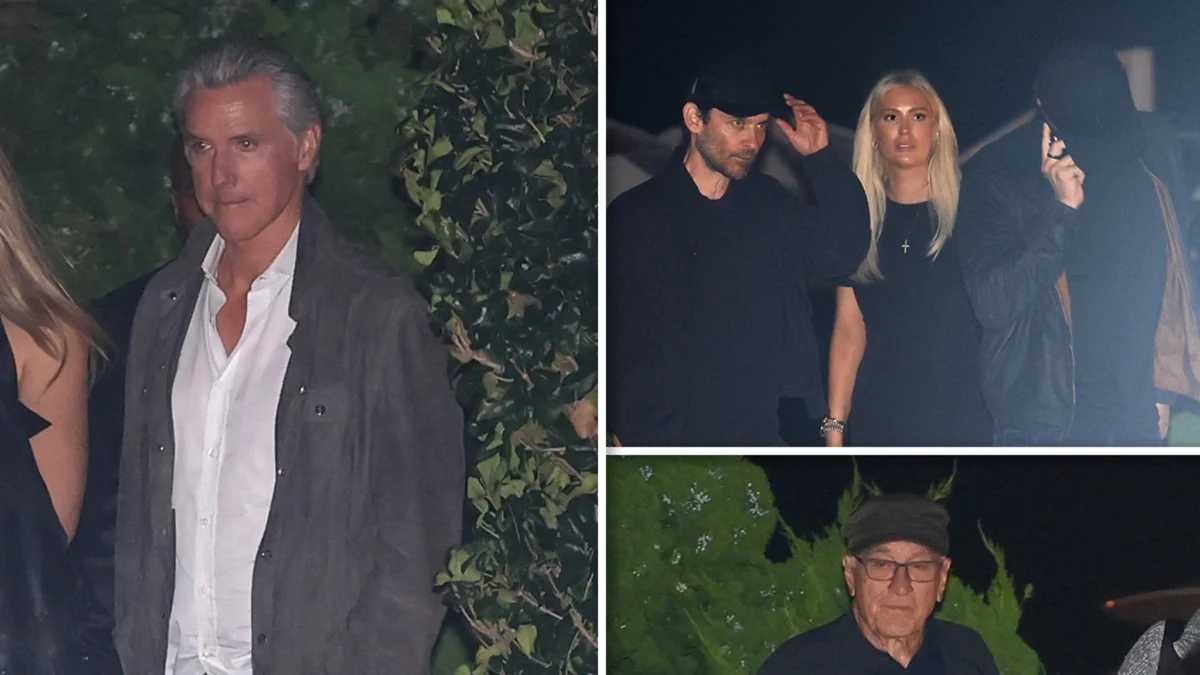
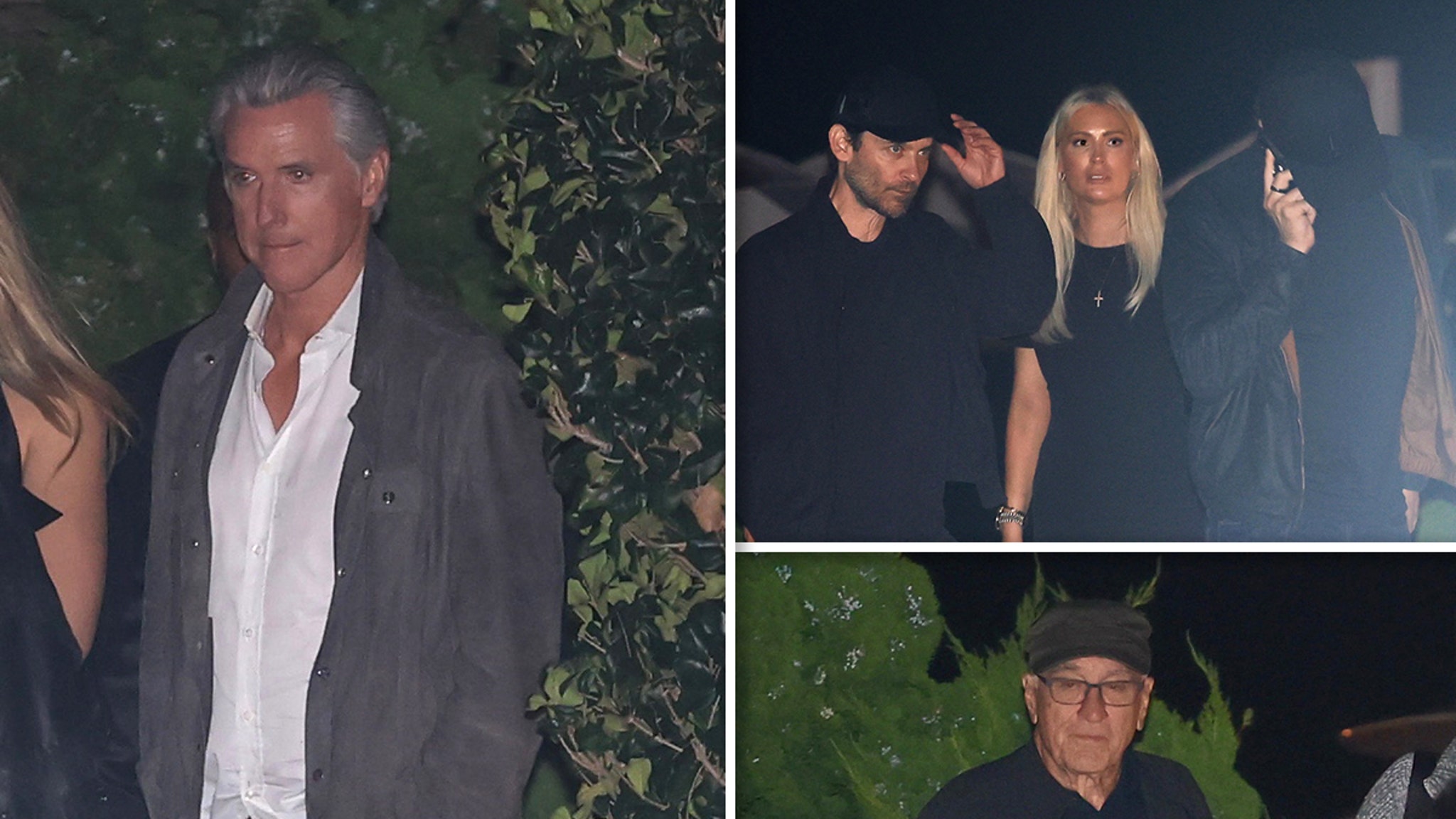
California Governor Gavin Newsom was recently spotted at the celebrity-frequented Nobu restaurant in Malibu, sharing a high-profile dinner with cinematic heavyweights Leonardo DiCaprio, Robert De Niro, and Tobey Maguire. The Friday night gathering brings together influential figures from both the entertainment industry and the political sphere against a backdrop of ongoing turbulence within Hollywood, most notably surrounding corporate restructuring and industry-wide labor and production shifts. While casual dining among public figures is common in Southern California, the convergence of prominent actors and a leading national political figure has sparked considerable discussion regarding the intersection of policy, the arts, and potential future political ambitions.
The Encounters of Politics and Cinema in Malibu
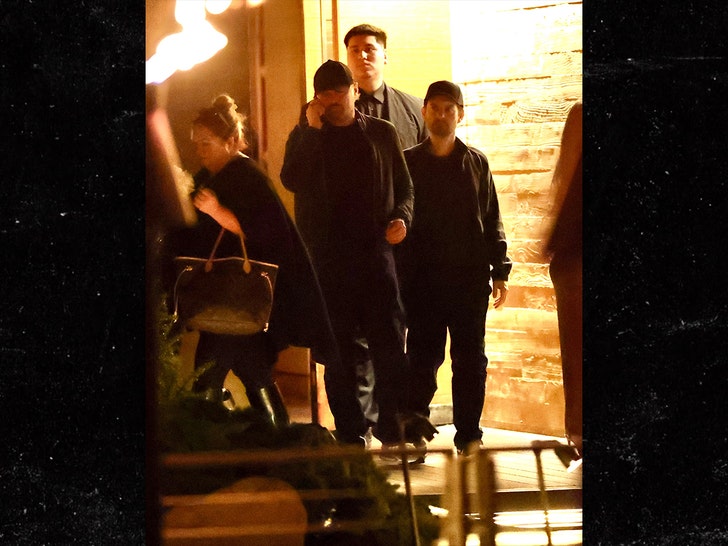
The evening brought together three of Hollywood’s most recognizable actors alongside one of the nation’s most visible governors. Robert De Niro, who co-owns the famed Nobu establishment where the dinner took place, was seen alongside longtime collaborators and close friends Leonardo DiCaprio and Tobey Maguire. The trio attempted a low-profile exit, donning casual hats, while Governor Newsom maintained a characteristically polished appearance in a white button-down shirt paired with a gray jacket. DiCaprio and Maguire, known for their decades-long friendship both on and off screen, coordinated in matching all-black ensembles as they departed the venue.
While the private nature of the dinner ensures that the exact agenda remains undisclosed, the gathering occurs at a pivotal moment for California’s signature industry. Hollywood has faced continuous economic pressures, including the lingering economic fallout from recent industry strikes, rising production costs, and major corporate shifts such as the ongoing drama surrounding Paramount. As the head of the state that serves as the global capital of the entertainment industry, Governor Newsom frequently interacts with studio executives, producers, and prominent actors to discuss state tax credits, regulatory environments, and the economic viability of domestic film production.
A Timeline of Industry Pressures and Political Speculation
The timing of the Malibu dinner coincides with intense speculation surrounding Governor Newsom’s political trajectory. As his second and final term as Governor of California moves toward its conclusion, political analysts and donors alike have increasingly focused on his potential aspirations on the national stage, particularly regarding the 2028 presidential election.
Recent polling data underscores Newsom’s positioning within the early national landscape for the Democratic Party. A recent survey conducted by Bowling Green State University among likely Democratic voters places Newsom with approximately 14 percent support. This positions him near the top tier of potential contenders, trailing only former Vice President Kamala Harris, who currently leads early preference polls at 17 percent.
The intersection of these political metrics and Hollywood’s elite has historically been significant. The entertainment industry serves as a primary fundraising engine for national Democratic candidates, and figures like DiCaprio and De Niro have long been active participants in political advocacy, particularly regarding environmental policy and civic engagement. Whether the discussion at Nobu centered on state legislative support for California’s film industry, philanthropic initiatives, or broader national political strategy remains a subject of intense speculation among political observers.
Data and Demographics of the 2028 Early Landscape
To understand the weight of such informal gatherings, analysts often look to the broader electoral landscape and the mechanics of early primary positioning. The early data from academic and independent polling organizations indicates a fragmented initial field for the 2028 Democratic nomination. With no incumbent president eligible to run—barring unprecedented constitutional developments—the party faces an open primary process reminiscent of the wide-field races seen in 2008 and 2020.
Key metrics from the Bowling Green State University polling illustrate the current state of voter sentiment:
- Kamala Harris leads early preference pools among registered Democrats at 17 percent, retaining high name recognition from her tenure as Vice President.
- Gavin Newsom follows closely behind with 14 percent support, benefiting from high visibility as the chief executive of the nation’s most populous state.
- A substantial percentage of voters remain undecided or are leaning toward alternative regional leaders, highlighting the fluidity of the nascent race.
For a governor of a state as economically vital as California, maintaining strong ties to cultural leaders and high-net-worth donors is a standard component of national profile-building. Nobu Malibu has frequently served as a neutral, upscale ground where policymakers and cultural icons can converse away from the formal confines of Sacramento or Washington, D.C.
Implications for California’s Economy and National Aspirations
The broader implications of Newsom’s meeting with DiCaprio, De Niro, and Maguire extend beyond mere celebrity gossip. California’s economy is deeply intertwined with the entertainment sector, which contributes tens of billions of dollars annually to the state gross domestic product and supports hundreds of thousands of jobs. In recent years, studio executives have increasingly looked to other states and international jurisdictions offering aggressive tax incentives to cut production costs, prompting state lawmakers in Sacramento to debate enhancements to California’s own film and television tax credit programs.

Engaging directly with industry leaders provides the governor with firsthand insights into the structural challenges facing studios, unions, and independent creators alike. At the same time, aligning with prominent cultural figures who command massive global platforms offers undeniable strategic value for any politician weighing a broader national campaign. While neither the governor’s office nor the representatives for the actors have released formal statements regarding the substance of the dinner conversation, the optics of the meeting reinforce the enduring symbiosis between Hollywood influence and American political ambition.
As the 2028 election cycle slowly takes shape and California continues to navigate its economic and legislative priorities, encounters of this caliber will undoubtedly continue to draw scrutiny from both political pundits and entertainment chroniclers alike.