



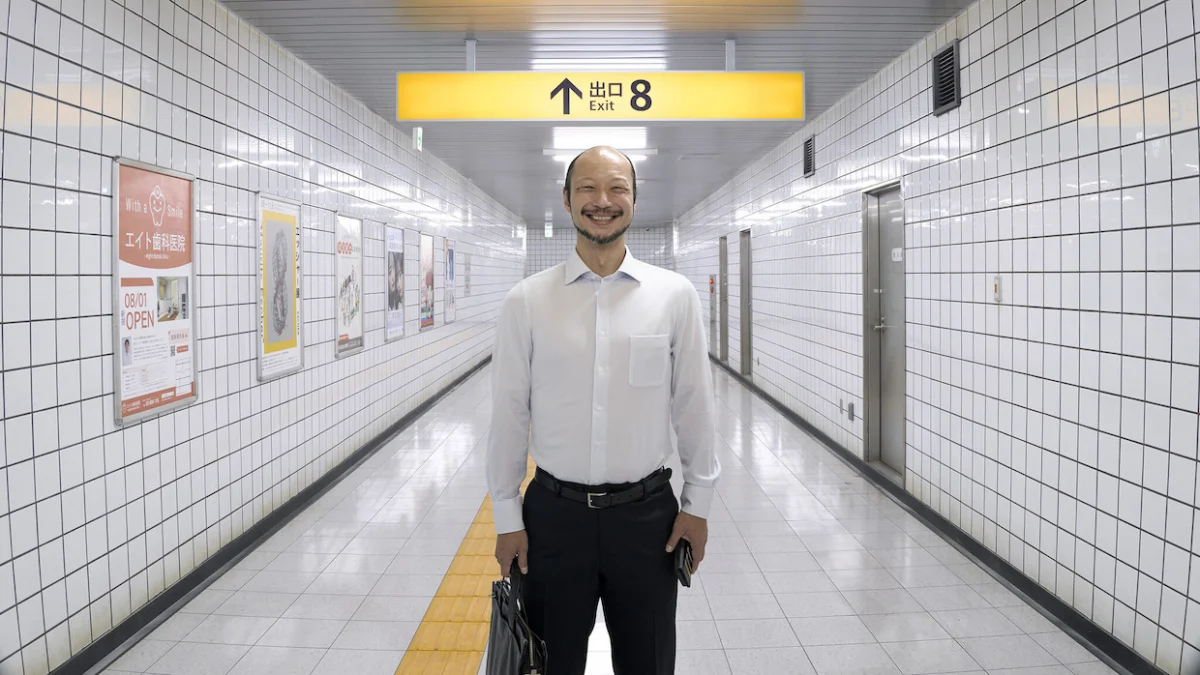
The announcement that Genki Kawamura, the prolific producer behind global Japanese hits such as Makoto Shinkai’s Your Name and Hirokazu Kore-eda’s Monster, would direct an adaptation of the indie video game Exit 8 marks a significant shift in the intersection of interactive media and traditional cinema. Distributed by the legendary Japanese studio Toho, with North American rights secured by NEON, the project represents a high-water mark for the "liminal horror" subgenre. Unlike traditional big-budget video game adaptations that rely on sprawling lore or established intellectual properties like Super Mario or Uncharted, Exit 8 is rooted in the minimalist, atmospheric tension of the "walking simulator." Kawamura’s transition from the intimate, focused dementia drama of his directorial debut, A Hundred Flowers (2022), to an elevated horror project suggests a burgeoning interest in how digital-native storytelling can be translated into a sophisticated cinematic language.
The Genesis of Exit 8 and the Liminal Space Aesthetic
The original Exit 8, developed by indie creator Kotake Create and released in late 2023, became an overnight sensation within the gaming community. Its premise is deceptively simple: the player is trapped in a recursive, photorealistic underground passage in a Japanese subway station. The goal is to reach the eighth exit by identifying "anomalies"—subtle changes in the environment, such as a poster changing size, a man with an unnerving grin, or the sudden appearance of extra doors. If an anomaly is spotted, the player must immediately turn back; if the environment remains normal, the player proceeds.
This loop-based mechanic tapped into the "liminal space" aesthetic—an internet-driven fascination with transitional, empty, and often eerie architectural spaces like hallways, malls, and transit hubs. This aesthetic, popularized by "The Backrooms" creepypasta and various "found footage" YouTube series, relies on the psychological discomfort of being in a place meant for passage that has become a destination in itself. By selecting this specific title, Kawamura has positioned himself at the forefront of a movement that seeks to capture the specific anxiety of the digital age: the feeling of being trapped in an endless, repeating loop of the familiar.
A Chronology of Discovery and Development
The path from a viral indie game to a major theatrical release was remarkably swift, reflecting the accelerated pace of modern content pipelines. Following the game’s release in November 2023, it immediately dominated streaming platforms like Twitch and YouTube. Yuto Sakata, a young producer at Kawamura’s production company, Story, first brought the title to Kawamura’s attention during this peak of viral popularity.
Kawamura’s interest was piqued not just by the game’s mechanics, but by the cultural phenomenon surrounding it. He observed that while every player faced the same digital corridor, the individual reactions—ranging from analytical caution to visceral panic—created a unique narrative for every viewer of a "Let’s Play" video. This observation aligned with a conversation Kawamura had a decade prior with Shigeru Miyamoto, the legendary Nintendo designer, who posited that a truly great game is as entertaining to watch as it is to play.
By early 2024, the project moved into active development. The production team faced the challenge of turning a repetitive gameplay loop into a compelling narrative feature. The decision was made to cast Kazunari Ninomiya, a member of the iconic idol group Arashi and a respected actor known for his roles in Letters from Iwo Jima and The Asada Family. Ninomiya’s involvement provided the star power necessary for a major Toho release, while the acquisition by NEON ensured the film would reach an international audience hungry for innovative J-horror.
Technical Innovation: Recreating the Unreal Engine in Live Action
One of the most striking aspects of the Exit 8 film is its commitment to practical production design over digital effects. The original game was built using Unreal Engine, known for its high-fidelity lighting and polished textures. To replicate this "uncanny" digital look, Kawamura and his team chose to build the subway corridor as a physical set rather than relying on green screens or post-production CGI.
The production design focused on the specific interplay of fluorescent lighting and reflective surfaces. "The way the lights bounce off the environment—none of this was achieved in post-production," Kawamura noted. By using high-gloss tiles and precisely calibrated lighting rigs, the filmmakers managed to capture the sterile, hyper-real quality of a video game render within a physical space. This choice serves to deepen the "liminal" feeling of the film, as the audience is presented with a real environment that looks suspiciously—and terrifyingly—synthetic.

Furthermore, the film’s cinematography employs a hybrid perspective. While it begins in a traditional first-person POV to ground the audience in the player’s experience, it frequently shifts to a third-person perspective. This transition mimics the experience of watching a livestream, where the viewer observes both the environment and the "player’s" (Ninomiya’s) emotional response to it. This meta-narrative approach blurs the lines between being a participant and being a spectator.
Supporting Data: The Rise of the Indie Game-to-Film Pipeline
The success of Exit 8 is not an isolated event but part of a broader trend where indie games serve as "proof of concept" for major film studios. Data from the gaming industry suggests that the indie sector has become a primary source of original horror concepts. In 2023, horror games accounted for a significant portion of indie releases on Steam, with titles like The Convenience Store and Iron Lung garnering millions of views on social media before any film deals were announced.
A key benchmark for this trend is Mark Fischbach’s (Markiplier) adaptation of Iron Lung. Produced on a budget of roughly $3 million, the film reportedly grossed over $50 million worldwide, demonstrating that a pre-existing digital audience can translate into massive box-office returns. Similarly, Jirô Nagae’s adaptation of The Convenience Store, produced in collaboration with NBCUniversal Entertainment Japan, proved that even "low-res" indie aesthetics could be successfully scaled for theatrical audiences.
The financial logic is compelling for studios:
- Built-in Audience: Games like Exit 8 already have millions of fans who have watched "Let’s Play" videos.
- Minimalist Settings: Many indie horror games take place in single, constrained locations, which significantly lowers production costs.
- Pre-Tested Mechanics: The "scares" have already been tested on a global audience via streaming platforms, providing a roadmap for cinematic tension.
Official Responses and Industry Implications
Industry veterans have expressed both excitement and caution regarding this shift. Jirô Nagae has been candid about the reasons behind the industry’s pivot toward indie games, citing a "shortage of fresh ideas" within the traditional studio system. Nagae suggests that in Japan, where securing funding for original screenplays is increasingly difficult, indie games provide an untapped resource of high-concept, low-risk material.
For Genki Kawamura, the project is less about filling a content gap and more about exploring the evolution of human entertainment. He views indie games as a form of "fine art" where individual creators can project their personal visual concepts and inner anxieties without the interference of corporate committees. By elevating Exit 8 to a major studio production, Kawamura is validating the artistic merit of the "walking sim" and challenging the traditional constraints of the "video game movie" genre.
The implications for the film industry are profound. As the line between "watching a game" and "watching a movie" continues to thin, we may see a new genre of "spectator cinema" emerge. This genre would prioritize atmosphere, environmental storytelling, and the psychological experience of the protagonist over traditional plot beats and character arcs.
Conclusion: The Future of the Interactive Narrative
Exit 8 stands as a landmark moment in the history of cross-media adaptation. It represents a departure from the "spectacle" of past video game movies, opting instead for a cerebral, atmospheric experience that honors its indie roots. The collaboration between a visionary director like Kawamura, a major studio like Toho, and a prestige international distributor like NEON suggests that the film industry is finally ready to treat video games not just as brands to be exploited, but as a legitimate source of avant-garde narrative inspiration.
As the film moves through its international release cycle, its performance will likely dictate the future of the indie-to-film pipeline. If Exit 8 achieves the critical and commercial success its pedigree suggests, it could pave the way for a new era of horror—one that finds its terror not in monsters or slashers, but in the quiet, repeating corridors of our digital and physical worlds. The "Exit 8" that Kawamura has constructed is more than just a destination; it is a gateway to a new form of cinematic expression that reflects the recursive, looped, and often uncanny nature of modern life.