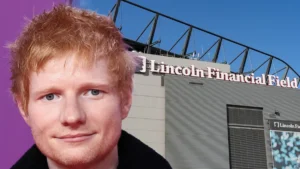
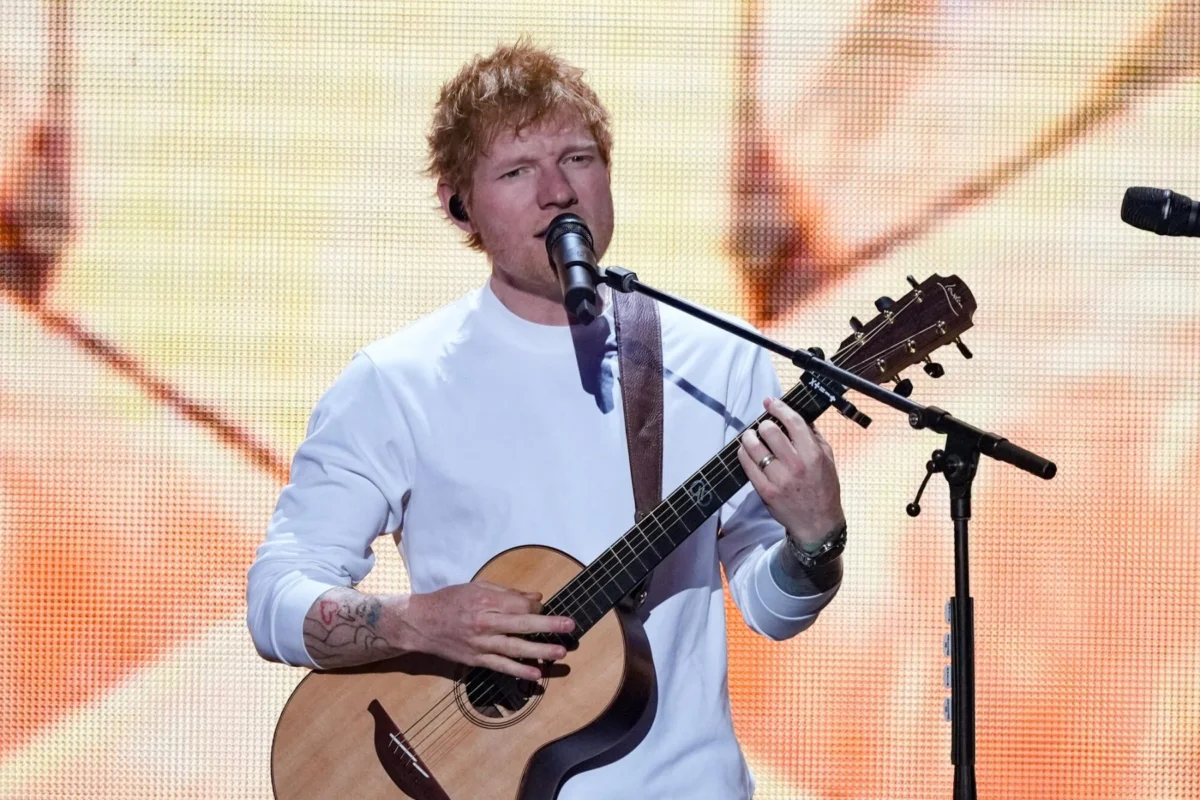
Ed Sheeran faced one of the most challenging nights of his career on Saturday, September 19, stepping onto the stage at Philadelphia’s Lincoln Financial Field under a cloud of intense public scrutiny, tour disruptions, and political controversy. Known traditionally for avoiding political discourse and explicitly rejecting the role of an "activist musician," the British pop-star found himself forced to address thousands of fans before even picking up his guitar. The concert marked the first performance of his ongoing "Loop Tour" following a cascading series of departures by his opening acts, backing band, and supporting personnel—a crisis sparked entirely by a geopolitical controversy thousands of miles away.
The unfolding PR nightmare transformed what should have been a standard stadium-sized pop concert into a high-stakes balancing act of emotional vulnerability, political sensitivity, and crisis management. While the performance ultimately proceeded with high energy and near-full attendance, the events leading up to the Philadelphia show exposed the profound vulnerabilities artists face when international geopolitics collide with the live entertainment industry.
Background Context and the Spark of the Crisis
The roots of the controversy stretch back to growing global tensions surrounding the Israel-Hamas war, which has deeply polarized public opinion across the globe, including within the entertainment and music industries. The immediate catalyst for Sheeran’s tour disruption involved his longtime friend and scheduled tour opener, Macklemore.
Macklemore had recently made public statements expressing strong support for Palestine and criticizing actions taken by the Israeli government. These remarks drew swift, organized backlash from a coalition of prominent venue owners and industry figures led by Robert Kraft, who took direct issue with the rapper’s political stance. Under immense pressure from venue leadership and stakeholders concerned about public safety and political fallout, the decision was made to remove Macklemore from the tour lineup.
What followed was a rapid chain reaction that caught Sheeran’s camp off guard. In an unprecedented display of solidarity with Macklemore, subsequent tour openers and even members of Sheeran’s core backing band—including the Irish folk-fusion group Beoga—announced they were dropping out of the tour. Beoga and other departing artists cited empathy toward Palestinians and a refusal to participate in a tour that had censored political speech as their primary reasons for withdrawal.
The mass exodus left Sheeran’s production hanging in the balance, creating a massive logistical hurdle and an overwhelming public relations crisis for a performer who has historically prided himself on maintaining an apolitical, family-friendly public image centered purely on love, unity, and songcraft.
Chronology of Events Leading to the Philadelphia Concert
The timeline of the crisis escalated rapidly over the span of just a few days:
- October 7 Onward: The ongoing geopolitical conflict intensified global divisions following the Nova music festival attacks and the subsequent military campaign in Gaza.
- Mid-September: Macklemore’s public statements regarding Palestine drew condemnation from venue stakeholders, leading to his removal from the tour.
- Days Prior to Sept. 19: Backup acts, opening performers, and the traditional backing band Beoga dropped out in protest, prompting intense online debate, viral news cycles, and heavy criticism directed at Sheeran for his initial online statement regarding the removal of Macklemore.
- September 17–18: Reports surfaced regarding heightened security protocols and potential protests outside Lincoln Financial Field in Philadelphia, prompting speculation over whether the concert would be canceled entirely.
- September 19: Sheeran addressed the crowd in person twice during the Philadelphia concert—first in a prepared statement before playing, and later in an off-the-cuff emotional address before the show’s finale.
Opening Statement and Addressing the Elephant in the Room
As the lights dimmed at Lincoln Financial Field, Sheeran did not immediately launch into his usual opening routine. Instead, he approached the microphone to confront the controversy head-on, reading carefully from a teleprompter to ensure his words were measured and precise.
"I’m used to my music being criticized, and I’m always happy to take that because I’m lucky a lot of you like my stuff," Sheeran told the crowd. "But this week, the criticism was about something much more important, and I’ve had to take and make difficult decisions, and I am making mistakes, and I’m so, so sorry."
Sheeran then attempted to acknowledge the immense human suffering on both sides of the Middle Eastern conflict, striking a delicate balance intended to honor the gravity of the situation without alienating his global fan base.
"What happened in Israel at the Nova music festival on October 7th was horrific and compounded centuries of Jewish pain. What is happening in Gaza is catastrophic, unjustifiable, and disproportionate," he said. "My heart has been broken by the scale of devastation and loss of civilians’ lives, of children’s lives. And the systemic injustice we’re seeing unfold in the West Bank cannot be overlooked."
He concluded his opening remarks by emphasizing his intent to educate himself further and donate to humanitarian causes, while pivoting back to the core theme of his music: "This concert is still a place where everyone is welcome, and everyone here can stand beside people that have opposing views."

Logistical Adjustments and Stage Alterations
The sudden departure of Beoga and other supporting musicians forced immediate structural changes to the "Loop Tour" format. Sheeran’s shows are primarily built around his solitary mastery of the loop pedal, allowing him to layer guitar tracks and vocals in real-time without a traditional backing band. However, certain segments of his live performances—particularly those featuring traditional Irish instrumentation—historically relied on guest musicians.
Furthermore, safety concerns forced production managers to scrap a planned "B-stage" setup located in the middle of the stadium floor. Sheeran admitted to fans that he had serious concerns about what might happen if he stood exposed in the center of a massive crowd amid heightened security threats and political tensions.
To fill the musical void left by Beoga, Sheeran hastily assembled a temporary backing ensemble for the Philadelphia date, led by violinist Alicia Enstrom. Despite the scramble behind the scenes, the musical execution remained remarkably tight, seamlessly transitioning into crowd-favorites like "Galway Girl" before returning to the core solo loop-pedal segments that define his live identity.
Behind the Scenes: Emotional Toll and Pressures to Cancel
While the concert proceeded smoothly on the surface—with outdoor protests having largely dissipated by the time doors opened and no major security incidents reported—the psychological toll on the artist was immense.
Before launching into his final encore, Sheeran sat on the edge of the stage, discarding the teleprompter for a raw, deeply personal address that offered a rare window into the pressures he faced behind closed doors.
"The last week of my life has been one of the worst weeks of my life, and today has been one of the weirdest days of my life. Tonight has been honestly the best show of my life," Sheeran confessed. He revealed that he had seriously debated canceling the entire tour, questioning whether he even wanted to continue his career as a recording artist.
"I really didn’t know whether this tour would carry on, I really didn’t know whether I’d get on stage again, whether I even wanted to be an artist at all," he continued. "I have so many people telling me to cancel this tour, and I have so many people falling out of my life that I’ve known for years and years and years, people just kind of backing away."
Despite experiencing what he described as abandonment from long-time friends and industry peers, Sheeran pointed to the resilience of his fanbase as the deciding factor in keeping the tour alive. Noting that ticket sales remained strong and that over 50,000 attendees showed up rather than demanding refunds, he framed his decision to perform as a commitment to his audience.
Broader Implications for the Live Music Industry
The crisis surrounding Ed Sheeran’s Philadelphia concert highlights a growing and complex trend within the global entertainment industry: the shrinking space for artists to remain neutral as cultural and geopolitical fault lines deepen.
In recent years, musicians, actors, and public figures have faced increasing pressure from fans, activists, venue operators, and corporate sponsors to take public stances on major international conflicts. Conversely, as Sheeran’s experience demonstrates, taking a stance—or failing to satisfy all factions when attempting to do so—can result in swift internal fractures, the loss of long-standing creative partnerships, and severe logistical disruptions.
The incident also underscores the vulnerability of major concert tours to external political pressures. When venue owners, promoters, and artists disagree on matters of free speech, political expression, and public safety, the financial and operational ripple effects can threaten multimillion-dollar entertainment enterprises almost overnight.
For Sheeran, the immediate crisis in Philadelphia ended with a successful show, pyrotechnics, and a reaffirmation of his bond with his audience. However, questions remain regarding how the remainder of his tour will unfold. Whether his hastily assembled backing band will remain permanent fixtures for upcoming dates, and how venue management will navigate future tour stops amid ongoing geopolitical sensitivities, remains to be seen.
As the music industry watches closely, Sheeran’s turbulent week serves as a stark reminder that in the modern cultural landscape, keeping the music playing is often far more complicated than simply stepping up to the microphone.