The 2026 Cannes Film Festival, which recently concluded on the French Riviera, served as a crucial global platform for the premiere of Congo Boy, a poignant and timely narrative feature from Congolese filmmaker Rafiki Fariala. This cinematic endeavor marks Fariala’s first foray into narrative filmmaking, following a notable career in documentary, and has garnered significant attention for its powerful portrayal of youth resilience amidst the complex socio-political landscape of the Central African Republic (CAR). The film, which screened in the prestigious Un Certain Regard section, offers a deeply human perspective on the challenges faced by young individuals in a region often defined by conflict and displacement, yet brimming with aspiration.
A Deep Dive into the Narrative: Music, Family, and Survival
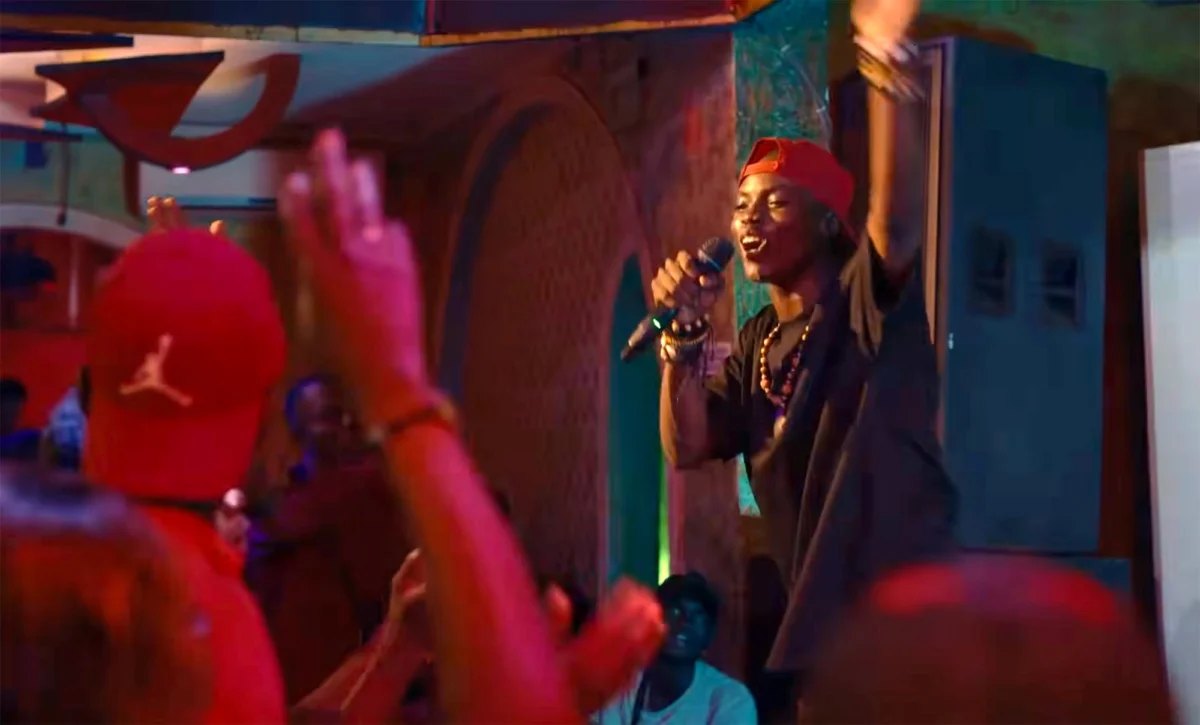
Congo Boy centers on Robert, a 17-year-old portrayed by the compelling Bradley Fioma Dembeasset, whose life in Bangui, the capital of the Central African Republic, is a delicate balance of ordinary teenage dreams and extraordinary adult responsibilities. Robert harbors an ardent ambition to become a renowned rapper, a dream that offers a beacon of hope and an escape from the harsh realities surrounding him. His life takes a dramatic turn when both his parents are unjustly imprisoned for falsifying passports, a common predicament for those navigating the porous borders and bureaucratic hurdles in conflict-affected zones. This sudden upheaval thrusts Robert into the role of sole guardian for his four younger siblings, forcing him to juggle a myriad of responsibilities: daily survival, odd jobs to put food on the table, school exams crucial for his future, and the relentless pursuit of his musical passion on concert stages.
The film’s narrative masterfully interweaves these threads, presenting a coming-of-age story that transcends geographical boundaries while remaining deeply rooted in its specific context. It explores universal themes of familial duty, the pursuit of artistic expression, and the unwavering human spirit in the face of immense adversity. Fariala’s directorial vision, praised for its "emotional clarity," ensures that the film avoids the pitfalls of a clichéd rise-to-fame story, instead grounding Robert’s journey in the gritty, often heartbreaking, reality of his environment. The supporting cast, including Christy Djomanda Louba, Pétruche Mbomba, Rosiana Kotozia, Gloria Ambacko, and Dieufera Sana, contribute to the authentic portrayal of a community bound by struggle and hope.
The Significance of Cannes and Un Certain Regard
The Cannes Film Festival stands as one of the world’s most illustrious and influential cinematic events, serving as a launchpad for films that shape global culture and discourse. Its various sections are meticulously curated to showcase a diverse range of filmmaking talent and artistic expression. The Un Certain Regard section, where Congo Boy premiered, is specifically dedicated to films that present "unusual and original works" by emerging directors or established filmmakers exploring new territories. Its inclusion in this competitive section underscores the film’s artistic merit and its potential to contribute fresh perspectives to the international film landscape.
For Congo Boy, a film from the Central African Republic, its presence at Cannes is particularly significant. It amplifies voices from a region often underrepresented in mainstream cinema, offering a nuanced counter-narrative to the often simplistic portrayals of Africa in Western media. The festival provides unparalleled exposure, attracting distributors, critics, and audiences from across the globe, thereby ensuring that stories like Robert’s can reach a wider consciousness and spark crucial conversations. The positive early reviews suggest that the film has successfully resonated with critics, validating Fariala’s vision and the power of his storytelling.

Geopolitical Context: The Shadow of Conflict and Displacement
The backdrop of Congo Boy is not merely incidental; it is a critical component of its narrative fabric. The film is set in Bangui, the capital of the Central African Republic (CAR), a nation that shares a border with the Democratic Republic of Congo (DRC). Both countries have been plagued by protracted periods of civil unrest, political instability, and humanitarian crises, directly influencing the lives of millions.
The Democratic Republic of Congo, in particular, has endured decades of conflict, often referred to as Africa’s World War, stemming from ethnic tensions, competition over vast natural resources (like coltan, diamonds, and gold), and the proliferation of armed groups. This ongoing instability has led to one of the world’s largest and most complex humanitarian emergencies, with millions internally displaced and countless others seeking refuge in neighboring countries, including the CAR. As of late 2025, estimates from the UN Refugee Agency (UNHCR) indicated over 5.5 million internally displaced persons within the DRC, and hundreds of thousands of Congolese refugees residing in neighboring states. These displacements are not just statistical figures; they represent families uprooted, lives shattered, and futures rendered uncertain.
The Central African Republic itself has faced its own cycle of violence and political upheaval, particularly since 2013, with recurring clashes between various armed groups and government forces. While Bangui, as the capital, might offer a semblance of stability compared to more volatile rural areas, it remains a city where the echoes of conflict and its socio-economic ramifications are deeply felt. The premise of Robert’s parents being imprisoned for falsified passports is a stark illustration of the bureaucratic and legal challenges faced by those caught between borders and conflict zones, often forced to make impossible choices for survival. Fariala’s decision to set the story here imbues it with an urgent realism, highlighting how personal aspirations intertwine with national turmoil.
Rafiki Fariala: A Filmmaker’s Journey from Documentary to Narrative
Rafiki Fariala is not a newcomer to the art of filmmaking. His directorial career began in the realm of documentary, where he honed his craft by observing and chronicling real-life experiences. His previous work, notably the documentary Nous, étudiants! (We, Students!), offered an intimate look into the lives of students in Bangui, showcasing his ability to capture authentic human stories with sensitivity and insight. This background in documentary filmmaking is evident in Congo Boy, which, despite being a narrative feature, possesses a raw, unvarnished quality that lends credibility to its fictionalized world. Fariala’s transition to narrative features is a testament to his evolving artistic vision, allowing him to explore complex themes with a controlled narrative arc while retaining the observational depth characteristic of his earlier work.
His collaboration with screenwriters Tommy Baron and Boris Lojkine, alongside producers Vicky Nelson Wackoro, Dieudo Hamadi, and Caroline Nataf, indicates a concerted effort to craft a compelling and nuanced story. This multidisciplinary approach ensures that Congo Boy is not just a personal statement but a meticulously constructed piece of cinema that speaks to broader societal issues. Fariala’s unique position as a Congolese filmmaker telling a story rooted in his region’s realities is vital. It ensures cultural authenticity and a perspective free from external biases, allowing the narrative to emerge organically from the lived experiences it seeks to represent.
Themes of Resilience, Artistry, and Hope

At its core, Congo Boy is a powerful testament to human resilience. Robert’s unwavering determination to pursue his musical dreams despite immense personal and societal obstacles serves as the central pillar of this theme. Music, in this context, is more than just a hobby; it is a lifeline, a form of self-expression, a means of protest, and a vehicle for hope. The film posits that art can thrive even in the most barren landscapes, offering solace and a path to recognition when traditional avenues are blocked.
The film also delves into the concept of chosen family and the profound responsibilities that often fall upon the shoulders of youth in crisis zones. Robert’s commitment to his younger siblings underscores the strong communal and familial bonds that often sustain communities in adversity. It highlights the often-overlooked heroism of young people who step up to fill voids left by conflict and displacement. Furthermore, the film challenges simplistic narratives about conflict-affected regions by showcasing the vibrancy of youth culture and the universal desire for self-actualization. It portrays Bangui not just as a city affected by conflict, but as a place where dreams are still forged, where music pulses, and where the next generation is actively shaping its identity.
Critical Acclaim and Broader Implications
Early reviews from Cannes have been overwhelmingly positive, with critics highlighting Fariala’s nuanced direction and the film’s profound emotional impact. The Variety review, in particular, noted that the film "succeeds because of Fariala’s emotional clarity, avoiding many pitfalls of the familiar rise-to-fame musical story." This critical reception is crucial for a film of this nature, as it helps to build momentum for wider distribution and audience engagement. It suggests that Congo Boy manages to tell a specific story with universal resonance, engaging viewers on an emotional level while also informing them about complex geopolitical realities.
The success of Congo Boy at Cannes holds broader implications for African cinema. It is part of a growing wave of films from the continent that are gaining international recognition, challenging existing narratives, and demonstrating the rich diversity of African storytelling. This visibility helps to foster a more inclusive global cinematic landscape and encourages further investment in African film industries. It also serves as an inspiration for aspiring filmmakers within Africa, demonstrating that authentic local stories have a place on the world stage. By showcasing the talent and unique perspectives of African filmmakers, Congo Boy contributes to the ongoing redefinition of global cinema.
Looking Ahead: Distribution and Impact
As of its premiere, Congo Boy has no official release dates set for broader theatrical distribution. However, its strong showing at Cannes, coupled with positive critical reception, positions it favorably for acquisition by international distributors. The film’s themes of resilience, family, and the pursuit of dreams are universal, suggesting a potential for broad appeal beyond festival circuits. Its ability to shed light on the realities of the Central African Republic and the Democratic Republic of Congo also makes it a valuable tool for advocacy and education, potentially finding audiences through educational institutions and human rights organizations.
The journey of Congo Boy from the streets of Bangui to the red carpet of Cannes represents more than just a filmmaking achievement; it is a powerful statement about the enduring spirit of creativity and hope in regions often overshadowed by despair. Rafiki Fariala’s debut narrative feature is poised to leave a lasting impression, not only as a significant work of art but also as a crucial cultural document that fosters empathy and understanding across continents. The global cinematic community eagerly awaits its wider release, anticipating the conversations and connections it is sure to ignite.