Comcast Corporation, the Philadelphia-based telecommunications and media titan, has announced a definitive plan to bifurcate its sprawling empire, separating its core connectivity and broadband business from its premier media and entertainment assets. This structural overhaul marks the end of an era for the conglomerate, which for decades championed the "vertical integration" model—the idea that owning both the "pipes" (internet and cable lines) and the "water" (movies, television shows, and news) would create an indomitable market position. On Monday, Comcast leadership confirmed that it will spin off its media units, including NBCUniversal and the European broadcaster Sky, into a standalone, publicly traded entity, while retaining its Xfinity-branded broadband, mobile, and cable television operations.
The move represents a seismic shift in the corporate strategy of a company that has spent the last 20 years aggressively acquiring assets to become a global leader in both distribution and content creation. While Wall Street analysts have long advocated for such a separation to unlock shareholder value, Comcast executives have historically resisted the idea, maintaining that the synergy between its diverse divisions was its greatest strength. However, the rapidly evolving landscape of the media industry—defined by the precipitous decline of traditional linear television and the high-capital requirements of the streaming wars—has finally forced a strategic pivot.
The Architecture of the Separation
The proposed spin-off will create two distinct market leaders. The first company, which will retain the Comcast name, will focus on high-margin connectivity services. This includes Xfinity broadband, which serves over 32 million customers, and a growing mobile business that has become a critical growth engine as the domestic broadband market reaches saturation. Michael Angelakis, the former Chief Financial Officer of Comcast and a long-time lieutenant of CEO Brian Roberts, has been tapped to lead the connectivity business.
The second company will house the vast majority of the NBCUniversal portfolio and Sky. This includes the Universal Pictures film studio, the Universal Destinations & Experiences theme park division, the Peacock streaming service, and Sky’s extensive European operations. Mike Cavanagh, Comcast’s current co-CEO, is slated to become the CEO of this new media entity. Notably, this separation follows a previous announcement to carve out several of Comcast’s cable networks—including CNBC, MSNBC, and USA Network—into a separate entity known as Versant Media Group.
Brian Roberts, the son of Comcast founder Ralph Roberts and the company’s controlling shareholder, will not serve as CEO of either company post-separation. Instead, he will maintain his influence as a significant shareholder and will be "actively involved" in the leadership and strategic direction of both firms. Roberts characterized the move not as a retreat, but as a proactive strategy to allow each business to pursue its own organic growth without being weighed down by the capital needs or market perceptions of the other.
A Chronology of Consolidation and Decoupling
To understand the magnitude of this decision, one must look at the timeline of Comcast’s expansion. The company’s modern identity was forged in 2002 when it acquired AT&T Broadband for approximately $47 billion, making it the largest cable provider in the United States. In 2011, Comcast completed its landmark acquisition of a majority stake in NBCUniversal from General Electric, a deal that was initially met with intense regulatory scrutiny but eventually became a blueprint for media consolidation.
In 2018, Comcast outbid The Walt Disney Company in a $39 billion deal to acquire Sky, the British-based satellite broadcaster, expanding its footprint into Europe and gaining a sophisticated streaming technology platform. However, the market environment began to shift shortly after the Sky acquisition. The "Great Unbundling" of the cable television package accelerated, driven by the rise of Netflix and the launch of competing services like Disney+ and Warner Bros. Discovery’s Max.
By 2019, internal discussions regarding a potential split began to surface, though they were never deemed urgent until recently. The decision to move forward now suggests that Comcast leadership believes the "synergy" model has reached a point of diminishing returns. By separating the businesses, the media wing can be valued as a content and theme park powerhouse, while the connectivity wing can be valued as a stable, cash-flow-heavy utility.
Market Reactions and the M&A Question
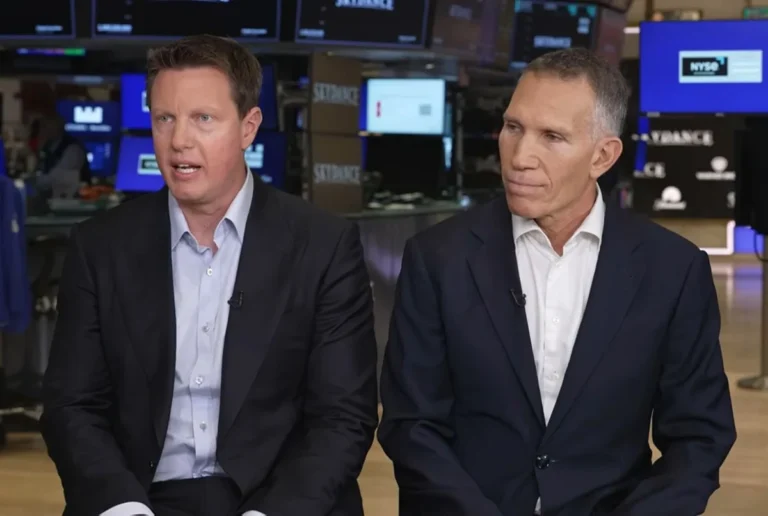
The announcement immediately reignited speculation that the split is a precursor to a larger merger or acquisition (M&A). In the media industry, size is often viewed as the only defense against the scale of tech giants like Amazon, Apple, and Google. Analysts have pointed to Warner Bros. Discovery’s recent history as a potential roadmap; that company was formed through a complex spin-off and merger process that many believe was designed to prepare the assets for an eventual sale.
However, during a call with investors on Monday, Brian Roberts and Mike Cavanagh were emphatic in their denials. When asked if the separation was a "setup" for future deals, Roberts responded with a definitive "Absolutely not." Cavanagh echoed this sentiment, stating that the ambition for NBCUniversal and Sky is to build and invest for growth as an independent entity.
Despite these denials, the market responded as if a consolidation wave was imminent. Shares of Charter Communications, Comcast’s largest rival in the cable space, surged 10% following the news. Investors have long speculated about a potential Comcast-Charter merger, which would create a near-monopoly on high-speed cable internet in the United States. Such a combination would have been unthinkable under the previous regulatory regime, but the shifting political landscape has led some to believe that a "connectivity-only" merger might be more palatable to regulators than a vertically integrated one.
Regulatory Hurdles and Strategic Obstacles
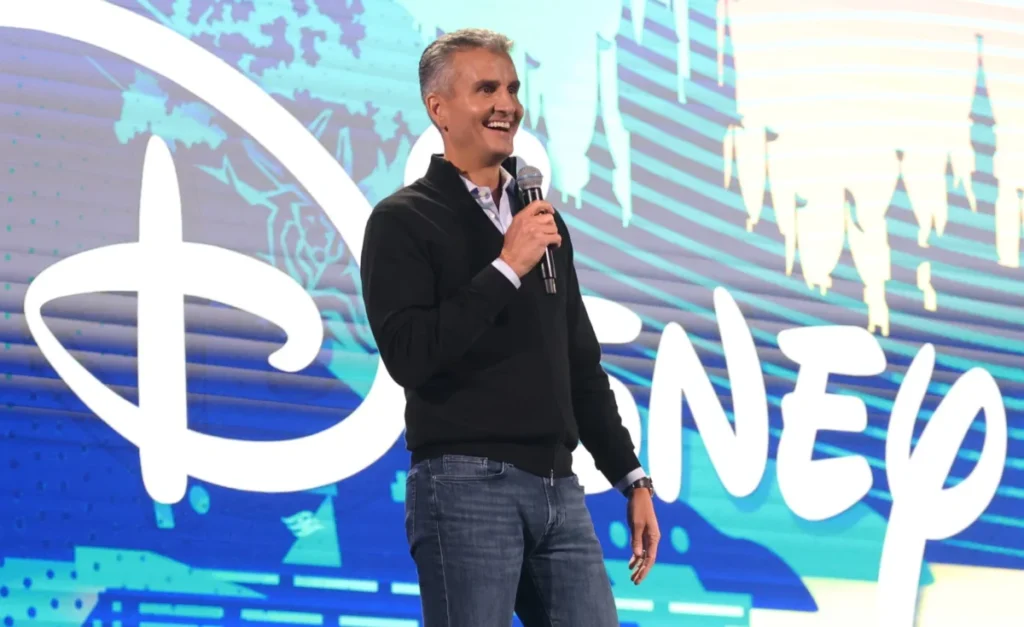
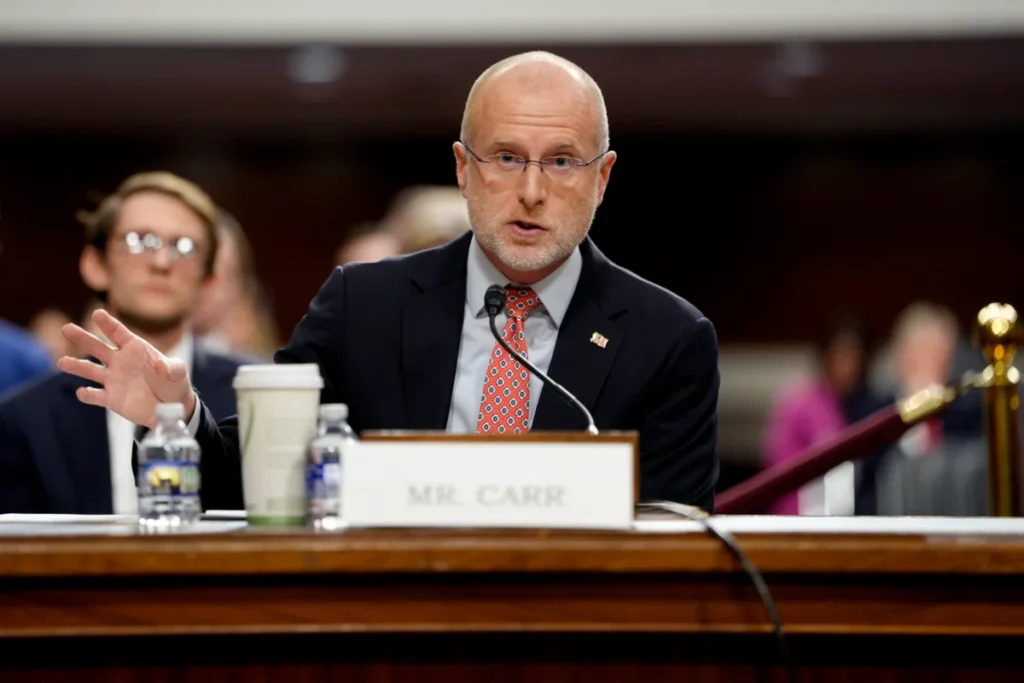
While a split provides "optionality," as media veteran Jonathan Miller noted, the path to further M&A is fraught with significant hurdles. For the newly formed media company, the ownership of the NBC broadcast network is a major sticking point. Federal Communications Commission (FCC) rules generally prohibit a single company from owning more than one of the "Big Four" national broadcast networks. This effectively prevents a merger between the new NBCUniversal entity and Disney (ABC), Paramount Global (CBS), or Fox.
Furthermore, any deal involving NBCUniversal would face intense antitrust scrutiny. While Paramount Global is currently undergoing its own merger with Skydance Media, and Warner Bros. Discovery remains in a state of flux, the pool of viable partners for a company of NBCUniversal’s size is small. Netflix, while recently showing interest in acquiring specific assets like film studios, has expressed little appetite for the "linear" television business—the traditional cable channels that still provide significant cash flow but are in a state of long-term decline.
On the cable side, a Comcast-Charter merger would face a "gauntlet" of regulatory challenges, according to MoffettNathanson analyst Craig Moffett. Beyond federal approval from the Department of Justice (DOJ), such a deal would require the blessing of individual state public service commissions. In states like Massachusetts, Illinois, and Maryland, which are traditionally more skeptical of large-scale corporate mergers, the opposition could be insurmountable.
There is also the matter of debt. Charter Communications is currently navigating the financial complexities of its merger with Cox, which is expected to leave the company with a debt load exceeding $100 billion. If the new Comcast connectivity entity were to take on a significant portion of the parent company’s existing debt—a common tactic in corporate spin-offs—the combined debt of a Comcast-Charter entity would be a massive burden in a high-interest-rate environment.
Implications for the Streaming Landscape
The separation will also have profound implications for Peacock, Comcast’s streaming service. Peacock has struggled to match the subscriber numbers of Netflix or Disney+, but it has found a niche through high-profile sports rights, including the NFL and the upcoming return of the NBA to NBC platforms.
As a standalone media company, the NBCUniversal entity will have the freedom to explore "adjacent businesses," as Mike Cavanagh put it. This could include partnerships with other streamers or a more aggressive shift toward a "studio-first" model, where it licenses its vast library of content—which includes the Jurassic Park, Fast & Furious, and Despicable Me franchises—to the highest bidder, rather than keeping it exclusive to Peacock.
Conclusion: A New Era for American Media
Comcast’s decision to split marks a definitive conclusion to the era of the "everything" media conglomerate. The strategy that built the company—buying up disparate pieces of the media value chain and forcing them to work together—has been replaced by a strategy of specialization and agility.
The next 12 months will be critical as Comcast works to finalize the details of the spin-off, including the precise allocation of debt and the valuation of the two new companies. While management insists that this is not a prelude to a sale, the move undoubtedly makes both halves of the company more "digestible" for potential suitors. In an industry defined by rapid disruption, Comcast has decided that the best way to survive the future is to break apart the past. Whether this "unbundling" at the corporate level will provide the growth Brian Roberts promises, or simply make it easier for the pieces to be absorbed by others, remains the central question for the future of the American media landscape.