




The execution of Christa Pike in Tennessee encountered severe complications on Wednesday evening, leaving the inmate alive following two separate attempts to administer a lethal injection. According to federal court filings submitted by her legal representation, prison executioners utilized both scheduled syringes of lethal chemicals, yet Pike remained conscious, responsive, and audibly snoring approximately an hour after the procedure commenced.
The dramatic and chaotic events unfolded inside the death chamber at the Riverbend Maximum Security Institution in Nashville. Witnesses and defense attorneys reported that the execution protocols failed to achieve their intended result, prompting prison officials to lower the viewing chamber’s curtains twice as medical teams struggled with the procedure. Legal filings noted that Pike had not lost consciousness and retained an active heartbeat despite the administration of the lethal substances, raising immediate and profound questions regarding the efficacy and constitutionality of the state’s execution protocols.
The botched execution represents the culmination of a frantic day of legal maneuvering that stretched from federal appeals courts up to the highest court in the United States. The proceedings have reignited intense national discourse surrounding the death penalty, the reliability of lethal injection protocols, and the profound legal and ethical challenges associated with capital punishment in the United States.
A Legal Battle That Went Down to the Wire
Pike’s path to the execution chamber on Wednesday, September 30, 2026, was marked by a relentless series of eleventh-hour appeals. Earlier in the day, the U.S. Court of Appeals for the Sixth Circuit granted a temporary stay of execution, pausing the lethal injection just hours before it was scheduled to take place. The appellate panel intervened to review new arguments presented by Pike’s defense team.

However, the state of Tennessee quickly appealed the decision to the U.S. Supreme Court. In a high-stakes decision, the nation’s highest court lifted the stay, clearing the legal pathway for state officials to proceed with the execution. With the judicial barriers removed, the Department of Correction moved forward with the lethal injection protocol, leading directly to the unprecedented complications that occurred inside the death chamber.
Throughout the post-conviction phase, Pike’s legal team argued vigorously to spare her life. Their primary legal strategy centered on the contention that the jury which originally sentenced Pike to death in the 1990s was never presented with the full scope of her personal history. Attorneys argued that mitigating factors—including severe childhood sexual abuse, profound psychological trauma, and a documented history of mental health disorders—were critically underrepresented during the trial phase. Despite these appeals for clemency and judicial intervention, the courts ultimately allowed the execution to be scheduled, setting the stage for Wednesday’s chaotic events.
The 1995 Murder of Colleen Slemmer
To understand the gravity and enduring public interest surrounding Christa Pike’s case, one must examine the horrific crime that resulted in her death sentence. In 1995, Pike was an 18-year-old student participating in the Knoxville Job Corps program, a federal career training initiative. It was during her time at the facility that she developed a volatile and obsessive jealousy toward 19-year-old Colleen Slemmer, a fellow Job Corps student.
Investigators established that Pike, along with an accomplice named Tadaryl Shipp and a third acquaintance, plotted against Slemmer over perceived slights. On January 12, 1995, Pike, Shipp, and another individual lured Slemmer away from the campus under the guise of making peace, taking her to a remote, wooded area near the University of Knoxville campus.
Once isolated, Slemmer was subjected to a brutal and prolonged assault. Trial testimony revealed that Pike tortured the victim for over half an hour, carving a pentagram into her chest and ultimately beating her to death with a large piece of asphalt. Pike infamously kept a piece of Slemmer’s skull as a macabre souvenir, showing it to peers upon her return to the Job Corps center.

The sheer brutality of the crime shocked the local community and quickly captured national media attention. Investigators apprehended Pike, Shipp, and their associates shortly after the murder. Due to the heinous nature of the offense and overwhelming physical evidence, the judicial proceedings moved swiftly toward a trial that would establish Pike as one of the most notorious female inmates on death row.
Trial, Conviction, and Decades on Death Row
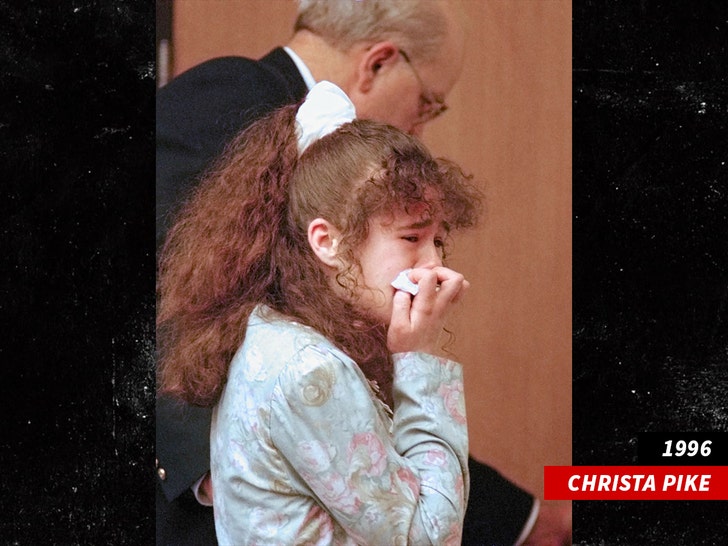
In March 1996, a Knox County jury convicted Christa Pike of first-degree murder and conspiracy to commit murder. Following the conviction, the sentencing phase focused heavily on the aggravating factors of the crime, including its premeditated, heinous, and depraved nature.
The jury returned a sentence of death by electrocution for the murder conviction, alongside a concurrent sentence for the conspiracy charge. Pike’s accomplice, Tadaryl Shipp, received a life sentence with the possibility of parole because he was a juvenile at the time of the offense. A third participant pleaded guilty to facilitation of murder and received a lesser sentence.
Upon her arrival at the Tennessee Prison for Women, Pike made history within the state’s correctional system. When she entered death row in 1996 at the age of 18, she became the youngest female inmate in the United States condemned to death in the modern era.
Over the subsequent three decades, Pike’s life behind bars was marked by continued disciplinary infractions and further legal drama. In 2001, while incarcerated, Pike was convicted of attempted first-degree murder after launching a brutal attack on a fellow inmate, Patricia Jones, nearly strangling her to death with a shoestring. This subsequent conviction cemented her reputation within the prison system and heavily influenced subsequent judicial evaluations regarding her potential for rehabilitation or commutation of sentence.
The Mechanics of the Botched Execution and Immediate Aftermath
The events of Wednesday evening have cast a harsh spotlight on Tennessee’s execution methods and the administration of capital punishment. According to the court filings submitted by Pike’s defense team, the execution procedure deviated significantly from standard protocols, resulting in a prolonged and distressing ordeal for all parties involved.
Witnesses inside the observation room noted that the execution team administered the primary chemicals intended to induce unconsciousness and subsequent death. However, as the timeline progressed past the expected window of efficacy, Pike remained responsive. Legal representatives documented that Pike was not only conscious and possessing an active heartbeat, but was audibly snoring as the curtains to the viewing chamber were repeatedly drawn and lowered.
This malfunction immediately triggered emergency legal filings by federal defenders seeking to halt the ongoing procedure. The revelation that an inmate survived the administration of lethal injection chemicals brings renewed urgency to ongoing debates regarding the reliability of pharmaceutical compounds used in executions, particularly given that numerous pharmaceutical manufacturers have restricted the sale of their drugs to state correctional facilities.
Broader Implications for Capital Punishment
The complications surrounding Christa Pike’s execution are expected to reverberate far beyond the borders of Tennessee. The incident provides immediate ammunition for opponents of capital punishment, who have long argued that lethal injection is an inherently flawed, unreliable, and potentially cruel and unusual form of punishment.

Legal analysts suggest that the botched execution will likely prompt a wave of new constitutional challenges from death row inmates across the country. Claims under the Eighth Amendment, which prohibits cruel and unusual punishment, frequently cite instances where execution protocols fail or result in prolonged suffering. Defense attorneys are expected to utilize the Tennessee incident to demand comprehensive transparency, independent medical oversight, and judicial moratoriums on lethal injections until states can guarantee humane and instantaneous execution methods.
Conversely, supporters of the death penalty and representatives of victims’ rights organizations may view the procedural failures through a different lens, focusing on the severity of the crimes committed by Pike and the prolonged legal appeals that delayed justice for Colleen Slemmer’s family for more than thirty years. However, even among proponents of capital punishment, administrative failures of this magnitude raise serious logistical concerns regarding the competence and preparedness of state corrections departments.
As federal courts review the emergency filings prompted by Wednesday night’s events, the immediate future of Christa Pike remains legally complex and medically uncertain. State officials face mounting pressure to provide a transparent account of the execution chamber malfunctions, while legal scholars and human rights advocates monitor a developing constitutional crisis that could fundamentally alter the landscape of American criminal justice.