
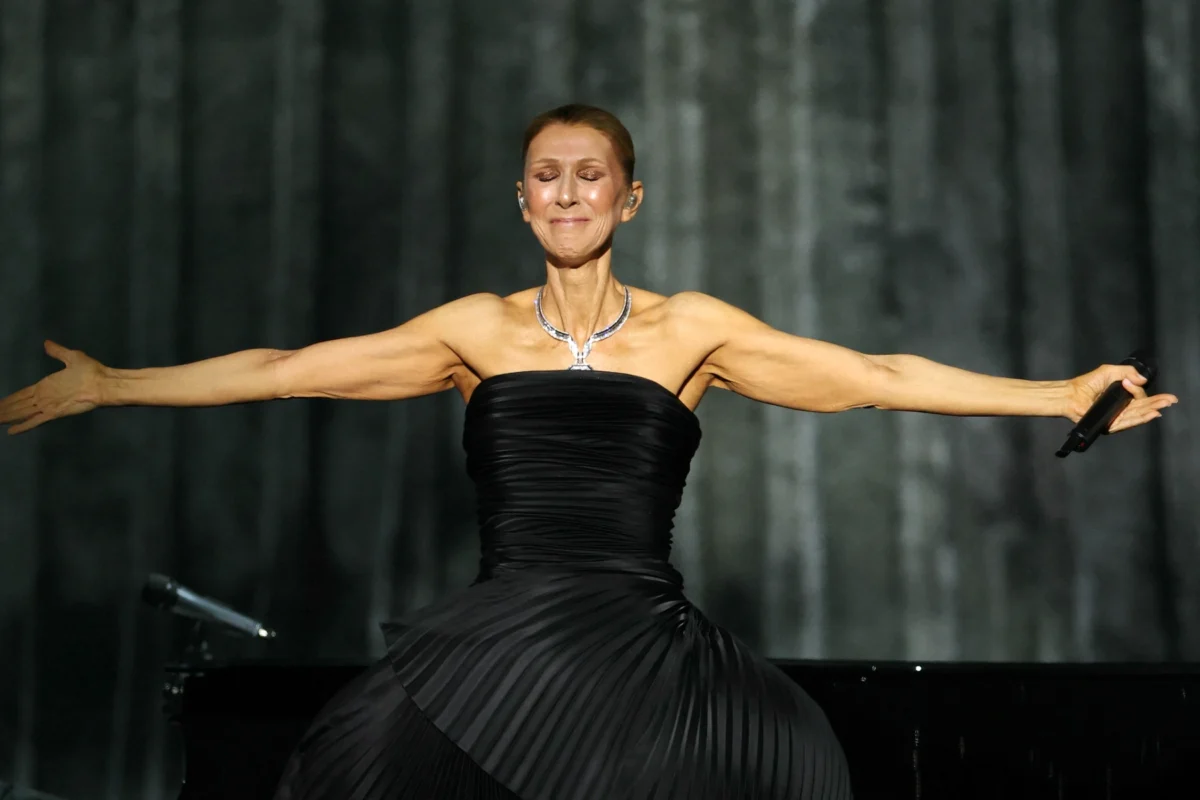
Céline Dion stepped back into the global spotlight on Saturday night, delivering an emotionally charged, vocally formidable comeback performance at the Plenitude Arena in Nanterre, just west of Paris. Marking her first live concert in six years, the legendary Canadian vocalist launched a massive 26-date Paris residency that immediately captivated the international music community. The opening night drew an ecstatic crowd of 30,000 fans, serving as the inaugural event for an autumn schedule that will see Dion perform to more than 480,000 total attendees across her first 16 scheduled dates.
The logistical demand for tickets demonstrated the enduring magnitude of Dion’s global appeal. Every seat for the residency sold out within hours of release, driven by an exclusive access lottery that attracted a staggering nine million registrants worldwide. For an artist who has spent the better part of a decade away from the concert stage due to significant health challenges, the reception underscored a deep, unwavering bond with her audience.
Background Context and the Road to Recovery
Dion’s triumphant return follows a prolonged and arduous absence from public performance, prompted by her public disclosure of a rare and debilitating neurological condition known as stiff-person syndrome (SPS). Diagnosed after experiencing severe muscle spasms and mobility issues that forced the cancellation of her highly anticipated Las Vegas residency and subsequent international touring legs, Dion retreated from the public eye to prioritize intensive medical treatment, vocal preservation, and physical therapy.
Stiff-person syndrome is an autoimmune neurological disorder characterized by progressive muscle stiffness and frequent, painful spasms triggered by environmental stimuli such as noise or emotional stress. For a performer whose craft relies heavily on diaphragmatic control, physical stamina, and precise vocal mechanics, the diagnosis presented a profound career threat. Throughout her rehabilitation, Dion maintained a remarkably private profile, occasionally updating fans through documentary footage and social media milestones, but steadfastly refusing to set a definitive timeline for a stage return until her health permitted a world-class performance.
The Saturday night engagement in Nanterre served not only as a musical comeback, but as a definitive physical testament to her recovery. Rather than relying on pyrotechnics, complex multimedia effects, or massive backup troupes, the production was deliberately minimalist. The staging was designed to focus entirely on Dion’s voice, allowing the acoustics of the Plenitude Arena and the raw power of her execution to command the room.
Chronology and Setlist Highlights of Opening Night
The evening began with palpable anticipation, with the house lights dimming 47 minutes past the scheduled start time. When Dion finally emerged, the emotional weight of the moment was immediately evident. Visibly moved to tears, she opened the two-and-a-half-hour set with "On Ne Change Pas," setting an introspective, vulnerable tone that resonated deeply throughout the arena.
The 29-song setlist bridged decades of musical evolution, weaving together intimate French ballads, powerhouse English anthems, and unexpected stylistic departures. A significant portion of the French-language segment drew from D’eux, the iconic 1995 album written entirely by Jean-Jacques Goldman. D’eux remains the best-selling French-language album in global music history, and hearing tracks like "Pour Que Tu M’aimes Encore" performed live elicited mass sing-alongs from the multi-generational audience.
Further establishing her artistic range, Dion incorporated a mirror-ball disco sequence midway through the show, injecting high-energy vitality into the evening. She delivered a soaring, operatic rendition of "La Wally" under simulated falling snow, before transitioning into a powerful gospel-backed arrangement. Demonstrating her willingness to take artistic risks, Dion debuted "Dansons," a brand-new comeback single penned once again by Goldman specifically for this era.
One of the evening’s most talked-about segments was a deliberate pivot toward the dance floor. Energized renditions of Donna Summer’s "I Feel Love," Eurythmics’ "Sweet Dreams (Are Made of This)," and a completely reworked, club-infused version of her own global hit "I’m Alive" showcased a looser, more playful side of the singer that contrasted sharply with the traditional balladeer persona many attendees anticipated. The concert reached a staggering emotional climax when Dion stepped away from her backing musicians to deliver an entirely a cappella performance of "All by Myself," silencing the 30,000-person venue with the sheer clarity and resonance of her upper register. The final notes faded as the clock ticked toward 11:14 p.m. local time, concluding a marathon 150-minute performance.
A-List Audience and Cultural Resonance
The cultural significance of Dion’s return drew an eclectic assembly of global figures, dignitaries, and cultural icons to the Plenitude Arena. Among those spotted in the VIP sections were former U.S. First Lady Michelle Obama, media mogul Oprah Winfrey, French-Malian pop sensation Aya Nakamura, and French European Space Agency astronaut Thomas Pesquet. Their presence underscored Dion’s unique cross-cultural status as a bridge between North American pop royalty and European artistic heritage.
The overwhelming demand for the residency has amplified discussions regarding the economics of major live-entertainment comebacks. Industry analysts note that Dion’s ability to sell out half a million seats instantaneously—despite years of inactivity—places her in an elite tier of touring artists capable of defying traditional market cooling trends.
Implications for the Live Music Industry and Future Touring
Dion’s successful opening night carries profound implications for both her personal career trajectory and the broader live entertainment sector. For the artist herself, the residency serves as a controlled, stationary testing ground to evaluate her physical endurance before committing to grueling global tour itineraries. By anchoring herself in Paris for 26 dates, Dion minimizes the rigorous travel demands associated with traditional multi-city tours, optimizing her health management while maximizing revenue and fan engagement.
From an industry perspective, the production sets a new benchmark for legacy artist comebacks. The decision to emphasize vocal purity over commercial gimmickry aligns with a growing consumer preference for authenticity in live performances, particularly among heritage acts navigating health-related career interruptions. Event organizers and venue operators across Europe are already reporting secondary economic booms in Nanterre and surrounding Parisian districts, driven by out-of-town travelers securing accommodations for the remainder of the residency dates.
As Dion continues her 26-night run at the Plenitude Arena, the classical discipline and emotional transparency of her opening performance have quieted any lingering doubts regarding her artistic vitality. More than just a concert series, the engagement stands as a historic reclamation of the stage by one of the defining vocal talents of the modern era.