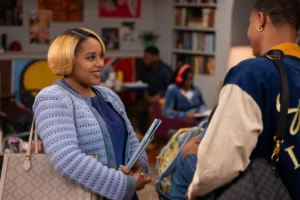




The Indonesian dark comedy "Better Off Dead," directed by Kristo Immanuel, has successfully transitioned from its domestic theatrical run to the international festival circuit, marking a significant milestone in its cinematic journey. The film, which premiered in Indonesian cinemas on August 14th, garnered substantial attention with a total of 184,960 admissions. Its critical acclaim was further cemented at the prestigious Indonesian Screen Awards, held as part of the 20th Jogja-NETPAC Asian Film Festival. Here, "Better Off Dead" was honored with five accolades, including the coveted Best Film and Best Directing awards, underscoring its artistic merit and compelling narrative. The film is now set to make its European premiere at the CinemAsia Film Festival in 2026, signaling its growing global appeal and recognition within the Asian cinematic landscape.
A Tale of Unseen Desires and Elaborate Deception
At its core, "Better Off Dead" revolves around the character of Gema, portrayed by Omara Esteghlal. Gema is an individual navigating a life marked by profound social isolation and a desperate yearning for recognition. His domestic circumstances are fraught with peculiarity: his mother adopts the guise of his sister to pursue romantic relationships with younger men, a surreal dynamic that underscores the unconventional nature of his upbringing. Compounding his woes, his father vanished during his childhood, leaving a void that has never been filled. In his professional life, Gema experiences a form of social invisibility, with colleagues largely disregarding his presence. This pervasive sense of being overlooked fuels his internal struggles and shapes his interactions with the world.
The narrative takes a pivotal turn with the death of Gema’s estranged father. This event, while ostensibly tragic, triggers an unexpected shift in his social dynamic. The superficial grief he displays, or perhaps the outward performance of it, is met with an outpouring of sympathy and newfound affection from his coworkers. This sudden influx of positive attention, a stark contrast to his previous experiences of neglect, becomes addictive for Gema. The fear of losing this hard-won acknowledgement propels him into a dangerous cycle of deception. In an attempt to sustain his colleagues’ attention, Gema begins fabricating further family deaths. This escalating series of lies, however, soon reaches a point of saturation. With no more fictitious relatives to "kill off," Gema finds himself compelled to devise new strategies to remain the focal point of his colleagues’ concern, pushing the boundaries of his fabricated reality.
Innovative Storytelling and a Unique Comedic Approach
Marketed as a "cringe comedy," "Better Off Dead" distinguishes itself from conventional cinematic structures through its audacious use of fourth-wall breaking. Gema’s direct addresses to the camera are not merely a stylistic choice but are intricately woven into the narrative fabric. What elevates this technique is the subtle, yet significant, detail that other characters within the film occasionally register or react to Gema’s direct monologues, creating an additional layer of comedic absurdity and dramatic irony. This meta-narrative element not only enhances the humor but also invites deeper interpretation.
One compelling reading of this stylistic choice is its potential as a coded representation of neurodiversity. The direct addresses can be viewed as an externalization of the internal monologue or self-talk often experienced by individuals on the autism spectrum. This interpretation imbues the film with a layer of empathy, transforming Gema’s unconventional behavior from mere eccentricity into a relatable manifestation of his internal processing. Despite the inherently awkward and often absurd situations Gema finds himself in, the audience is encouraged to connect with his underlying vulnerability and his fundamental desire to be seen. The film masterfully balances moments of outright laughter, often born from the sheer outlandishness of the events, with a genuine sense of relatability and empathy for the protagonist’s plight.

The Power of Performance and Ensemble Dynamics
The success of "Better Off Dead" is significantly attributed to the nuanced performance of Omara Esteghlal as Gema. Esteghlal imbues the character with a compelling likability, effectively juxtaposing Gema’s morally questionable actions with his deeply ingrained desire for acknowledgment and belonging. His portrayal ensures that even as Gema engages in increasingly dubious behavior, the audience remains invested in his journey, rooting for his eventual understanding or redemption.
The supporting cast plays a crucial role in complementing Gema’s developing narrative. While some characters occasionally lean into predictable comedic archetypes, they collectively contribute to the film’s vibrant tapestry. Mawar Eva de Jongh, as Kerin, adopts a persona that is both progressive and principled, consistently urging her colleagues to adopt a more sensitive approach when discussing the deceased. Muhadkly Acho portrays a seemingly affable boss who grapples with his age and attempts to maintain relevance within a younger professional environment, a subtle commentary on generational dynamics in the workplace. Mario Caesar, as Danu, serves as the antagonist who uncovers Gema’s elaborate scheme, though his attempts to expose the truth are ultimately futile within the film’s unfolding events. Despite occasional moments where these supporting elements might feel somewhat repetitive, the overarching theme of a "found family" emerges as a potent force, delivering a profoundly satisfying emotional conclusion to the narrative.
Cinematic Craftsmanship and Emotional Resonance
The cinematography, helmed by Dimas Bagus Triatma Yoga, plays an instrumental role in allowing the narrative of "Better Off Dead" to unfold with a sense of organic flow. The visual language effectively supports the film’s often chaotic yet meticulously structured plot, avoiding unnecessary visual complexities. While certain aesthetic choices align with conventional comedic filmmaking, the inclusion of additional artistic elements, such as the musical compositions by Nic Edwin and a poignant song performed by Mawar de Jongh, adds a unique dimension. These musical contributions, at times seemingly out of sync with the immediate scene, paradoxically manage to feel surprisingly fitting, contributing to the film’s overall emotional texture.
This deliberate blending of stylistic elements results in a cinematic experience that transcends mere entertainment. "Better Off Dead" successfully evokes a range of complex emotions in its audience, including anger, confusion, tension, and a distinct, often uncomfortable, sense of cringe. This emotional resonance is a testament to the film’s ability to engage viewers on a deeper level, prompting introspection alongside amusement.
Broader Implications and Festival Circuit Success
"Better Off Dead" stands as a testament to the power of accessible storytelling, offering a light-hearted comedy that requires minimal prerequisite knowledge of its corporate setting or the nuances of modern workplace dynamics. The film’s strength lies in its relatable portrayal of a character whose fundamental human desire for validation is universally understood. By making audiences laugh heartily, delivering unexpected plot developments, and presenting a nuanced, even if occasionally clichéd, representation of its diverse characters, "Better Off Dead" leaves a lasting impression. Its success at the Jogja-NETPAC Asian Film Festival, culminating in multiple awards, underscores its critical appeal within Indonesia. The subsequent progression to the international festival circuit, beginning with its European premiere at CinemAsia Film Festival 2026, signifies a promising trajectory for Kristo Immanuel’s directorial debut. This global exposure not only validates the film’s artistic merit but also opens doors for wider distribution and potential future projects, further solidifying its position as a noteworthy entry in contemporary Asian cinema. The film’s ability to resonate with diverse audiences, bridging cultural divides through its exploration of universal themes like loneliness, the need for connection, and the consequences of deception, positions it as a significant cultural export. The initial box office performance of nearly 185,000 admissions in Indonesia indicates a strong local resonance, providing a solid foundation for its international endeavors. The anticipation for its European premiere suggests a growing international appetite for unique, character-driven comedies that tackle complex emotional landscapes with both humor and sensitivity.