

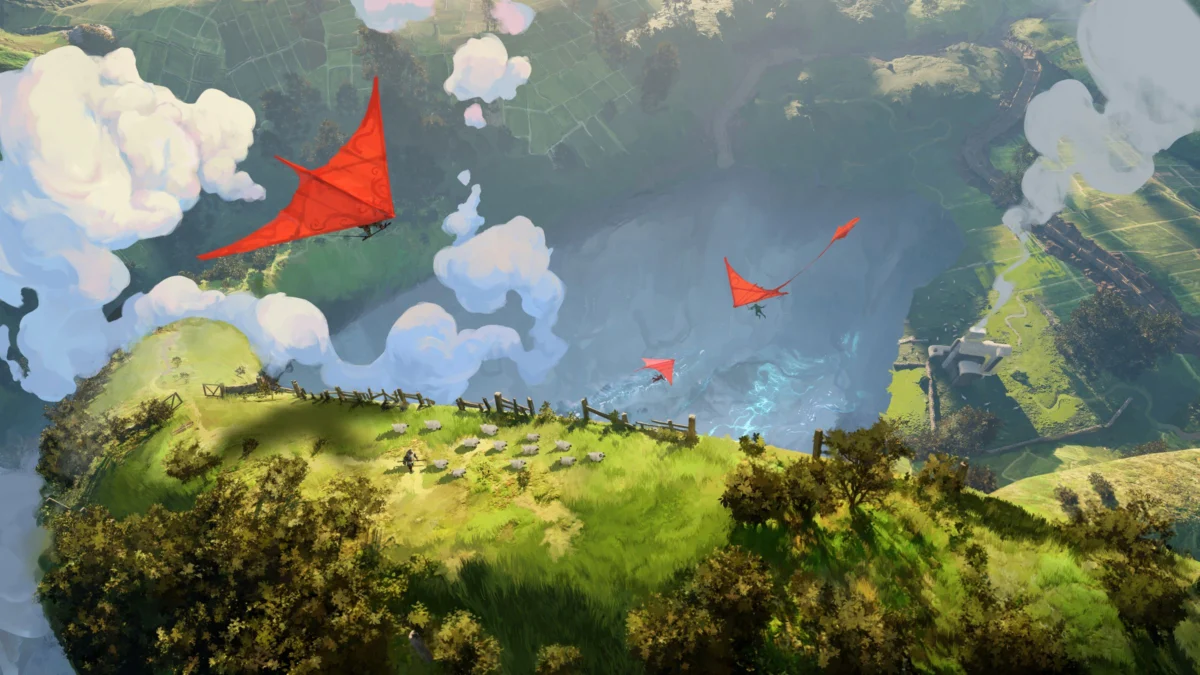
The landscape of massively multiplayer online role-playing games is poised for a significant evolution following ArenaNet’s official announcement of Guild Wars 3. Slated for a closed beta release in late 2027, the upcoming title represents the first major mainline installment in the acclaimed franchise in over a decade. Built from the ground up using Unreal Engine 5 after four years in stealth development, Guild Wars 3 aims to modernize the genre by integrating momentum-based movement, deeply collaborative combat mechanics, and a streamlined "meaningful MMO" player scale. Alongside the announcement, developer ArenaNet confirmed that the franchise will make its historic console debut on the PlayStation 5, operating concurrently alongside continuous updates for both the original Guild Wars and Guild Wars 2.
Historical Context and Chronological Development of the Franchise
The Guild Wars franchise has occupied a unique space within the PC gaming ecosystem since its inception. Released in 2005 by ArenaNet—a studio founded in 2000 by former Blizzard Entertainment developers Mike O’Brien, Patrick Wyatt, and Jeff Strain—the original game disrupted the traditional subscription-model MMORPG market. By pioneering a buy-to-play economic model that eliminated monthly fees, Guild Wars cultivated a dedicated, cult-like user base without requiring the constant financial commitment demanded by competitors like World of Warcraft.
In March 2007, ArenaNet detailed its long-term vision for a true persistent-world sequel, culminating in the August 2012 launch of Guild Wars 2. The second installment redefined dynamic event structures, replacing static quest hubs with open-world environmental storytelling and action-oriented combat. Over the subsequent twelve years, Guild Wars 2 expanded through numerous major expansions, including Heart of Thorns, Path of Fire, End of Dragons, and Secrets of the Obscure, maintaining a healthy, active player community.
Development on Guild Wars 3 quietly commenced roughly four years ago, positioning the project as a generational leap for the studio. Set chronologically prior to the events of the first two games, the third installment is engineered to serve as an accessible entry point for newcomers, requiring no prior familiarity with the deep lore of Tyria.

Core Gameplay Innovations: Momentum, Movement, and Combat
One of the most profound departures in Guild Wars 3 lies in its overhaul of character mobility and physics. Historically, MMORPGs have struggled to incorporate true physical momentum due to the inherent constraints of network latency, client-server synchronization, and the unpredictable nature of massive multiplayer interactions. ArenaNet’s technical team has leveraged Unreal Engine 5 to bypass these traditional limitations, introducing fluid movement transitions that bridge the gap between classic MMORPGs and modern action RPGs.
In Guild Wars 3, players can seamlessly transition from a sprint into a ravine glide, execute wall-running sequences, and cover terrain with expressive freedom, governed strictly by a tactical stamina meter. This focus on momentum directly influences combat encounters. Characters can build velocity to ram adversaries into environmental hazards, stun them against cliff faces, or displace them from elevated positions.
Combat synergy—a hallmark of the previous titles—has been substantially expanded. The game introduces "contextual skills" that dynamically alter based on environmental variables and cooperative positioning. For instance, a Warrior class can angle a shield to serve as a physical launchpad for an allied character, catapulting them into airborne strikes. Elemental systems allow players to interact dynamically with the world; setting a weapon on fire can ignite nearby environmental elements, such as clearing spider webs, or synergize with group attacks to apply stackable multiplayer status conditions. Enemy crowd-control effects scale progressively, culminating in physical blockades or shatterable ice mechanics when targets are systematically frozen and struck with heavy kinetic force.
Architectural Philosophy: The Meaningful MMO Approach
In terms of scale, ArenaNet has intentionally avoided attempting to replicate the monolithic server architecture of traditional theme-park MMOs. Studio head Colin Johanson has characterized Guild Wars 3 internally as a "meaningful MMO." Rather than crowding hundreds of anonymous avatars onto a single screen, the game utilizes an evolved iteration of the megaserver technology introduced in Guild Wars 2.
Active combat zones are capped at approximately 20 players, ensuring that individual actions retain tactical weight and visibility. Conversely, social hubs such as towns and cities scale up significantly to accommodate large-scale player gatherings. This design philosophy directly addresses a broader industry trend identified by ArenaNet leadership: the stagnation of the MMORPG genre over the past decade, during which millions of players have remained anchored to decade-old titles due to a lack of genuine innovation.

Furthermore, ArenaNet has confirmed that Guild Wars 3 will feature dedicated player-versus-player (PvP) modes alongside high-trust, coordinated dungeon experiences. Interface design has also been heavily scrutinized, with developers promising a significantly reduced heads-up display (HUD) footprint to maximize visual immersion compared to conventional, clutter-heavy MMORPG user interfaces.
Cross-Platform Strategy and Ecosystem Longevity
A critical milestone for the franchise is its expansion onto home consoles. While the original Guild Wars and Guild Wars 2 remained strictly PC-exclusive platforms, Guild Wars 3 is being developed natively for both PC and the PlayStation 5. This expansion introduces distinct technical and design challenges, particularly regarding social communication mechanics. While ArenaNet has not yet detailed how console players will navigate complex text-based communication systems, the cross-platform release indicates a broader strategic effort to capture the modern console gaming demographic.
Uniquely, the announcement of a sequel does not signal the sunsetting of prior titles. Unlike many publishers who aggressively wind down predecessor servers to consolidate player bases, ArenaNet has committed to maintaining long-term operational support for both the original Guild Wars—recently refreshed as Guild Wars Reforged with modern system enhancements and a mobile client port—and Guild Wars 2. This multi-generational approach ensures that the franchise’s extensive historical library remains accessible alongside the upcoming launch.
Industry Implications and Future Outlook
The announcement of Guild Wars 3 arrives at a crucial juncture for the games industry, which has seen a marked slowdown in the production of high-budget, original MMORPGs. With development costs skyrocketing and consumer preferences shifting toward live-service games, arena-based shooters, and open-world survival titles, major studios have largely retreated from traditional MMORPG development.
ArenaNet’s gamble on Unreal Engine 5, console integration, and physics-driven mechanics positions Guild Wars 3 as one of the few high-profile entries in the genre slated for the latter half of the decade. As the industry awaits further technical showcases and hands-on alpha demonstrations leading up to the late 2027 beta window, the sustainability of the studio’s dual-pronged approach—simultaneously supporting legacy titles while pushing technological boundaries—will serve as a significant bellwether for the future of online multiplayer role-playing games.