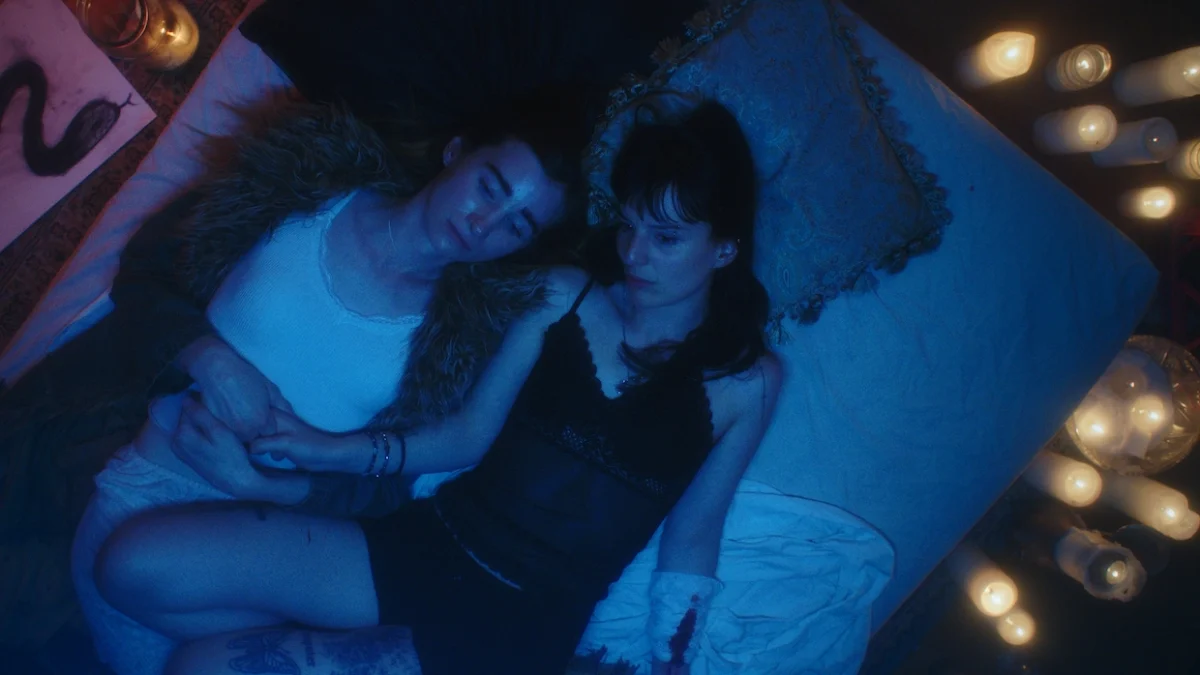
The Australian film industry has witnessed a significant shift in its independent sector with the rapid ascent of Alice Maio Mackay, a 21-year-old director whose prolific output has challenged traditional notions of production timelines and genre constraints. Her latest feature, The Serpent’s Skin, serves as a cornerstone of her current international festival run, marking her seventh completed film before reaching the age of 22. This supernatural romance, which recently celebrated its American premiere at the Alamo Drafthouse in Brooklyn, represents a synthesis of DIY ethics, queer narrative reclamation, and a distinct aesthetic informed by 1990s television and operatic rock music.
A Prolific Debut on the Global Festival Circuit
The Serpent’s Skin arrives on the heels of a successful year for Mackay, following the reception of her previous work, such as the holiday-themed horror film Carnage for Christmas. The new film has secured placements in major genre festivals across the globe, including screenings in London and Montreal. This international footprint is notable for an independent production originating from Australia, a territory where indie genre films often struggle to find theatrical distribution beyond domestic borders.
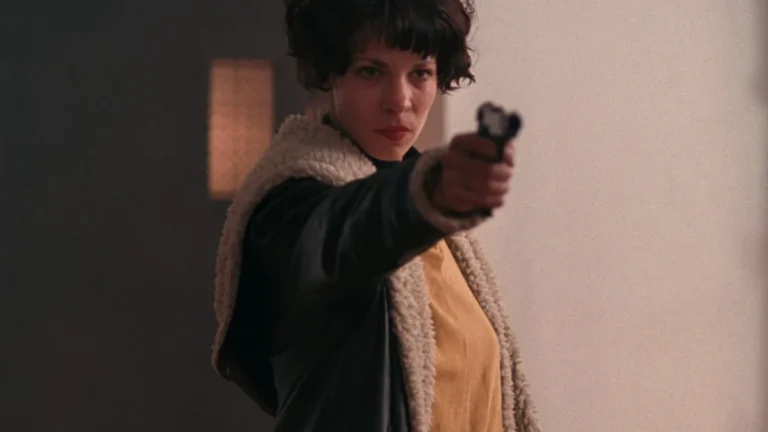
The film’s narrative centers on Anna, portrayed by Alexandra McVicker, a newcomer to a mysterious town who finds herself drawn to Jen (Avalon Fast), a goth tattoo artist with an enigmatic aura. As the two women discover a shared affinity for magical powers, they are forced to confront a demonic entity possessing Danny (Jordan Dulieu), a local youth who represents the "alt-boy-next-door" archetype. The production is characterized by its sharp wit and a "lo-fi" aesthetic that prioritizes atmospheric tension and character dynamics over high-budget visual effects.
Narrative Framework and Subversion of Genre Tropes
At its core, The Serpent’s Skin is an exploration of queer identity through the lens of supernatural fiction. Mackay’s approach to the script involves a rigorous developmental process. Unlike many contemporary filmmakers who move directly to storyboarding, Mackay writes her stories in a narrative prose format—essentially a short novel—before collaborating with her long-term co-writer, Benjamin Pahl Robinson, to adapt the material into a screenplay. This method ensures a depth of characterization and a literary foundation that informs the film’s dialogue-heavy sequences.
A critical element of the film is its subversion of the "toxic progressive" male trope. In her previous works, Mackay often utilized overtly bigoted antagonists to drive political narratives. However, with The Serpent’s Skin, she shifts focus toward a more contemporary villain: the superficially progressive young man who nonetheless embodies traditional toxic masculinity. By centering the conflict around Danny, a character who is initially "friend-zoned" by Anna, Mackay examines the entitlement often hidden behind modern subcultural aesthetics.
A Chronology of Creative Development
Mackay’s journey to the New York premiere is the result of a consistent and disciplined production schedule. Her career trajectory can be mapped through a series of rapid-fire releases that demonstrate her evolution as a stylist:
- Early Foundations: Mackay’s background is rooted in the performing arts. Before transitioning to film, she was a trained dancer, competing in ballet, tap, and contemporary dance from the age of eight. Her musical education was equally specialized, focusing on the bassoon at a dedicated music school.
- The DIY Transition: Moving into film, Mackay embraced a collaborative model, frequently working with a recurring ensemble of creators. This "creative hive" includes Vera Drew, the director and editor of The People’s Joker, who served as the editor for The Serpent’s Skin.
- The 2023-2024 Festival Run: The production of The Serpent’s Skin coincided with the post-production of her sixth film and the filming of her eighth. This overlapping schedule allowed Mackay to maintain a constant presence in the festival circuit, culminating in the current North American tour.
- American Premiere: The Brooklyn premiere at the Alamo Drafthouse signifies a bridge between the Australian indie scene and the American "New Queer Cinema" movement, placing Mackay’s work alongside directors like Jane Schoenbrun and Gregg Araki.
Collaborative Synergy in the Queer Indie Scene
The success of The Serpent’s Skin is inextricably linked to Mackay’s role within a broader network of queer indie filmmakers. This cohort is characterized by a "revolving door" of talent, where directors frequently act in each other’s films and share technical resources.

Avalon Fast, who plays Jen in The Serpent’s Skin, is herself a noted director in the Canadian lo-fi scene (Honeycomb). Similarly, the film features contributions from Louise Weard and Annapurna Sriram. This collaborative framework allows for the production of high-concept genre films on modest budgets, bypassing the traditional gatekeeping of major studio systems. Vera Drew’s involvement as an editor is particularly significant, as her rhythmic and often subversive editing style complements Mackay’s theatrical sensibilities.
The Interplay of Music, Theater, and Cinematic Structure
Mackay’s background as a "theater kid" is evident in the structural choices of The Serpent’s Skin. She has noted a preference for long, dialogue-driven scenes, such as the climactic conversation on a rooftop between Anna and Jen. These sequences are often rehearsed as if they were stage plays, emphasizing performance and blocking over rapid-fire cutting.
Music serves as a primary source of inspiration during the writing process. Mackay utilizes character playlists and specific "temp music" to establish the emotional frequency of her scenes. A surprising but foundational influence on The Serpent’s Skin is the work of Meatloaf, specifically the Bat Out of Hell trilogy. Mackay cites the operatic scale and "larger than life" emotional stakes of Jim Steinman’s compositions as a blueprint for the film’s romantic arc. This musical influence, combined with a soundtrack featuring "classic gay music" icons like Kylie Minogue and Madonna, creates a tonal bridge between the film’s supernatural horror and its sentimental heart.
The Cultural Resonance of Y2K Nostalgia
The Serpent’s Skin enters the cultural conversation at a time when there is a significant resurgence of interest in the "Y2K" era and early 2000s television. Mackay’s work draws heavily from the "teen witch" subgenre, citing Buffy the Vampire Slayer, Charmed, and the Twilight saga as formative influences.
However, Mackay’s use of nostalgia is not merely derivative. Her objective is to transform the "subtext" of 1990s supernatural media into explicit "text." While shows like Buffy featured queer characters, they were often sidelined or subjected to tragic tropes. In Mackay’s vision, the queerness of the protagonists is the central engine of the story, presented without the need for apology or explanation. This approach aligns her with contemporary works like I Saw the TV Glow, though Mackay maintains a more theatrical and wit-driven tone compared to the surrealist melancholy of her peers.
Industry Impact and Broader Implications
The emergence of Alice Maio Mackay signals a potential shift in how independent film is produced and consumed. Her ability to complete seven features before the age of 22 suggests that the barriers to entry in the film industry are lowering for those who can master DIY technology and build strong creative communities.
Industry analysts suggest that Mackay’s model of "prolific genre-bending" is particularly suited to the current streaming and festival landscape, where there is a high demand for niche content that speaks directly to underrepresented audiences. By combining the tropes of horror and supernatural romance with authentic queer perspectives, Mackay has carved out a unique space in the market.
Furthermore, the reception of The Serpent’s Skin in major urban centers like New York and London validates the global appeal of localized indie stories. As Mackay prepares for the release of her next project—already completed and featuring a cast of established indie actors—the trajectory of her career offers a case study in the power of creative persistence. Her work suggests that the future of queer cinema may lie not in the pursuit of major studio approval, but in the continued cultivation of independent, collaborative, and unapologetically nostalgic visions.