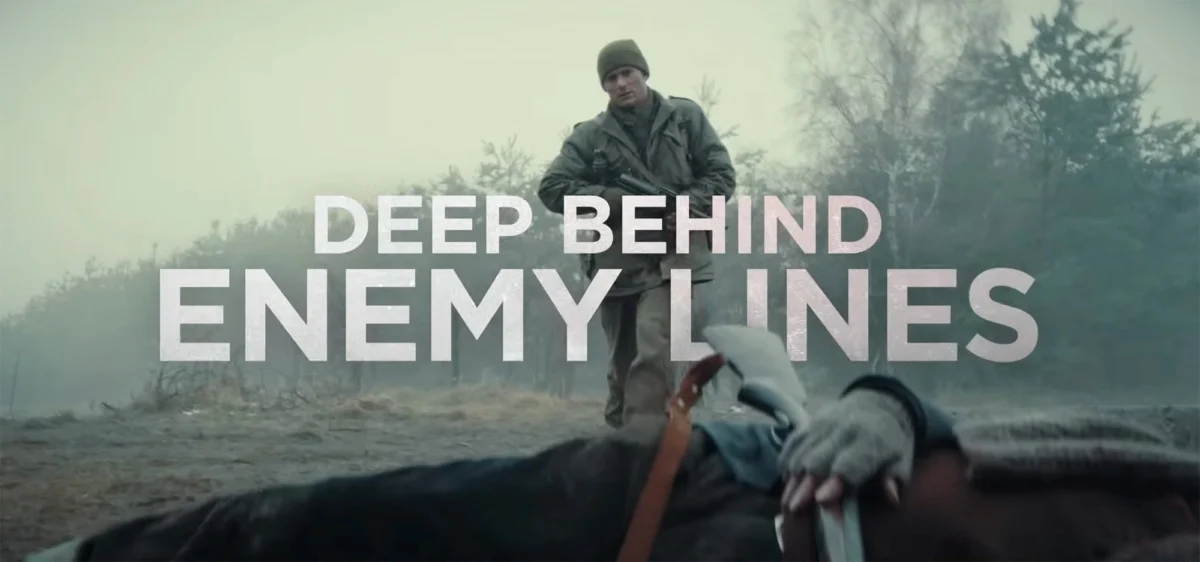
Saban Films and Roadside Attractions have officially unveiled the trailer for Lucky Strike, a World War II survival thriller poised to arrive in theaters in June 2026. Directed by Rod Lurie, known for his gritty military dramas such as The Last Castle and the critically acclaimed The Outpost, the film promises an intense depiction of a solitary soldier’s struggle for survival amidst the chaos of the Battle of the Bulge. The narrative centers on an injured American soldier, portrayed by Scott Eastwood, who finds himself isolated behind German lines. His mission: to evade an advancing Nazi Panzer army and relay crucial intelligence using a nascent communication technology, the Motorola SCR-300 backpack radio. This project marks a significant reunion for director Lurie, producer Marc Frydman, and star Scott Eastwood, following their successful collaboration on The Outpost. The ensemble cast also features Colin Hanks, Aunjanue Ellis-Taylor, and Taylor John Smith, suggesting a compelling dramatic core to the action.
Filmmaking Vision and Creative Team Synergy
Rod Lurie’s directorial approach to military narratives is distinguished by his emphasis on realism, the psychological toll of combat, and the moral complexities faced by soldiers. A graduate of the United States Military Academy at West Point, Lurie brings an authentic perspective to his war films, often grounding them in meticulous research and firsthand accounts. His previous works, including The Contender, Nothing But the Truth, and particularly The Outpost, have demonstrated his capability to craft tension-filled dramas that resonate with audiences. The Outpost, a harrowing account of the Battle of Kamdesh in Afghanistan, garnered significant praise for its brutal honesty and intense action sequences, largely attributed to Lurie’s direction and Scott Eastwood’s performance.
The collaboration on Lucky Strike represents a continuation of this successful partnership. Scott Eastwood, known for his roles in Suicide Squad and Pacific Rim: Uprising, has increasingly taken on more demanding dramatic roles, with The Outpost highlighting his capacity for conveying raw vulnerability and determination under duress. His portrayal of Staff Sergeant Clint Romesha in The Outpost was lauded for its authenticity and emotional depth, qualities that will likely be crucial for his character, John Castle, in Lucky Strike. The reunion with producer Marc Frydman further solidifies the creative nucleus, ensuring a cohesive vision for the film’s production. Frydman, who co-wrote the screenplay with Lurie, is instrumental in shaping the narrative’s historical grounding and dramatic arc.
The supporting cast also brings considerable talent to the project. Colin Hanks, recognized for his versatility across genres, from Fargo to Jumanji: The Next Level, is expected to provide a nuanced performance. Aunjanue Ellis-Taylor, an acclaimed actress with credits including King Richard and Lovecraft Country, brings a powerful dramatic presence, while Taylor John Smith, seen in Where the Crawdads Sing, adds to the promising ensemble. The combined experience of these actors under Lurie’s direction suggests a film that will not only deliver on action but also explore the profound human elements of wartime survival.
Historical Context: The Battle of the Bulge
The Battle of the Bulge, known officially as the Ardennes Offensive, was the last major German offensive campaign on the Western Front during World War II. Launched on December 16, 1944, and lasting until January 25, 1945, the surprise attack caught Allied forces largely unprepared, creating a "bulge" in the Allied lines that gave the battle its name. The offensive involved over 200,000 German troops, nearly 1,000 tanks and assault guns, and aimed to split the Allied lines, encircle and destroy four Allied armies, and seize vital port facilities at Antwerp, thereby forcing a separate peace on the Western Allies.
Chronology and Key Events:
- December 16, 1944: The offensive begins under conditions of heavy fog and snow, providing cover for the German advance and grounding Allied air superiority. German forces achieve significant initial breakthroughs, particularly in the Ardennes forest region.
- December 17, 1944: The Malmedy Massacre occurs, where Waffen-SS troops execute American prisoners of war, stiffening Allied resolve. Bastogne, a key road junction, is encircled by German forces, leading to a crucial siege.
- December 18-23, 1944: American forces, particularly the 101st Airborne Division, dig in at Bastogne, holding out against repeated German assaults despite severe cold, lack of supplies, and relentless artillery fire. General Anthony McAuliffe famously responds "NUTS!" to a German surrender demand.
- December 23, 1944: The weather clears, allowing Allied air forces to launch devastating attacks on German supply lines and armored columns, significantly hindering their advance. Air drops of supplies and medical aid begin for the besieged troops in Bastogne.
- December 26, 1944: Elements of General George S. Patton’s Third Army break through to relieve Bastogne, marking a turning point in the battle.
- January 3, 1945: Allied counter-offensives begin from both the north and south of the bulge.
- January 25, 1945: The "bulge" is largely eliminated, and the original front lines are restored. The Germans are pushed back, having suffered irreplaceable losses in men and matériel.
Strategic Importance and Human Cost:
The Battle of the Bulge was a desperate gamble by Adolf Hitler, intended to reverse the tide of the war on the Western Front. Its failure had profound implications: it exhausted Germany’s remaining strategic reserves, particularly tanks, fuel, and experienced personnel, making further large-scale offensives impossible. The battle delayed Allied advances by several weeks but ultimately sealed Germany’s fate, paving the way for the final Allied push into Germany.
The human cost was immense. Allied forces, predominantly American, suffered over 89,000 casualties, including approximately 19,000 killed, 47,500 wounded, and 23,000 missing or captured, making it the largest and bloodiest battle fought by the United States in World War II. German casualties were even higher, estimated between 67,000 and 100,000, including significant numbers killed, wounded, or captured. The battle highlighted the extraordinary resilience of Allied soldiers, who fought valiantly in brutal winter conditions against a determined enemy. It is within this harrowing historical backdrop that Lucky Strike seeks to tell a personal story of survival and ingenuity.

Technological Significance: The Motorola SCR-300
A pivotal element of the film’s premise involves the Motorola SCR-300, a backpack-mounted radio that represents new technology at the end of the war. Developed in 1940 and introduced in 1943, the SCR-300 was a groundbreaking piece of military communication equipment. It was the first true portable FM transceiver to be widely used by the U.S. Army, earning it the nickname "walkie-talkie" from American soldiers.
Technical Specifications and Capabilities:
The SCR-300 was a formidable piece of kit for its time. Weighing approximately 38 pounds (17 kg) with its battery, it was designed to be carried on a soldier’s back, typically by a dedicated radio operator. It operated in the frequency range of 40 to 48 MHz, offering 41 channels. Its frequency modulation (FM) capability was revolutionary, providing clearer communication with less static interference compared to the amplitude modulation (AM) radios prevalent at the time. This clarity was crucial in the noisy and chaotic environment of the battlefield. The radio had an effective range of about 3 miles (4.8 km) in open terrain, though this could be significantly reduced by dense forests, hilly terrain, or urban environments, as would have been the case in the Ardennes. Power was supplied by wet-cell batteries, which required frequent recharging or replacement.
Impact on Warfare and Relevance to the Film:
The introduction of the SCR-300 fundamentally changed battlefield communication. Prior to its widespread deployment, tactical communication often relied on field telephones, runners, signal flags, or older, heavier, and less reliable radio sets. The SCR-300 provided platoon and company commanders with instantaneous, two-way voice communication with their subordinate units, a capability that dramatically improved command and control, particularly in fast-moving or fluid combat situations. It enabled better coordination of infantry, artillery, and even close air support, enhancing tactical flexibility and responsiveness.
For a soldier trapped behind enemy lines, as Scott Eastwood’s character John Castle is in Lucky Strike, the SCR-300 would have been an invaluable, if cumbersome, tool. It represented his only potential link to friendly forces, a lifeline in an otherwise isolated and hostile environment. The film’s premise, wherein Castle uses his wits and the SCR-300 to thwart an advancing Nazi Panzer army, highlights the critical role this technology played not just in overall strategy but in individual survival and intelligence gathering. The ability to relay enemy positions, movements, or even simply to confirm one’s own location could mean the difference between life and death, or between a tactical victory and a devastating defeat. The film implicitly acknowledges the pioneering spirit of radio operators and the technological advancements that shaped the outcome of the war.
"Inspired by True Events": Exploring the Narrative’s Foundation
The tagline "Inspired by true events" is a common descriptor for historical dramas, signaling a narrative that draws from real-world occurrences while taking creative liberties for dramatic effect. While Lucky Strike does not specify the particular true events or individuals that directly inform John Castle’s story, it is highly plausible that the film synthesizes numerous accounts of soldiers who found themselves isolated or behind enemy lines during the Battle of the Bulge.
The sheer scale and chaotic nature of the Ardennes Offensive meant that countless individual dramas unfolded. Units were overrun, supply lines severed, and soldiers became separated from their commands, forced to rely on their training, resourcefulness, and sheer will to survive. The dense forests and severe winter weather exacerbated the isolation, making navigation and communication incredibly challenging. Stories of individual heroism, desperate evasion, and critical intelligence gathering by isolated soldiers are abundant in the historical records of this period.
John Castle, armed with his Motorola SCR-300, likely serves as a composite character, embodying the experiences of many such soldiers. His story could reflect instances where radio operators, despite being cut off, managed to transmit vital intelligence, guide artillery fire, or simply confirm the presence of enemy forces, thereby impacting local engagements. The film’s focus on "spy craft" further suggests an emphasis on clandestine operations and the psychological tension of espionage, even in a direct combat scenario. By weaving these elements into a single compelling narrative, *Lucky Strike aims to offer a poignant and relatable window into the human experience of this monumental battle. The film’s depiction of Castle’s struggle to "find his way back home" resonates with the universal desire for survival and reunion amidst the horrors of war.
Thematic Depth and Broader Implications
Beyond the immediate thrills of a survival action film, Lucky Strike appears poised to delve into deeper thematic territory. The initial quote from the trailer, "80 years from now, everyone will know what happened in that battle. But will they understand it? I hope they do," serves as a powerful mission statement. It implies that the film seeks not merely to recount historical facts but to foster a deeper emotional and intellectual understanding of the Battle of the Bulge, particularly from the perspective of an individual soldier.

Exploring the Human Element of War:
The film’s focus on an injured, isolated soldier highlights themes of resilience, resourcefulness, and the psychological fortitude required to endure extreme duress. It is a story of individual agency against overwhelming odds, exploring how one person’s actions, even when seemingly small, can have significant ramifications in a larger conflict. The isolation experienced by John Castle underscores the profound loneliness and fear inherent in combat, contrasting with the camaraderie often depicted in larger unit-focused war films. This intimate portrayal can offer a powerful insight into the human cost and personal sacrifices made during wartime.
The Role of Technology and Intelligence:
The Motorola SCR-300 is not just a plot device; it is a character in itself, representing the burgeoning role of advanced communication technology in modern warfare. The film can explore the critical importance of intelligence gathering and dissemination, showcasing how timely information, even from a single source, can influence tactical decisions and potentially save lives. This aspect adds a layer of intellectual engagement, highlighting the strategic thinking required in combat beyond brute force.
Commemoration and Contemporary Relevance:
As the world approaches the 80th anniversary of the Battle of the Bulge, films like Lucky Strike play a crucial role in historical commemoration. They serve as educational tools, introducing new generations to the sacrifices made and the pivotal moments that shaped the 20th century. By presenting these events through a compelling narrative, the film can ensure that the lessons and human experiences of WWII remain relevant and understood by contemporary audiences, fostering reflection on themes of conflict, survival, and the enduring quest for peace. The film’s emphasis on understanding, rather than just knowing, historical events speaks to a desire for deeper engagement with the past.
Production and Release Details
Lucky Strike is a collaboration between Saban Films and Roadside Attractions for its distribution in the United States. Saban Films has established itself as a prolific distributor of independent and genre films, often focusing on action, thrillers, and dramas. Roadside Attractions is well-regarded for its discerning selection of independent cinema, frequently securing critical acclaim and awards recognition for its releases. Their joint effort suggests a robust distribution strategy aimed at reaching both a broad audience interested in war films and a more discerning viewership appreciative of character-driven dramas.
The film is slated for release in select US theaters on June 26th, 2026, positioning it as a significant summer release. This timing typically indicates confidence in its commercial appeal and its ability to compete in a crowded cinematic landscape. The theatrical release strategy also underscores the filmmakers’ belief that Lucky Strike is an experience best viewed on the big screen, where the intensity of the action and the scope of the historical setting can be fully appreciated.
In conclusion, Lucky Strike emerges as a highly anticipated WWII survival thriller, drawing strength from the proven collaboration between director Rod Lurie and star Scott Eastwood. By grounding its narrative in the brutal realities of the Battle of the Bulge and integrating the technological marvel of the Motorola SCR-300, the film promises a compelling blend of action, historical context, and human drama. As it prepares for its June 2026 release, Lucky Strike stands to offer a powerful cinematic experience, inviting audiences to not only witness but truly understand a pivotal chapter of World War II.