Maria Martínez Bayona’s debut feature, "The End of It," dives headfirst into the profound implications of a future where mortality is a choice, presenting a visually striking, albeit thematically uneven, exploration of legacy, identity, and the very definition of a life well-lived. The film centers on Claire, a former provocative artist on the cusp of her 250th birthday, who has decided she is ready to embrace the ultimate finality: death. This decision, presented as an artistic choice in a world that has transcended natural aging, ignites a complex web of relationships and philosophical quandaries, anchored by a tour-de-force performance from Rebecca Hall.
A World Where Death is Optional: The Premise of "The End of It"
In the not-so-distant future depicted in "The End of It," scientific advancements have eradicated the natural process of aging. Life extension treatments have become so sophisticated that death itself is no longer an inevitable biological outcome but a conscious decision. This groundbreaking reality forms the backdrop against which Claire’s existential crisis unfolds. Approaching her 250th birthday, a milestone that in a previous era would have been unimaginable, Claire finds herself profoundly weary of an unending existence. Her decision to opt out of life is not born of physical suffering or a lack of material comfort, but rather a deep-seated ennui and a struggle to maintain a sense of self after centuries of living. This premise immediately establishes a fertile ground for examining the human condition when stripped of its most fundamental constraint.
Rebecca Hall’s Masterclass as Claire
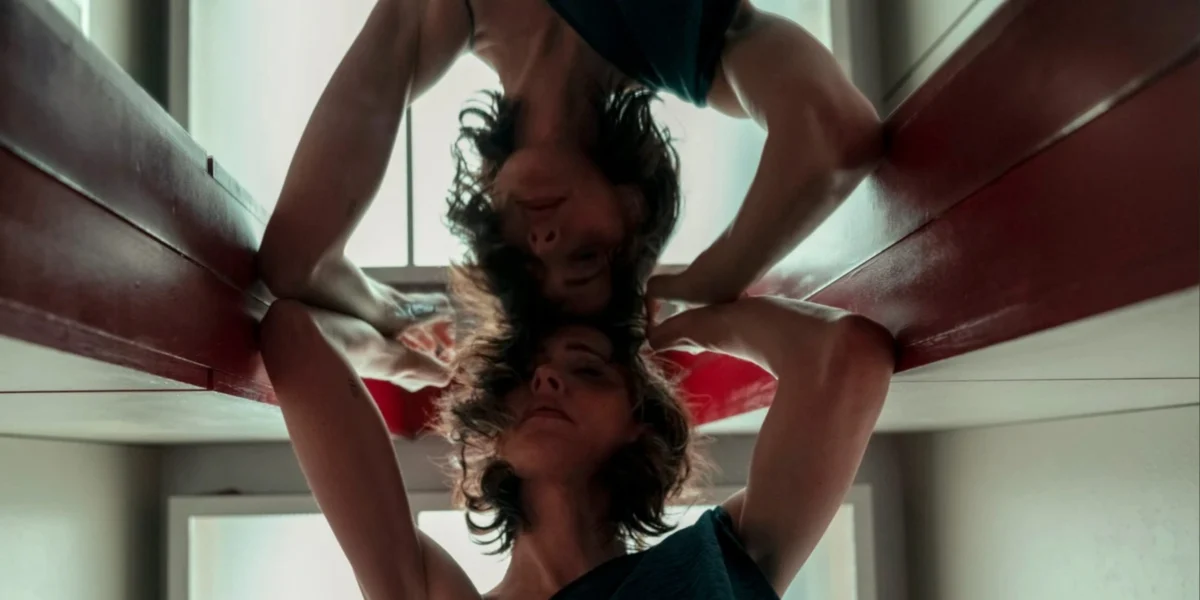
At the heart of "The End of It" lies Rebecca Hall’s incandescent performance as Claire. The film’s critical success hinges significantly on her ability to embody a character who has lived for an epoch, accumulating experiences, artistic achievements, and the inevitable baggage that comes with such an extended lifespan. Hall navigates Claire’s complex emotional landscape with remarkable dexterity, seamlessly transitioning between moments of dark humor, profound melancholy, and fierce artistic determination. The review highlights her as an "insanely clever performance," particularly when she is provided with an "eccentric, poignant, 250-year-old character who grapples with creative legacy." This praise underscores Hall’s skill in bringing depth and nuance to a character facing an unprecedented existential dilemma. Claire’s struggle is articulated in a "killer monologue" where she describes feeling "horizontal and stretched so thin that she struggles to define who she is anymore." This visceral description, delivered with Hall’s characteristic intensity, captures the essence of her character’s predicament: the erosion of self in the face of perpetual existence. The review emphasizes that Hall "absolutely locks in for the challenge," making her an "invigorating watch" even when the film’s conceptual framework falters.
The Creative Conflict: Art and the Ultimate Performance
Claire’s decision to end her life becomes an unexpected catalyst for her to reclaim her artistic identity. In a world that has seemingly commodified and perhaps even diluted the impact of art through infinite time and endless creation, Claire’s impending death offers a unique opportunity to stage a final, definitive artistic statement. Art exhibitors propose curating a retrospective of her work, but the true artistic frontier emerges with the suggestion of a "watch me die" performance. This concept transforms her final days into her ultimate masterpiece, a radical act of self-definition in the face of a society that has made death optional. The film tracks Claire’s physical deterioration as she embarks on this performative journey, drawing parallels to cinematic explorations of bodily transformation and decay. The review notes a "neat little nod to David Cronenberg’s ‘The Fly’ with Claire peeling off some of her fingernails," suggesting a visceral engagement with the physical realities of mortality that immortality has obscured. This element of the film, while visually arresting, is also noted as potentially derivative, with the review referencing Coralie Fargeat’s "The Substance," particularly a church-set sequence where Hall is seen in "full-body old-age makeup." While Hall’s performance elevates these moments, the review suggests the messaging can feel "reductive and heavy-handed."
Thematic Explorations: Mortality, Legacy, and the Self
"The End of It" grapples with profound questions about the nature of mortality and the measure of an artist’s life. In a world where biological death is no longer a given, the film probes what it truly means to live and to die. Claire’s crisis is not just about the end of her physical existence but about the potential erasure of her identity and her artistic legacy. Immortality, the review suggests, has "chipped away at Claire’s self, leaving her in a layered personal crisis regarding her creative body of work." This thematic core is central to the film’s narrative. The review points out that the film "plays with punchy ideas about mortality and aging, zooming in on the measure of an artist against the work they leave behind." While the film’s "sleek visuals mask some rather shallow thematic explorations," Hall’s performance is credited with putting in "riveting work to elaborate on Bayona’s ideas, keen for a deeper dive." The film finds its most compelling material in "the concept of death itself and how immortality erases Claire’s self to the point where she reaches a breaking point." This suggests that the film’s true strength lies not in its speculative world-building alone, but in its intimate examination of the human need for finitude and meaning.
Supporting Cast and Narrative Dynamics
While Rebecca Hall commands the screen, the supporting cast in "The End of It" is noted as a weaker element of the film. The review states that "the supporting performances pale in comparison, falling short of the meticulous commitment that Hall’s work radiates from start to finish." This is partly attributed to the screenplay’s limitations in crafting fully realized characters for those within Claire’s inner circle. The arrival of Claire’s daughter, Sarah, played by Noomi Rapace, is described as failing to "move the story along," and the relationships within Claire’s immediate family struggle to find a "narrative place here that feels insightful and compelling enough." This suggests that the film, in its focus on Claire’s singular journey, may have sacrificed the depth and complexity that a robust ensemble could have provided. The husband and AI assistant, mentioned in the initial premise, are not elaborated upon in the review, leaving their narrative function and impact open to interpretation. However, the review does hint at "humorous complexity of their relationships," which, if fully realized, could have added further layers to Claire’s existential dilemma.
Visual Language and World-Building
Despite its narrative shortcomings, "The End of It" is lauded for its impressive visual language and Maria Martínez Bayona’s "precise eye for evocative imagery." The cinematography and production design work in tandem to create an "immersive quality to the world-building." The detailed depiction of Claire’s home, reflecting her centuries of accumulated possessions and experiences, is particularly highlighted. The reviewer notes the "impressive level of detail in bringing Claire’s home to life," suggesting a thoughtful approach to visualizing a life lived across multiple eras. A striking detail mentioned is Claire’s "gorgeous-looking, earthy room where she keeps her real bones on display, assembled to resemble the look of one full body structure." This macabre yet artistic display serves as a potent symbol of her relationship with her own physicality and mortality, even in a world where such considerations are largely obsolete. These visual elements contribute significantly to the film’s atmosphere and thematic resonance, offering a rich tapestry against which Claire’s story unfolds.
Broader Implications and Artistic Intent
The high-concept premise of "The End of It" is described as "fascinating to explore on paper," and in theory, such creative elements should foster a compelling narrative. The film offers "glimmers of brilliance throughout, suggesting a promising first-time feature director and screenwriter working through her artistic expression." Bayona’s debut is seen as a journey that "perfectly serves the protagonist’s search for the art that makes her feel most honest about herself." The film’s ultimate success, despite its flaws, is attributed to the "phenomenal Rebecca Hall, who is incredibly adept at commanding attention and striking a specific tonal balance." This makes "The End of It" an "engaging watch despite its flaws," a testament to both Hall’s performance and Bayona’s directorial vision.
The implications of a society where death is optional are vast and touch upon numerous facets of human existence. From the potential for societal stagnation and the erosion of value in life itself, to the psychological toll of infinite existence, these are the complex themes that "The End of It" attempts to explore. The film’s central conflict, Claire’s desire to die, can be interpreted as a profound statement on the human need for closure, for limits, and for the very definition of life that is intrinsically tied to its inevitable end. The artistic legacy that Claire seeks to define through her final act also speaks to a universal human desire for meaning and permanence in a transient world. In a future where natural death is circumvented, the act of choosing death becomes a radical assertion of agency and a profound statement on what constitutes a life of value. The film, through its ambitious premise and a central performance of exceptional caliber, invites audiences to contemplate these enduring questions, even as it navigates the complexities of its own narrative execution. The 102-minute runtime suggests a focused, albeit potentially condensed, exploration of these weighty themes.